| Author |
 Replies: 15 / Views: 5,421 Replies: 15 / Views: 5,421 |
|
|
Pillar Of The Community
923 Posts |
|
|
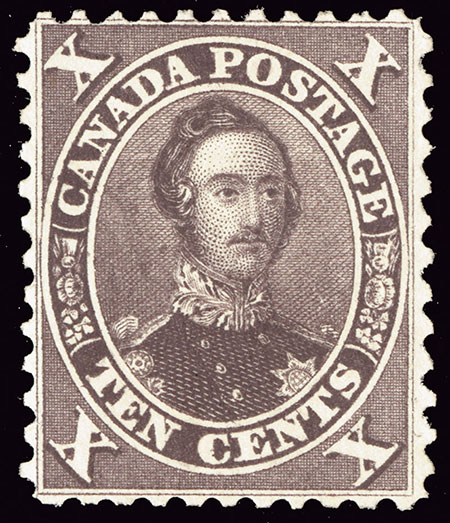
I know some of you experts can help me out on this. I am missing #16 10c Albert black brown (of course - it's $1250 in Good condition!) Yet I see (and own) #17's that are black/grey/brown and wonder how I could spot one if it came on the market. For instance, here's ebay # 263296334933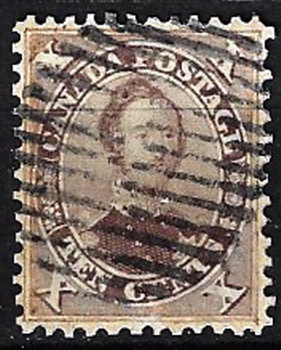 Looks black brown to me! Here are my #17's. I want that middle one to be #16: 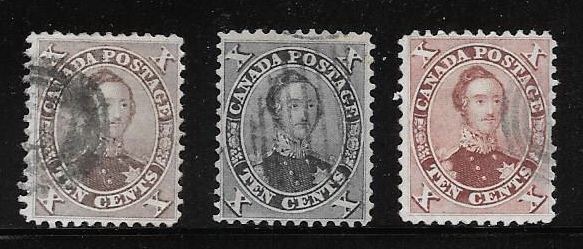 Why isn't it? And also - why is this particular colour given a separate Scott/Unitrade number? |
|
Send note to Staff
|
|
|
|
|
Pillar Of The Community
Norway
1661 Posts |
|
|
Don't know if you already checked this, but the #16 is always perf 11 3/4 on all 4 sides. (not 12).
On my monitor your stamp absolutely look black brown - actually almost black.
Nice stamps! |
Send note to Staff 
|
|
|
Pillar Of The Community
United States
8956 Posts |
|
|
I believe the first stamp is a changeling. Referring to the ebay stamp of course Peter |
|
Send note to Staff
|
| Edited by Petert4522 - 11/06/2017 2:06 pm |
|
|
Pillar Of The Community
923 Posts |
|
|
Pillar Of The Community
France, Metropolitan
3756 Posts |
|
|
Pillar Of The Community
United States
728 Posts |
|
|
I have a certified copy of #16 used mine has a red pen cancelation. The perforations will be 11.75 on all sides of the stamp. 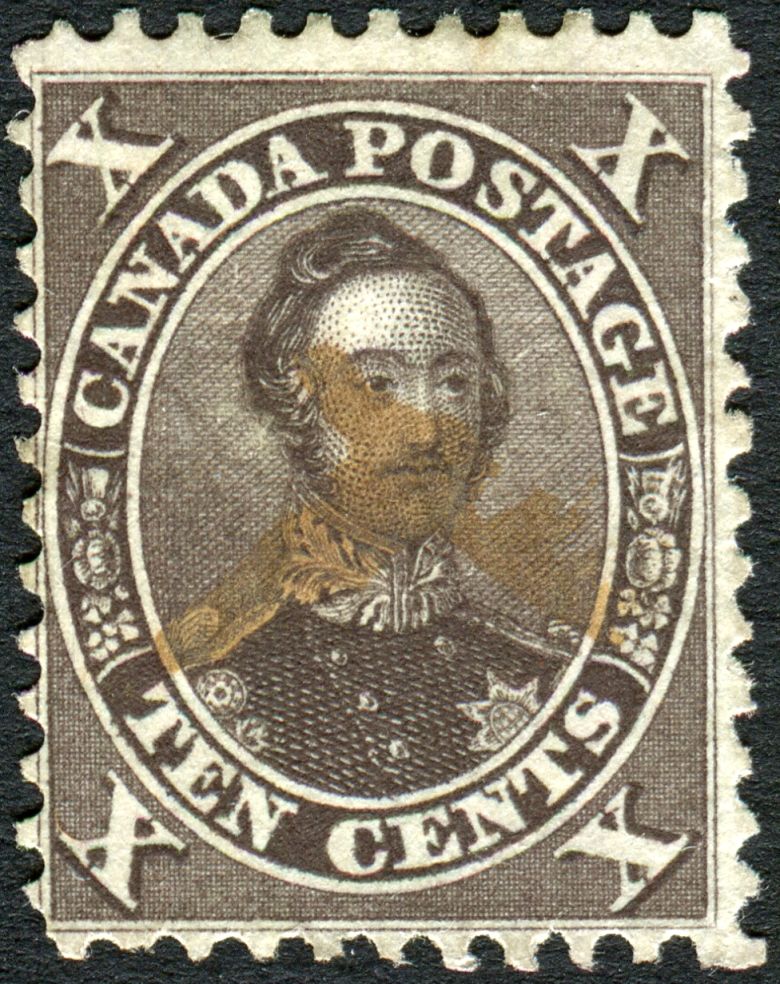 |
|
Send note to Staff
|
|
|
Pillar Of The Community
Norway
1661 Posts |
|
|
Quote:
So it's the perforation that decides No, unfortunately not quite that easy. No 17 also comes as perf 11.75 similar to no 16. The clue is that no 17 also exists as perf 12 x 11.75 and perf 12 - whilst #16 never comes with perf 12 - so any stamp with perf 12 on any side can NOT be #16, so the perforations can be used for elimination only - not for positive identification. Watermark - nice one - Albert got "red-x'ed on the nose"  (RXOTN) |
|
Send note to Staff
|
|
|
Pillar Of The Community
3865 Posts |
|
|
Rest in Peace
Canada
5701 Posts |
|
|
Quote:
And also - why is this particular colour given a separate Scott/Unitrade number? Excellent question! My answer is it should NOT be. Shades are so subjective. Judging by what I see on my monitor, either of sak's first two stamps could be #16. We can talk about perforations all we want, but the fact is if you look in Scott (not Unitrade), both stamps are considered perf 12 and there is no mention of 11.75, so when they numbered it years ago, they probably did not even know of the perf. difference. In my opinion, the shades should have minor numbers. I have said it before, Scott went horribly wrong in the numbering of early Canadian stamps years ago. Blaamand - you are perusing your Unitrade well  . |
|
Send note to Staff
|
|
| Edited by BeeSee - 11/07/2017 12:43 pm |
|
|
Pillar Of The Community
Norway
1661 Posts |
|
|
I fully agree Brian - makes no sense for having a separate catalog number for #16 (and others!). It is obvious that the same plates/cliches were involved in the printing for both #16 and #17, as the 'string of pearls' and other varieties exist for both.
If for any comfort, the same (un-)logical way of thinking can also be seen with other catalog publishers - and for other countries. Example given the infamous France 'Peace and Commerce' 1c on Prussian blue paper, Maury #84 / Scott #87. The exact same stamp is printed on several other shades of blue paper (Scott only list a few of them) as well, without those shades getting its own catalog numbers. There is nothing that makes the particular printing on Prussian blue paper any different from any of the other printings, except for the color of the paper. The only logical reason I see for establishing major numbers for such rarities was for the dealers to draw particular attention to them, and hence up their prizes. (the Prussian blue was 'discovered' later and became more sought after because it was given a separate number).
Alternatively some 'important' collector which had obtained such a rarity (or several of them) managed to convince publishers to dedicate a separate number, and suddenly he was sitting on a rare and major stamp issue unknown to most, and he would become an even more distinguished collector in philatelic circles - and his stamp would be more valuable due to increased attention.
At the end of the day the ones issuing catalogs are not machines but humans, and could have their personal or economical reasoning for their choices. And back in the days - large money were at stake! |
|
Send note to Staff
|
|
|
Rest in Peace
Canada
5701 Posts |
|
|
Quote:
The only logical reason I see for establishing major numbers for such rarities was for the dealers to draw particular attention to them, and hence up their prizes I agree Jon - and Scott was a major dealer in stamps way back then. That is the beauty of designing your own album pages (which I even did before computers) vs commercial albums - you include only the stamps you want and set your own completion level, rather than staring at empty spaces that you can never fill. |
|
Send note to Staff
|
|
|
|
Pillar Of The Community
3865 Posts |
|
|
Quote:
I fully agree Brian - makes no sense for having a separate catalog number for #16 (and others!). It is obvious that the same plates/cliches were involved in the printing for both #16 and #17, as the 'string of pearls' and other varieties exist for both. That is why John Walsh has his BNA stamp catalogue numbers based on the stamp dies used. See http://www.nfldstamps.com |
|
Send note to Staff
|
| Edited by jogil - 11/07/2017 4:57 pm |
|
|
Pillar Of The Community
923 Posts |
|
|
I agree that the choice of Scott/Unitrade numbers is important to the collector.
I have most Canadian stamps.
I do not have #1194i, the 39¢ Flag coil on Rolland paper. That does not stop me from thinking: Great! I have completed the Flag issues. It's just a paper variety. One can go nuts collecting ALL varieties. What relief to have finished with the Centenniels!
(If anyone has a #1194i for sale, please contact me!)
Another example is #1366i, the Gravenstein Apple Perf. 13.1 - do you need it to complete your Fruit tree collection?
That is why I questioned the wisdom of differentiating between #16 and #17...
and, forgive me Watermark, the three large Queens on laid paper #31-3.
Such designations will prevent most (if not all of you, but 1;) from ever achieving "completion" - the irrational goal that drives so many collectors.
|
|
Send note to Staff
|
|
|
Pillar Of The Community
3865 Posts |
|
|
What also helps with having all related stamps of the same Die under one number is that it gives one an idea of what there is in the specialization of one specific stamp. |
|
Send note to Staff
|
|
|
Pillar Of The Community
Canada
730 Posts |
|
|
Scott 16 has a definite blackness to the shade and is not just a darker brown. The first scan below is a Scott 16. In the 2nd scan, I try to show the three early shades progressing from the Black Brown (Scott 16) to the Chocolate Brown (Scott 16i) then to the Deep Red Violet (Scott 17e). Not sure why but the shades are slightly lighter in the thread as compared to on my laptop (and the real stamps). A seasoned collector of this issue once asked me the same question, "Why does the Black Brown have its' own Scott number?" The 5c Brown (Brick) Red doesn't have a number nor do any of the other 1st printing stamps in this issue. It seems collectors have grown attracted to this stamp and specifically the Black Brown. Along with the scarcity of this early shade, its' popularity has boosted the catalog value to be much higher than the other shades of the 10c Consort. This difference in value seems to be one reason for the separation in Scott. 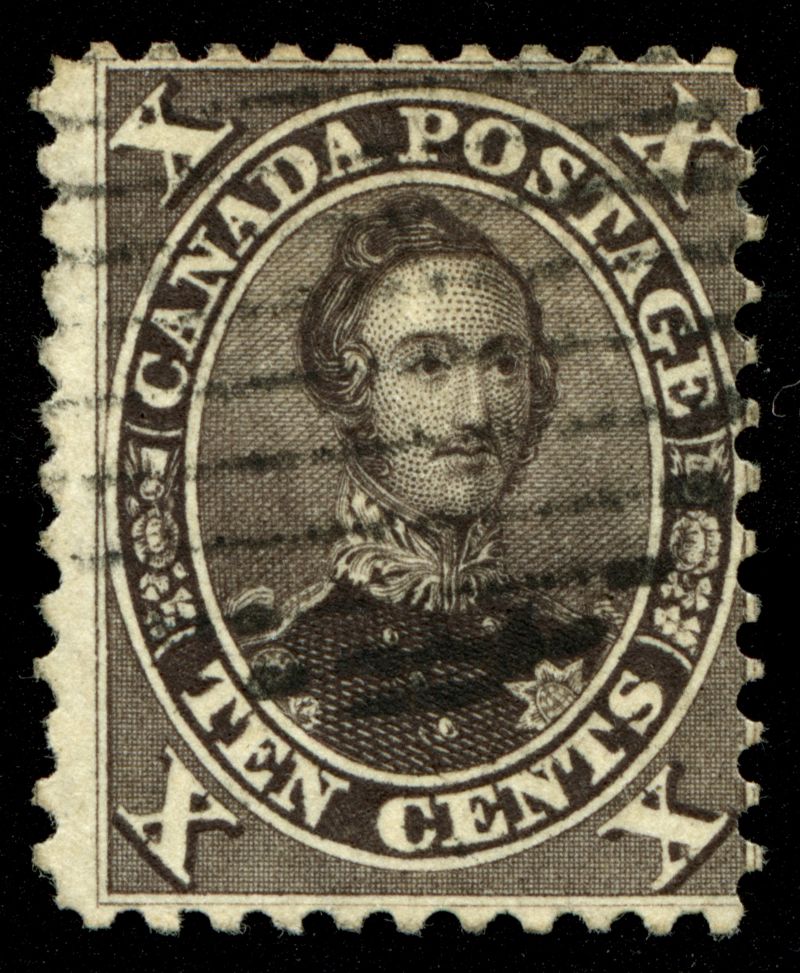 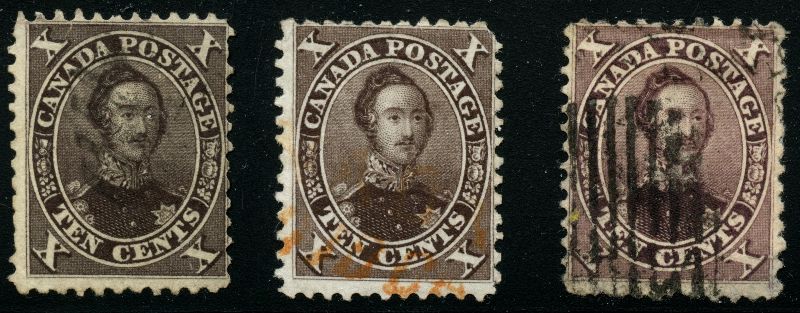 |
|
Send note to Staff
|
| Edited by jimjung - 11/12/2017 07:53 am |
|
|
Pillar Of The Community
Canada
1449 Posts |
|
| |
Replies: 15 / Views: 5,421 |
|




 Posted 11/06/2017 10:45 am