| Author |
 Replies: 58 / Views: 8,964 Replies: 58 / Views: 8,964 |
|
|
|
Pillar Of The Community
Canada
644 Posts |
|
|
jogil - You are correct that the new Instanta is slightly different than the old. The old one is made of yellow plastic and can still be purchased second hand at a decent price. I bought one recently from ebay for around $10 and it still had the original paper sleeve. Barring that, the one by Unitrade is the second best option, I agree. The book is easy to order online from VGG Greene's website. http://www.greenefoundation.ca/books.htm#booksIt lists all the perforations, colors, printings, etc. and has been recently updated. It references the fact the the Kuisalas gauge is not the best for the Small Queens and bases its numbers on the yellow Instanta for consistency, and recommends anyone studying the issue to do the same. I don't recall if it talks about the Registration stamps. My information comes from a different book specifically on that issue. |
Send note to Staff 
|
|
|
Valued Member
Canada
382 Posts |
|
|
Here is hoping that I can clarify a couple of issues here:
1) There is no comparison between the Arfken Small Queens book and the more recent book by Hillson & Nixon. The Arfken book is a study of the postal history of the Small Queen period while Hillson/Nixon is a study of the Small Queen stamps. If one is planning to undertake a serious study of the Small Queens, it would be useful to have both books as there is no overlapping of information. Each is a scholarly discussion of its subject.
2) The Hillson / Nixon book does not study the Registration stamps.
3) there are two excellent studies of the Registration stamps available from BNAPS having been published as part of the ongoing exhibition series. The first is #9 - REGISTRATION MARKINGS and THE REGISTERED LETTER STAMPS which was an exhibit prepared by Harry Lussey. The second is #29 - CANADA'S REGISTERED LETTER STAMPS - A Reconstruction of the Horace Harrison exhibits.
4) I have regular access to the VSC6000 at the Greene Foundation and have used its measuring accuracy to compare various perforation gauges (he VSC6000 measures to the nearest 100th of a millimeter under high magnification). I have been able to demonstrate that the "yellow" Instanta gauge is consistently accurate as are the new similar gauges from Unitrade. There was a period where Instanta gauges were made from clear plastic and they appear to be unstable and therefore somewhat useless for serious research and expertization work.
If any Forum members are visiting the Greene Foundation, I will be happy to check the accuracy of your gauge while you are there.
Suggestion: if you plan to buy the BNAPS books, become a BNAPS member because the publishing discount is enough to pay your annual dues.
I hope this info is useful to our Forum members.
GJP
|
|
Send note to Staff
|
|
|
Rest in Peace
Canada
5701 Posts |
|
|
However, just to be clear, the Hillson / Nixon book is NOT a BNAPS book, so the discounts do not apply. |
|
Send note to Staff
|
|
|
|
Valued Member
Canada
382 Posts |
|
|
Thanks BeeSee. I should have indicated that both the Arfken and the Hillson / Nixon books are published by the Greene Foundation.
GJP |
|
Send note to Staff
|
|
|
Pillar Of The Community
3865 Posts |
|
|
Are there two different editions of the Hillson / Nixon book and are they different from each other since it says reprinted? |
|
Send note to Staff
|
| Edited by jogil - 11/19/2017 07:35 am |
|
|
Pillar Of The Community
1375 Posts |
|
|
Thank you all. I will use an Instanta a friend has and then will read more about those stamp, will come back then and perhaps show more photos or information. It's interesting for a beginner that there are so many different "perforation approaches" for those Canada classic stamps and the most used catalogue does not list all known stamps. But I will learn all this I hope. |
|
Send note to Staff
|
|
|
Pillar Of The Community
3865 Posts |
|
|
Jack Forbes used an old Instanta perforation gauge for the Small Queens and came out with a chart of what he found in his BNAPS booklet of Small Queens stamps. He gauged mint blocks and most of them were exactly perforation 12.00 which the Kiusalas Canadian specialist gauge does not have on it. This perfect perforation 12 has been puzzling die hard Kiusalas users for some time as a stumbling block to its widespread use. How can such a key gauge 12 not be accounted for? |
|
Send note to Staff
|
| Edited by jogil - 11/19/2017 10:13 am |
|
|
Pillar Of The Community
Canada
1449 Posts |
|
|
Quote:
Are there two different editions of the Hillson / Nixon book and are they different from each other since it says reprinted? I note that BNAPS sells the 2012 book on Small Queens, by Nixon as exhibit series # 64 - $64 Vincent G Greene sells the Hillson/Nixon big book on CANADA'S POSTAGE STAMPS OF THE SMALL QUEEN ERA 1870-1897 - $150 Do not own neither but which one is better, for the $$$ ?? Own the VGG on Large Queens, good for paper diff and lots of colour shades |
|
Send note to Staff
|
| Edited by Renden - 11/19/2017 10:06 am |
|
|
Valued Member
Canada
382 Posts |
|
|
Jogil, The second printing of the Hillson / Nixon book has no material changes in content from the first edition - it is merely a reprint. It is physically slightly different as we used a different printer and the quality of the paper was upgraded. The book was reprinted because the first printing sold out! By the way, the book is expensive simply because it cost a great deal of money to produce. The Greene Foundation does not publish for profit, but we would like to recover some of our cash outlay.
Renden, the BNAPS book you mention is not the same. It is Ted Nixon's Gold Medal exhibit of Small Queens some of which formed the basis of the research presented in the book that he co-wrote with John Hillson. Again, there is no comparison of the contents beyond the fact that both relate to Small Queens and both are worthy of being purchased for a Small Queen research library (as are many other books and exhibit reprints).
GJP |
|
Send note to Staff
|
|
|
Pillar Of The Community
Canada
1449 Posts |
|
|
Pillar Of The Community
3865 Posts |
|
|
Pillar Of The Community
1375 Posts |
|
|
hello again, in the meantime I could borrow a "yellow" Instanta perf gauge. Now I just wanted to check the perforations and let you know. But I am even more confused now. Before I make an upload of all more or less fitting "perforation gauge tries" I want to show something more obvious. I just made this collage to show that: - left and right perforation are equal (Instanta 11.6) - top and bottom perforation are not equal (Instanta 11.9 top and 11.75 bottom) Are there any compound perforations there? I only found the one with 11.9 to 12.1 x 11.6. PS: By the way I also compared with a new Instanta which is indeed off. 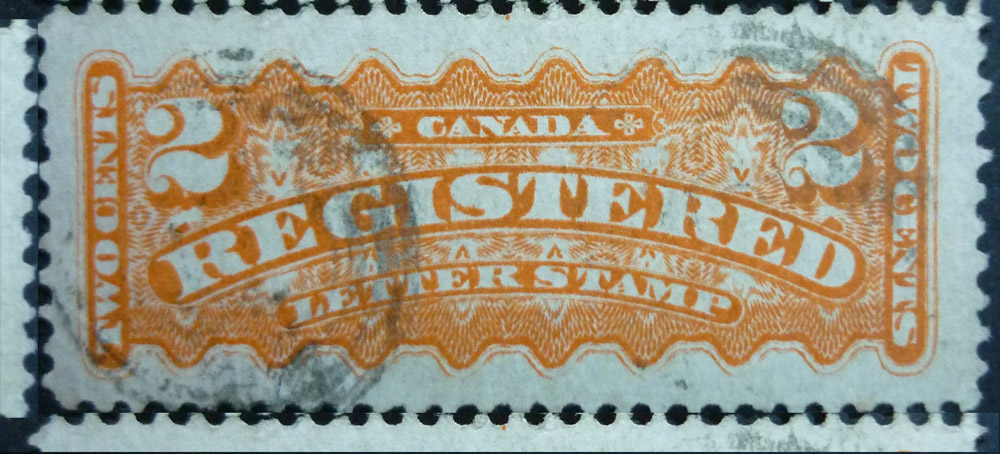 |
|
Send note to Staff
|
|
|
Pillar Of The Community
3865 Posts |
|
|
It may be that the bottom was re-perforated using a Rosback stroke perforator with Kiusalas 12-67=11.75 perfs per 2 cm as found on the U.S. Kiusalas specialist gauge. These old perforators are still around and have been used in the printing trade. However, it could also be that a different rotary perforating wheel was used with Kiusalas 12-67=11.75 perfs per 2 cm as found on the Canadian Kiusalas specialist gauge.
With regards to the Hillson/Nixon book on Small Queens, was the Kiusalas gauge used for any of the perforations in it? |
|
Send note to Staff
|
| Edited by jogil - 11/28/2017 10:57 am |
|
|
Rest in Peace
Canada
5701 Posts |
|
|
Stamperix, can you measure the stamp between the 26 holes as shown below? As an example, if the distance is 44, then doing the math 26/44x20 gives us a perforation of 11.82. Check top and bottom. 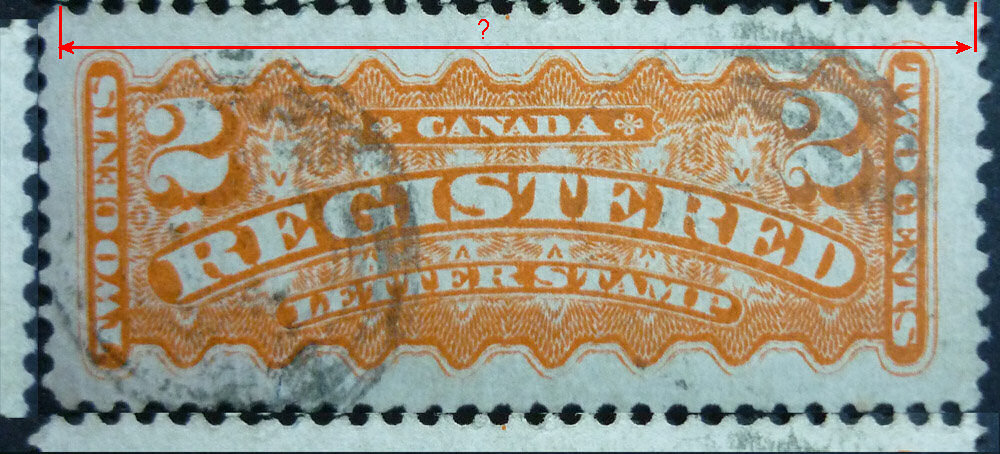 |
|
Send note to Staff
|
|
|
|
Pillar Of The Community
1375 Posts |
|
|
Thank you both. I am sorry for any confusion, but the image I showed was a photo, I now made a scan, and it's though the same perforation at top and bottom. There was a perspective problem in the photo. Now this scan(s), although my scanner is not the best, concerning the color. Well, I am totally new to the Instanta gauge and need some practice there. But here is what I get after many tries under loupe: top and bottom: 11.8 left and right: 11.6 BeeSee: the distance as shown in the scan is 43.5mm, which would make your math to 11,95, but both US Multigauge and yellow Instanta show 11.8. I made a scan of the Instanta in addition, but exactly like this it looks in reality. So I guess after all that it's a non-reperforated 11.9x11.6 stamp, but still can't see why it's 11.8 on the gauge and 11.9 in theory and 11.95 after BeeSee's math? 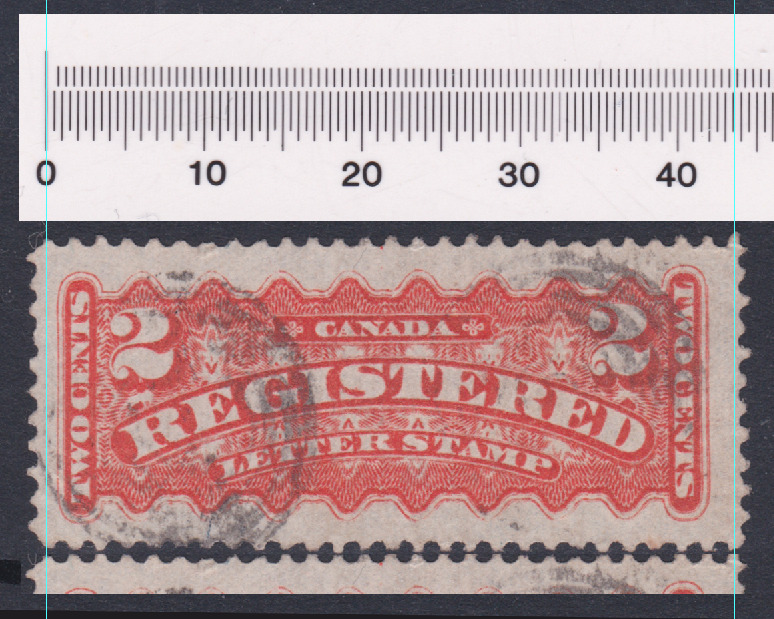 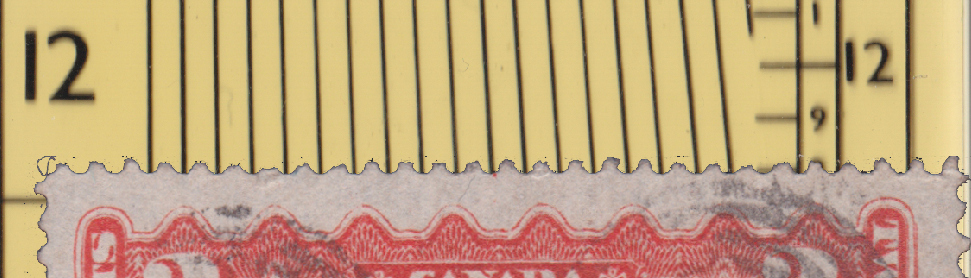 |
|
Send note to Staff
|
|
|
Replies: 58 / Views: 8,964 |
|




 Posted 11/17/2017 2:07 pm


