| Author |
 Replies: 16 / Views: 7,332 Replies: 16 / Views: 7,332 |
|
Valued Member
United States
310 Posts |
|
|
|
Just received a SG advertisement mailing for Christmas (don't know why, I must have made an inquiry once...) but I have always meant to ask...what is the binding like on their Springback album set "Windsor"? Maybe just a picture of what that is exactly would suffice. I take it there are no punched holes in the pages. My apologies in advance for this elemental question. I keep my British in their One Country album, perhaps an upgrade is in order to the Windsor Sovereign. John
|
|
Send note to Staff
|
|
|
|
|
Pillar Of The Community
United Kingdom
8624 Posts |
|
|
Pillar Of The Community

United States
5468 Posts |
|
|
Valued Member
United States
310 Posts |
|
|
Got it, the spring pressure in the binding pinches the pages. Just pry apart slightly to add or remove. Thanks, never seen them here. |
Send note to Staff 
|
|
|
Pillar Of The Community
United States
1125 Posts |
|
|
Pillar Of The Community
1363 Posts |
|
|
Springback binders were not only one of the standard European types of binders, but were also very popular in the U.S. years ago. Take a look at pictures of President Franklin Roosevelt working on his stamp collection, and you will notice springback albums. He may have used other albums, tool, but I've only see him with springbacks. The same goes for the royal collection in Britain where you also see pictures of springback binders.
Ring binders weren't around years ago, as far as I know. Two-post binders seem to have been the other main option, and they won out over the years for most albums, at least until ring binders became popular in recent years. There is a certain elegance to springback binders. They make an album look very much like a book without any rings or posts to deal with. They may seem a little old-fashioned today, but they're a good option in some ways even if they're not very popular anymore.
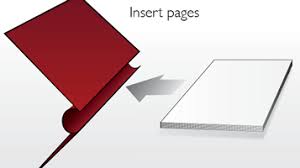
The springback binder is opened by simply bending back the two covers to open the spring clip which makes up the entire spine of the binder. You can hold the inside of one cover of the binder against your body, your desk or the arm of your chair. You just bend the covers back toward themselves. You then remove and insert the pages out of the clip either across the covers or you can slide them up the spine. I find that second method easier. It's easier by having the pages held inside a heavy sleeve of some sort. Most springback binders come with a cardboard sleeve to put your pages into.
One commenter above suggests the pages won't lie flat in a springback binder, but of course pages don't lie flat in a two-post binder, either. That's the reason for the recent popularity of ring binders of various types. Pages do lie flat in ring binders. In reality, pages can be made to lie perfectly flat in a springback binder (ora post binder) if you use pages designed to lie flat. These pages are more expensive, though. Pages designed to lie flat (or at least "flatter") have some sort of folding device along their spine margin. At the less expensive end of the spectrum are ribs or grooves impressed into the left side of the page to help pages lie flatter. A step up is those elongated holes you see on some European album pages which help pages bend easily so they lie mostly flat inside the binder. The best (and most expensive!) option is linen-hinged pages. These have a narrow strip of linen glued to the left side of the pages that allows the page to fold flat. To me, these are the ultimate pages, and an album with linen-hinged pages will allow pages to lie completely flat -- even a fairly large number of pages, in my experience. But you pay a lot more, and they're not widely available. Even with regular pages, though, if you bend the pages a few times you can get them to lie flatter just as you would do in a post binder. Putting fewer pages into a binder makes this a little easier to do. |
|
Send note to Staff
|
| Edited by DrewM - 11/16/2017 4:58 pm |
|
|
Pillar Of The Community
United States
772 Posts |
|
|
I could just see myself fumbling trying to open a spring-back binder and all the pages fall out onto the floor  |
|
Send note to Staff
|
|
|
Pillar Of The Community
United States
3224 Posts |
|
|
You avoid that by laying it open on a table, bottom board folded back. Then press down on the top board. Note in Randy's 2nd picture, the cream-colored wraparound card/heavy paper that goes around the pages. It lets you grab all the pages as a unit if you slide out everything "up" or "down" rather than "out to the right".
One advantage of springbacks is the range of pages that can be put in one without pages flapping around like in a partly filled ring binder. The latter situation's not too good with plastic mounts. I like the page proportions in a somewhat shorter album, too, but I can't recall any printed album pages in that format. And yes, the linen-hinged pages (or perhaps homemade versions) are great. Sometimes unused pages can be found either with or without an old springback album.
|
|
Send note to Staff
|
|
|
Pillar Of The Community
Netherlands
799 Posts |
|
|
Pictures about how it works from my German Empire "work in progress"album(It is a bit older and shows its age, but still works fine) 1) opened on the table like hy-brasil described. It takes not a lot of effort to keep it open. 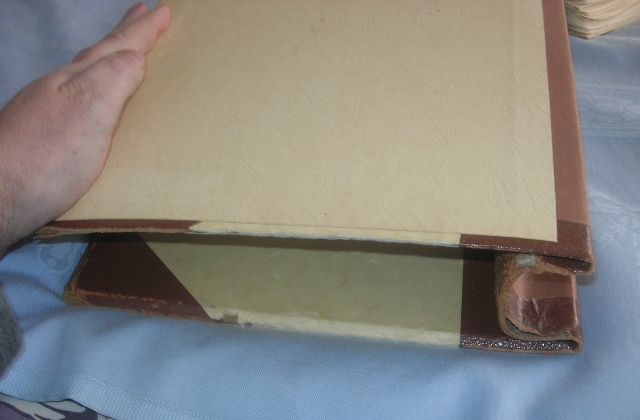 2) The creme colored wraparound with pages. 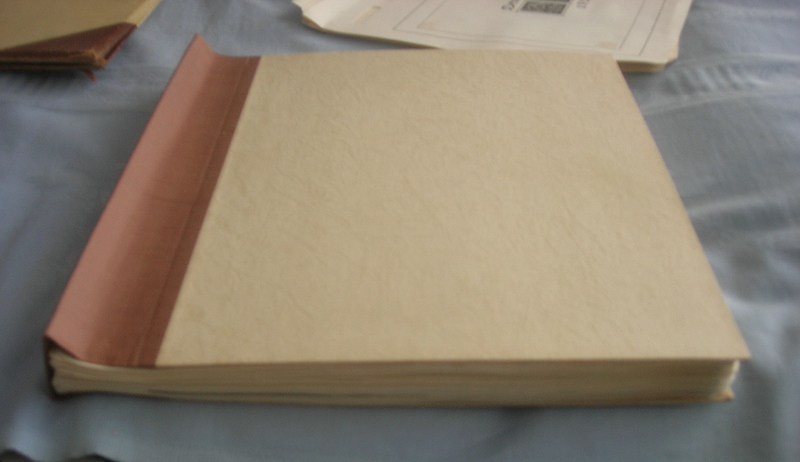 3) insert into the springback 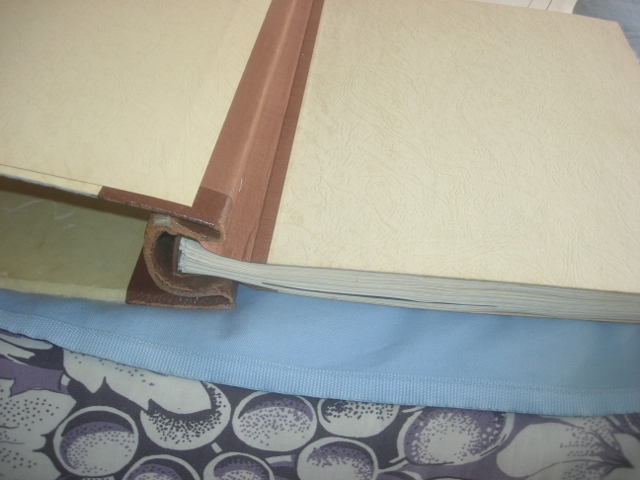 4) Gently release pressure. And there is your album, it holds a good number of pages, but as already mentioned before do not put to many pages in. 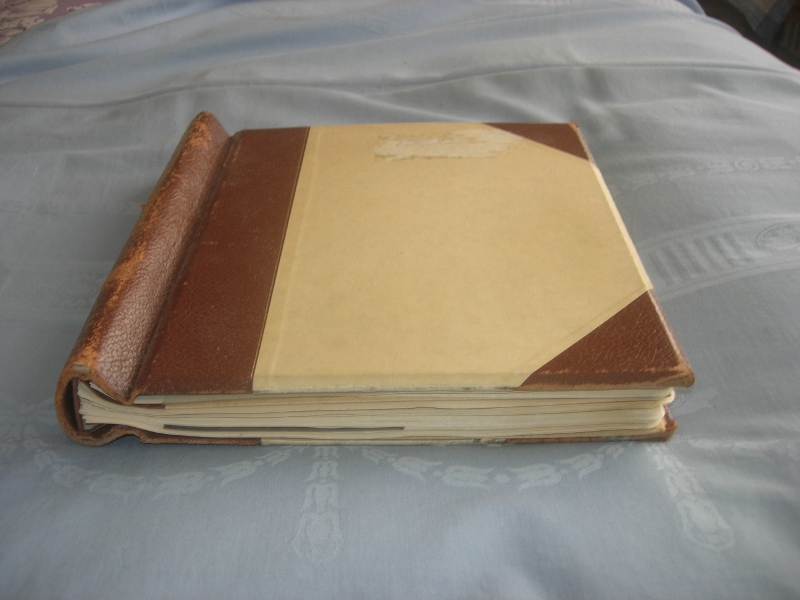 |
|
Send note to Staff
|
|
|
Valued Member
United States
310 Posts |
|
|
O.K. Apparently it is a whole system for keeping stamps, manuscripts, and any other printed materials. If actors like them it's got to be alright. haha Other than the SG version, who else still makes these specifically for stamps? Just curious. Some well worn leather there Johan! Thanks. |
|
Send note to Staff
|
|
|
Pillar Of The Community
Canada
877 Posts |
|
|
Quote:
Ring binders weren't around years ago It all depends on your definition of "years ago". I remember having a springback album in the U.K. back in 1950 - that's 67 years ago. My father's collection was in 2-post binders, as illustrated below. Put together in the 1940s and still going strong.The spine and the left retaining plate hinge backwards to expose the posts which will remain vertical. When closed, there is a bar which rotates around its center and locks into grooves in the posts. To allow the individual pages to lie flatter, my father used to make two vertical cuts in the page then reassemble the page, using brown paper tape and leaving a small gap between the segments of the page. This arrangement has stood the test of 70+ years of use and still going strong. This is shown in the unlocked but closed position in the picture. 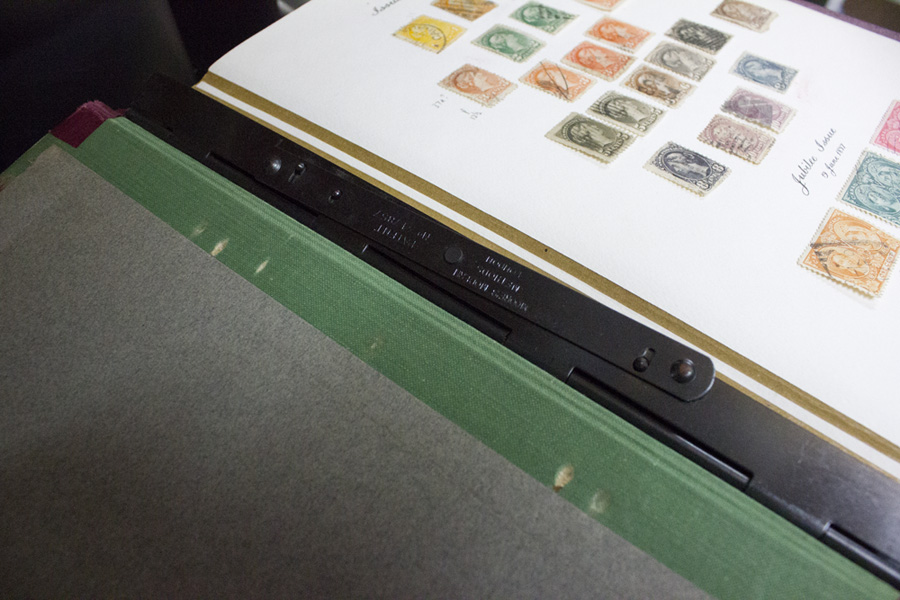 |
|
Send note to Staff
|
|
|
Pillar Of The Community
United Kingdom
8624 Posts |
|
|
Pillar Of The Community
United States
3224 Posts |
|
|
Thank you, Johan! Just what was needed, since US-based collectors today aren't familiar with such albums.
As for the well-worn appearance, it just shows that these albums last a long time and stay springy, though I've seen a few really worn-out albums with the steel spring breaking through the binding.
|
|
Send note to Staff
|
|
|
Pillar Of The Community
1363 Posts |
|
|
Not quite on subject, but speaking of ways to make two-post albums, I've always thought Scott albums used a particularly bad design, They use two rectangular posts held in the binder by long wires that you slide in and out of the album cover. The whole thing ends up ripping, getting rusty inside the binder, and generally not working well. Itma's albums are a masterpiece of logical design compared to this.
Springback binders have gone largely out of fashion, replaced by two-post binders and ring binders which are fine. But springbacks are elegant ways to house pages and can hold pages of different sizes without holes in the margins. Plus they have a nice classic look, I think. |
|
Send note to Staff
|
|
|
Pillar Of The Community
Australia
554 Posts |
|
|
There is definitely an elegance & sense of spaciousness with even the cheapest of springbacks that you don't get with ring or post binders. I remember all the stamps mags of the 60's & 70's having "2 for 1" ads for springbacks. I still have my electric typewriter on which I used to write up my pages. One problem with writing up with regular computor printers is that you would have to fold over the left hand side, the pages are about an inch too big to fit. Then you would have to worry with centreing etc. So far I haven't tried it & have concentrated on writing up my stamps using 3-ring binders. Stick a Steiner page into the computor, modify it a bit, press "print", & she's done. My Postal History pile, however, is increasing. Forlorn. Unloved. We need an album they say... 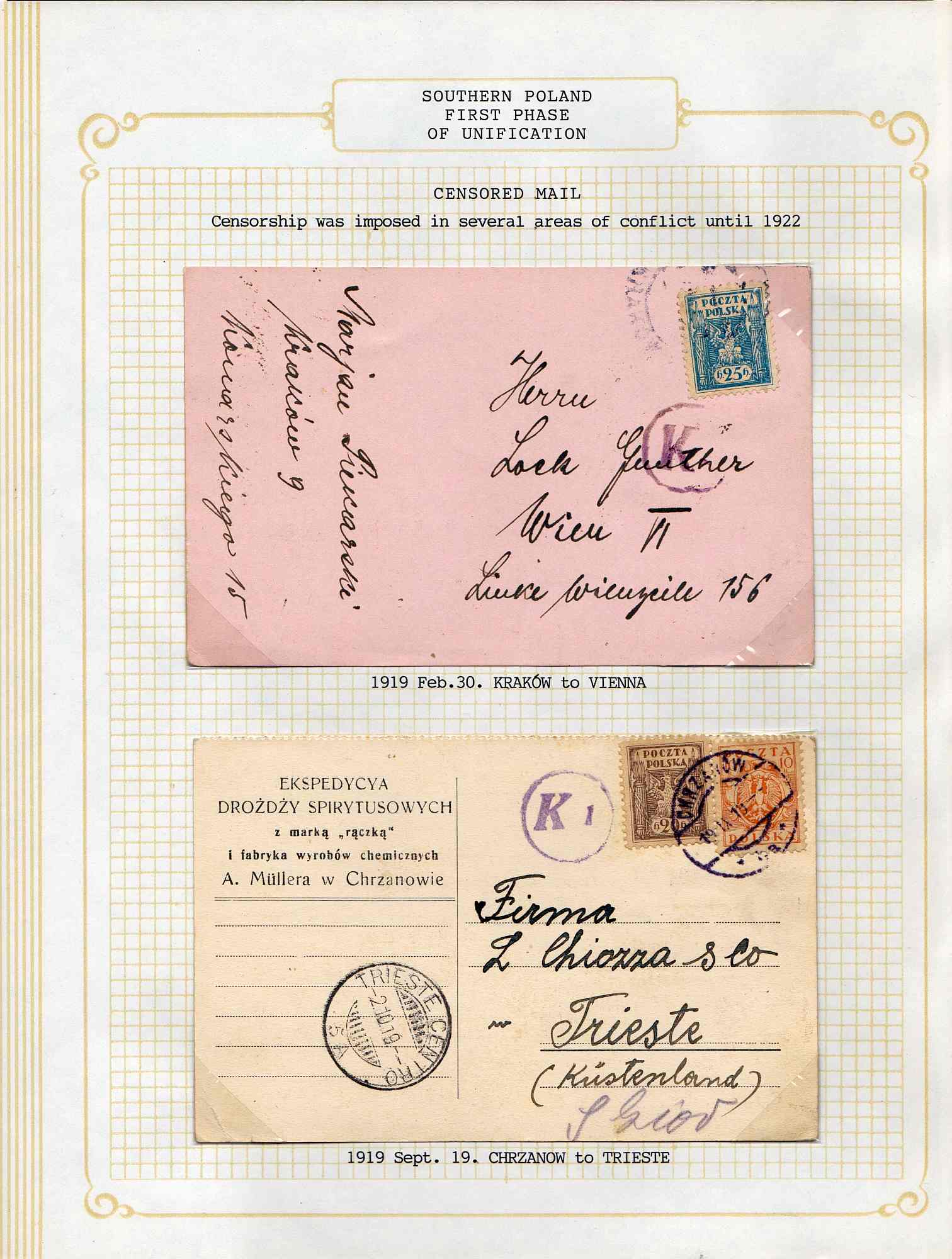 |
|
Send note to Staff
|
|
|
Pillar Of The Community
1363 Posts |
|
|
I'm going to amend my pretty enthusiastic comment above about springback binders.
Coincidentally, just today I was opening up an older Lighthouse springback binder to put the sleeve and pages back inside it. Something seemed wrong with the spring or the cover, and I couldn't fit the pages into it as easily as I usually do. Then, all of a sudden, sproing! The spring ripped off the back cover of the binder.
I didn't realize this, but the spring is attached inside each cover with paper (or maybe it's cloth) which runs from the spring to the cover and glues the spring to the cover. When you bend the binder open, that fabric pulls the spring open. As long as everything is in good shape, bending back the cover to bend the spring open works just fine. But if whatever glues the spring to the inside of the cover, or the fabric itself, gives way . . . the album is suddenly useless. I cannot see how it could be repaired.
I've never had a similar problem with a two-post binder or a ring binder. The closest problem I've seen is on the old Scott albums where the green fabric of the cover hinges to the spine. After much use that location can begin to rip. I imagine this is the reason Scott has moved to metal hinged binders. So, I'm a bit "off" springback binders at the moment. I'd watch for any loosening where the spring is attached just inside the covers. If it gets loose enough to notice any movement, it's probably best to throw the binder away. I'm also going to be much more wary of buying older, used springback binders since they're the ones where the glue may be most dried out.
There's no danger, by the way. When the fabric gives way, the spring is suddenly no longer being pulled open and it just closes very fast. Just don't put your finger in there! |
|
Send note to Staff
|
| Edited by DrewM - 12/03/2017 11:03 pm |
|
|
Replies: 16 / Views: 7,332 |
|




 Posted 11/16/2017 08:50 am