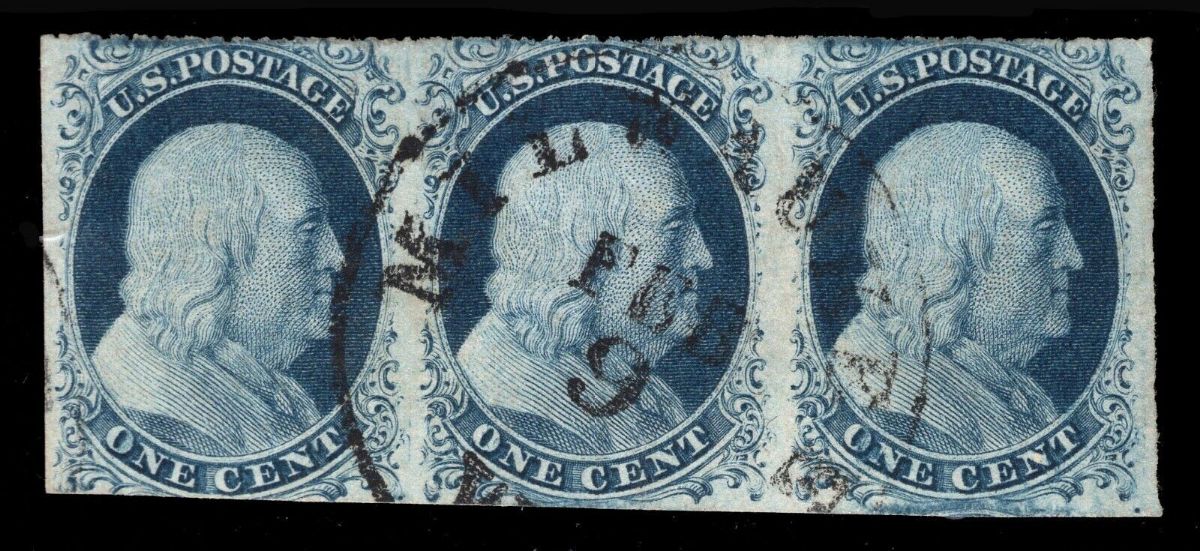
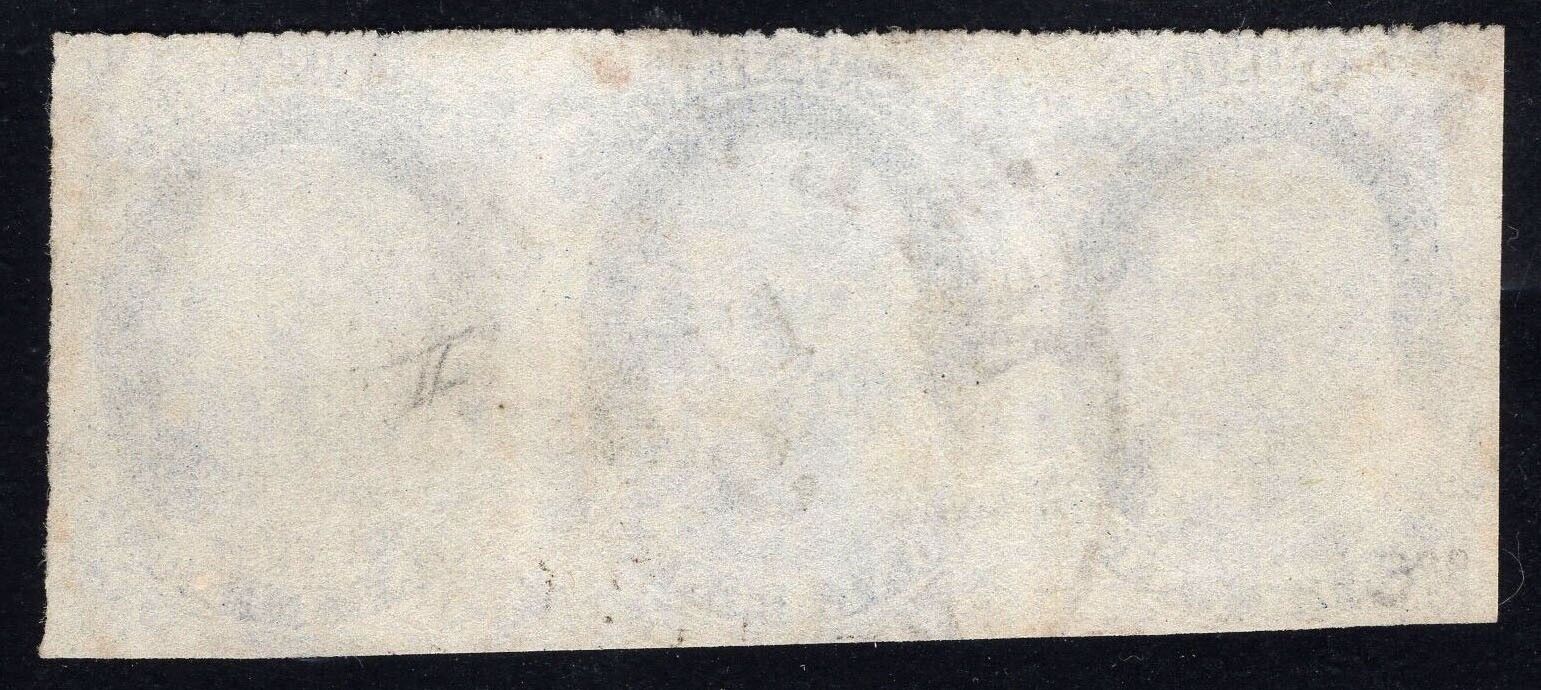
This strip is 26-27-28R2. All Type II, Scott #7.
It shows a lot of why I have always enjoyed the 1c stamp.
1) Even though it is not a 4-margin gem strip, and is otherwise imperfect, I find it aesthetically attractive, in that its a very nice printing from plate 2. The engraving of the 1c stamp, I personally find to be quite beautifully done. The delicate ornamentation, and the fragile nature of some of the design over time due to wear, incomplete transferring or plate finishing makes the end result interesting and highly variable. They aren't all the same.
2) Each of the three stamps has outstanding plating marks, making each, individually, quite simple to plate. Note the distinctive markings in the "O" of ONE in the bottom label. There are frequent issues in this area, particularly on plates 2 & 3, and often provide good clues for plating.
3) The guide dot on 28R2 is way low to the right. My other 28R2 which is cut more normally at bottom does not show the dot. Note that the 27R2 dot is also low and not visible even here. The 8R column and its guide dots are a very interesting study, ending, believe it or not, in position 99R2, and also the big double transfer: 89R2. 48R2 is also a big double transfer. Coincidence? No. The plate was entered vertically from top to bottom, and even 8R2 is a double transfer - at top left its visible. If you look at guide dots for 28-48-68-88 you see a pattern in some of those positions of extremely low-placed guide dots. These dots were used to guide the entry of the 9R column. So it should be no surprise, that when they got to the bottom, they had mostly run out of room and were way out of alignment. This caused them to reset and re-enter part of 89R2 and to re-enter and short transfer 99R2. A big mess. So this strip, with the nice wide cut at bottom right plays into the 99R2 story. Kind of cool actually. Yet another reason I enjoy this item and stamp issue.
4) Milwaukee CDS - with the modern spelling of Milwaukee. Around this time frame it was also known as Milwaukie.
5) Last, is the top of the strip, which is why I posted the back. That sure looks like a privately applied method of separation / perforations to me. Either private rouletting, or sewing machine applied perforations. Its definitely not normal manual tearing apart, nor is it scissor-separated. Only at top.
There can be lots to enjoy from collecting this issue.





 Posted 04/13/2023 10:09 pm