| Author |
 Replies: 64 / Views: 10,755 Replies: 64 / Views: 10,755 |
|
|
|
Pillar Of The Community
United States
2948 Posts |
|
|
Quote:
In those days there was no official paper contract--the first documented paper contract didn't occur until 1893 when the BEP took over as principal. AJ, thank you for that reply. As for the curl test I did above, the flat stamp is 1851 the curled stamp is postmarked 1857. This certainly wasn't a controlled scientific test. What technique do you use to dampen the stamps for curl test. I lay the stamps face down on water in a dish or on a plate. |
Send note to Staff 
|
|
|
Pillar Of The Community
United States
2555 Posts |
|
|
AJ, Paper formed on a cylinder doesn't have a grain like that formed on a Fourdrinier. You shouldn't expect it to curl. You are either wrong about Crane using a cylinder or you are wrong about your OMG-it-curls-stamp being printed in 1858. Which is it? |
|
Send note to Staff
|
| Edited by sinclair2010 - 01/16/2018 8:14 pm |
|
|
Valued Member
213 Posts |
|
|
stampcrow, I just use and eye dropper to gradually soak the stamp. Sinclair, Paper is a specialized subject just like plating or color studies. If you wish to become a paper specialist you can read-up on the subject. And I encourage that activity, that's why I wrote, Rag Paper Manufacturing in the U.S. 1801-1900, available on Amazon.com. |
|
Send note to Staff
|
|
|
Pillar Of The Community
United States
2555 Posts |
|
|
AJ, I clearly have an interest in paper. I have never really called myself a paper specialist nor did I ever plan on wearing the label. My study is heavily weighted towards the study of the stamps themselves. After all, I am a stamp collector, not a professional researcher. That is why I have been able to make discoveries that are not part of the written record. It is your own arrogance that prevents you from making the same discoveries and to be able to converse with me without being condescending. Also, If you are wrong about some things or you have some questionable methods, does it really matter how many books you have written?
I also used to do some work for one of those much ballyhooed APS experts. Never once have I ever felt the need to strut around here telling everybody about it. This is the first public mention of it ever. |
|
Send note to Staff
|
|
|
Bedrock Of The Community
12731 Posts |
|
|
Pillar Of The Community
United States
3291 Posts |
|
|
Pillar Of The Community
United States
2948 Posts |
|
|
OK, I did the water drip curl test on the two Oct. 1858 stamps. The one on the left stayed flat. The one on the right curled instantly. 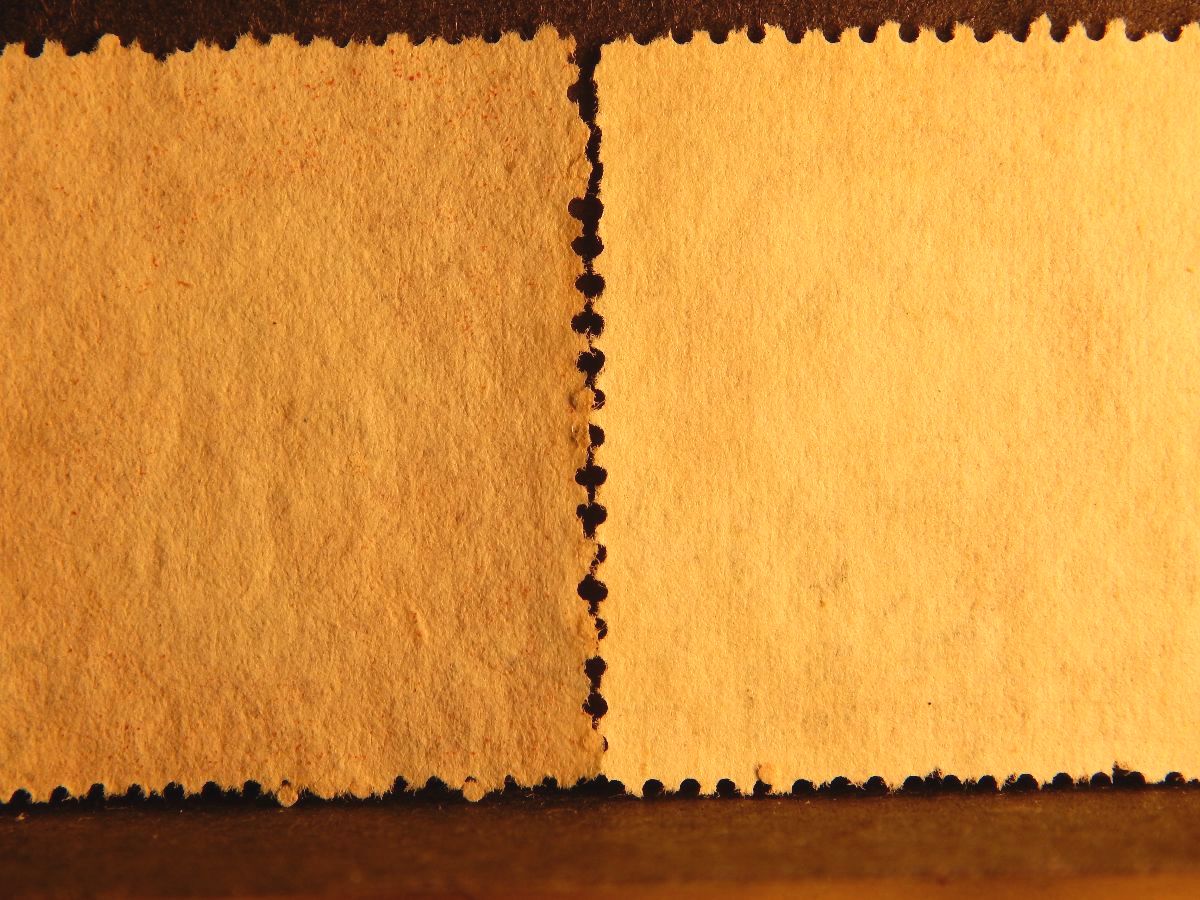 |
|
Send note to Staff
|
|
|
Valued Member
213 Posts |
|
|
Bedrock Of The Community
12731 Posts |
|
|
Pillar Of The Community
United States
2948 Posts |
|
|
AJValente...??
Just thought I was showing two different types of paper in my last post. Both stamps postmarked 1858, but appear to be different and react different when drip tested.
I was hoping to discuss appearance further, but will discontinue... |
|
Send note to Staff
|
| Edited by stampcrow - 01/18/2018 6:42 pm |
|
|
Bedrock Of The Community
12731 Posts |
|
|
stampcrow - I believe that AJ's comment was in response to a post above yours. |
|
Send note to Staff
|
|
|
Pillar Of The Community
United States
2555 Posts |
|
|
No. You don't really answer questions. A while ago you claimed that the thin paper 1851 stamps were printed on the same paper as late printing 1847's. I asked you to supply pictures that prove your contention, you did nothing. I asked for a scan of your vertical stitch watermark on 3c stamp and you gave me a scan of the front of the stamp. The front of the stamp? Who does that? I asked you to clarify (or correct) some contradictory statements about your 1858-printed stamps but you didn't. All we get is that you wrote a book. I don't think you like to be challenged and I think you believe it is beneath you to answer any of my questions. It seems like you think you know it all and everybody else is just needs to sit down.
I have an idea for a truce, I will admit that I don't know everything and you can stop acting like you do. |
|
Send note to Staff
|
|
|
Bedrock Of The Community
12731 Posts |
|
|
Pillar Of The Community
United States
2555 Posts |
|
|
Pillar Of The Community
United States
2555 Posts |
|
|
Here is another installment on identifying stamps from the back. Like everything, there are exceptions and examples that don't really fit but it is one of those things that you know when you see if you have that trained eye. The early printings from Plate 1E can frequently have a very distinctive ink bleed of the orange brown printing ink. Some of them are the thin paper stamps but not nearly all of them. It is best used to sort Plate 1e from 1i stamps but that is certainly not the only use. It can help identify some the shades associated with the early Plate 1E printings as well. Chase describes the part India paper as being yellowish but I think what he was actually looking at was this ink bleed. Here is a scan of a pair of Plate 1E stamps that I took from ebay several years ago. The stamps are not mine. 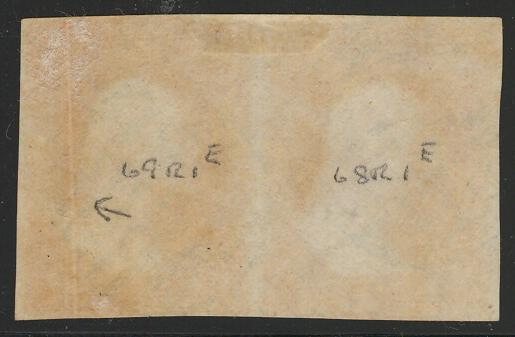 |
|
Send note to Staff
|
|
|
Replies: 64 / Views: 10,755 |
|




 Posted 01/16/2018 7:17 pm