| Author |
 Replies: 18 / Views: 2,413 Replies: 18 / Views: 2,413 |
|
Valued Member
United Kingdom
182 Posts |
|
|
I'm not sure what this is and I couldn't find it in the SG catalogue  It has a small piece of what seems like metal in the middle and on the back. Any ideas? Thank you  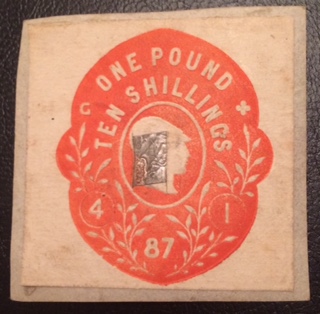 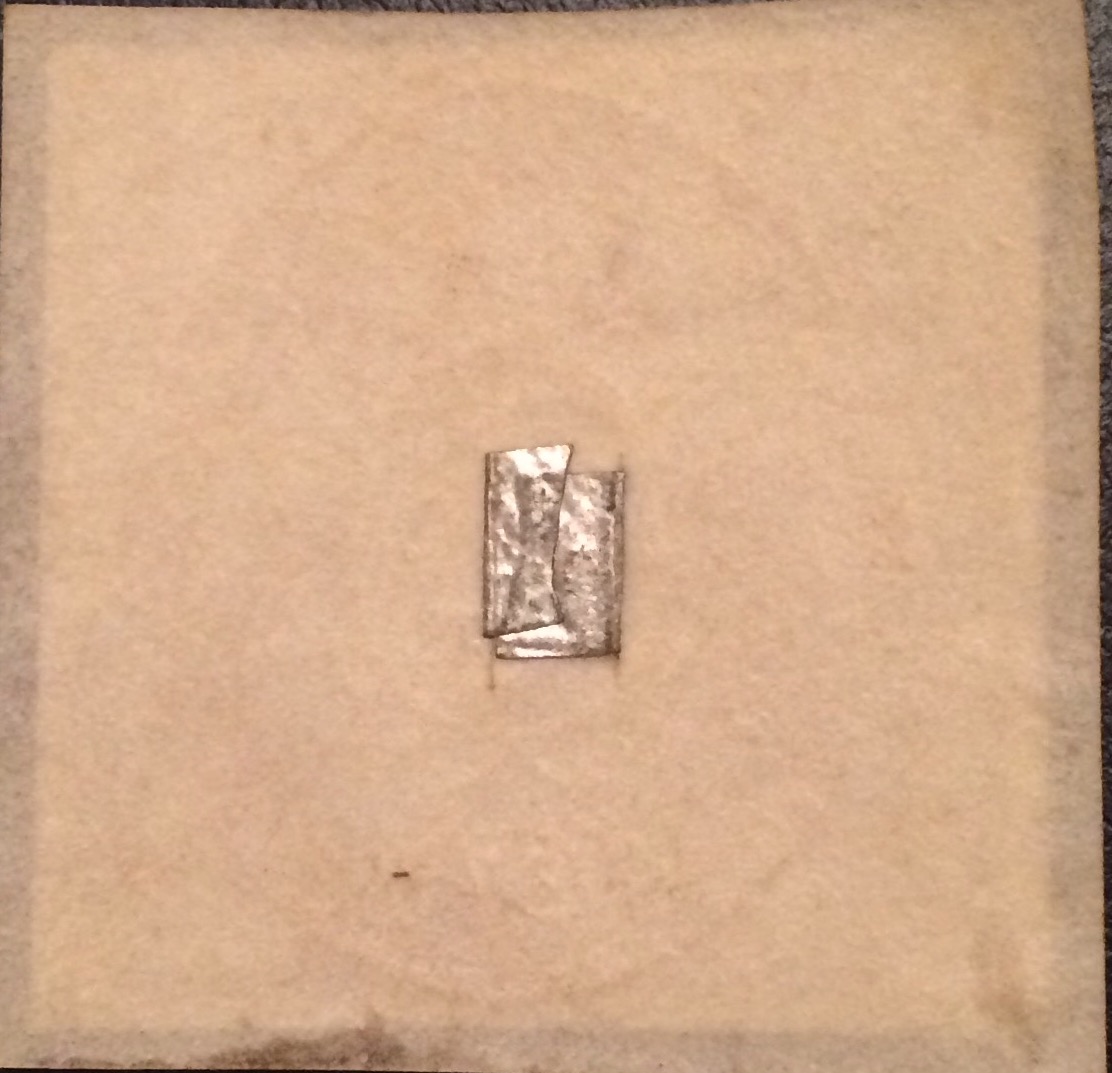 *** Moved by Staff to a more appropriate forum. *** *** Moved by Staff to a more appropriate forum. *** |
|
Send note to Staff
|
|
|
|
|
Pillar Of The Community
United Kingdom
3220 Posts |
|
|
Hi eiger,
This is a British impressed revenue stamp.
The stamp was fixed to a document using the tin staple and usually a label was then stuck on the other side to cover the ends of the staple.
This label would have the royal cypher such as "QV".
|
Send note to Staff 
|
Nigel |
|
|
Bedrock Of The Community
Australia
38679 Posts |
|
|
Valued Member
United Kingdom
182 Posts |
|
|
Valued Member
United Kingdom
182 Posts |
|
|
Valued Member
United Kingdom
182 Posts |
|
|
Pillar Of The Community
United Kingdom
3220 Posts |
|
|
Bedrock Of The Community
Australia
38679 Posts |
|
|
Bedrock Of The Community
Australia
38679 Posts |
|
|
Valued Member
United Kingdom
182 Posts |
|
|
Bedrock Of The Community
Australia
38679 Posts |
|
|
My query in 2007
and the response from my mentor, Mr. Blair Stannard of canada.
Rodney:
"Escutcheoning" was a method to ensure that revenue
stamps did not detach from vellum / parchment documents.
=========================================
Colonial Proofs: De La Rue Colonial Proofs: 1901 (Oct.)
"REPORT/UPON/STAMPING OF DOCUMENTS", a four page
confidential document on the recommended system of affixing
revenues to parchment documents - "ADHESIVE STAMPS,
which may adhere firmly for a lengthened period, are
nevertheless liable in course of years to become detached,
owing to the greasy matter which exudes from the parchment."
The last page shows perf. 14 "IMPERIUM" 6d. in dull lilac and
carmine affixed over escutcheon and tied by imitation red
embossed seal, together with escutcheon tying piece of
paper through page and photograph of escutcheoning knife.
=====================================
The embossed revenue stamps were on a seperate
piece of paper from the document. They were slit
twice with an escutcheoning knife and a (metal) band
passed through the two slits in the stamp (and the
parchment of course).
On the reverse side the ends of the band were folded
to secure it and they were then tied to the back of the
document with a paper seal bearing the monarch's insignia.
I believe the band was also known as an escutcheon.
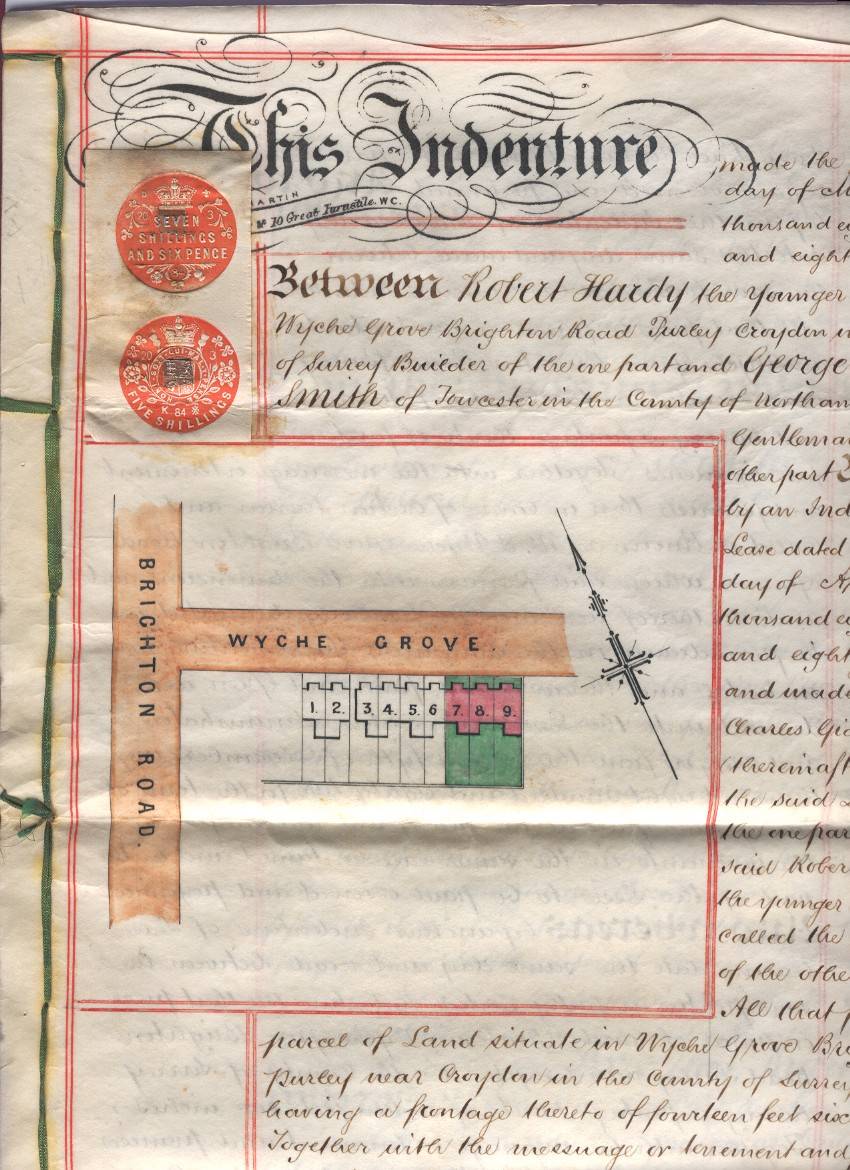
The document front would look like this.
Blair
|
|
Send note to Staff
|
|
|
Valued Member
United Kingdom
182 Posts |
|
|
Bedrock Of The Community
Australia
38679 Posts |
|
|
You are no doubt aware, but just in case for students,
the embossed revenue is dated
4th January 1887 in the embossing.
|
|
Send note to Staff
|
|
|
Bedrock Of The Community
Australia
38679 Posts |
|
|
TIP:
You may wish to consider, subsequent to an ID,
to alter your Thread title to assist students of the future, and searching.
Something like GB Royal Cypher or whatever you deem fitting.
|
|
Send note to Staff
|
|
|
Pillar Of The Community
United Kingdom
3220 Posts |
|
|
Hi Rod,
That quote on "escutcheoning" reads very strangely to me.
An escutcheon is usually a shield or arms displayed on a shield.
I could see how affixing the revenue stamp to the document could have been called "escutcheoning" (as many older revenue stamps had the royal arms) but I don't how this would be associated with the staple.
I wonder if the 1901 author got a little confused?
|
|
Send note to Staff
|
Nigel |
|
|
Valued Member
United Kingdom
182 Posts |
|
|
Replies: 18 / Views: 2,413 |
|



 Posted 01/27/2018 2:40 pm