| Author |
 Replies: 15 / Views: 1,874 Replies: 15 / Views: 1,874 |
|
|
Valued Member
Belarus
75 Posts |
|
|
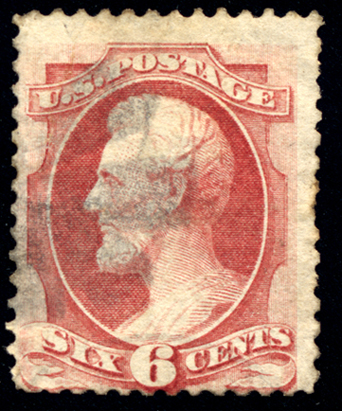
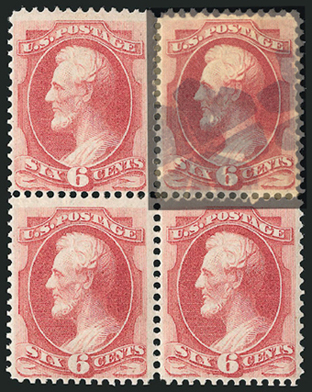
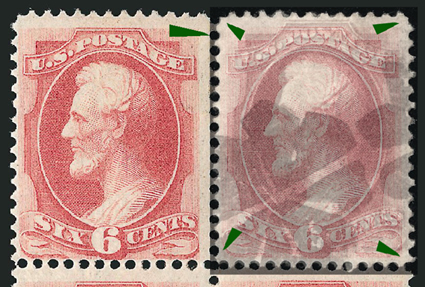
I propose to discuss stamps 1870. compared to the Scott 148 stamp, the dimensions are not the same..(height and width). Scott 137 corresponds to the size. Tried the dimensions of different years of issue, without grill, the dimensions are not the same... But with the grill, not every brand fits the size. As this can be explain. Maybe it's Scott 137 without the grill...? 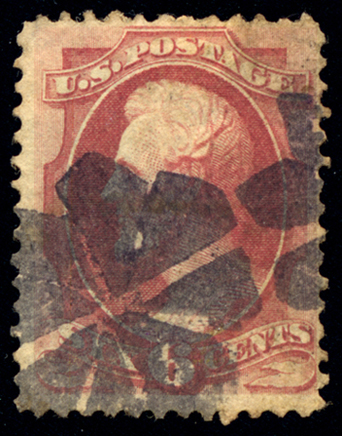 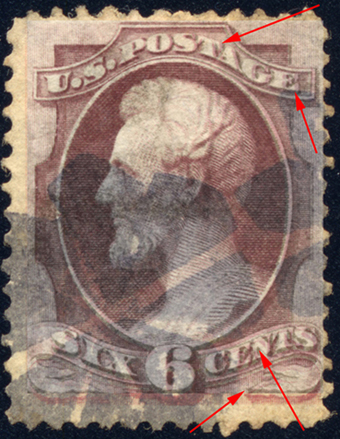 |
|
Send note to Staff
|
|
|
|
|
Valued Member
United States
466 Posts |
|
|
The bottom image appears to have have a shifted or double transfer in the lettering. It is a neat variety.
I don't think the 6c Lincoln stamps has engraving size differences as the dies were same for all of the varieties. |
Send note to Staff 
|
|
|
Moderator

United States
12330 Posts |
|
|
Crouse27,
The bottom image is not a DT stamp, valera_foto has overlaid two images (top one with transparency) to demonstrate the size difference.
Don |
|
Send note to Staff
|
|
|
Valued Member
Belarus
75 Posts |
|
|
Valued Member
Belarus
75 Posts |
|
|
Valued Member
United States
466 Posts |
|
|
That helps; I missed it completely!
Can the difference in size be linked to natural variation due to moisture content of the paper during printing?
Is the overlaid image missing a portion of the shadowing at bottom of design due to perforation? |
|
Send note to Staff
|
|
|
Pillar Of The Community
United States
644 Posts |
|
|
Paper shrinkage due to differing ways of how these stamps may have been stored in up to 148 years since they were first produced.
If a 6c does not have a grill then it is simply not a 137. Grilled stamps do exist in multiples where one has a grill and the other does not, in that case one is a 137 and one is a 148. |
|
Send note to Staff
|
|
|
Pillar Of The Community
United States
1414 Posts |
|
|
Quote:
Paper shrinkage due to differing ways of how these stamps may have been stored in up to 148 years since they were first produced. Paper shrinkage was a factor as the stamps dried after printing and before gum and perforations were applied. There is a note in the Scott Catalog about paper orientation of the Bank Note grills. Early state grills were on vertical mesh paper while late state grills were on horizontal mesh paper. I have seen non-grilled Bank Note stamps with size variations that would correlate with paper grain or mesh direction. I haven't seen much in the literature about paper orientation in this or later series. Bob Rufe has done some work with the Special Handling stamps noting that the 1928 printings can be differentiated from later printings because "special paper" originally intended for horizontal grain flat plate booklet pane paper. Size differences exist, but not because of storage conditions. |
|
Send note to Staff
|
|
|
Pillar Of The Community
United States
3292 Posts |
|
|
Pillar Of The Community
United States
1414 Posts |
|
|
Quote:
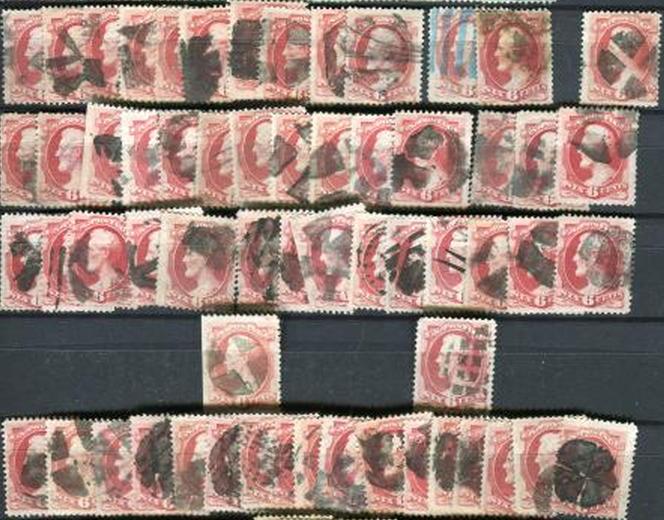
This scan shows the various sizes of 6c Nationals, Sc148 It does? The recent discussion was about the size of the printed desigh. Comparison requires high resolution stans and careful alignment of the stamps being compared. The size difference between a rotary press and a flat plate stamps is much greater than two bank note stamps with opposite paper grain. I will return to this when I find some suitable stamps to compare and scan.  |
|
Send note to Staff
|
|
|
Pillar Of The Community
United States
1946 Posts |
|
|
Quote:
Grilled stamps do exist in multiples where one has a grill and the other does not, in that case one is a 137 and one is a 148. Actually that is not quite correct. It depends upon whether the two stamps are still attached to one another. If so, the Scott listing for such a pair is 137b. The combo strip of four on cover, listed in the US Specialized just under 137b, (illustrated in the link valera_foto provided) is unusual in that one of the stamps in the strip is without grill, while the others are grilled. I own that item, which is signed by Brookman, and can tell you that the stamp without grill is in the middle of the strip, not at one end. Such a thing is usually the result of air bubble rippling as the sheet passes through the grilling apparatus. Because the stamps stand as evidence for, and result from, unusual phenomena, there is more to the classification game than mere definitions. |
|
Send note to Staff
|
| Edited by essayk - 02/27/2018 12:00 am |
|
|
Valued Member
Belarus
75 Posts |
|
|
Valued Member
Belarus
75 Posts |
|
|
Valued Member
United States
466 Posts |
|
|
I see now in the overlaid images one design is slightly wider and the other is slightly taller than the other. You overlay the stamps very nicely matched toward bottom. So I think it is as cfrphoto says above on paper mesh vertical or horizontal and moisture and drying variance in paper after printing.
Very interesting observation. |
|
Send note to Staff
|
|
|
Valued Member
Belarus
75 Posts |
|
|
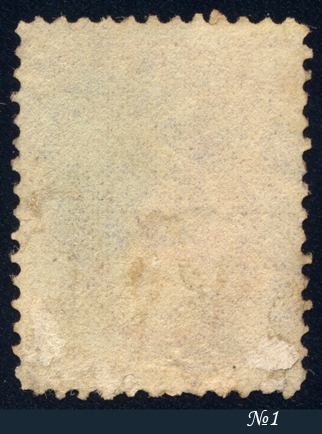
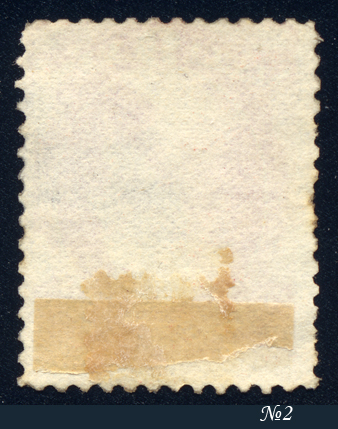
I wanted to clarify what decision to make..... can be suggest, 137/ 148   Who can answer....? |
|
Send note to Staff
|
|
|
Pillar Of The Community
United States
1414 Posts |
|
|
Scott 148. I don't see a grill. A 137 would require expertizing because fake grills are common. The extraneous hinges and adhering paper should be soaked off so that grills or faults can seen clearly. |
|
Send note to Staff
|
|
| |
Replies: 15 / Views: 1,874 |
|



 Posted 02/25/2018 05:27 am