Quote:
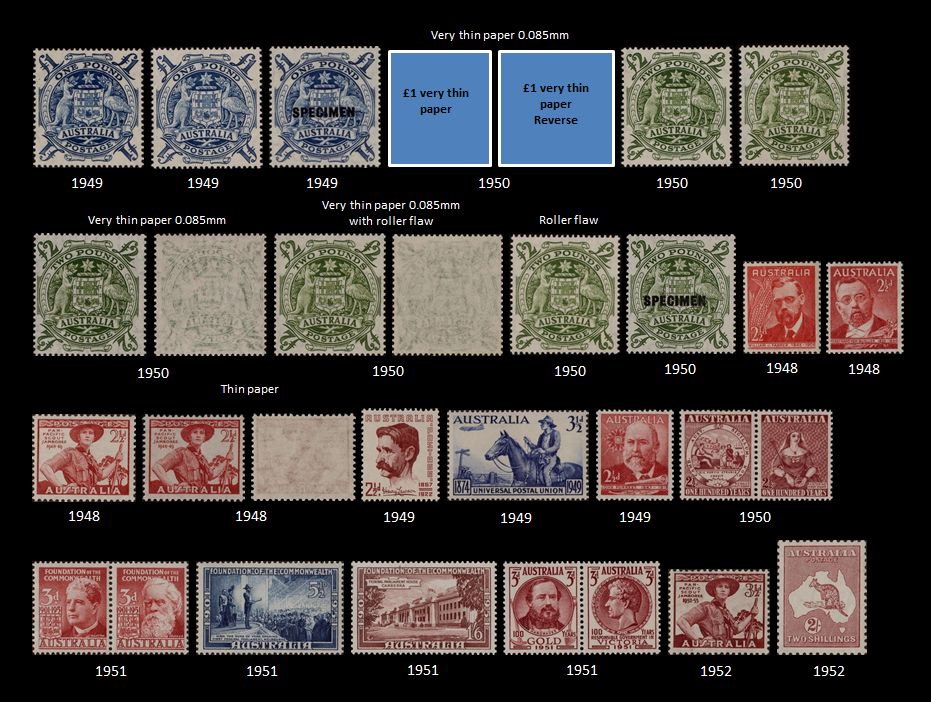
I noticed you appeared to measure the thin paper on your display. Thanks for posting the stamps.
I have always just compared the back of the stamp against black paper and noticed that the thin paper stamps are highly transparent compared to the "normal ones". Is there a certain width that is considered the thin paper, or is the visual method that I use okay?
The Commonwealth Catalogue delisted the thin paper issues from the 1948 high value set (SG 224a-224d and Scott 218-221) except for the 5/, but like you I have found them on the higher values also.
Hi KGVIStamps
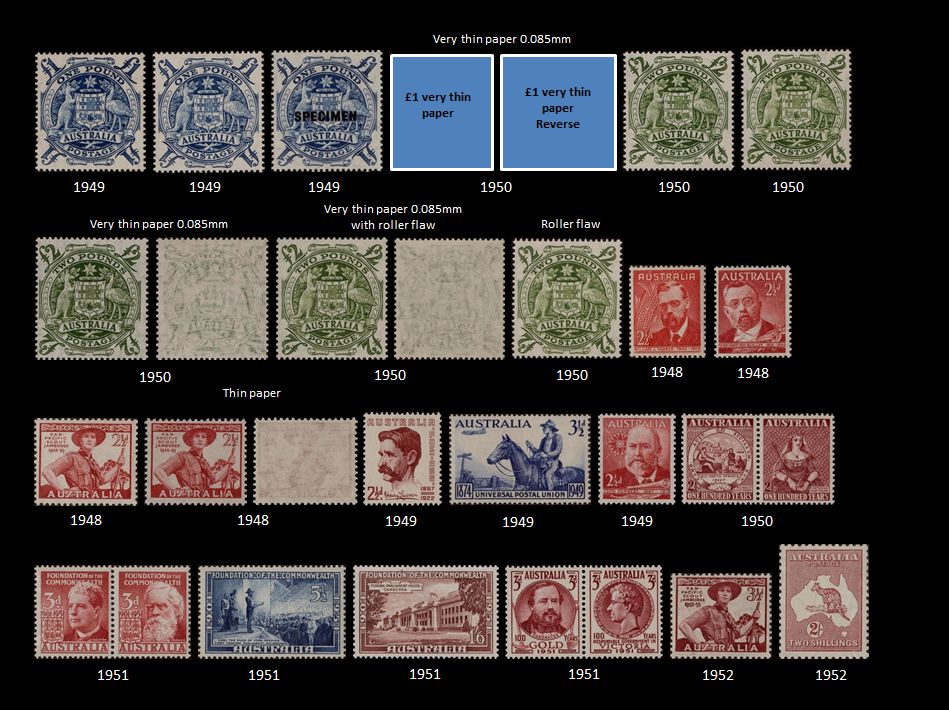
Quite an appropriate name for this particular part of the forum. The transparency of a thin paper compared to a normal paper is a good way to identify them, and the accepted width of a thin paper is 0.08mm or less.
The visual method is okay, but using a micrometer gives better accuracy and in some cases more value to the stamp.
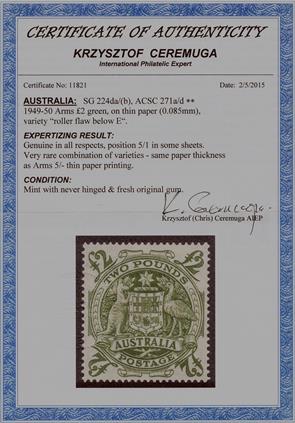
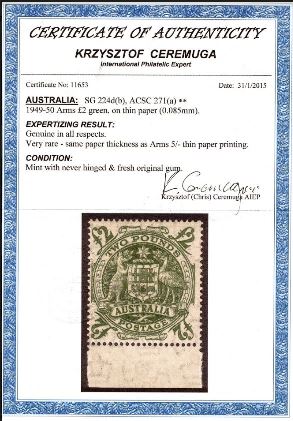
Normal paper thickness is 0.11mm, the thickness of a thin stamp in the ACSC is 0.08mm, the 5/- and two £2 stamps shown are 0.085mm.
Did you know that some thick paper stamps of the KGVI era show a degree of transparency giving a slight impression that it is on thin paper.
This sometimes occur on the £1 coronation stamps and in the Coat-of-Arms, but luckily thinness for both comes with a deep shade caused by ink saturation, and there is only one thin paper of the coronation series and that is the 1949 printing.
McCracken used two paper thickness for the 1949 coronation issue, the thin paper was a very limited printing of 160,000 and was only distributed in Sydney, so all used copies would have a NSW postmark.
A little known fact is that McCracken also used paper originally supplied for use with the Ash printings (quantity unknown) for the 1949 printing (one is shown above in the display). McCracken favoured thin paper, and unfortunately the ACSC does not mention thin paper for the £1 printings of 1949.





 Posted 03/23/2018 2:22 pm


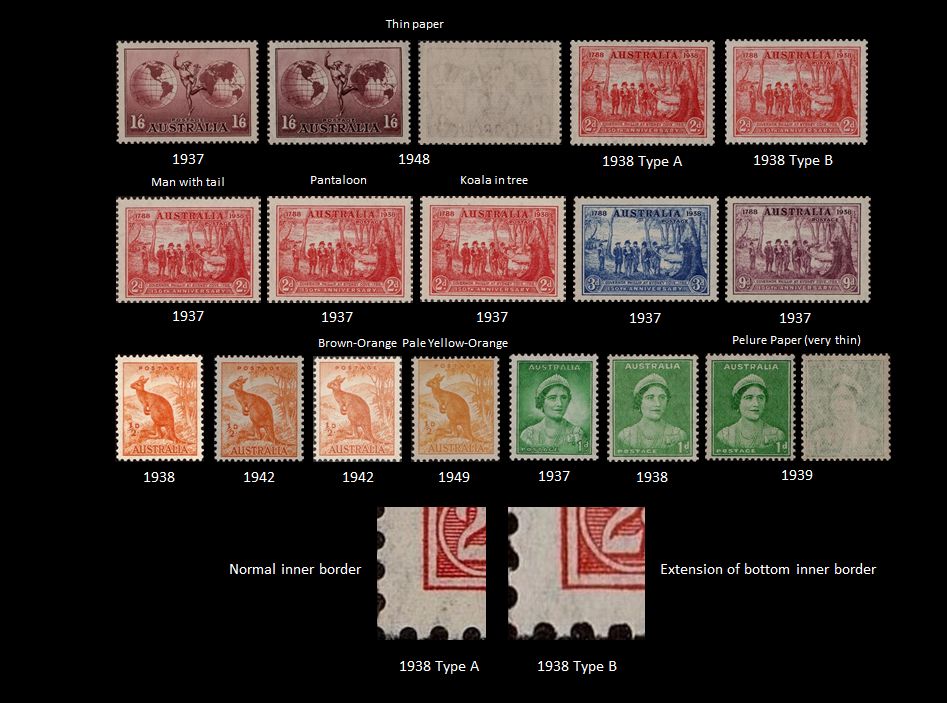
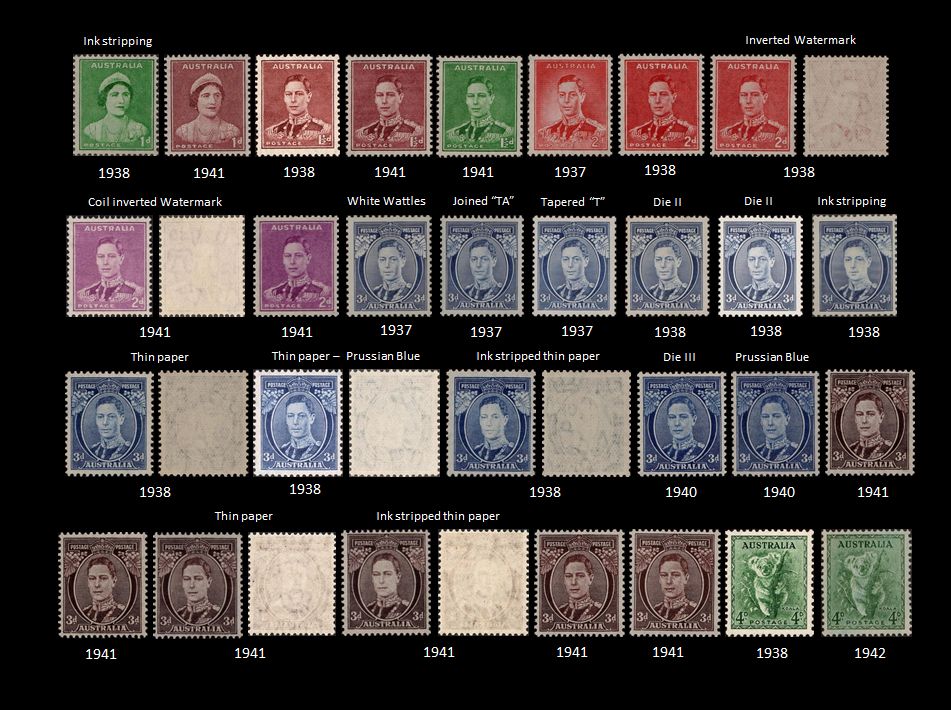
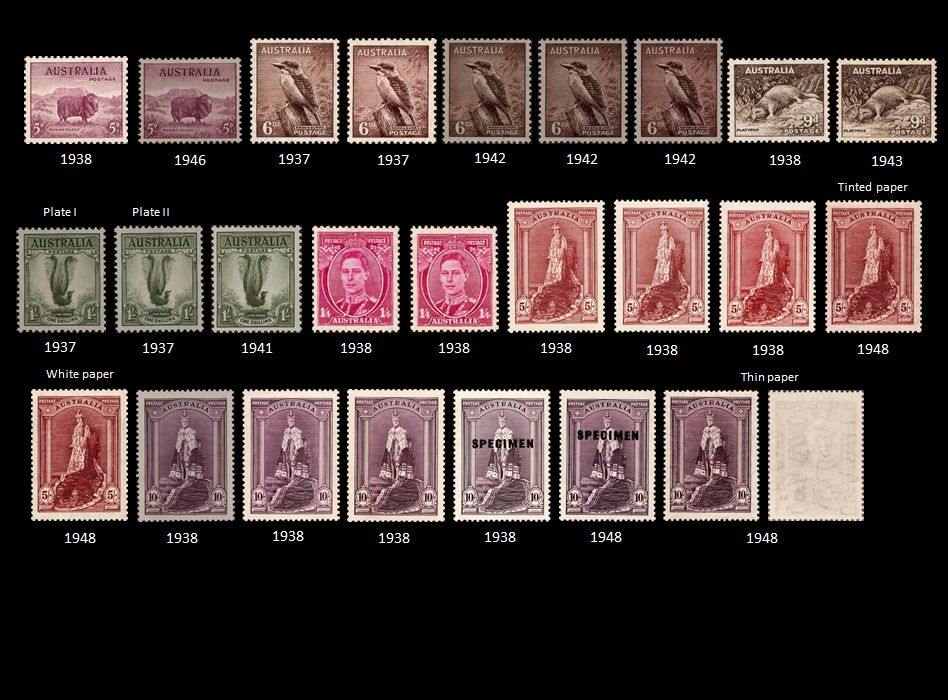
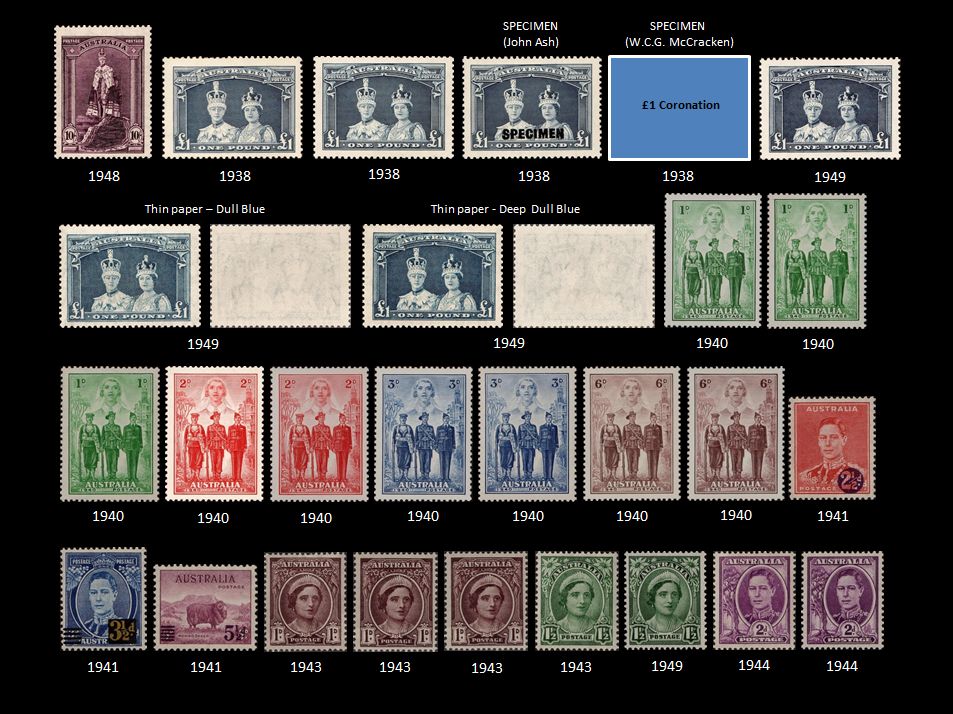
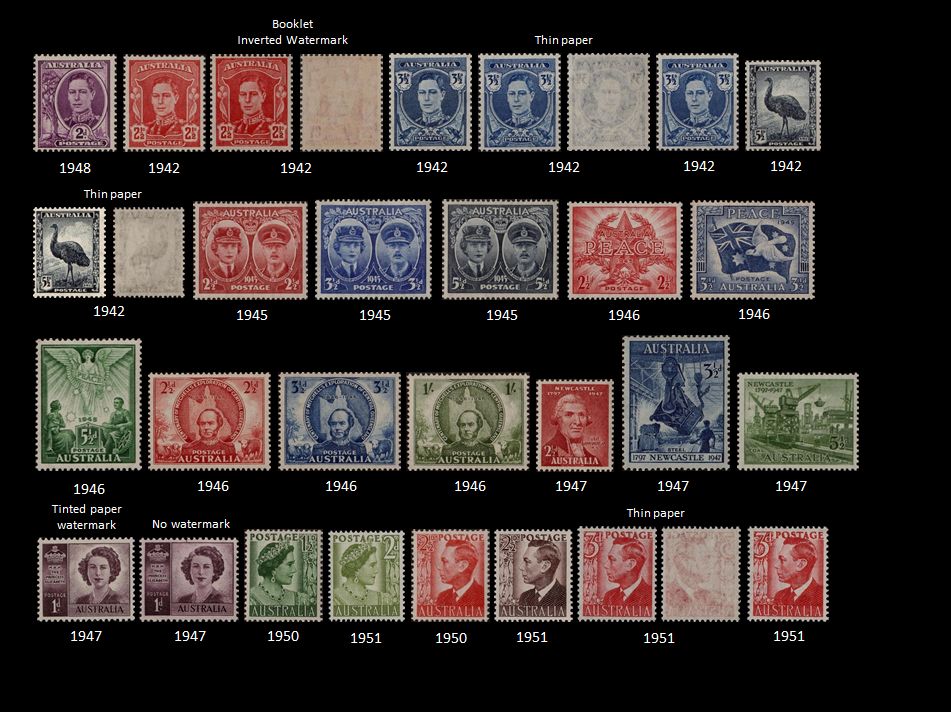
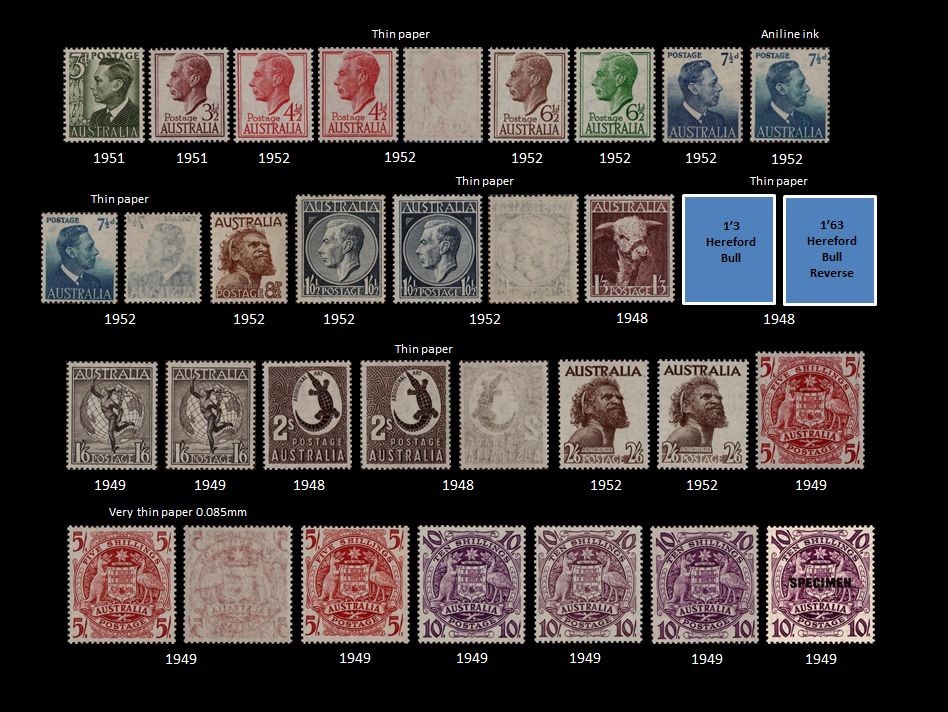


 Wonderful presentation of those difficult to find items. Good luck on filling in those missing varieties. (I'll keep a lookout for them here in the States.)