|
This page may contain links that result in small commissions to keep this free site up and running.

Welcome Guest! Registering and/or logging in will remove the anchor (bottom) ads. It's Free!
To participate in the forum you must log in or register.
| Author |
 Replies: 28 / Views: 4,192 Replies: 28 / Views: 4,192 |
|
Moderator

United States
12330 Posts |
|
|
|
|
Pillar Of The Community
United States
635 Posts |
|
|
Pillar Of The Community
Australia
3299 Posts |
|
|
Thank you Don, an essential read I'd say.
Everyone should take their online privacy just as seriously as they do their offline privacy. |
Send note to Staff 
|
|
|
Pillar Of The Community
United States
1873 Posts |
|
|
I agree with the conclusion of the article, namely that certain free online sites will have to convert to paid, but a major driver not mentioned in the article is that online digital advertising has suffered significant devaluation in the past year.
In June 2017, Proctor & Gamble cut its quarterly digital ad spend by $140 million. In July 2017, P&G reported that this cut had zero effect on its rate of sales growth; it discovered that it was sending millions of dollars to clickbots and web sites with fake traffic, not real buyers. This caused a shock wave through the ad tech industry, which is now viewed as one of the worst areas for private investment in high technology, with billions of dollars in VC likely to be lost as programmatic placement firms and other companies in the ad tech infrastructure gradually fail over the next 2-3 years. Facebook and Google collectively receive at least 75% of all online digital ad spending, but some commentators believe that these emperors have no clothes, because ads on their platforms simply do not make an impression as consumers have trained themselves to ignore, suppress or skim past them. The forward valuation of Facebook and Google as companies has to be seriously questioned if they are collecting data that is useless in terms of creating return for an advertiser's dollar.
Another way of responding to the article is to say: if the data collection bothers you, don't click on the ads either, but realize that this will only accelerate the conversion of free sites to paid. |
|
Send note to Staff
|
|
|
Valued Member
United States
363 Posts |
|
|
The best way to describe this I've heard is - "If you're not certain what the service is selling, then you are the product." |
|
Send note to Staff
|
|
|
Valued Member
United States
69 Posts |
|
|
Maybe 10 or 15 years ago when I worked for the US Dept of Commerce, they contracted with Google to manage the Department's email. Some of us complained as loudly as we could, but we were assured that Google would not breach the confidentiality of our communications, which satisfied our bosses. Need I say any more? As in The Wizard of Oz, I don't think we are in Kansas any more... |
|
Send note to Staff
|
|
|
Pillar Of The Community
Finland
753 Posts |
|
|
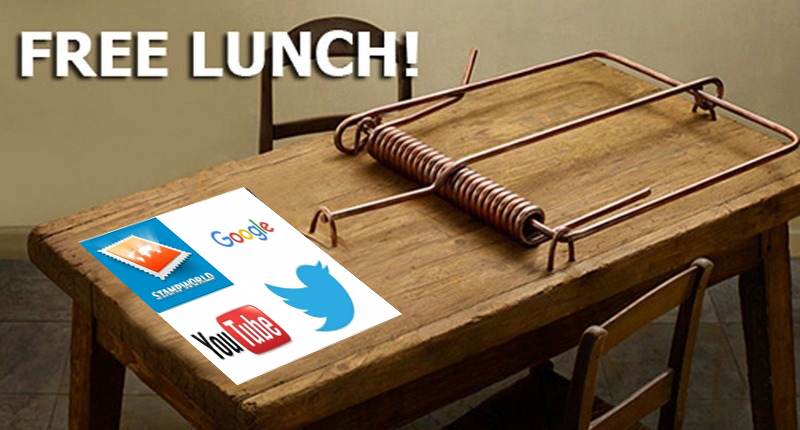
I'll be a bit lazy, and just copypaste my response to this topic from another forum where Don/51studebaker posted this as well Quote:Love the image, LOL.... But seriously speaking you are right. Possibly the one thing I would add to your article, is that starting this May here in Europe we've got a thing called GDPR (General Data Protection Regulation) coming into effect. What it basically means that services and websites MUST (or otherwise face the risk of penalty): a) get user consent for data collection (that is what all those "This website uses cookies, and if you agree..." dialogues on websites are all about), b) and tell clearly what kind of information they are collecting, why they are collecting, how they are storing that data, are they sharing the data and under what terms, - and above all report any failures to protect user data within specific time (for this purpose each and every website should have Privacy policy). I think this Wikipedia article is a good primer on the topic: https://en.wikipedia.org/wiki/Gener...n_Regulation ... In nutshell it's doing a lot of things for protecting the average user in online world. Possibly the most interesting, and easily omitted part of it all, is that this not applies to websites by European owners, but also websites providing content and services to European visitors (see article #3). As such for example Stamp Community Forum and all other stamp websites are legally bound by these new GDPR-rules (unless they prevent access of European visitors). Unfortunately a lot of non-European websites (and their owners) either don't care or don't know of this (at least yet). I'm not saying "free lunch" services are bad. If you read terms of service and privacy policy (WHEN AVAILABLE as SHOULD) before signing up, there should be very little surprises coming out. Facebook, Twitter, StampWorld etc. all tell you with more or less vague expressions how they mine your personal data.. But most people just never read the fine print, they just tick the box / hit the submit button to get onwards as quickly as possible (And hands up who reads user manuals first - I do, and rest of my family always nags about it to me, LOL) -k- |
|
Send note to Staff
|
|
|
|
Pillar Of The Community
United States
4515 Posts |
|
|
If people were willing to pay for what they use, some of this could be different. There has been always been someone selling something for free but had strings attached. It is just getting more sophisticated. |
|
Send note to Staff
|
Al |
|
|
Pillar Of The Community
United States
4515 Posts |
|
|
Moderator
United States
12330 Posts |
|
|
As I posted on another forum, we are in the middle of a technological revolution and much of our society has not yet caught up. I wrote this... Quote:
Consider the industrial revolution and the changes it drove. It ended not only the careers of many workers, but also changed society and the long established master/apprentice relationships. All indications was that this caused quite a bit of stress and hardships for many people; most of whom felt threatened by the change. The obvious negative impacts of the changes that the industrial revolution seeded, horrendous working conditions, unreasonable working hours, and many safety concerns were fodder for those who resisted change. But over time laws and society caught up with changes that the industrial revolution bought to the table and we saw protection of workers' rights and other labor laws.
Once again we are facing the same situation with the current technological revolution. People are pushing back against unwanted change and the revolution has raced ahead of our society and laws. But the inevitability of this change is no different than the industrial revolution. As our hobby struggles to accept this change there are things from the past from which we can learn. For example, I have never recommended investing in Facebook due to my concerns about their data mining. Their data mining has raced ahead of our laws and I fear that their future is not assured. Facebook is not 'free', our data is their product and they are doing what they need to for profitability… I think that our society is just now catching on to significant privacy impact of this kind of data mining and it does not bode well for Facebook. I would not recommend hooking any wagon to theirs until the law evolves on the privacy issues. As scb correctly points out, regulations are slowly becoming more commonplace. But our hobby is currently not acknowledging the potential privacy issues when we blindly recommend folks to use 'free' philatelic websites. This is akin to not mentioning any of the risks when we recommend auction houses to people (aka Regency). I am not suggesting that we become paranoid, but constantly recommending 'free' websites without mentioning the privacy issues seems problematic to me. Harvesting personal information is not benign, folks should be aware that their personal data has value and that they are giving it away in exchange for use of these sites. And even if you direct users to the Terms and Conditions/Privacy policies of these sites, they are often incomplete, misleading, and so full of legalese as to be unreadable. So I felt it appropriate to try to highlight and further describe this issue. Don |
|
Send note to Staff
|
|
|
Pillar Of The Community
United States
4515 Posts |
|
|
Don,
Even if you read the fine print, the concern is that the most important data is getting stolen. The IT infrastructure is just not secure - storage of data, communication. I post on these stamp forums tells people that I collect stamps. You do not need to use Facebook or use Stampworld to get most of the same information. It used to be that the magazines you subscribed to gave information for your interests to mailers.
|
|
Send note to Staff
|
Al |
|
|
Bedrock Of The Community
12759 Posts |
|
|
In an age when you can, with a person's name and geographic location and very little else, utilize the internet to find out everything from their birth information to criminal records and everything in between, people should realize that the cat is already out of the bag. What you do, where you live, who you know, your relatives, your interests, your friends, what you eat, where you work, your socioeconomic profile, your political contributions and leanings, etc.. At least a few of these items are virtually gauranteed to be easily obtainable for most of us and for those who utilize social media such as Facebook much much more is there for the taking. At this point information acquisition by these sites is simply updating and fleshing out what is already out there.
|
|
Send note to Staff
|
|
|
Moderator
United States
12330 Posts |
|
|
Al,
My concern is not that it might be stolen, my concern is that it has been productize and sold without our knowledge. When I sign up for a website, I read the T&Cs but more importantly I evaluate how they generate income. So for example, take this community. It was obvious this community accepts donations, sell banners, and has an affiliate program. I found no additional negative references or indications that personal info was being peddled. But when I do the same discovery on, for example StampWorld, many red flags are raised. Hell, the StampWorld T&Cs were clearly written in another language and the translation is poor (at best). And if someone has an issue, are they prepared to pursue legal remedies in Belize? Is this really a website that we should be recommending without at least a 'heads up' to new collectors?
And what about the new APS initiative endorsing and driving members to use Facebook. Will members assume that if APS is suggesting Facebook as a platform that they do not need to be concerned about privacy issues? Or should APS be, at least, noting that privacy issues exist with FaceBook? Do folks understand that Facebook has said that a full 'opt out' privacy option would be a paid only product from them?
Or we can just ignore this stuff, sit back be lazy, and just let the chips fall where they may; not caring if some people get burned after we have 'helped' people. Just like the Regency situation. Lots of fingers pointed but no one here willing to admit that we recommend people to use auction houses without ever bothering to let anyone know there were risks.
I am not willing to simply tell new hobbyists 'buyer beware' and walk away. I think we should be fighting to assist every new hobbyist by arming them with the best information we can. If, after receiving this kind of help, they go out and do stupid things than I fully agree with 'buyer beware'. But to just assume that everyone knows this stuff, to just assume that others can figure it out on their own, or to assume that new hobbyists should pay for experience we can easily share is just not in my DNA.
Don |
|
Send note to Staff
|
|
|
Pillar Of The Community
Finland
753 Posts |
|
|
Quote:
Or we can just ignore this stuff, sit back be lazy, and just let the chips fall where they may; not caring if some people get burned after we helped people I cannot help thinking anything else but a quote by Martin Luther King Jr. here: "Nothing in all the world is more dangerous than total ignorance and conscientious stupidity.". It was a valid statement then, and it applies here as well. The main issue here that most people don't understand even the very basics of online services or apps that they use daily, or how those services (or embedded services within) may profile their life and data as a product. So yes, education is the key here... But to make matters worse: most people are not even remotely interested in obtaining the education and understanding... Which is why legislative actions are pretty much the only way to harbor end users from the consequences of their chosen behavior... Sometimes the stupidity of mankind is just too much to comprehend with sane reason. -k- |
|
Send note to Staff
|
|
| Edited by scb - 04/08/2018 10:06 am |
|
|
Pillar Of The Community
United States
4515 Posts |
|
|
Quote:
And what about the new APS initiative endorsing and driving members to use Facebook. Will members assume that if APS is suggesting Facebook as a platform that they do not need to be concerned about privacy issues? Or should APS be, at least, noting that privacy issues exist with FaceBook? Do folks understand that Facebook has said that a full 'opt out' privacy option would be a paid only product from them? I do not see Facebook as the end all but just a way to connect with people that already use Facebook - not push people to Facebook. Many collectors are already there. It is more "short attention span" activity to show up in their news feed as teasers back to the web site. This leads to have content on the APS web site and services to back it up. |
|
Send note to Staff
|
Al |
|
|
Pillar Of The Community
United States
939 Posts |
|
|
Check out: Do You Trust This Computer? is a 2018 documentary film that outlines the benefits and especially the dangers of artificial intelligence. It features interviews with a range of prominent individuals relevant to AI, such as Ray Kurzweil, Elon Musk and Jonathan https://vimeo.com/263108265 |
|
Send note to Staff
|
|
|
Replies: 28 / Views: 4,192 |
|
|
To participate in the forum you must log in or register. | |
 Metropex Stamp Show: Roseville, Minnesota October 23-24 Weird Covers, 1885,1886, And 1982 For Users Of Two-Post Blue International Albums What Is Your Experience With Binders. New Member Posting Image Of Avatar, Front And Back Of U2 Cut Square, Market Value Or References? Working On An Offline Collection George Washington 3 Cent 1861 With Print On The Back Hello From The Netherlands - New Member Then And Now, From Old Postcards New Member Wanting To Add An Avatar Sparks Auction Fees? 163 VF Nyfm Vertically Ribbed 163 XF Quartered Cork, Labeled Jumbo 136 VF Quadruple Split H Grill Nashville Philatelic Society-Your Invitation To Our Auction Night Meeting Monday, October 26, 2026 Nashville Philatelic Society-Your Invitation To Our Meeting Monday, October 19, 2026 Christmas Around The World 2026 C.e. In The Large Queen Cancel A More Condensed Album Page Experiment. US Scott #3 Postmarked Or Fake? Linn's Is Back - The Newspaper Is Back In Print Lots Of 1867 Grills On Sale Ajman Michel 1292A (1294A?) International Postage Stamp Album, Junior Edition By Scott C. 1928 Need Help Finding Original Source Of This Patriotic "paste-On" Cutout It's Now Cheaper To Use Fedex Ground Than USPS Ground For Some Zip Codes Metropex Stamp Show: Roseville, Minnesota October 23-24 Weird Covers, 1885,1886, And 1982 For Users Of Two-Post Blue International Albums What Is Your Experience With Binders. New Member Posting Image Of Avatar, Front And Back Of U2 Cut Square, Market Value Or References? Working On An Offline Collection George Washington 3 Cent 1861 With Print On The Back Hello From The Netherlands - New Member Then And Now, From Old Postcards New Member Wanting To Add An Avatar Sparks Auction Fees? 163 VF Nyfm Vertically Ribbed 163 XF Quartered Cork, Labeled Jumbo 136 VF Quadruple Split H Grill Nashville Philatelic Society-Your Invitation To Our Auction Night Meeting Monday, October 26, 2026 Nashville Philatelic Society-Your Invitation To Our Meeting Monday, October 19, 2026 Christmas Around The World 2026 C.e. In The Large Queen Cancel A More Condensed Album Page Experiment. US Scott #3 Postmarked Or Fake? Linn's Is Back - The Newspaper Is Back In Print Lots Of 1867 Grills On Sale Ajman Michel 1292A (1294A?) International Postage Stamp Album, Junior Edition By Scott C. 1928 Need Help Finding Original Source Of This Patriotic "paste-On" Cutout It's Now Cheaper To Use Fedex Ground Than USPS Ground For Some Zip Codes
What Is The Strangest Or Most Unusual Stamp Material You Own? Weird Covers, 1885,1886, And 1982 Gems And Minerals Metropex Stamp Show: Roseville, Minnesota October 23-24 Working On An Offline Collection For Users Of Two-Post Blue International Albums What Is Your Experience With Binders. New Member Posting Image Of Avatar, Front And Back Of U2 Cut Square, Market Value Or References? Hello From The Netherlands - New Member Lakes, Marshes, Mangroves, And Wetlands On Stamps Show Your Film And Music Star Stamps Pushing 330,000 All Different Worldwide Stamps In One Collection . World Post Day And International Letter Writing Week The Albumeasy Examples Thread With Code What Did You Do Philatelically: Today Or Recently? Stamps On Stamps Big Top Philately Lighthouses On Stamps Happy Halloween 2018 International Postage Stamp Album, Junior Edition By Scott C. 1928 Odd Shapes On Stamps (Including Hexagons) Venues For Art And Culture: Museums, Theatres, Galleries, Concert Halls, Etc. US Slogan Cancels Christmas Around The World 2026 Science-Fiction/Fantasy Stamps George Washington 3 Cent 1861 With Print On The Back
Disclaimer: While a tremendous amount of effort goes into ensuring the accuracy of the information contained in this site, Stamp Community assumes no liability for errors. Copyright 2005 - 2026 Stamp Community Family - All rights reserved worldwide. Use of any images or content on this website without prior written permission of Stamp Community or the original lender is strictly prohibited.
Privacy Policy / Terms of Use Advertise Here |
| Stamp Community Forum |
© 2007 - 2026 Stamp Community Forums |
| It took 0.28 seconds to lick this stamp. |
 |
|
|
|


 Posted 04/07/2018 4:07 pm