A quick study on perforation to maybe shed some light on many questions asked and yet to come.
DISCLAIMER: This study is done on danish stamps (and thus also Icelandic stamps) however this topic will be true for most line perforators and comb perforators in the scandinavian region - maybe all over?
Prior to perforation most countries had imperforated stamps, and slowly came rouletted stamps.
In Denmark these were swapped for a comb perforator in 1864 and this is where our little fairy tale begins.
*****
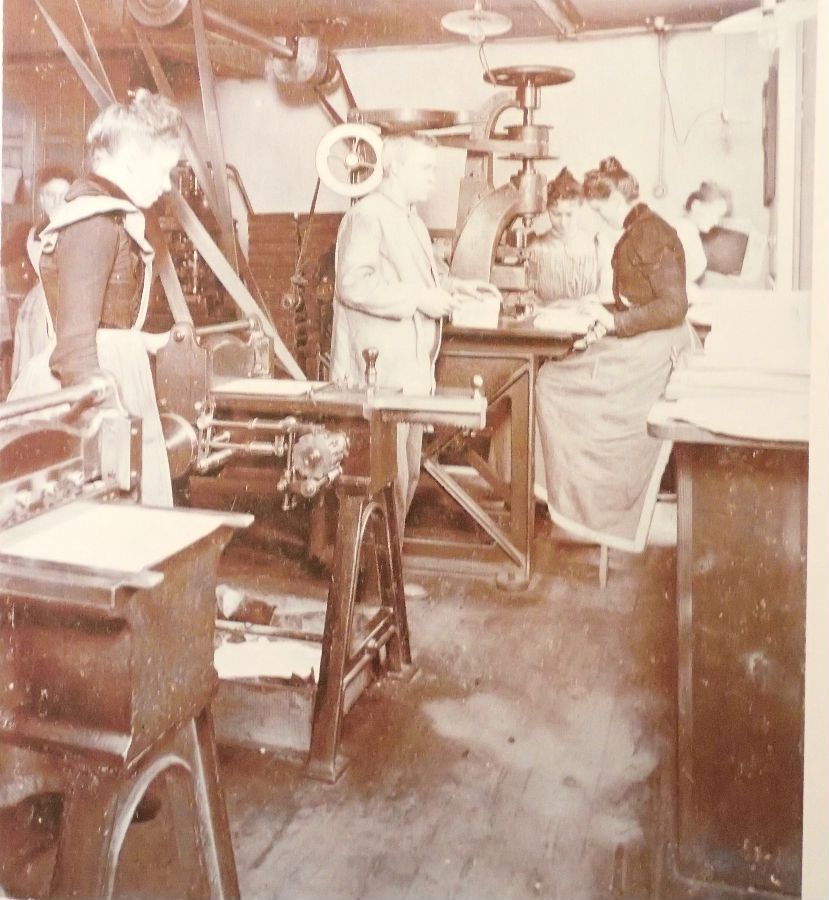
A picture showing H.H. Thiele's printing house, unknown year (but because of the electric lightbulps it's assumed the picture is around 1900.
In front 2 perforation machines facing opposite each other.
one perforator lady was needed for each machine, it's assumed that the machines were steampowered with a leather strap to pull the sheets forward to be perforated, but was reset manually.
in the back 2 ladies in the process of controlling the prints before taking the time to perforate them.
The guy, as often, is there to look important (supervisor of sorts)
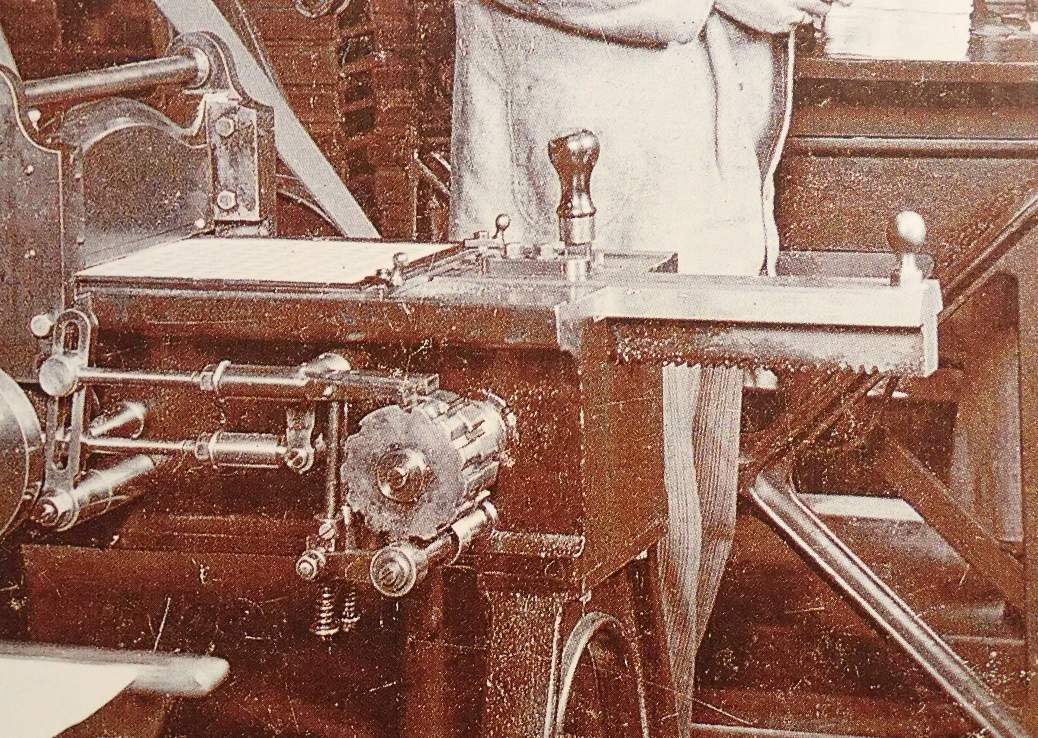
zoomed picture showing the mechanics, a table to hold the sheet (or sheets, more of this later) and a gear to pull the sheet equally ahead.
Metal plates were used to pin and hold the sheet in place. making the process somewhat slow.
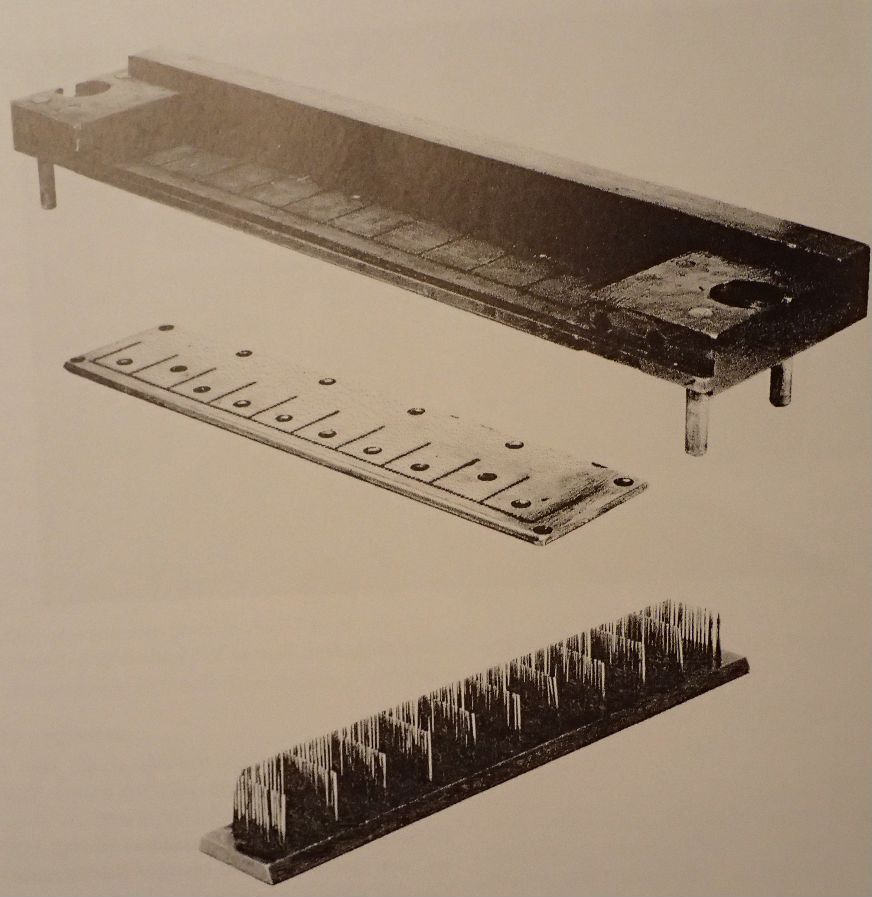
preserved parts of the comb perforator. the dark part was the bottom part, on top of this the sheet to be perforated was placed and fed through, and shiney metal plate was a guide bar for the needles. and lastly, the "comb", metal plate with rows on needles.
it was quite important that everything was assembled very precise as most can imagine how a needle would have to behave through 2 sets of holes that doesn't align perfectly.
one can also imagine how much work was put into making equipment like this by hand, and how easily minor inaccuracies could occur.
previous posts, questions and debates often circle around, what is natural and what is a defect.
these inaccuracies in the assembly or manufaturing of parts could cause needles to bend, break or wear down quicker than others.
so which is which?
the beauty of a comb perforator is that each vertical row of stamps (10 rows 10 columns, and in Denmark we only care about the vertical and refer to those as rows - confusing I know) are identical, so a bend, broken or worn down needle will always be in the same spot.
naturally it was virtually impossible to drill small needle holes exactly on a line with the exact same distance, and this too is something that leaves the same expression on each row.
Minor inaccuracies in perforation and plateflaws are used for positioning a certain stamp in a certain print in a certain position - GEEKY
there were heavy control of the stamps, both while printing (2 guys looked on as ink was applied) and as mentioned before perforation, and then again before delivery to post offices.
these minor details were often overlooked.
while major issues like huge splashes of color, major damage to clichés and perforation flaws were quickly repaired.
some of the major ones are highly popular and the most popular on the perforation front is the so called "1895 perforation error"
a minor inaccuracy in the assembly of the guiding plates cause several needles to break off in the 2nd, 3rd, 5th, 6th, 7th, 8th and 9th row.
these might have been discovered and approved because of pressure on time frames or high demand of stamps or simply overlooked.
but they were quickly fixed as approximately 20% of these prints ( 4 prints total, 4øre bicolor print 75, 8øre bicolor print 79 10øre coat of arms print 19 and 20øre coat of arms print 17.) were printed with perf. 12 3/4 instead of 14.
these errors are not that rare except on the 10øre coat of arms.

the blank stamp is unfortunately an illustration of me missing 6th row
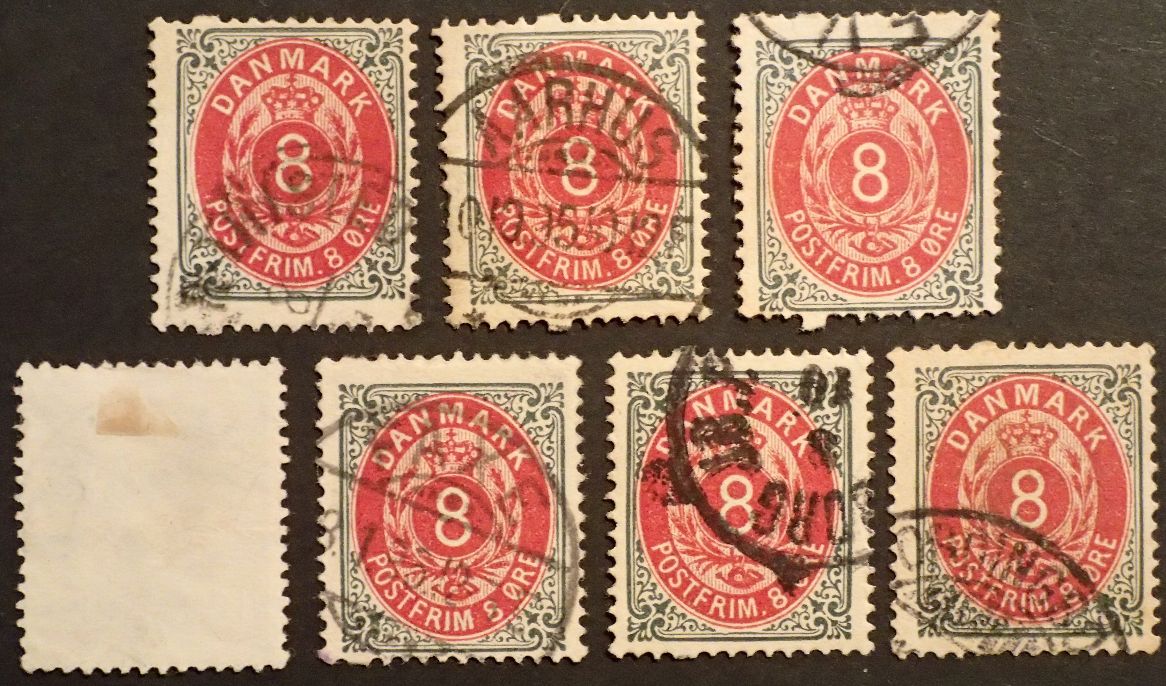
same perforation errors on various 20øre Coat of Arms.
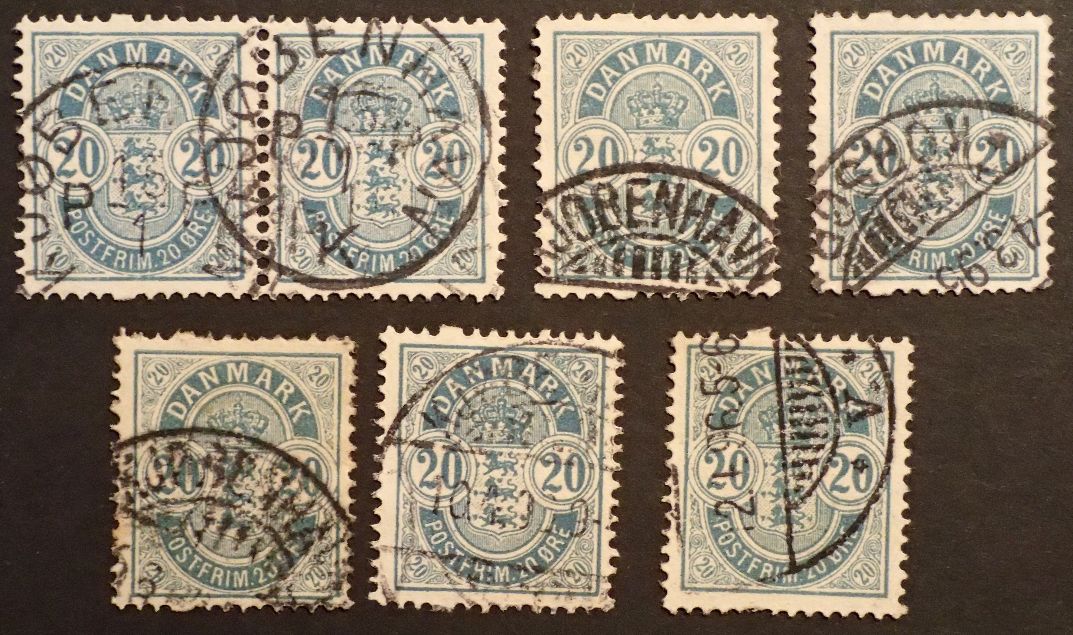
some 1864 issue with perforation faults.

An example of something that is also possible on a comb perforator. 20øre is a normal stamp, and the 2 side versions speak for themselves. This happens when the machine skips a gear or gets stuck.. the oversized is much more common.
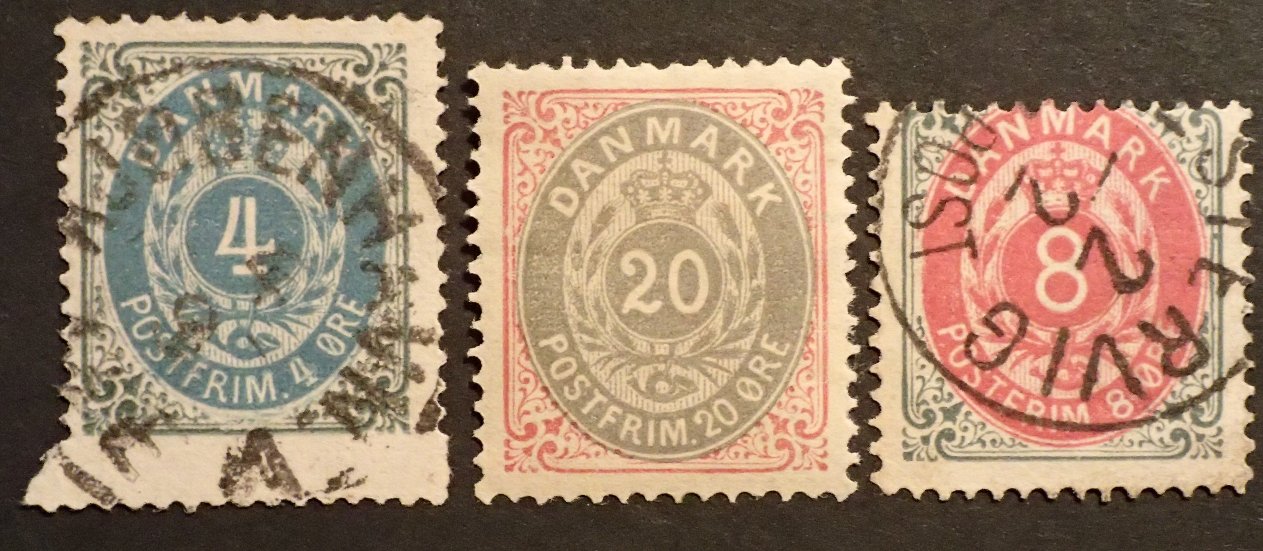
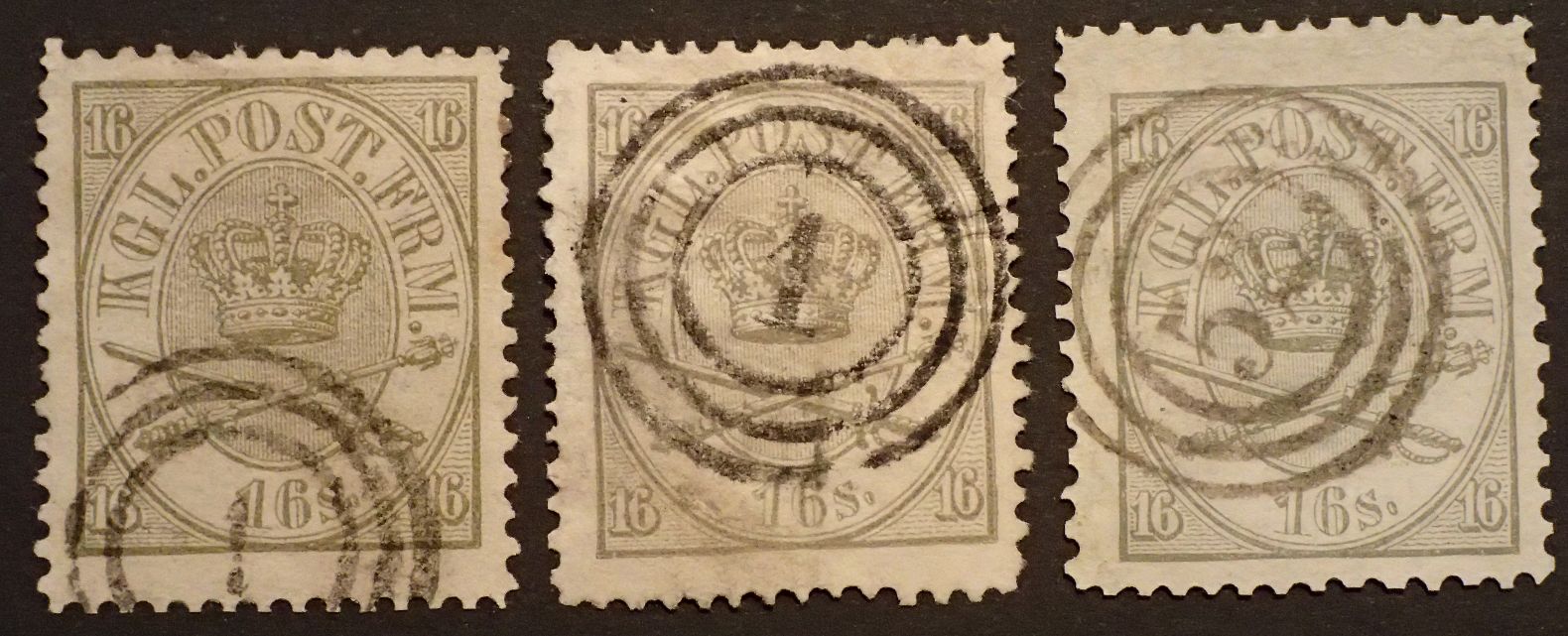
Back to the teaser, I believe that experiments on how many sheets could be perforated at the same time were made in the beginning. It's quite common to find these fuzzy perforated Crown and Scepter stamps, and my theory is that that's because they were on the bottom of a pile and the needles thus couldn't punch through. it becomes less common in the later years, and when it does happen again I believe it to be a sign of time pressure - but this is my theory alone.
Below example of these 1864 stamps.

To sum up on comb perforation - In Denmark there are records of 9 different comb perforator machines from 1864 to 1905 and some of these are used for many years after the Coat of Arms issue.
the main ones are KI and KII.. an earlier post/discussion on defective stamps mentioned that KI would leave many short perfs and rounded cornors, this machine was used for all Skilling issues (except the line perforated ones) and early Øre values and later as a reserve machine when KII needed maintenance.
that's an area for a different day.
******
With the mention of Line perforation we rush on to that.
works similar as the Comb, except it's just a long row of needles and you'd have to turn the sheet 90 degrees after horizontal rows.
and basicly the same all over with these exceptions.
bent, broken or worn needles will not show on the corresponding sides
Line perforated stamps can be wider or smaller on all sides.
often horrible perforation with small/new needles appearing as very small perforation holes and wide perforations doesn't necessarily break in the middle so short or long perfs are normal.
Below is 4 line perforated stamps in their natural sorry look.
1st stamp is an extreme example of a wide stamp, these are extremely rare to find and a prized possession!
Lineperforated stamps are in general very hard to find with what people considder flawless perforation.
these are in theory all flawless when you know about the process of making them.

Because this is so, the 1864 issue is often subject to - punched, repaired, altered, beautificated or whatever name you'd use for it perforation
3 such examples shown - these are hard for most to spot as virtually worthless, as most might just think they're nice?
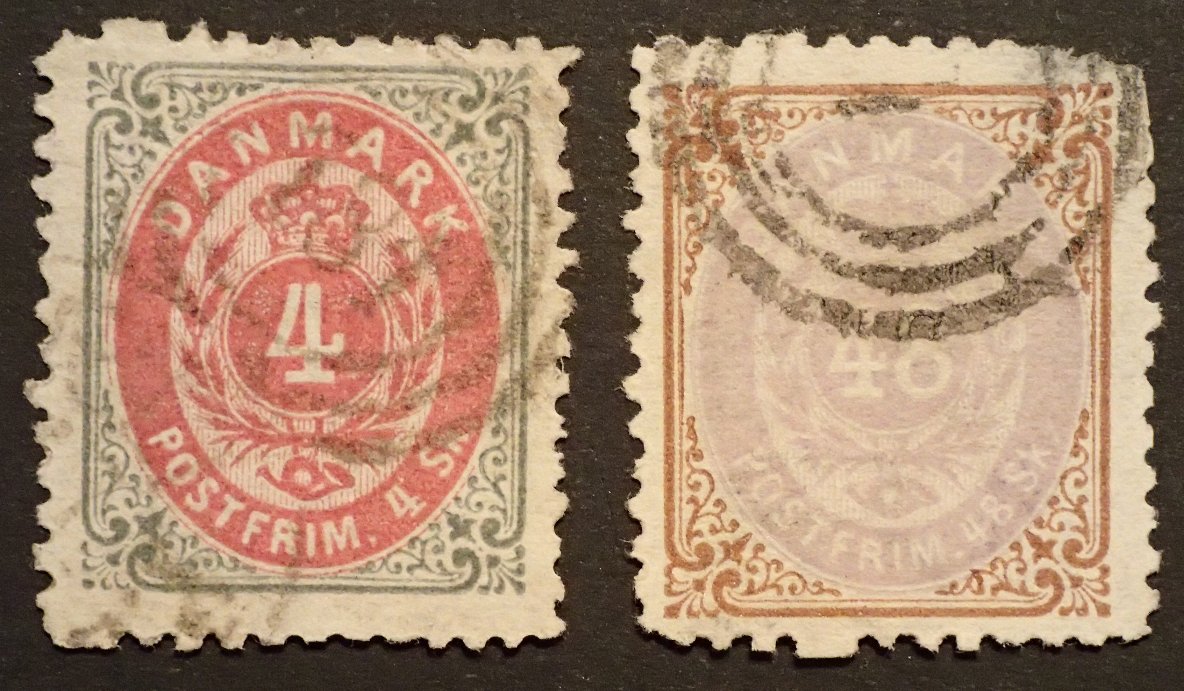
1870 Bicolored, 1st print of 2 and 4skilling as well as 48sk (Thick Frame) were perforated with Line perforation. 2 and 4skilling are both printed on double sheets, so when seperated most were perforated with a KI comb, and the rest with the Lineperforator - I guess due to timepressure.
and all can appear with perforation faults as shown, the 48skilling is quite common with this type, but the 4skilling is quite rare (also notice the small perf holes and how lucky the tear from the sheet came out a beautiful example of a rare stamp). notice how the broken perfs do not align on Line perforation.
hope this helps to answer some questions in the future.
Brian





 Posted 04/23/2018 3:39 pm


