Stamp Community Family of Web Sites
Thousands of stamps, consistently graded, competitively priced and hundreds of in-depth blog posts to read


Stamp Community Forum
 
Username:
Password:
Save Password
Forgot your Password?

This page may contain links that result in small commissions to keep this free site up and running.

Welcome Guest! Registering and/or logging in will remove the anchor (bottom) ads. It's Free!

Collar Cancel--Mid-1880-S

Next Page    
 
To participate in the forum you must log in or register.
Author Previous TopicReplies: 17 / Views: 3,169Next Topic
Page: of 2
Valued Member
213 Posts
Posted 04/26/2018   08:26 am  Show Profile Bookmark this topic Add AJ Valente to your friends list Get a Link to this Message
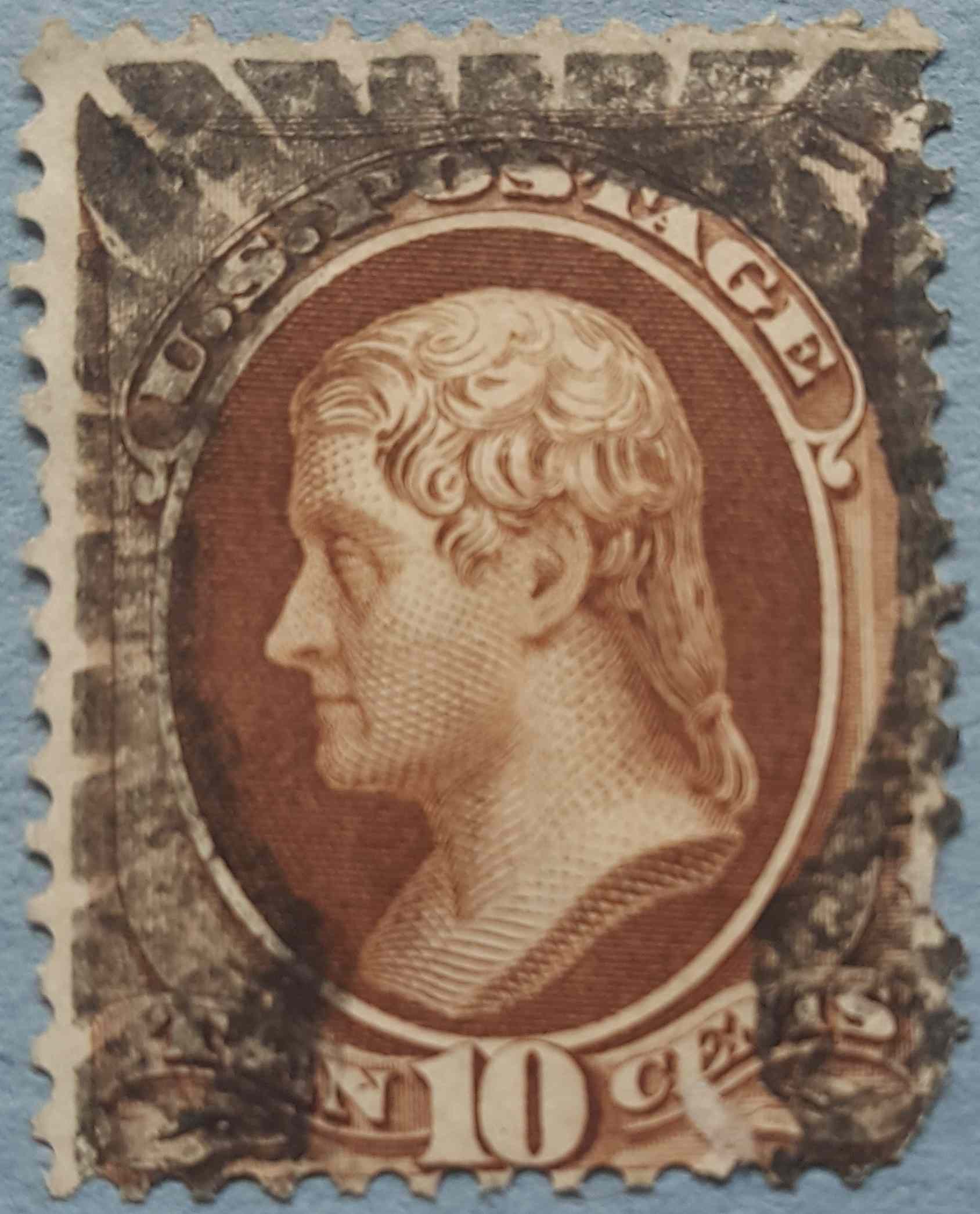
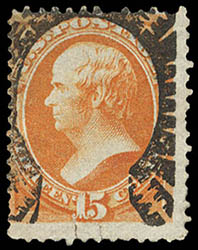
This is called a "collar" cancel. The name comes from a design that goes around the neck (medallion) of the stamp, and is open in the front. There's been little attention paid to this cancel, except for a brief mention in a long-ago article in Stamps magazine.


Send note to Staff

Valued Member
213 Posts
Posted 04/26/2018   08:35 am  Show Profile Bookmark this reply Add AJ Valente to your friends list  Get a Link to this Reply
The collar cancel is one of the many 'rubber made' cancels of the 1880s. These were offered to postmasters around the country by private firms. Most collectors are familiar with the "wood cut" cancels, which feature the artistic whim of the postmaster. On the other hand, rubber cancels were fanciful designs for the masses. The common postmaster with little or no skill at carving could otherwise achieve a degree of distinction. There was a downside however, while wood cut cancels had a degree of permanence, the life of the rubber cancel was rather short by comparison.

Wood cut cancels as the NYFM or Waterbury classics, are essentially tied to a singular location. Rubber made cancels are otherwise inorganic, and might pop-up almost anywhere. Many of the star cancels or Maltese cross cancels of the 1880s are rubber made. By virtue of on-cover evidence specialists can at times associate certain cancels with a post office or post offices. The Port Townsend kicking mule is one such variety. In such cases the postmaster continued ordering same rubber killer over a period of time.

Then there are a group of fanciful rubber cancels that were scarcely used, and rarely show up on cover. These are designs that for one reason or another never caught-on with postmasters or the public. A postmaster might purchase one from a catalog or travelling salesman thinking it was a good idea at the time, only to abandon it later when it failed to live-up to its expectations. The collar cancel is one such variety.

I always thought the collar cancel was cool, kind of like an overprint. I often though it would be fun to have a page of them representing every stamp of the set. But alas, this is not to be. Except for one lone example found in an old-time collection, no others have been sighted. Nor is anything known of its origin, and no covers have ever surfaced. Philatelically this is called a dead-end. Scarcity is high, desirability is potentially very high, but unlikely this cancel will ever create a following of any kind.

Questions? Comments?
Send note to Staff  Go to Top of Page
Pillar Of The Community
United States
852 Posts
Posted 04/26/2018   09:00 am  Show Profile Check paperhistory's eBay Listings Bookmark this reply Add paperhistory to your friends list  Get a Link to this Reply
There are two of them in the Rumsey auction this weekend at Westpex (lot 1439), attributed to Pottsville PA.

I'm not convinced it's rubber, but I could easily be wrong.
Send note to Staff  Go to Top of Page
Pillar Of The Community
6336 Posts
Posted 04/26/2018   10:28 am  Show Profile Bookmark this reply Add John Becker to your friends list  Get a Link to this Reply
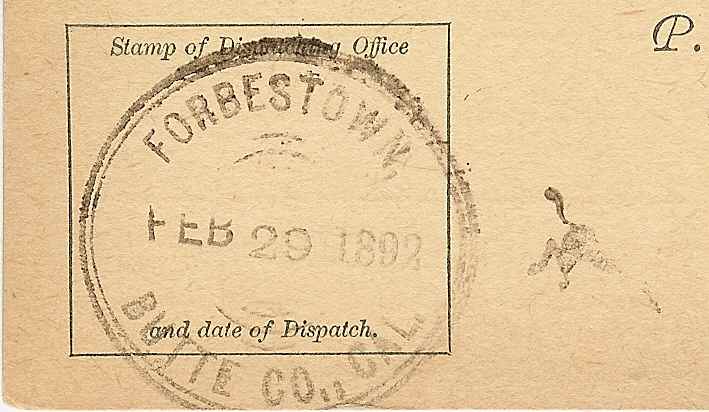
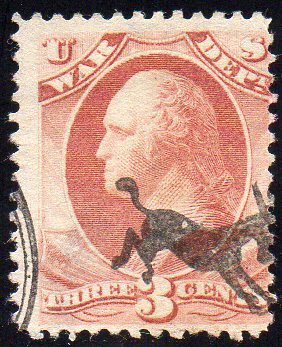
While Port Townsend is most famous for their "kicking mule" killer, the mule was used at other towns. Thus individual strikes on loose stamps are often not positively identifiable to Port Townsend. Here is a Leap-Day example on the corner of a registry card from Forbestown, Butte Co., Cal, ironic to show only the mule's rear from that county!

Send note to Staff  Go to Top of Page
Pillar Of The Community
United States
1944 Posts
Posted 04/26/2018   11:53 am  Show Profile Bookmark this reply Add essayk to your friends list  Get a Link to this Reply

Quote:
There are two of them in the Rumsey auction this weekend at Westpex (lot 1439), attributed to Pottsville PA.


Actually, those two are not attributed for any location. The lot description mentions that the only known cover with this killer bears an originating townmark in Pottsville. It does not say the stamps being offered are from that cover, nor does it mention what stamp or stamps are on it.

Does the 10c in the OP belong to you, Alan?


Quote:
except for a brief mention in a long-ago article in Stamps magazine.


Can you give us the reference to year/volume and pages?
Send note to Staff  Go to Top of Page
Edited by essayk - 04/26/2018 11:59 am
Bedrock Of The Community
Australia
38679 Posts
Posted 04/26/2018   1:29 pm  Show Profile Bookmark this reply Add rod222 to your friends list  Get a Link to this Reply
Nice thread,
enjoyed reading.

Send note to Staff  Go to Top of Page
Pillar Of The Community
France, Metropolitan
3746 Posts
Posted 04/26/2018   1:43 pm  Show Profile Bookmark this reply Add perf12 to your friends list  Get a Link to this Reply
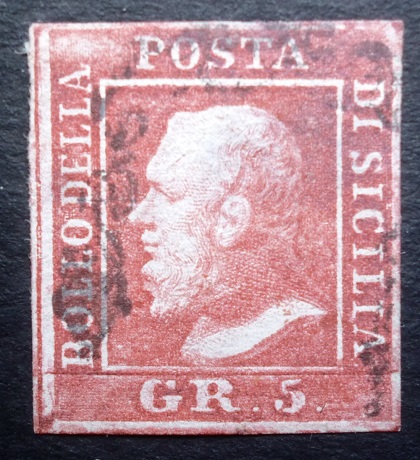
The idea was perhaps like the Sicily cancel.For respect to the
king, the cancel avoided covering the head.Not always though..
Send note to Staff  Go to Top of Page
Pillar Of The Community
United States
1944 Posts
Posted 04/26/2018   3:36 pm  Show Profile Bookmark this reply Add essayk to your friends list  Get a Link to this Reply

Quote:
I'm not convinced it's rubber, but I could easily be wrong.


You are not wrong.
Send note to Staff  Go to Top of Page
Pillar Of The Community
6336 Posts
Posted 04/26/2018   8:41 pm  Show Profile Bookmark this reply Add John Becker to your friends list  Get a Link to this Reply
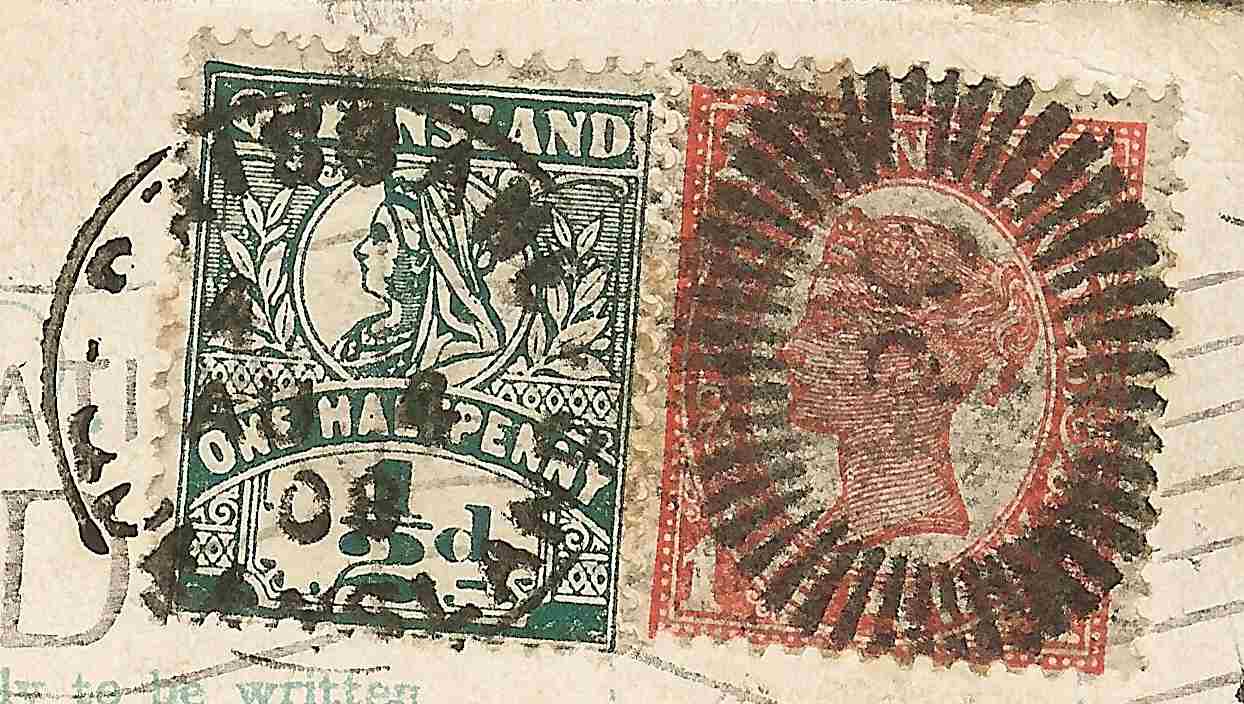
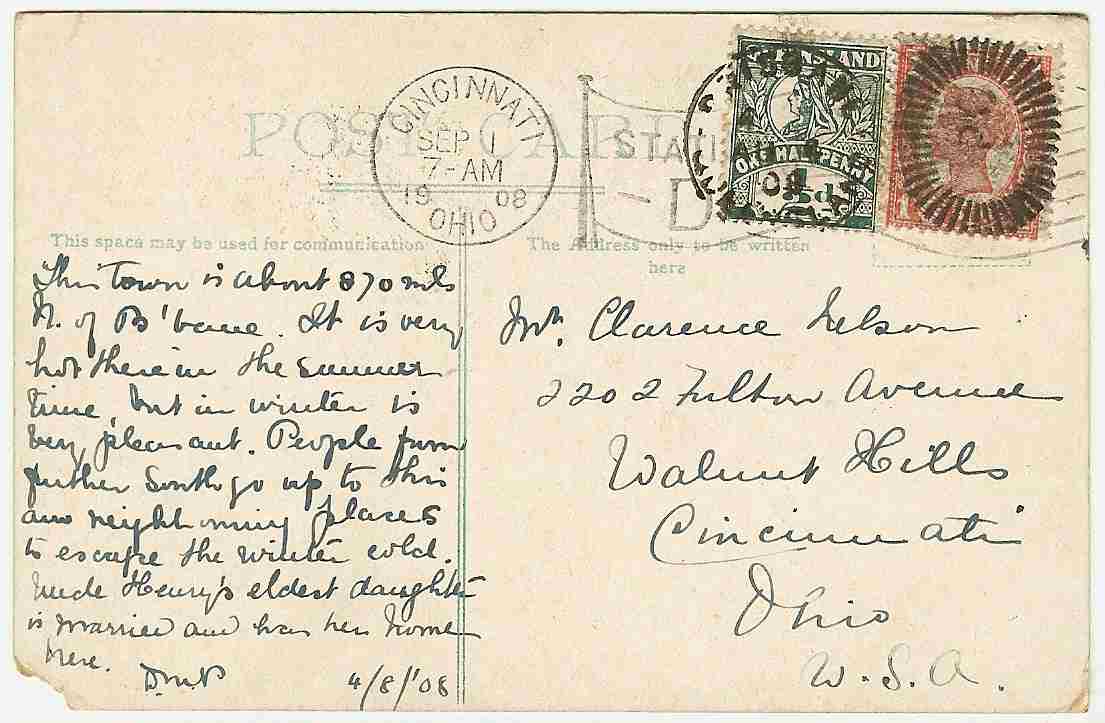
From Brisbane, Queensland:


Send note to Staff  Go to Top of Page
Pillar Of The Community
United States
4097 Posts
Posted 04/26/2018   11:08 pm  Show Profile Check eyeonwall's eBay Listings Bookmark this reply Add eyeonwall to your friends list  Get a Link to this Reply


Any suggestions on what I should pay for it? (stamp is thinned)
Send note to Staff  Go to Top of Page
Edited by eyeonwall - 04/26/2018 11:10 pm
Pillar Of The Community
United States
1414 Posts
Posted 04/26/2018   11:52 pm  Show Profile Bookmark this reply Add cfrphoto to your friends list  Get a Link to this Reply
A Washington State stamp dealer told me about a cache of Kicking Mule cancels found in an accumulation. Excitement turned to dismay once it was discovered that the range of issues with the cancels extended from the Bank Note era to early 20th century issues and then to some Canadian stamps.

I have an opinon, but this cancel is outside my area of expertise. Suggest finding an individual or expertizing committee with detailed knowledge and experience.
Send note to Staff  Go to Top of Page
Edited by cfrphoto - 04/26/2018 11:52 pm
Valued Member
213 Posts
Posted 04/28/2018   08:48 am  Show Profile Bookmark this reply Add AJ Valente to your friends list  Get a Link to this Reply
Essak, Unless stated otherwise, everything I post is currently in my collection.

Identifying rubber cancels is a matter of experience IMO. Once one has seen enough of them, they're not hard to identify.

As far as the reference goes, hard to say. It's one of those things, you read the article and retain the information. Only years later did I find the stamp.

Does the Rumsey auction show a picture of the lot?

BTW John Becker is correct. The kicking mule was a stock rubber stamp that was used in more places than Port Townsend.
Send note to Staff  Go to Top of Page
Pillar Of The Community
Learn More...
United States
1825 Posts
Posted 04/28/2018   10:09 am  Show Profile Bookmark this reply Add rlsny to your friends list  Get a Link to this Reply
Here are the pictures from the Rumsey auction. The lot sold for $725 + fees.


Send note to Staff  Go to Top of Page
Pillar Of The Community
United States
1944 Posts
Posted 04/28/2018   1:15 pm  Show Profile Bookmark this reply Add essayk to your friends list  Get a Link to this Reply
There were some problems with the initial posts in this thread which should get attention now that the sale of the following two stamps in the 2018 Rumsey "Westpex" auction is complete:
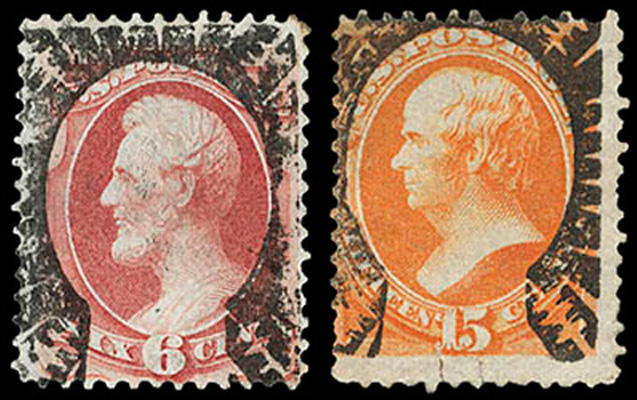


These were two examples of the same cancellation that appeared on a 10c in the OP, which was identified as a "collar" cancel in that post. The distinguishing details of a "collar" cancel were given in the second post, which emphasized that they are produced by a rubber cancelling device mass produced commercially and widely promoted and used in the 1880s. The case was made that cancels of this particular design did not catch on with postmasters or the general public of the day, and that:

Quote:
Except for one lone example found in an old-time collection, no others have been sighted. Nor is anything known of its origin, and no covers have ever surfaced. Philatelically this is called a dead-end. Scarcity is high, desirability is potentially very high, but unlikely this cancel will ever create a following of any kind.


The initial sentence in that quote is laid to rest by the appearance of the two examples that were just sold, illustrated here.

The story that was told in the first two posts here could hardly be further away from what is said about this cancellation type by the auction house, starting with its designation. In the description of lot 1439 this cancellation type is called a "Keyhole," presumably referring to the way it resembles the upper part of a lock opening for the use of an antique skeleton key in which a round center hole flares out and downward for the barrel and bit of the key to enter the lock. If we accept the notion of "collar" as given earlier, it is important to distinguish this cancellation from that type for several reasons.

First we must consider date of origin and use. Contrary to the quoted statement, the lot description observes "There is only one recorded cover bearing the Pottsville Pa. "Keyhole" cancel dated August 1st 1871 to Spain." The plausibility of that date is reinforced by the fact that the stamps are hard paper issues of the National Bank Note Co. If we accept the statement from the house, then we must consider what is known of the rubber stamp "collar" type.

James Cole in Cancellations and Killers of the Banknote Era 1870-1894 devotes the first 18 pages to a chapter written by Richard Graham entitled, "Postmarks and Postmarking Devices of the Banknote Era." Graham discusses the advertising of cancellation devices in the Postal Guides of the 1880s, and (p.9) observes that the first mention of devices in rubber is in a full page ad in the January 1880 Guide by a seller in Illinois. Prior to this, townmarks and killers for commercial sale were most commonly rendered in cork, wood, or metal. According to Graham, the material most commonly used for the killer portion of a cancellation, particularly with the advent of the duplex device in the mid-1870s, was cork.

From this we may understand that elaborate cancellations like these keyhole types in 1871 were not done on rubber but most probably on cork. There is no evidence whatsoever that these were commercially produced or available to postmasters generally. Without further evidence beyond the single known cover, we can only say that the postmaster in Pottsville, Pa. is alone in the use of this particular keyhole killer cancel. As for the existence and authenticity of the cover, I can only report that during the sale the auctioneer identified the owner of the cover as Mr. Bill Gross. Nothing was said about the kind of certification it has, but the fact of its mere existence was not challenged.

As for the "following" this cancel might have I can say this: I was happy to bid the initial $400 for the lot sold by Rumsey, despite the obvious faults in the stamps, and not surprised in the least that it sold for $725 (not to me). Bidding was rapid up to that point, when it probably dawned on everyone who we might be bidding against. In my opinion the uniqueness of the design of this keyhole marking, preserving the vignettes of portrait stamps, will make it an object of interest and importance alongside some of the great Chicago blues and elaborate fancy cancels of the early 1870s.


Send note to Staff  Go to Top of Page
Edited by essayk - 04/28/2018 1:23 pm
Valued Member
213 Posts
Posted 04/29/2018   10:40 am  Show Profile Bookmark this reply Add AJ Valente to your friends list  Get a Link to this Reply
Hats' off. Mystery solved. Seems a bit odd the keyhole isn't known on the more common values and that the one reported cover went overseas. Probably need a Schuylkill County postal historian to explain that.

-AJV
Send note to Staff  Go to Top of Page
Pillar Of The Community
United States
1944 Posts
Posted 04/30/2018   10:54 am  Show Profile Bookmark this reply Add essayk to your friends list  Get a Link to this Reply
Thanks AJV. In a spirit of collaboration, rather than competition, would you be willing to tell us more of what you know about the 10c you posted? Do you know where it came from; what kind of mail matter it was on?

Since it is in your collection (lucky stiff) presumably you made the scan?

More to come?

Send note to Staff  Go to Top of Page
Edited by essayk - 04/30/2018 11:01 am
Page: of 2 Previous TopicReplies: 17 / Views: 3,169Next Topic  
Next Page
 
To participate in the forum you must log in or register.

Go to Top of Page

Disclaimer: While a tremendous amount of effort goes into ensuring the accuracy of the information contained in this site, Stamp Community assumes no liability for errors. Copyright 2005 - 2026 Stamp Community Family - All rights reserved worldwide. Use of any images or content on this website without prior written permission of Stamp Community or the original lender is strictly prohibited.
Privacy Policy / Terms of Use    Advertise Here
Stamp Community Forum © 2007 - 2026 Stamp Community Forums
It took 0.22 seconds to lick this stamp. Powered By: Snitz Forums 2000 Version 3.4.05