| Author |
 Replies: 8 / Views: 3,362 Replies: 8 / Views: 3,362 |
|
|
Pillar Of The Community
561 Posts |
|
|
Good Afternoon, I've been going through my Queensland stamps and was hoping I could get an opinion on some of these "errors" and if there is any added value. Please have a look and give me your honest evaluation - thanks. 01 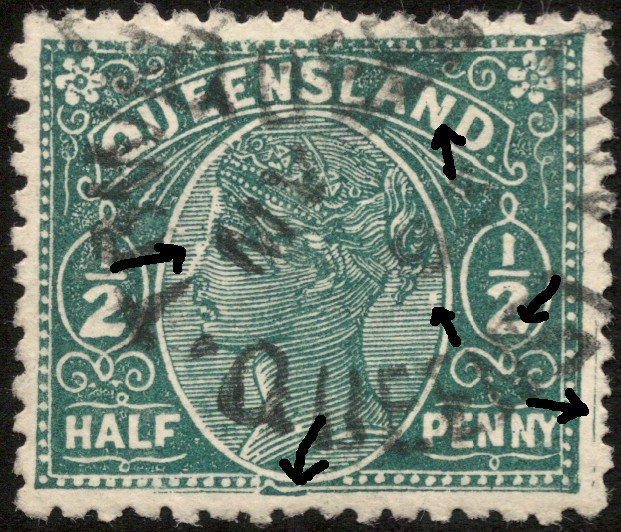 02 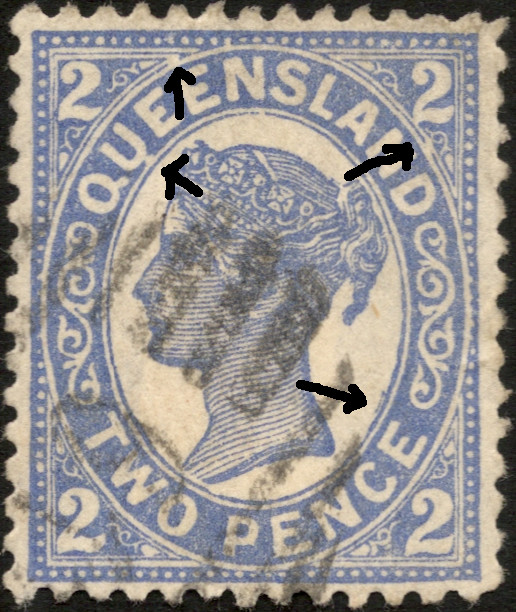 03 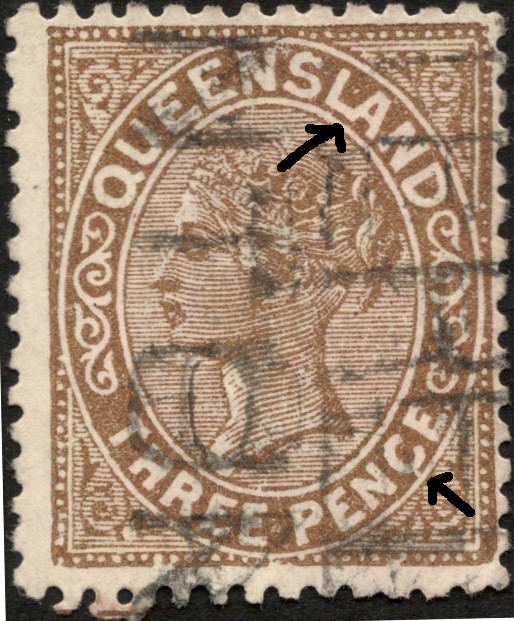 04 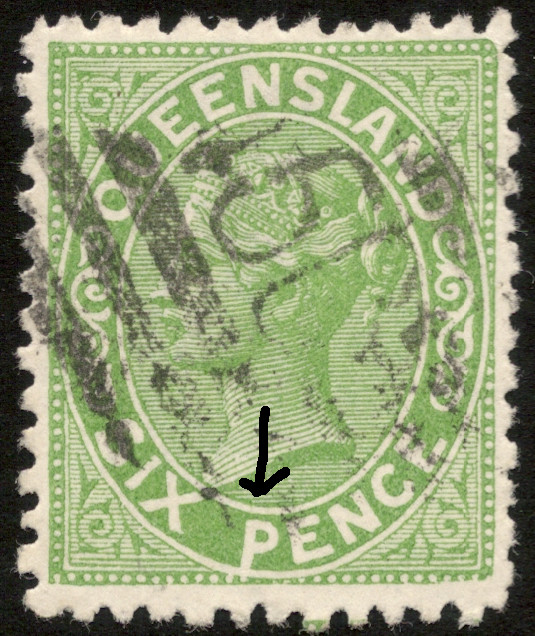 05 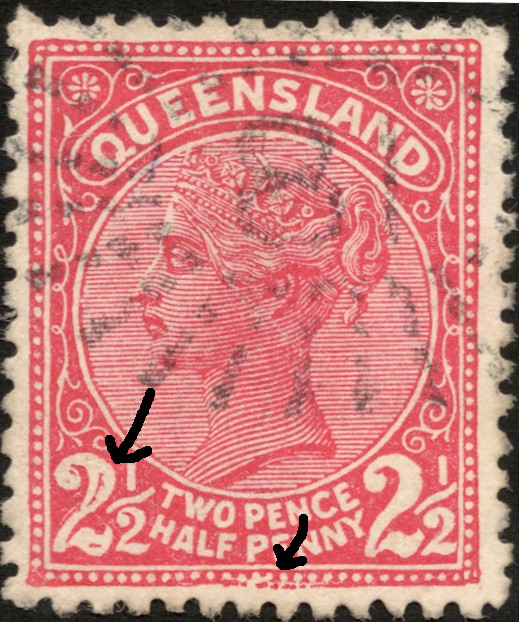 06 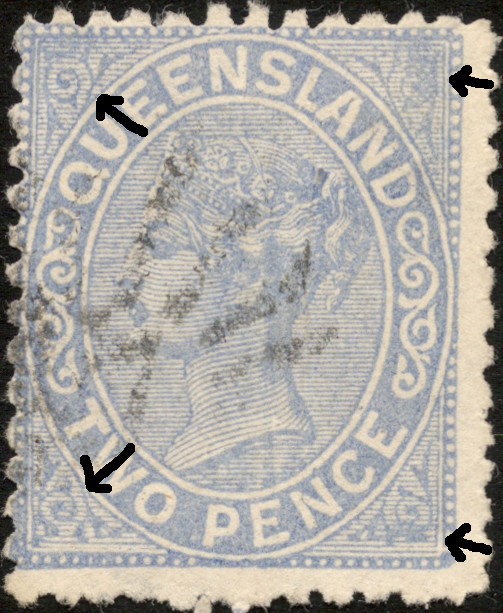 07 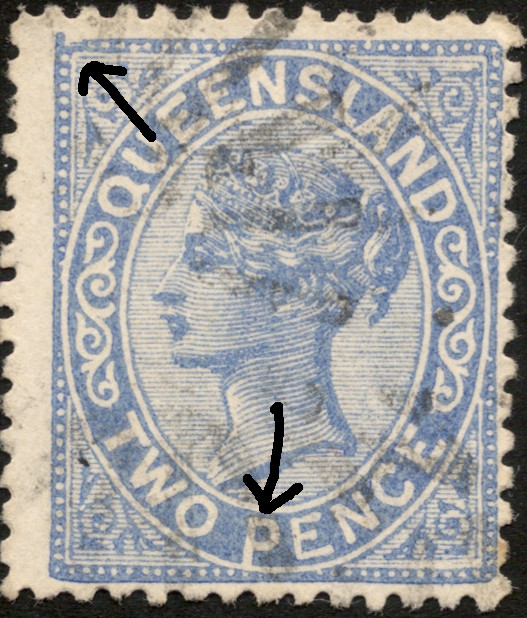 08 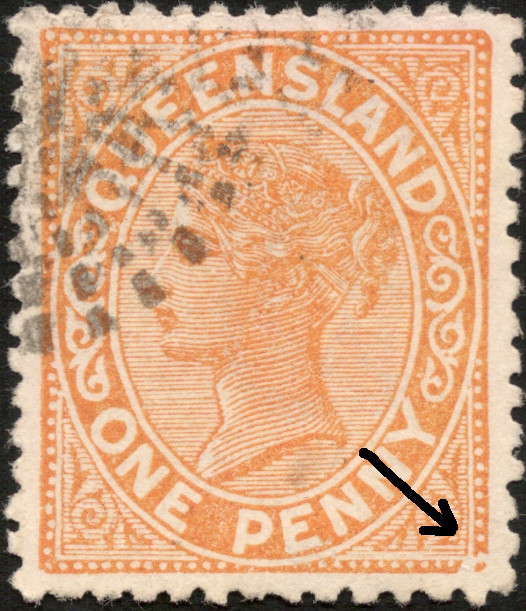 |
|
Send note to Staff
|
|
|
|
|
Pillar Of The Community
United States
8956 Posts |
|
|
Those are the same as earlier ones you showed, not errors. Some of that may be caused by a dirty plate, too much or not enough ink.
Very common for certain issues and/or printing methods. One could build a very interesting study about these.
Peter |
Send note to Staff 
|
|
|
Valued Member
United Kingdom
29 Posts |
|
|
Pillar Of The Community
Australia
3299 Posts |
|
|
Quote:
One could build a very interesting study about these. I was thinking the same thing. Some of these could be plate wear. This is philately 101. How long were these plates in use? What are the printing runs and numbers and when were the stamps printed? For the federation issue (the second stamp) then the Brusden White catalogue will have loads of good information. Also, have a look here: https://queensland1sideface.blogspo...icle_31.html  |
|
Send note to Staff
|
| Edited by Bobby De La Rue - 04/30/2018 6:15 pm |
|
|
Pillar Of The Community
561 Posts |
|
|
Hi, I haven't posted these stamps before. As far as Queensland goes, I sure have found some obvious flaws from plate wear. The reason I refer to them as errors is they were produced and used in public as you see them... with... wait for it... errors. Not too common elsewhere... other countries would have replaced the plates. |
|
Send note to Staff
|
| Edited by souldjer777 - 04/30/2018 7:53 pm |
|
|
Pillar Of The Community
United States
8956 Posts |
|
|
Souldier, they are not worthless by any means. As I suggested above they would make a fantastic study of how they were printed. Your statement about how other countries would have changed the plates - please take into account the time frame that these were printed.
Back in the day we were less of a throw-away society. Besides, plate wear is not the main problem with your examples. Dirty plates and over/under inking seems to be more common.
Also, two of the stamps show a very interesting plate fault. The letter "P" on these is taller than the others and this may well be a known variety.
By the way, I collect stamps of Switzerland and the Netherlands & Colonies and several series of these two counties show "defects" like yours!
Peter |
|
Send note to Staff
|
|
|
Pillar Of The Community
Australia
1692 Posts |
|
|
Error checking stamp sheets in the Victorian era prior to issuing was not a priority and many errors and numerous varieties will be found. Most of my Victorian issues are proofs and although these are flawless, the commercial printings were not and many errors were released to the public (if you are lucky a very scarce or even rare error will surface, but these are are seldom seen).
During the end of the usage of Victorian era postage stamps (political infighting caused the delay of issuing Australian stamps for 12 years, allowed the continuation of Victorian stamps long after the old Queen passed away, (even commercial printings of the current King, Edward VII were ignored, the only monarch not to be depicted commercially on Australian postage).
One will find numerous errors on stamps during those 12 years, most likely a lack of interest in correcting and removing faulty sheets.
Such errors are of course a source to endeavour on a quest to find a pattern to these errors, they may not be of any real philatelic value but the research into these errors are.
Rob
|
|
Send note to Staff
|
|
|
Pillar Of The Community
561 Posts |
|
|
Thanks Petert4522, I did some more research and found a quote from Stanley Gibbons that explains a lot...
S.G. Note after #183 from Australia / Queensland
"These are from new plates; four types of each value grouped as before. The 1d. is without stop. In all values No. 2 in each group of four has the "L" and "A" of "QUEENSLAND" joined at the foot and the No. 3 of the 2d. has the "P" of word "PENCE" with a long downstroke."
So that takes care of a few of these - but not all. |
|
Send note to Staff
|
| Edited by souldjer777 - 05/01/2018 10:10 am |
|
|
Pillar Of The Community
Australia
937 Posts |
|
|
A comprehensive study of all QLD stamps from 1879-1912 has been published by the Royal Philatelic Society of Victoria.
'Queensland Postage Stamps 1879-1912' by Kenneth F. Scudder, FRPSV (RPSV, Melbourne, 2013)
includes detailed information about these stamps, including history, printings, excellent descriptions and many diagrams of the constant plate flaws to be found. |
|
Send note to Staff
|
|
| |
Replies: 8 / Views: 3,362 |
|




 Posted 04/30/2018 4:28 pm


