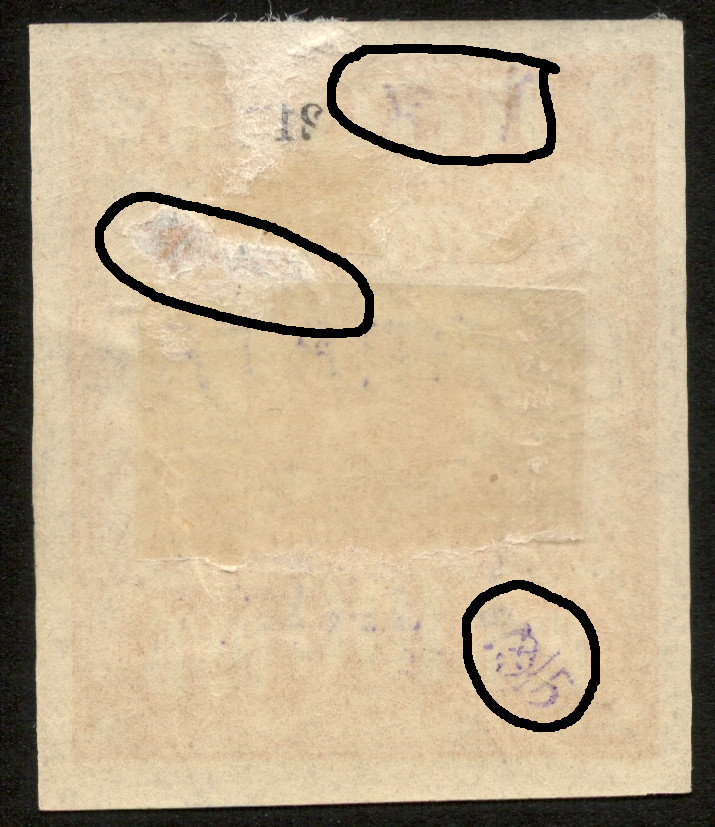
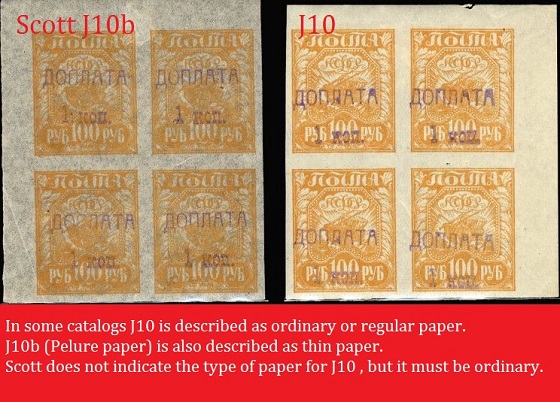
Quote:
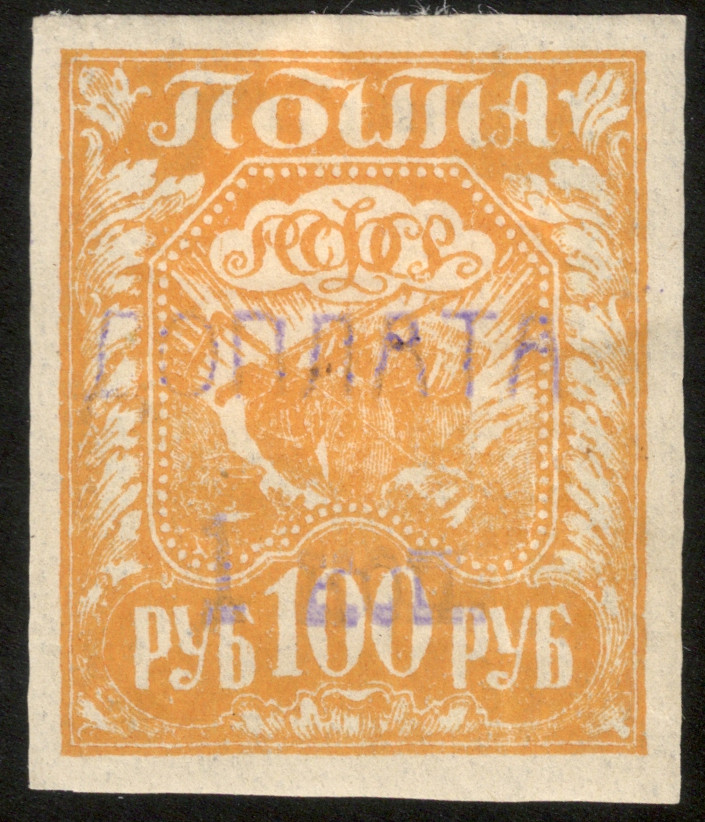
Please show me another one like it as an example if you could. From my perspective it looks as though the ink is showing through from underneath the orange.
I took some time to look for a good example, but then realized that, if you think the violet ink is under the orange AND you have the actual stamp in front of you, I could not convince you by showing just a scan of something else. So the following is for members that may be on the fence regarding your claim that an overprint is really an underprint here.
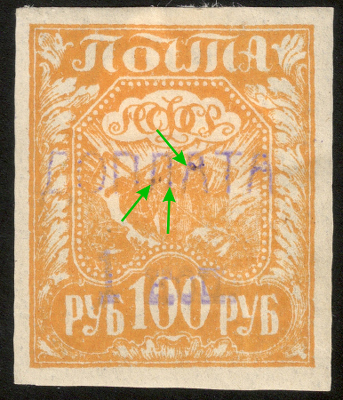
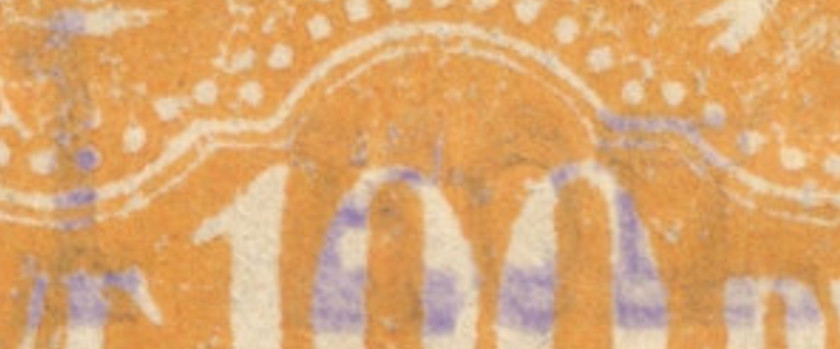
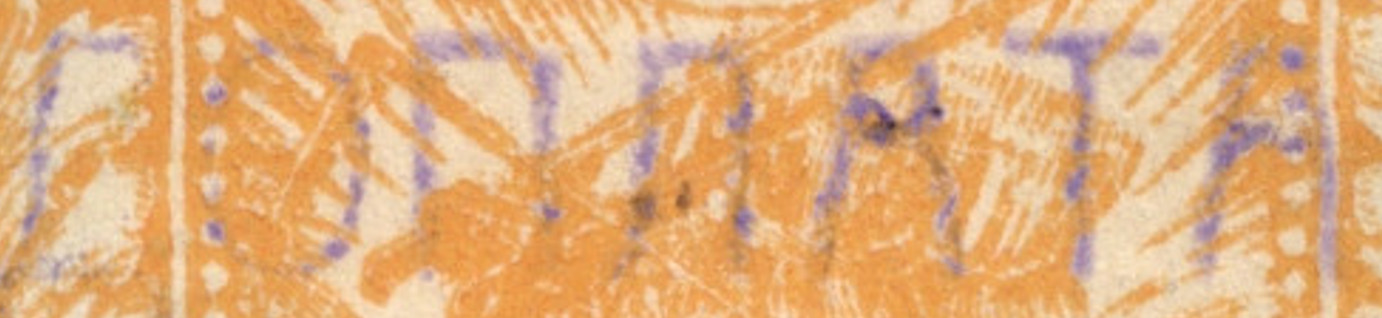
If the violet overprint is under the orange, how is it that the violet shows clearly as the same color OVER some orange sections?
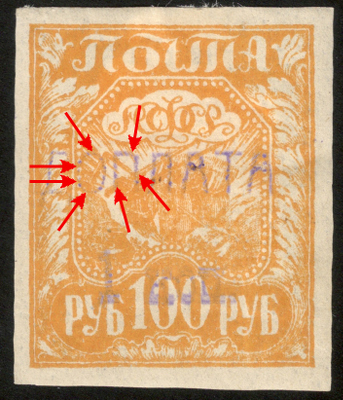
How is it that so many places where violet and orange ink coincide that the violet fades to nearly nothing? Spots in just two letters are indicated. You might guess the orange ink is very opaque, but that would be incorrect. Hold a 100R orange thin paper stamp of this issue to the light, and light shines nearly equally well through the printed portions as well as the unprinted portions.
What would also be the reason for an underprint aside from a fake created by the P.O. or printers or Harry Potter-type magic? The issue is an existing stamp with a surcharge put on it. This is typically done when the P.O. is caught short of proper values. Having imprinted paper with the surcharge on hand before it was ever thought to be needed and then printing some random stamp design on top of it makes no sense.
Quote:
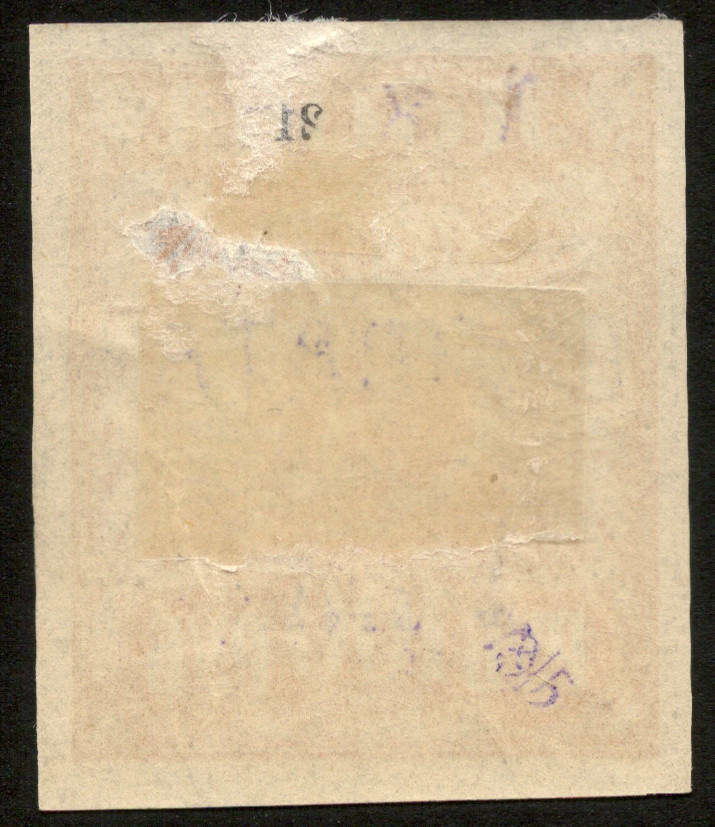
All the gum is still there which makes it somewhat impossible to remove the stuck hinges.
Actually, having all the gum present makes it very much easier to remove the hinges. Removing the hinges is not recommended here because of the thins already present.





 Posted 05/08/2018 1:55 pm