To simplify a bit, I'll try a sketch. The facer canceler machine is basically 2 pairs of the same 4 mini units. A random stack of rectangular envelopes will have the stamp in 4 possible positions: facing you at top right or bottom left (up side down, if you will), and the similar 2 stamp positions on the envelopes facing away from you, A, B, C, and D. The envelopes ride along their top/bottom and feed into the canceler which uses the tagging on the stamps to "see" them.
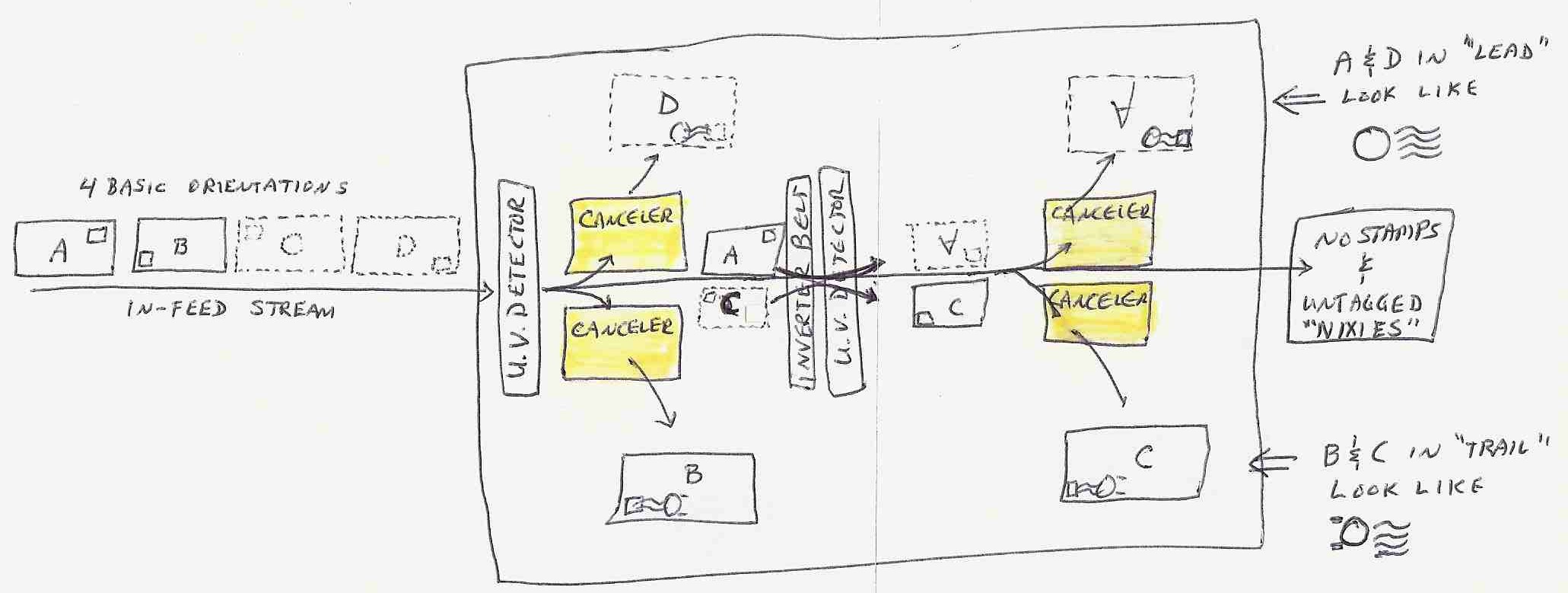
Letters are canceled upside down (which is why machine cancels are the same distance down from the top of the envelopes - they are actually the same distance up from the bottom of the upside down envelope!) The envelopes with stamps on the bottom (B and D)are diverted to the first 2 canceling heads. The remaining stream of envelopes passes through an inverter belt which turns them upside down and the process repeats with A and C now riding along upside down. The tagging is detected and the envelopes diverted at before. The result is 4 stacks of faced and canceled mail ready for the sorting process. The few envelopes with no stamps detected pass on a 5th position for manual inspection by the Nixie Clerks.
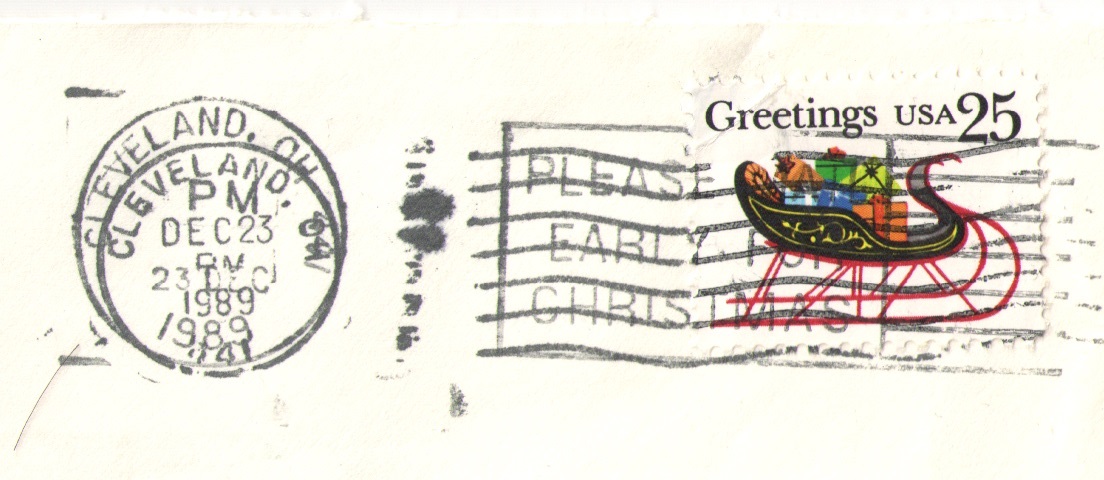
Half the stamps passing through the facer-canceler machines will have their stamps on the leading end of the envelope and half will naturally have the stamp on the trailing end. The "trail bars" are effectively extra gripping surfaces in addition to the edge of the dial to pull the envelope through the machinery. 2 of the canceling heads have trail bars, 2 do not.
Here is a pair of photos (crudely overlapped) taken in 1994 of such a system. In this case the letters feed from the far right and pass to the left. The accumulation "tables" of canceled mail stick out toward the viewer. The operators then transfer the accumulated mail into the corrugated trays to carry them off for further processing.
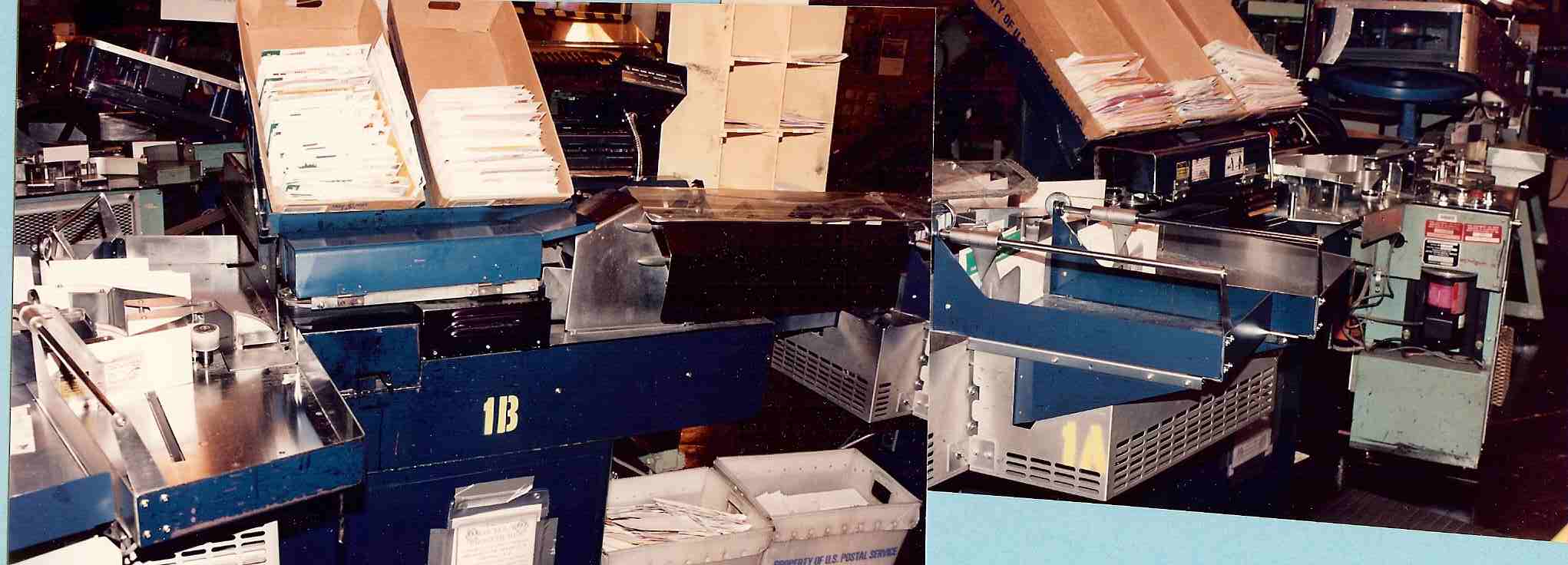
Of course these machines have been replaced by the spray cancel units, but the same principles applies to face the cancel the mail.





 Posted 07/03/2018 10:06 am