| Author |
 Replies: 19 / Views: 2,402 Replies: 19 / Views: 2,402 |
|
Pillar Of The Community
United States
2948 Posts |
|
|
|
|
Bedrock Of The Community
United States
10864 Posts |
|
|
The fumes will work, but it must be done carefully. A bit of research should help you find the best method for doing it properly. |
Send note to Staff 
|
|
|
Bedrock Of The Community
Australia
38679 Posts |
|
|
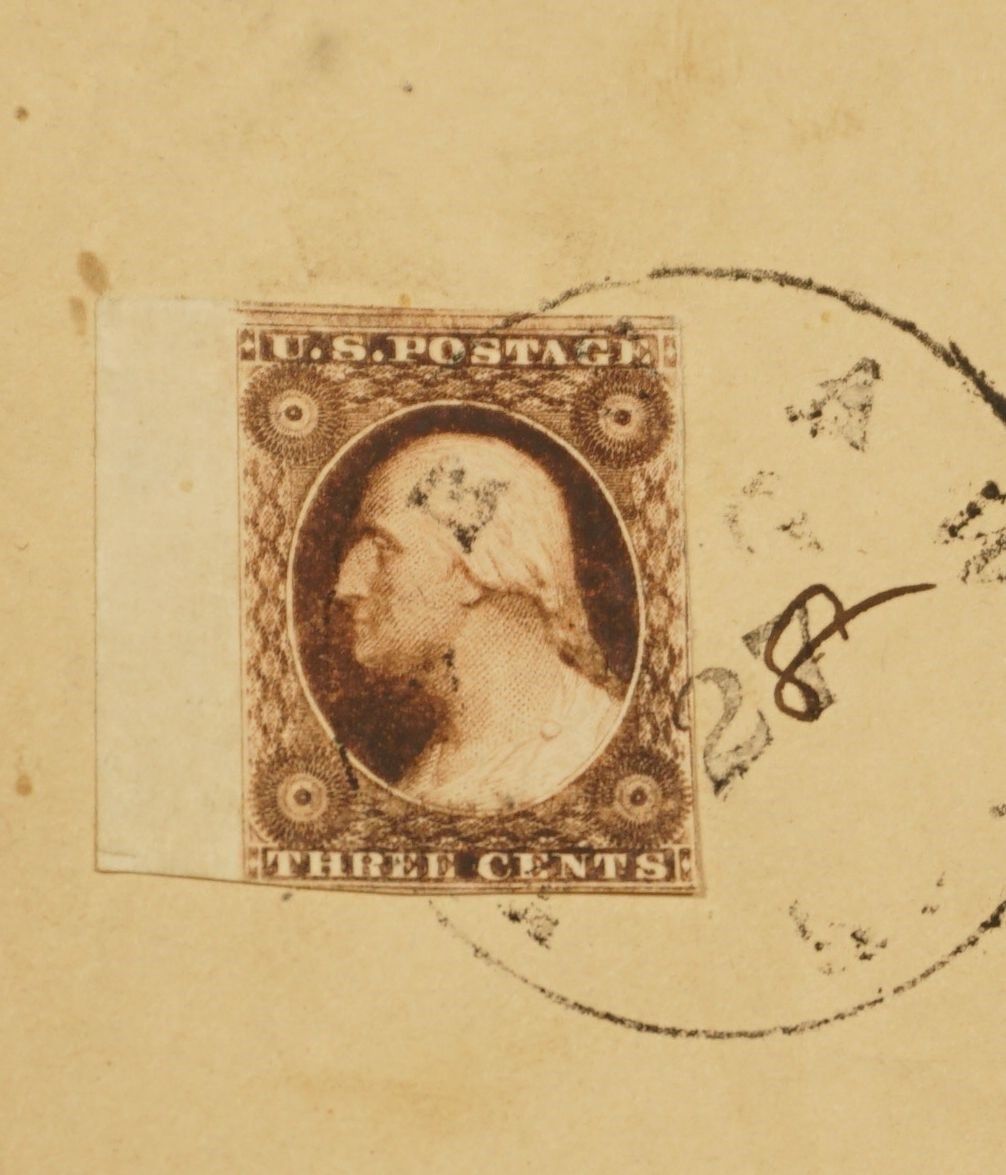
I would strongly advise to approach a prof restorer, for cost. Repairing via peroxide requires rinsing, not good for your cover. Good Luck. Sulphide blackening of stamps.  |
|
Send note to Staff
|
|
|
Bedrock Of The Community
United States
10864 Posts |
|
|
The stamp could be carefully washed using a small artists brush and just enough water to stop the process without loosening the stamp from the cover. |
|
Send note to Staff
|
|
|
Pillar Of The Community
United States
3528 Posts |
|
|
It's been a long time since I did it, but I always found doing this with stamps on cover to be very easy. I used to use 20% H2O2, which I don't recommend for beginners (3% is safer), but with what I used this was quick and easy.
Get 1 small cup distilled water in addition to the peroxide. Get at least 2 clean q-tips.
Dip q-tip 1 into peroxide and carefully paint the stamp with it. Pretty quickly after that dip q tip 2 in water and paint the stamp to stop the reaction. With 20% peroxide and practice this is very fast, easy and I think pretty safe - once you get the hang of it. I haven't tried this with 3% but that would be good to do instead. What I don't know is how long that will take.
I did this many times very methodically and never had a problem. Your mileage may vary - so always try something new on a cheap stamp you don't care about destroying. |
|
Send note to Staff
|
|
|
Pillar Of The Community
United States
2555 Posts |
|
|
I use peroxide fumes for covers. My method is not that sophisticated. I put 3% peroxide in a watermark tray and place the cover over the tray. I would check it every 10 or 15 minutes to monitor progress. I also usually use whatever combination of stiff cardboard that I need to prevent the cover from contacting the liquid.
As a cautionary note, this will eventually lift the stamp from the cover if done for too long. |
|
Send note to Staff
|
|
|
Moderator

United States
12330 Posts |
|
|
There are a number of factors which affect how well the Hydrogen peroxide will work. Obviously the higher the Hydrogen peroxide concentration the greater the effect of the oxidation process. The highest concentration generally used in paper conservation is 35% hydrogen peroxide. (Stout stuff, be careful.) The room temperature can impact the speed of the reaction; increasing the ambient temperature 10° doubles the rate of the chemical reaction. Hydrogen peroxide has a shelf live, using old hydrogen peroxide will not result in good results. The hydrogen peroxide pH changes after opening the bottle and then changes even more over time; this pH change lowers its ability to reverse the oxidation process. Buy a fresh bottle for best results. And of course 'time' and a 'sealed environment' also have a large impact on how well the oxidation will be reversed. http://stampsmarter.com/learning/Ho...idation.htmlDon |
|
Send note to Staff
|
|
|
|
Valued Member
United States
166 Posts |
|
|
  Here is before and after using sinclair2010's method with one exception. I soaked a cotton ball and put it in the tray instead of pouring the peroxide in the tray. Unfortunately, I had to replace my scanner between the two scans so not a perfect comparison. |
|
Send note to Staff
|
|
|
Valued Member
United States
109 Posts |
|
|
Nice job! Just a note for anyone thinking of using 20-33 percent hydrogen Peroxide. Be careful and remember it is an oxidizer. Take the precautionary measures when handling it. Store bought has only 3-4% peroxide in it. |
|
Send note to Staff
|
|
|
Pillar Of The Community
United States
3528 Posts |
|
|
Pillar Of The Community
United States
3528 Posts |
|
|
Last night I was posting from my phone so I kept my explanation short, .. there are a few steps I should clarify to the method I outlined earlier.
In addition to q-tips, get acid-free white blotter paper if you can. White paper towels can do in a crunch. Be careful not to overpaint the stamp with peroxide or water. You don't want to over-wet it. After you paint it with peroxide, take the blotter paper and press it on the stamp (blot it). Watch it for 2-3 seconds and then paint with water and re-blot dry. You can repeat this, including re-apply peroxide multiple times prior to adding water if it isn't taking enough effect. Typically, however, I would just have to paint once with peroxide, blot, paint with water, blot.
After that, its probably a good idea to press the stamp. By avoiding putting too much water or peroxide at once and blotting it, that usually prevents the stamp from falling off (I never had that happen to me). |
|
Send note to Staff
|
|
|
Pillar Of The Community
United States
2948 Posts |
|
|
Thanks everyone!!
This evening I will try the "fumes" method. It seems less invasive. Will post results. |
|
Send note to Staff
|
|
|
Pillar Of The Community
United States
2948 Posts |
|
|
Not seeing any change.
Then I noticed this bottle of Peroxide is marked, Exp. 9/13... |
|
Send note to Staff
|
|
|
Valued Member
United States
109 Posts |
|
|
Has it been opened multiple times? It does weaken with exposure to air. Expiration on 13 means it was probably produced in 10 or 11. I think they may be required to put a 2 year expiration date on them. I know a lot of items fall into this. |
|
Send note to Staff
|
|
|
Moderator
United States
12330 Posts |
|
|
The pH begins to change as soon as the bottle is opened. It is not like it is costly, I always use a new bottle. (A bottle is <$2. How much is the stamp or cover worth? How much is your time worth?)
Don |
|
Send note to Staff
|
|
|
Pillar Of The Community
United States
2948 Posts |
|
|
I've used it a number of times the past 6 months or so. Never thought about the expiration.
Headed to the market now.
|
|
Send note to Staff
|
|
|
Replies: 19 / Views: 2,402 |
|




 Posted 07/10/2018 10:49 pm