| Author |
 Replies: 23 / Views: 4,363 Replies: 23 / Views: 4,363 |
|
Pillar Of The Community
Canada
1755 Posts |
|
|
|
Okay folks... first off, we shall review the currency. Remember that there are people on the board very new to all of this, so I will start right at the start and work my way up. If you already know some of this, it will be a good refresher.
Here we go...
With the exception of Canada, Ceylon, Malaya, and a few other countries using dollars and cents in a decimal-based currency, most of the other countries used the "British Pound Sterling System". I will discuss the Indian currency system when we talk about India, as it is VERY different, and I do not wish to confuse.
As we are all familiar with the Canadian Dollar, I will use it as an example to illustrate the way it was used. I will avoid the "nicknames" of the currency as this will only confuse those trying to learn the system from a stamp collecting perspective. For example, if you've never used Candian currency, and the stamp you are looking at says "Twenty-Five Cents" on it; telling that person it's "a quarter" will confuse him.
The Canadian Dollar is simple...
100 cents = 1 dollar
The short forms: c or ¢ for cent, $ for dollar. Thus:
Twelve cents = 12¢
Two dollars = $2
Four dollars and ten cents = $4.10
The British System....
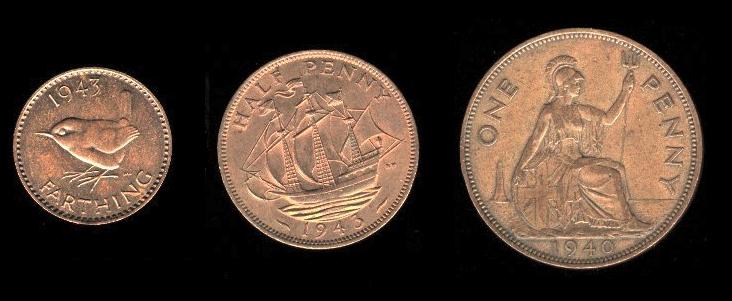
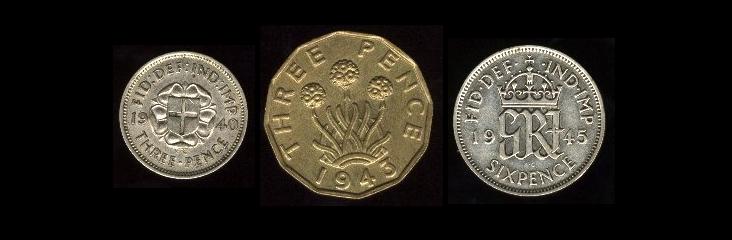
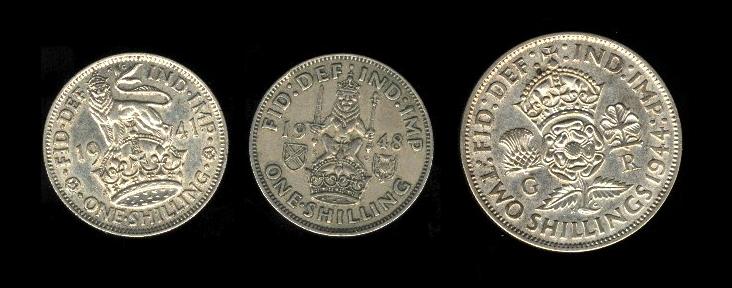
12 pence = 1 shilling
20 shillings = 1 Pound Sterling
Therefore 12 pence x 20 shillings = 240 pence in a Pound Sterling
One penny, two pence.
The short forms: d for penny (or pence), /- or s or sh for shilling, and £ for Pound Sterling. Thus:
One penny = 1d
six pence = 6d
two shillings = 2/-
three shillings and two pence = 3/2 (spoken: "Three & Two")
one pound = £1
EXCEPTION: You will see fractions of a pence on stamps sometimes they will be written out in English, other times in numbers, or both.
A half pence (or half penny) will be shown as ½d.
A quarter pence maybe written "One Farthing" or shown as: ¼d.
One and a half pence may be written "Three Half-Pence" or shown as 1½d.
As Canadians use currency as in cetain increments, 25¢, 50¢, $1, etc. The British system uses:
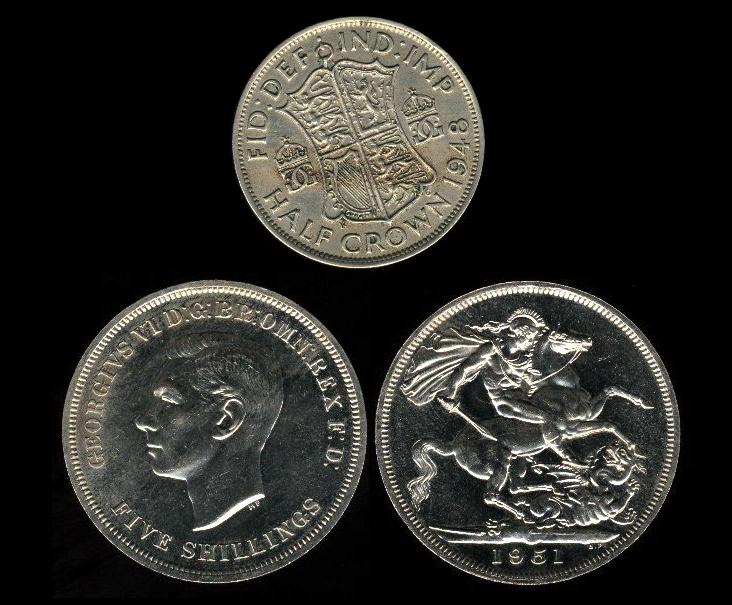
1d, 3d, 6d, 1/-, 2/-, 2/6, 5/-, 10/-
** note that 6d is half a shilling, 2/6 is 1/8th of a pound sterling, 5 shillings is a quarter of a pound sterling, 10 shillings is half a pound.
This will become easier as you see the stamps.
Remember, in the KGVI-era, most stamps were printed to meet a specific rate, other than those very low values and very high values, used for make-up rates.
I hope I have not confused you too much.
David
|
|
Send note to Staff
|
|
|
|
|
Valued Member
Australia
312 Posts |
|
|
Great post David. It bugs me that Scott use the abbreviation p for pence when listing pre-decimal Australian stamps  They have a pic of the stamp that clearly says 3d, then list the stamp as 3p. Some variations of the short form of shillings are ´˜ or ´· So you might see 2´6 or 1´· - difficult to reproduce exactly on the computer though. Balf |
Send note to Staff 
|
|
|
Pillar Of The Community
USA
867 Posts |
|
|
Pillar Of The Community
USA
1881 Posts |
|
|
Hello David......
Great info.....I'm sure the beginners here will appreciate this discussion. I've always wondered....why is d used for penny/pence ? |
|
Send note to Staff
|
|
|
Pillar Of The Community
USA
9748 Posts |
|
|
I just handed the bartender 5 pounds and took whatever change they handed back !! |
|
Send note to Staff
|
APS 070059 Life Member International Society of Guatemala Collectors I.S.G.C. #853 |
|
|
Pillar Of The Community
Canada
907 Posts |
|
|
Pillar Of The Community
Canada
907 Posts |
|
|
Quote:
why is d used for penny/pence ? I can answer this one. Pre-1971 amounts of less than 1/- (one shilling) were denoted with a "d" which derived from the term "denarius", as in 2d, 6d, 10d, which came directly from Roman times. Don't forget that the Romans once occupied most of England. |
|
Send note to Staff
|
|
|
Pillar Of The Community
USA
9748 Posts |
|
|
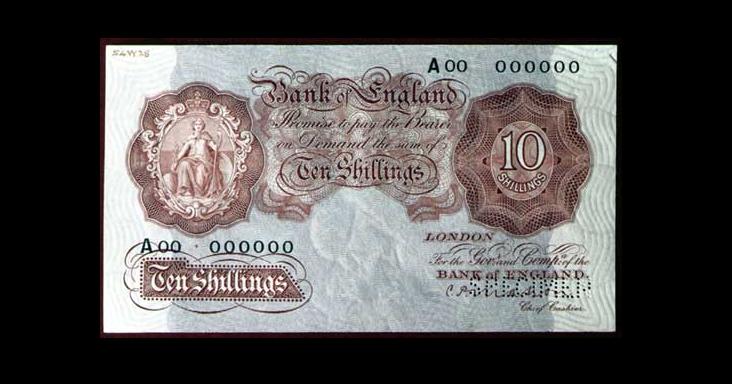
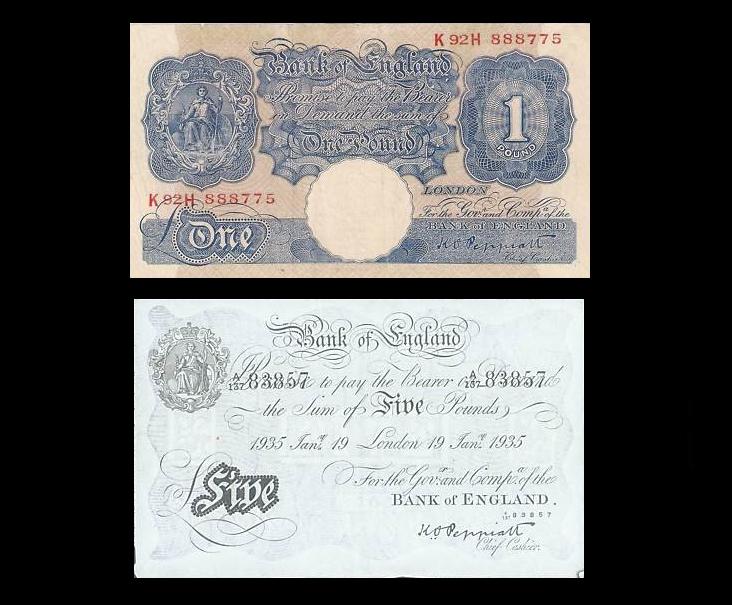
WpgLwr Nice Display of coins and notes !! |
|
Send note to Staff
|
APS 070059 Life Member International Society of Guatemala Collectors I.S.G.C. #853 |
|
|
Pillar Of The Community
Canada
1755 Posts |
|
|
Rest in Peace
Canada
6750 Posts |
|
|
Very Nice David. I had never bothered before to understand the currency, just went by what was on the stamp. Oh, I need that stamp kind of thing, not bothering what it said really. Your presentation makes it nice and clear. All the information in one place. Thank You. Well, except I was confused by you saying one penny = two pence, not understanding yet and thinking you were doing a currency conversion of some sort that would become clear later. Now I see you were saying One Penny singular use compared to Two Pence plural use (for multiple Pennies).  Thus the sentence 'If I put my penny in this pile of pence it'll be just one more penny in the pile.' is a correct way to say it(?) (I hope!). Isn't it nice when someone gets most of the info but misses a critical little piece that prevents them from understanding the other bits.  Or because they have laboured under a misunderstanding for years and have to change their way of thinking about something in order to understand and 'clear up' the remaining confusion. I seem to run into this a lot. Hmmm. I always thought it was because I didn't eat enough fresh fruit or something.  Doug WpgLwr, Thanks for the nice money pics also. By the way, how do Crowns and half-crowns fit into the picture? |
|
Send note to Staff
|
|
|
Pillar Of The Community
Canada
907 Posts |
|
|
A Crown is 5 Shillings; A Half Crown is "Two Shillings, Sixpence" (or "Two and Six"). A Pound would equal 4 Crowns or 8 Half Crowns. |
|
Send note to Staff
|
|
|
Pillar Of The Community
Canada
1755 Posts |
|
|
Puzzler:
Yes, the singular of penny is penny, the plural is pence.
In a quirky way, you can say, two penny, four penny. That's why Canada's Scott No. 1 says on it "Three Pence", but we all call it a "Three Penny Beaver".
David |
|
Send note to Staff
|
|
|
Pillar Of The Community
China
1313 Posts |
|
|
Pillar Of The Community
Canada
907 Posts |
|
|
Pillar Of The Community
Canada
1755 Posts |
|
|
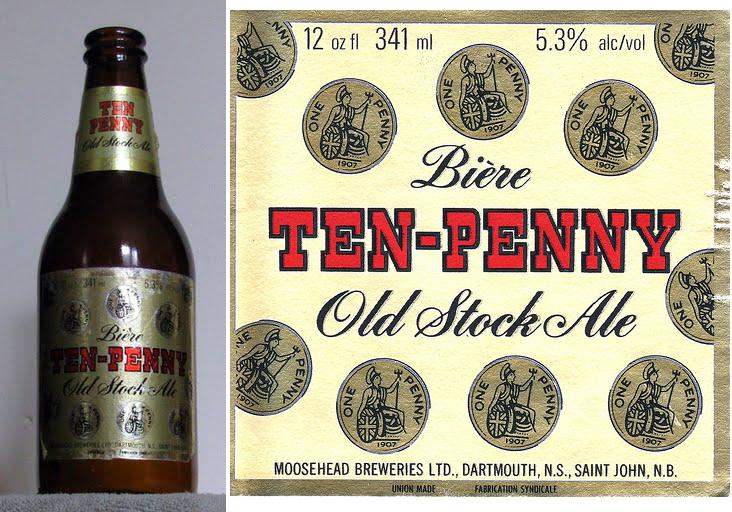
A few last comments before I move to Part 2... 1. According to the international monetery exchange tables on 1940 (right beforecurrency exchange was stopped due to the war), it took approximately four Canadian Dollars to purchase one Pound Sterling. 2. Thank-you all for your input and participation.  3. Glenn: Cheers! to your 10d Ale! David |
|
Send note to Staff
|
|
|
Valued Member
United States
143 Posts |
|
|
Replies: 23 / Views: 4,363 |
|




 Posted 10/29/2009 11:10 pm