Thanks to Rob for posting those two articles from Linns. The second one is more acurate in relation to the "stamps" than the first, but there are some serious innacuracies in the first article re the Polish army.
A large contingent of the Polish army did not retreat into Russia after the German invasion of Poland, rather, they were captured by the Soviets when they in turn invaded Poald from the east on 17 Sept. 1939. These soldiers & officers were imprisoned in POW camps.
The Polish army did not stay intact. About 8,000 of its officers were murdered (along with about 14,000 others} in the Katyn forest & other places in the Soviet Union in April and May 1940.
Once Germany invaded the Soviet Union, the Poles were now allies & Stalin let those who wanted to, leave & eventually form the Polish II Corps under the command of Lieutenant General Wladyslaw Anders. They passed through Palestine, Egypt & into Italy as part of the British Eighth Army, where they distinguished themselves at the battle of Monte Cassino. Two veterans of this campaign were members of the Polish Philatelic Society in Melbourne when I lived there & they kept me quite poor with their philatelic wares.
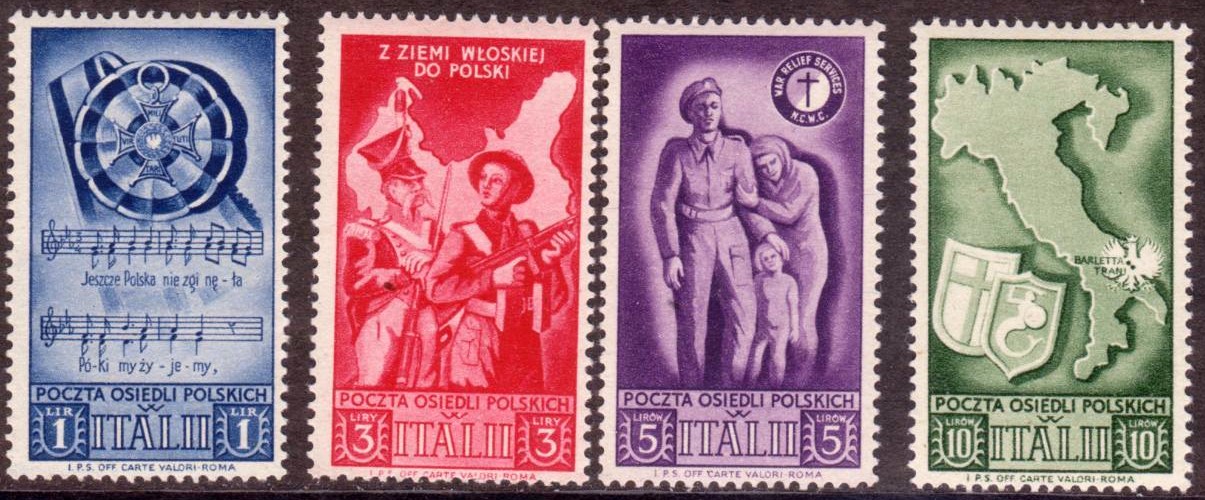
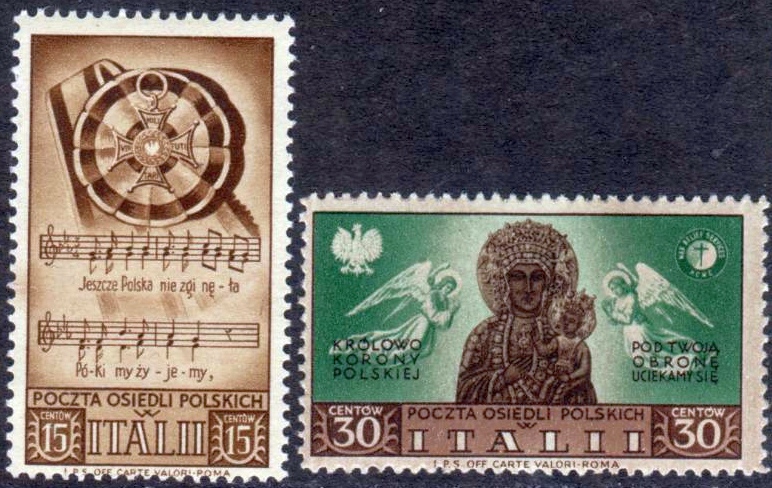
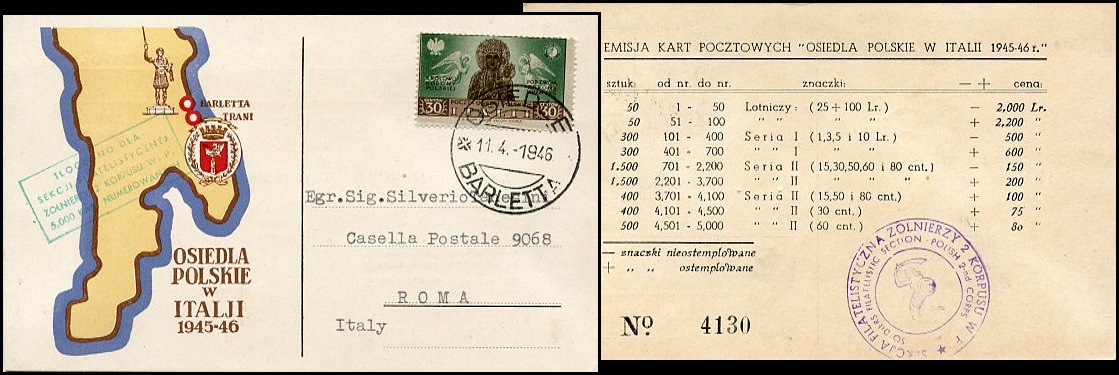
In July 1945 the II Corps opened up two Displaced Persons camps in Barletta & Trani for the Poles who found themselves in Italy, these included POWs, forced labourers etc. There doesn't seem to be any evidence as to exactly who came up with the idea for the labels but a directive by the II Corps dated 27 X 1945 gave permission for the issuance of charity labels. 50% of the proceeds were to go to the "War Relief Services - National Catholic Welfare Conference", 35% to the local population around Barletta & Trani, & 15% to widows & orphans of members of the Polish II Corps.
Regular mail for occupants of the DP camps was free & the II Corps used the Polish Filed Post # 120 (registration charges did incur a fee), but the philatelists in the camps & the Corps had a field day with producing cancelled covers & cards. The Italian Post Office in a directive published 18 III 1946 expressly forbade the use of these labels to pay postage.
First issue: 1946 13 Feb. 200,000 sets. Face value 19 lira, set sold for 70 lira
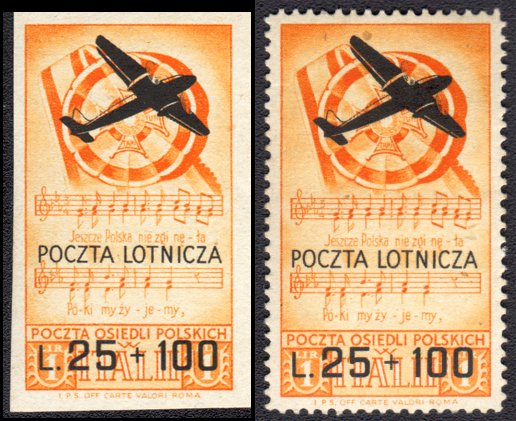
Second issue: 1946 28 Feb. Air. 85,000 perf & 8000 imperf
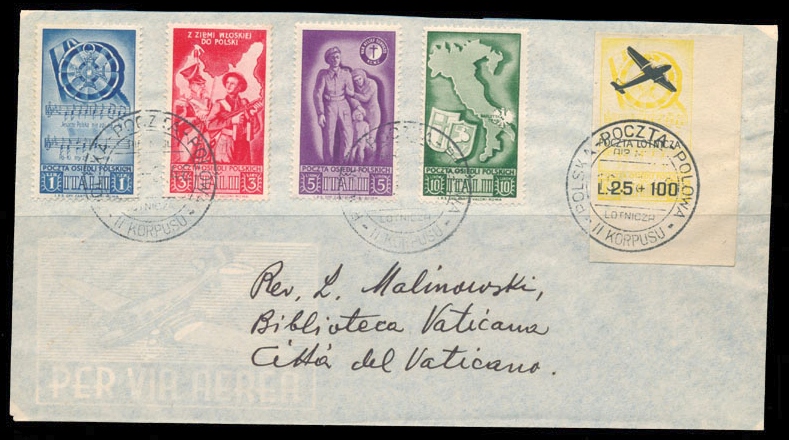
Third issue: 1946 10 April. Additional vaues. 1,000,000 sets. Face value 2L 35c, set sold for 10 lira.
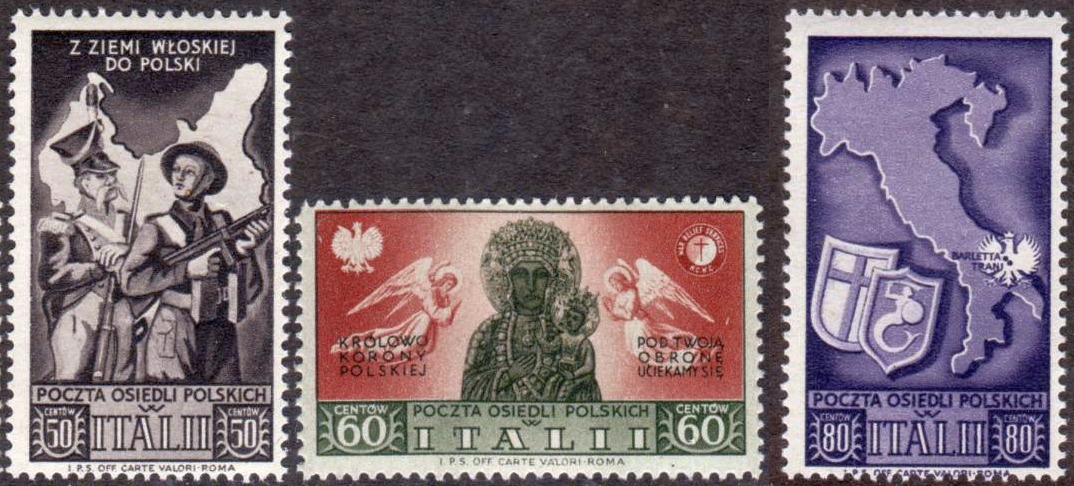
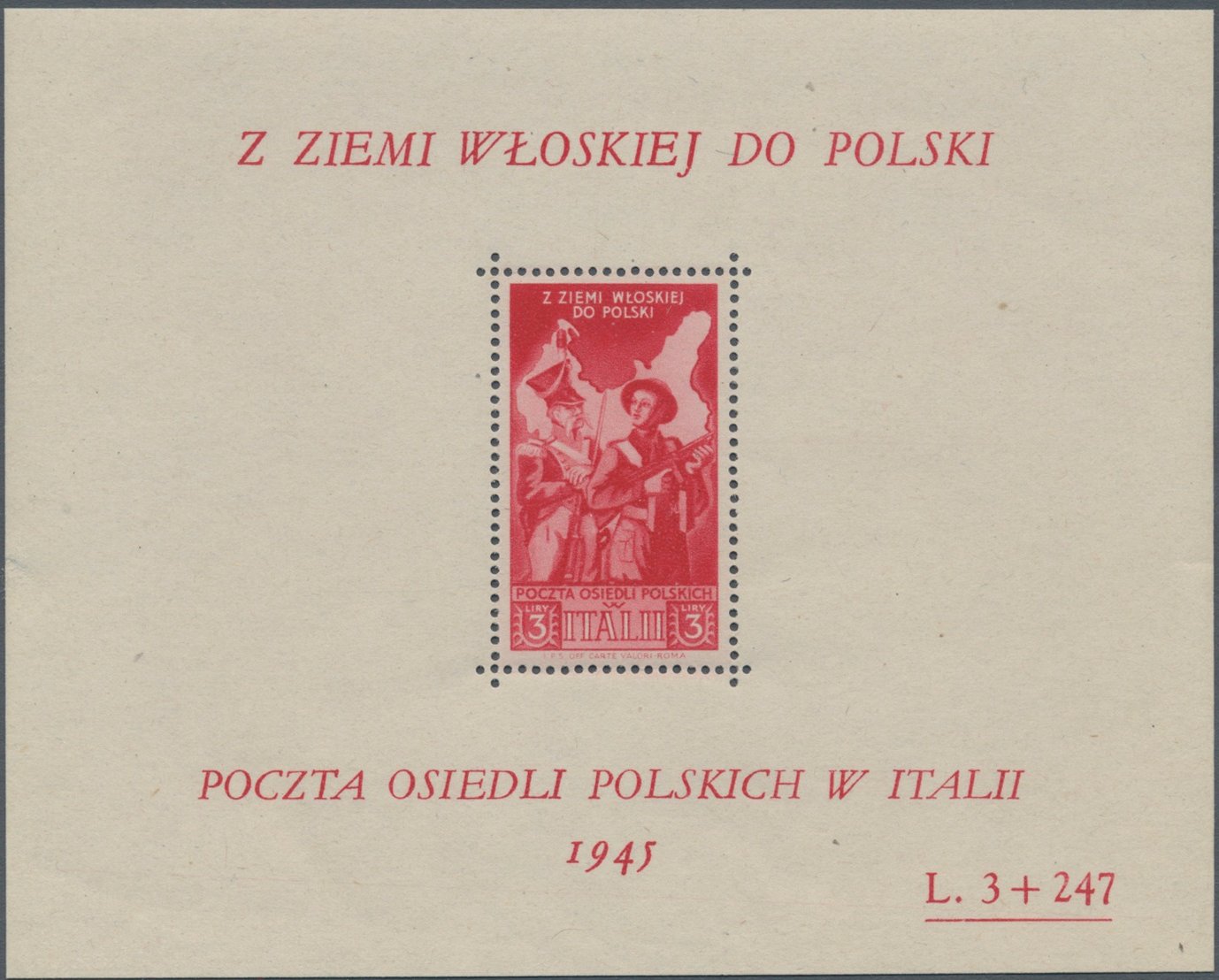
Fourth issue: 1946 19 April. Souvenir sheets, 5,000 each value
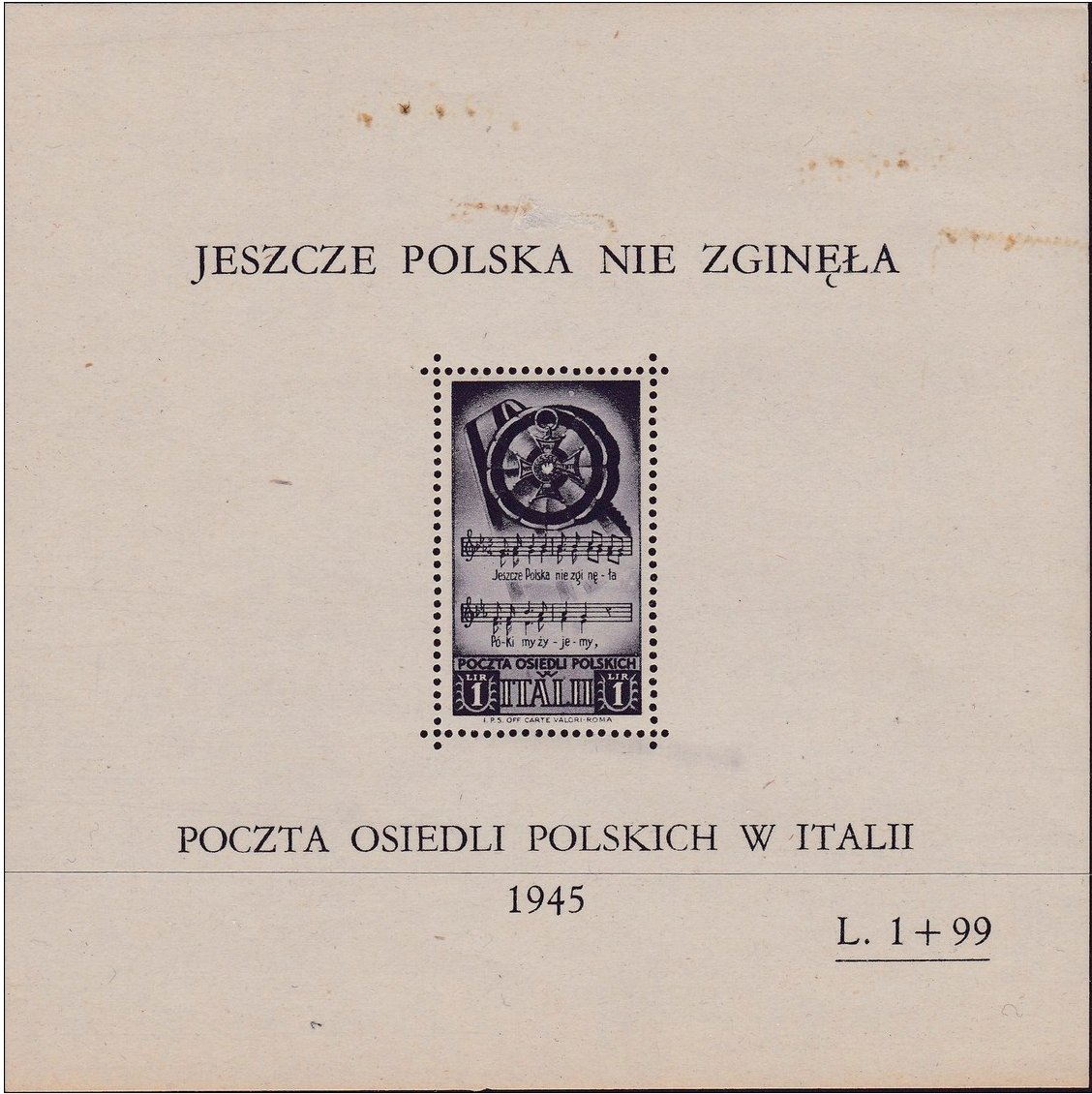
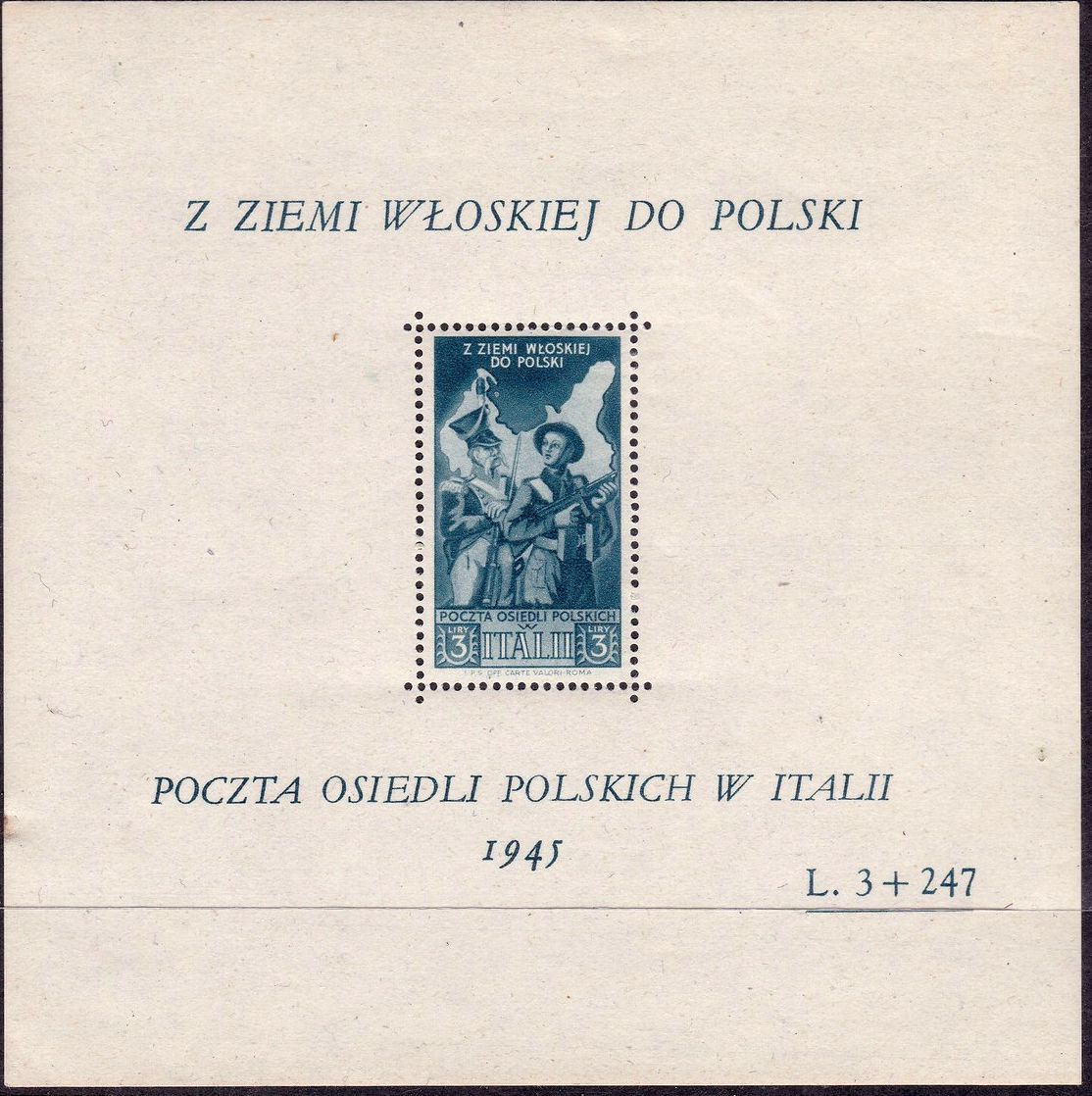
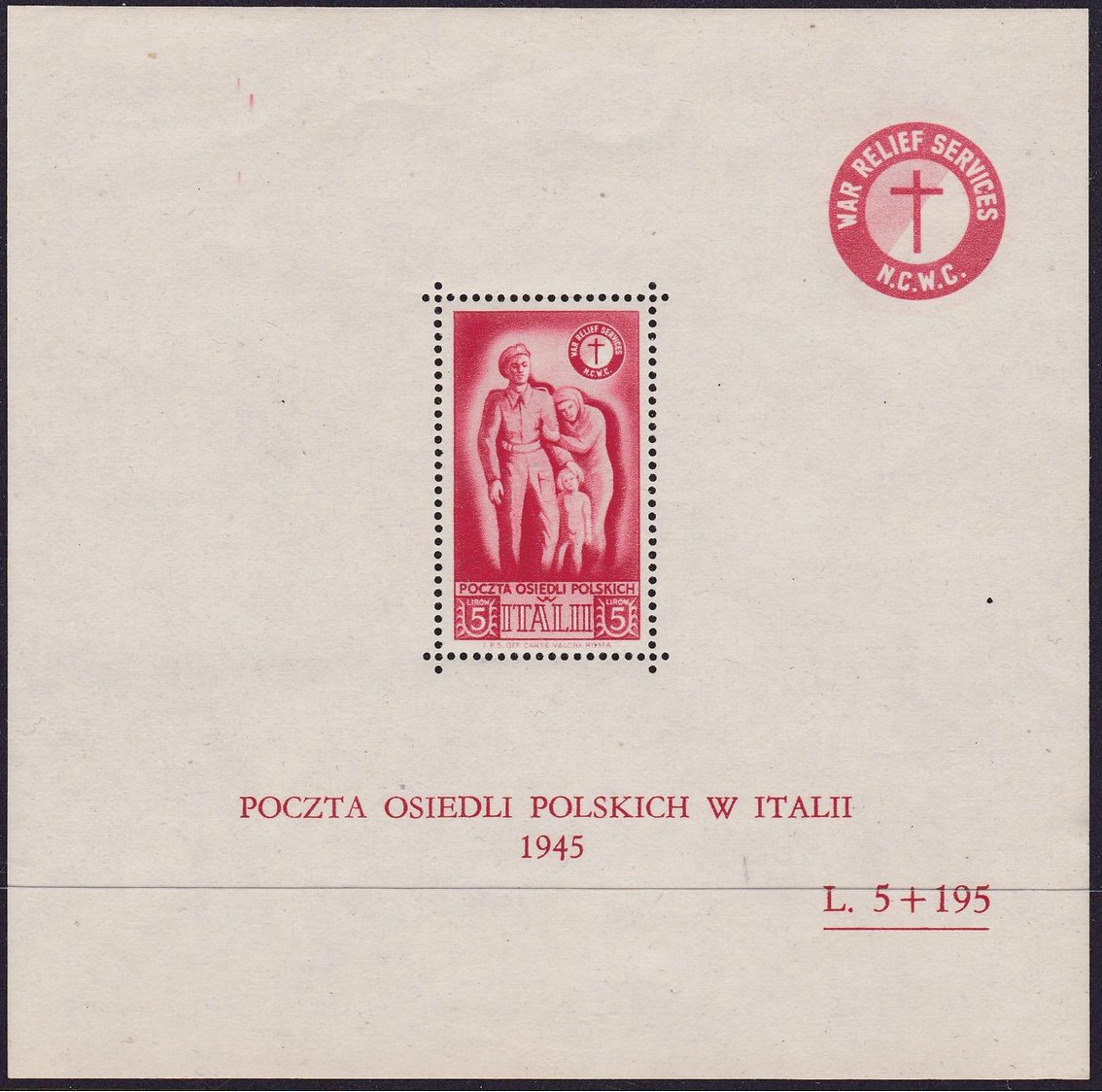
There is also a proof of a souvenir sheet which is quite scarce.
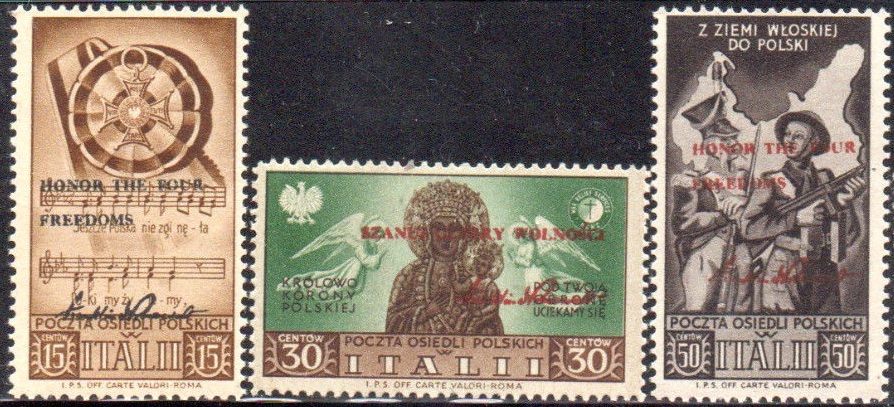
These are all that are listed in the Polish catalogues. Also mentioned are 5 values privately overprinted "HONOR THE FOUR FREEDOMS" in Polish, English & French, together with a signiature of President Roosevelt.
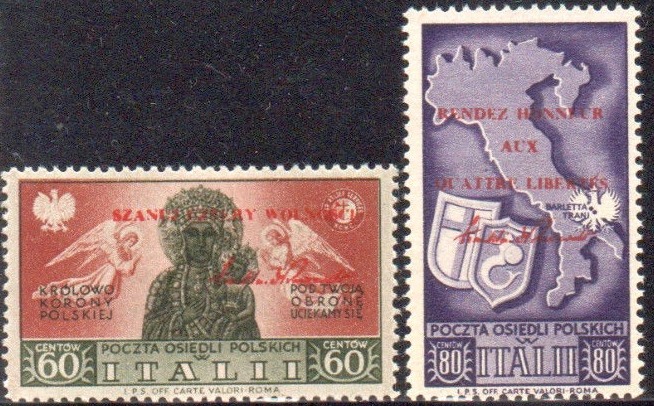
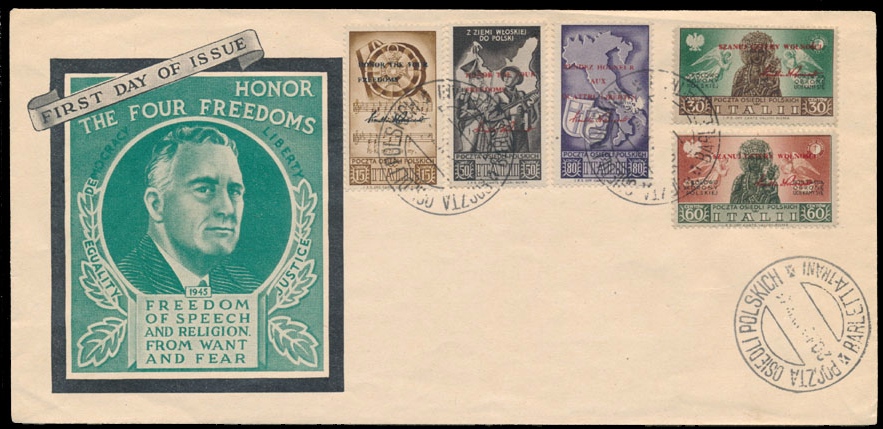
Not listed in any Polish catalogues are 5 values overprinted for airmail, one Polish auction site lists these as proofs.
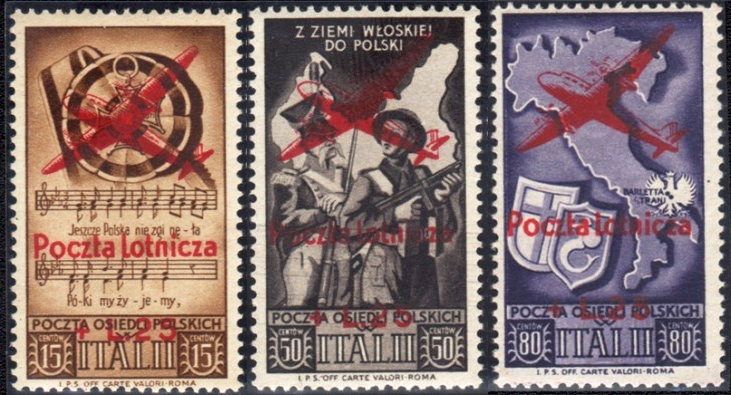
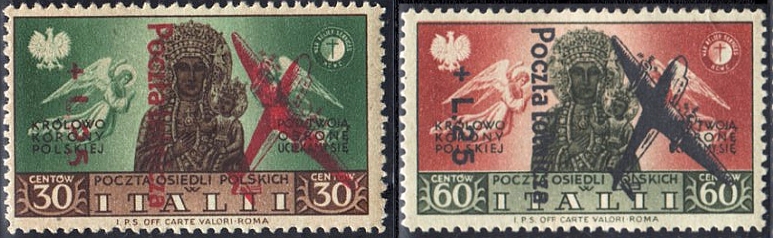
References
Filatelista periodical. No 8, 15 April 1959. Warsaw
Polskie Znaki Pocztowe, Vol 4, Warsaw 1966
Katalog Specializowany Znakow Pocztowych Ziem Polskich 1990, Warsaw
History of the Polish Army Postal Service - Middle East & Italy 1940-48, Ryszard Wagner, Caldra House, GB 1992





 Posted 08/15/2018 7:12 pm