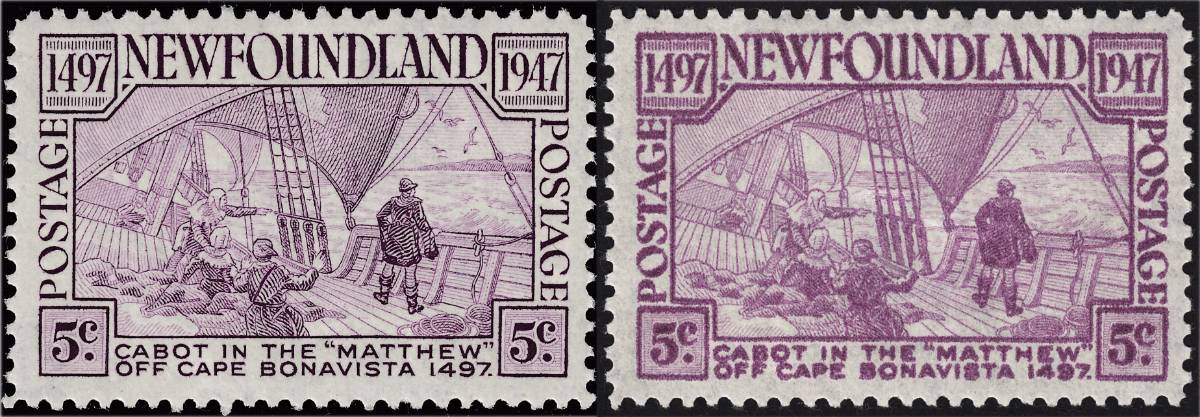
I have used this Scott 274 - N.S.S.C. 256 (Newfoundland Specialized Stamp Catalouge.) as an example.
FIG.1 below are 2 Scott 274 (Cabot in Matthew stamp...
"A" stamp is what looks like a normal ink printed stamps)..
"B" is the stamp am concerned about that may be printed in
Aniline ink.Organic pigment, which is made from carbon, is used for making black ink.
Inorganic pigments, which are made by mixing various chemicals together, are used for colored inks.

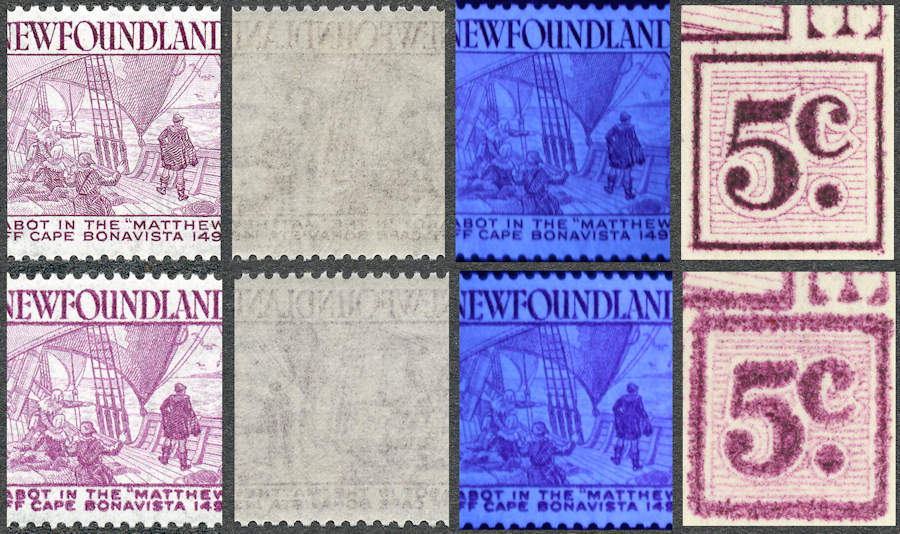
Here is the back of these 2 stamps..
"B" stamp has all the characteristics of an Aniline printed stamp.
..The bleed is usually caused by thinned out Aniline stamps.
Aniline ink is dissolved in alcohol or other volatile solvents.
A lot of normal inks are oil based.

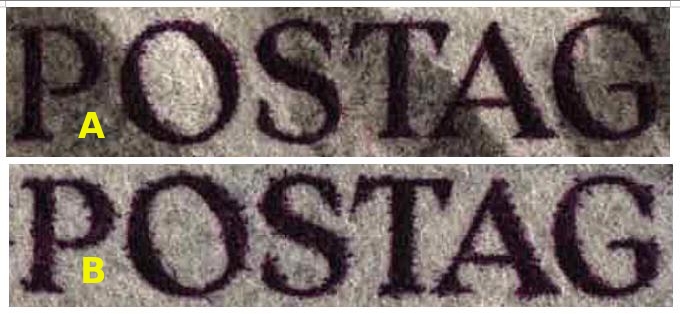
Below picture shows
"A" as being a normal printer ink printing
on the word postage and
"B" has the characteristic of blurry ink results..(Aniline)
Both A and B stamps have slightly different colours as shown below.

Below is a drawing showing the difference between normal ink and aniline ink...I am showing this drawing because of my 5 years experience in Lithography in my early years..
Normal ink has a certain tackiness to it because the skin texture is present, while solvent based inks such as Aniline ink is the same as putting paint thinner to have paint spread more easily.
Also Solvent based inks will penetrate paper more than normal, and thats way Aniline ink bleeds through paper easily.

This issue had 5 million stamps printed, but only 1000 were printed with Aniline ink..Going under what collectors say that approx. 10% of stamps still exist..This means probably best estimate, only 100 survived over the years.
Bottom line..stamp "B", Aniline or not..





 Posted 08/21/2018 2:57 pm