Stamp Community Family of Web Sites
Thousands of stamps, consistently graded, competitively priced and hundreds of in-depth blog posts to read


Stamp Community Forum
 
Username:
Password:
Save Password
Forgot your Password?

This page may contain links that result in small commissions to keep this free site up and running.

Welcome Guest! Registering and/or logging in will remove the anchor (bottom) ads. It's Free!

US Airmail Collection--What To Do Next

 
To participate in the forum you must log in or register.
Author Previous TopicReplies: 13 / Views: 2,515Next Topic  
Valued Member

United States
12 Posts
Posted 09/17/2018   08:45 am  Show Profile Bookmark this topic Add Jimbo to your friends list Get a Link to this Message
An area of focus for me is U.S. airmail. In searching and reading many threads and posts on this Forum, it seems my reason for deciding initially to focus on U.S. airmail is shared with other similar collectors—that it is reasonable to achieve a "complete" collection of U.S. airmail postage stamps.

What do other collectors who specialize in U.S. airmail decide to do after they've collected all of the airmail postage stamps and after they've filled all the album spaces?

The American Air Mail Society offers many suggestions and possibilities for expanding an airmail collection to include other additional areas of concentration. There is even a 28-page guide to collecting airmail that can be downloaded from their website.

For those of you who specialize in U.S. airmail—what are your areas of concentration?

And just as importantly, how do you display or mount your airmail collection, particularly if it includes a specific area of concentration?

***

I'll explain where I am now with my U.S. airmail collection.

I decided to collect only mint/never-hinged stamps that are at least VF. These were mounted in a Safe hingeless album. But then I started to collect additional varieties of airmail stamps for which there were no spaces in the printed Safe album, so I proceeded to create custom pages—which has been a lot of fun as I consider various ways about how I want to best display my collection.

My airmail collection includes:

• All stamps including coil pairs, plate blocks and booklets in MNH

• Most of the individual stamps and coil pairs are in the Safe hingeless album while plate blocks and additional booklet issues are in Showgard black mounts on custom designed album pages

• Individual stamps for all of the major catalog numbers including C13-C15 and including wet and dry printings

• Plate blocks start with C7 (except for the Zepps) consisting of one plate block example for each stamp

• For coil stamps, I have a single stamp as well as a coil pair and all coil pairs are joint line pairs

• For booklet issues, I have both the booklet pane including all slogan varieties as well as the booklet itself—so, for example, I have C25a mounted together with two full/mint booklets (BKC2 and BKC3), since one booklet contains two panes and the other booklet contains four panes

A specific question: What do you suggest I use to mount the full mint booklets? I thought about using a clear plastic and acid free business card page, but I prefer the booklet to be mounted to the custom album page. I probably will use acid free photo mounting corners, unless someone has a better idea.

***

What do I collect now in my U.S. airmail collection?

Perhaps air post stamped envelopes (e.g. UC1, etc.) or air post postal cards (e.g. UXC1). Either or both seem a natural next step. I've not collected these items before. Any suggestions or comments about these items?

Are FDCs the way to go next?

I've never collected any FDCs—which has never appealed to me—and I know nothing about particular cachet makers. How do you decide on which cachet maker—or do you collect a variety of cachet makers? Or no cachet maker?

I thought about crash covers, but I wonder if this is too limiting and whether acquiring such a narrow subject might be expensive and/or difficult.

Are there other covers or postal history as opposed to FDCs that you collect?

If I choose to specialize in a single series (e.g. DC-4 Skymaster) or an individual subject (e.g. Lindbergh—with a focus on C10), then what would be some guidelines or suggestions?

I know there is no one right answer. It is what ultimately most appeals to me. But I'm very interested in anything other airmail collectors can share with me about your own experiences--and possibly avoiding any pitfalls or frustration by pursuing an ill-conceived area of concentration.

Send note to Staff

Pillar Of The Community
United States
8956 Posts
Posted 09/17/2018   09:11 am  Show Profile Bookmark this reply Add Petert4522 to your friends list  Get a Link to this Reply
One of the most interesting areas would be ( in my opinion ) covers that show the correct usage for the different stamp issues. To me that is more relevant than collecting mint stamps

Peter
Send note to Staff  Go to Top of Page
Pillar Of The Community
United States
851 Posts
Posted 09/17/2018   09:40 am  Show Profile Check paperhistory's eBay Listings Bookmark this reply Add paperhistory to your friends list  Get a Link to this Reply
An easy expansion if you want to stay with the stamps is to try to collect all of the plate blocks (or as many as you can) by number and position. That will keep you busy for a while. The stationery is a good add-on as well (and I'd say that international airmail stationery - the aerogrammes and the postal cards - are a good challenge to find properly used).

I like C4-6 so I collect the "zone" airmail rate period. I also combine other interests so have been developing a collection of Ohio airmail, with the idea of eventually putting together an exhibit showing the development of airmail in Ohio.
Send note to Staff  Go to Top of Page
Pillar Of The Community
United States
612 Posts
Posted 09/17/2018   10:44 am  Show Profile Bookmark this reply Add Walkman82 to your friends list  Get a Link to this Reply
Jimbo,

When I recently reached the point you're at, I expanded my airmail collection to include color, perforation, and tagging varieties; tagging omitted; EFOs (double transfers, color[s] omitted, imperf between), precancels, FDCs, air post envelopes, air letter sheets, and air post postal cards. Basically everything airmail related in the Scott and Mellone catalogs.

Scott
Send note to Staff  Go to Top of Page
Pillar Of The Community
United States
6661 Posts
Posted 09/17/2018   7:02 pm  Show Profile Bookmark this reply Add stallzer to your friends list  Get a Link to this Reply
Commercial covers to exotic locations, non philatelic.
Send note to Staff  Go to Top of Page
Rest in Peace
United States
1189 Posts
Posted 09/17/2018   10:29 pm  Show Profile Bookmark this reply Add Stampman2002 to your friends list  Get a Link to this Reply
Jimbo,

So you think you're done, eh? You've got EVERYTHING for an airmail collection, right?

Not so fast, me bucko! Having completed the basic album of material, now it's time to go what I call "in-depth" with the collection. Hang onto your seat, 'cuz here we go!

- You've already added plate blocks, but how about engraver/siderographer initials? Here's an example:
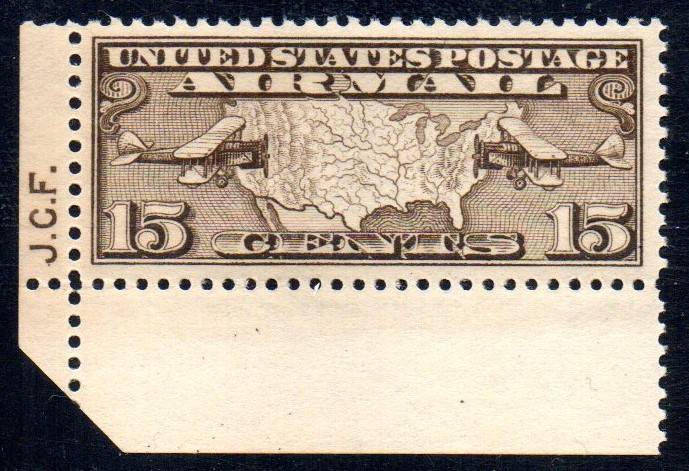


You can find these on the earlier stamps through the 1930's issues. The practice fell by the wayside in the 1940's with WWII and never was resumed.

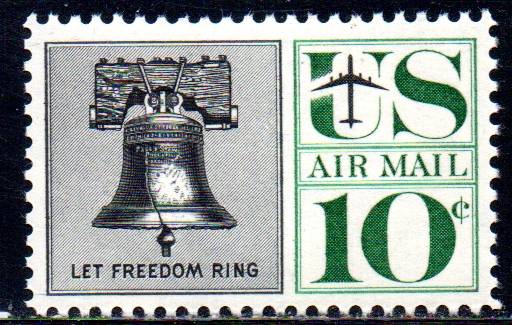
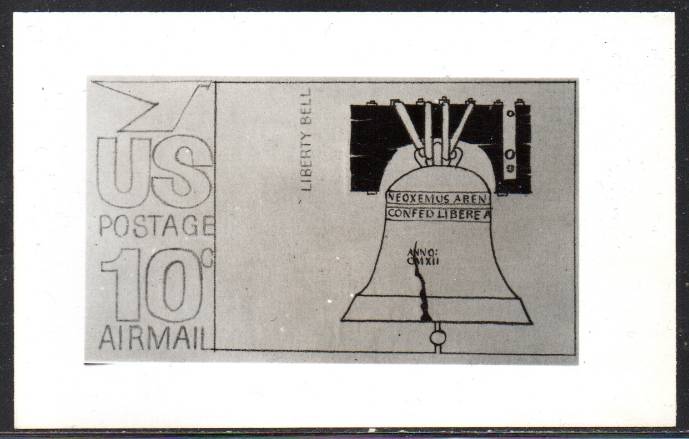
- Add the preproduction material. One of the methods used by the USPOD in the 1920's through the 1960's was photographic essays. This allowed the artists at the BEP to create one image, have it photographed and then passed to the people who needed to see or approve of the design. Here's a couple of examples. I've included the actual stamp for comparison:
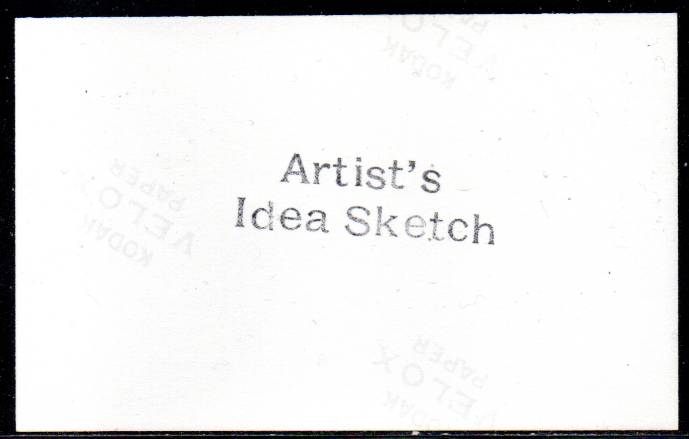
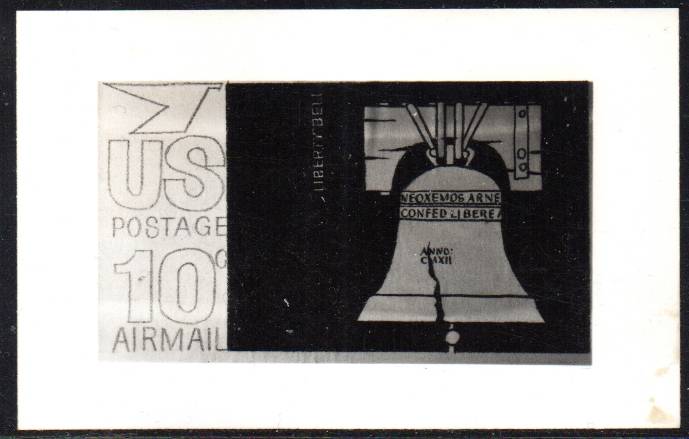



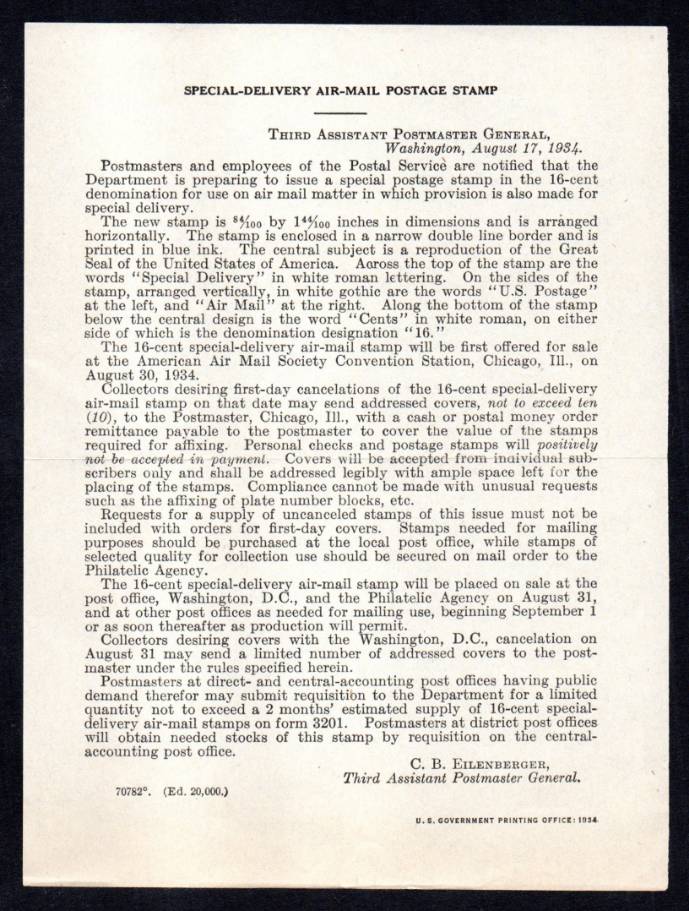
You can also add the various ways the USPOD notified everyone about upcoming stamps. Through about 1950, the 3rd Assistant Postmaster General would issue a notice, like this for the the Airmail Special Delivery stamp, Scott CE1.


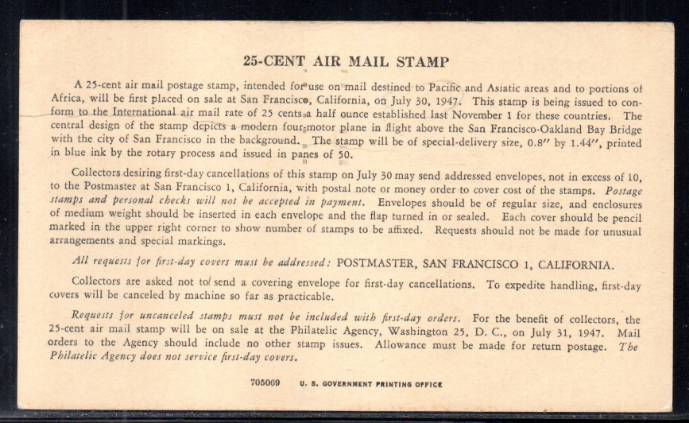
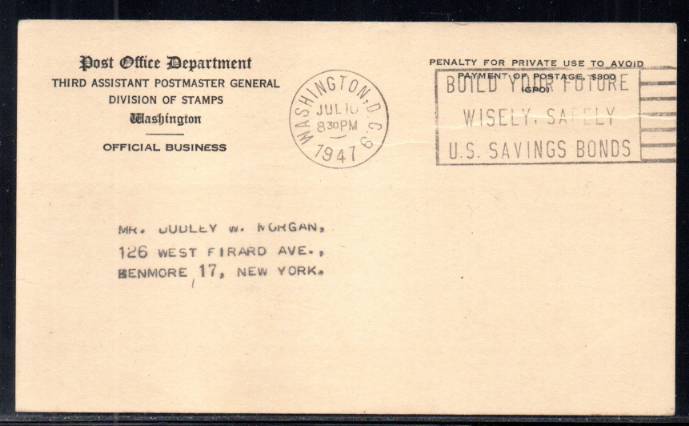
Another way it was done, for a brief period from 1938 through 1947, was with a card notice. Collectors, first day cachet makers, or whoever wanted to could sign up and have these notices sent to them. Here's an example:


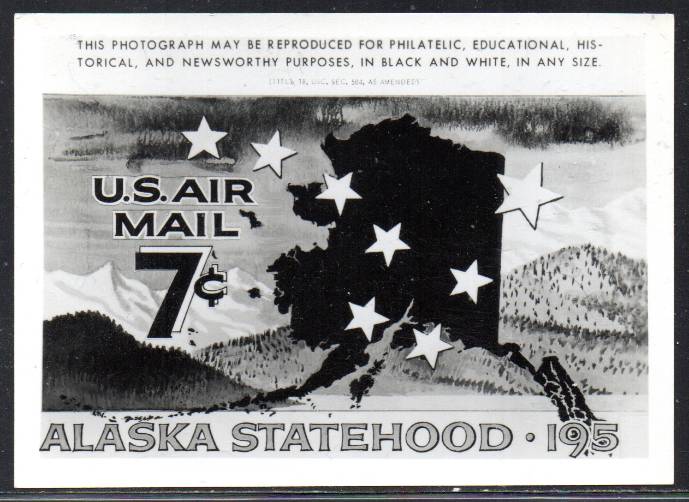
Then, starting around the 1930-1940 period, the USPOD began providing photographs of upcoming stamps to newspapers, cachet makers and magazines. This is an example of what is called publicity photos:


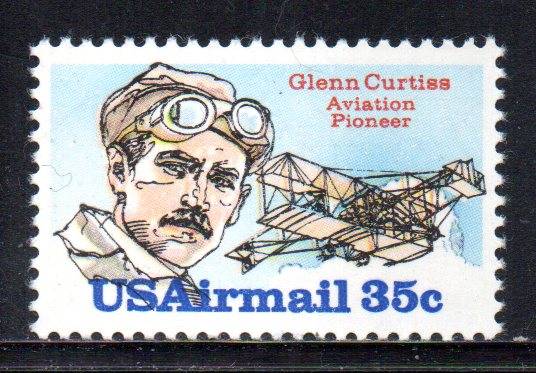
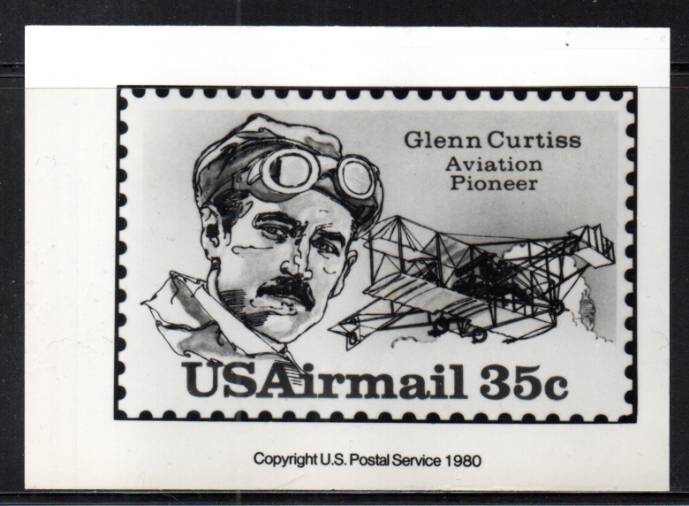
As technology advanced, the USPS add color transparencies. Here's an example of the stamp and both the publicity photo with the publicity transparency:
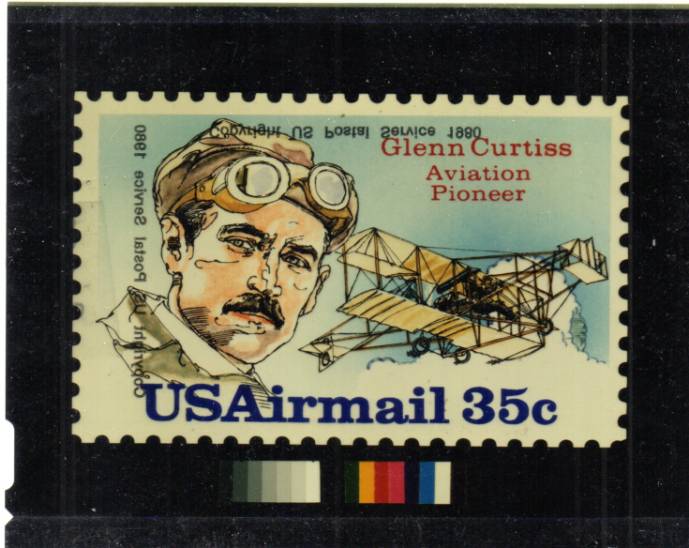


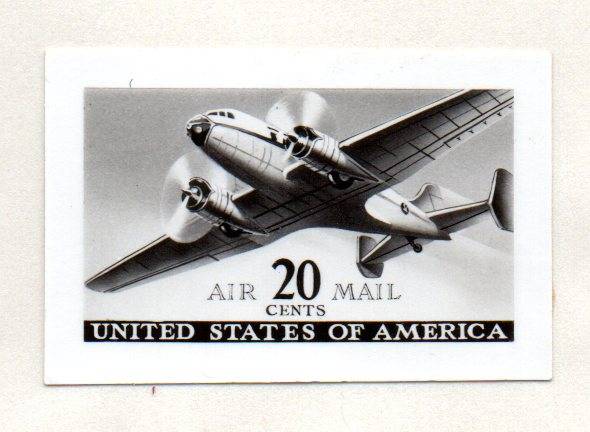
These are not to be confused with some of the photographic essays, which closely resemble the finished stamp, such as this example for the 20 cent Transport stamp, C29:


You could also add some stamps which were never issued. Here's two nice items.

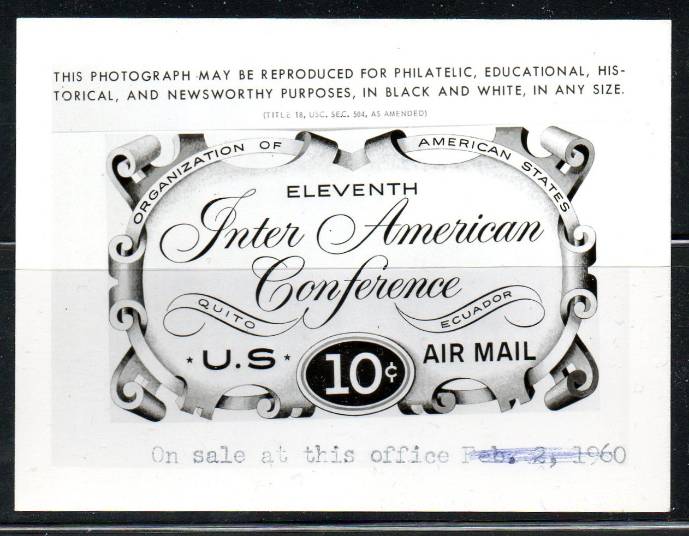
The first was an airmail stamp which was supposed to be issued for the Inter-American Conference in Quito, Ecuador. Problem was the conference was postponed, as was the stamp. Although announced in October 1959 with an issue date in February 1960, it never happened. Four plates were created, certified and then defaced in 1962 without ever having made an impression! Here's the only tangible evidence of the stamp that never was, the publicity photo:


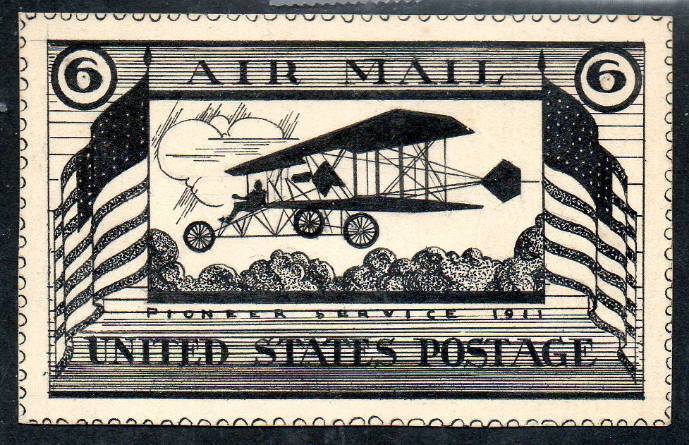
Another set is shown next. This was a series of designs created by Alicia Kessler. These are the original designs on card in black pen. These were featured in a 1936 Airmail Society Journal article.
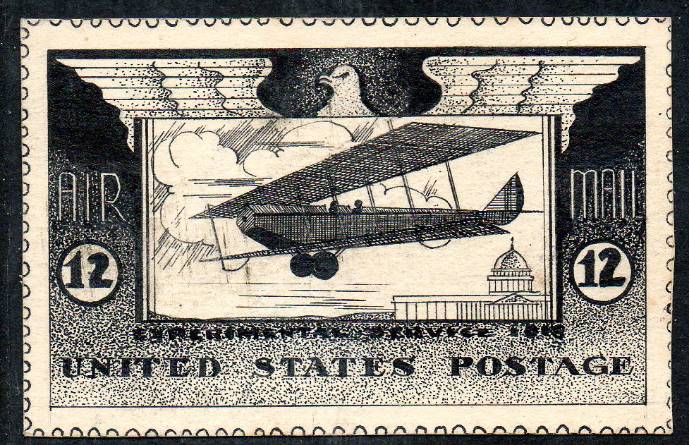
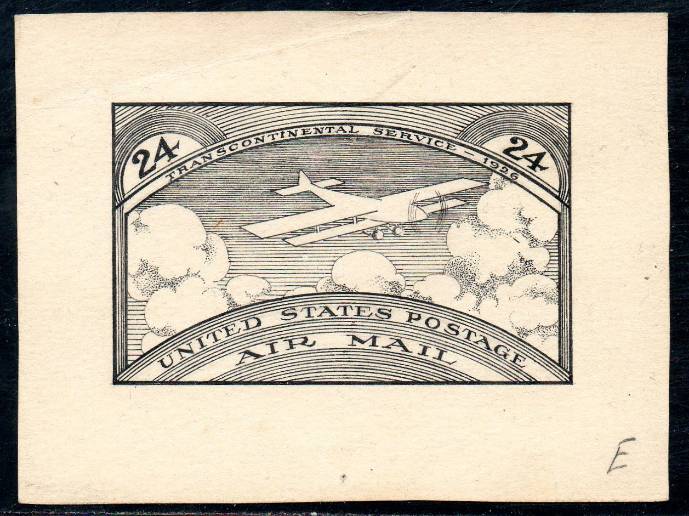
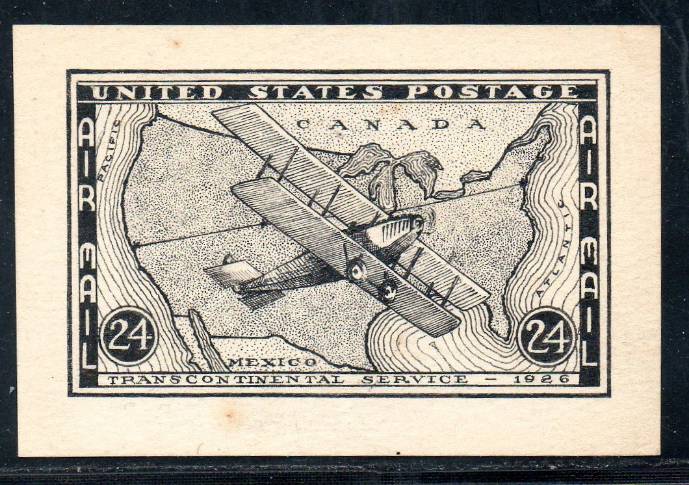
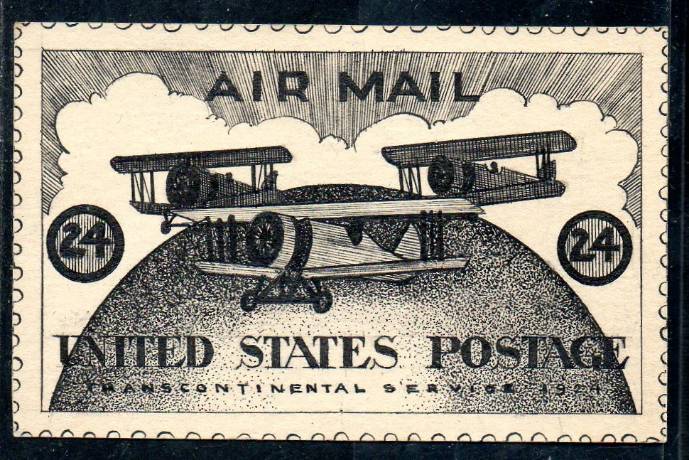
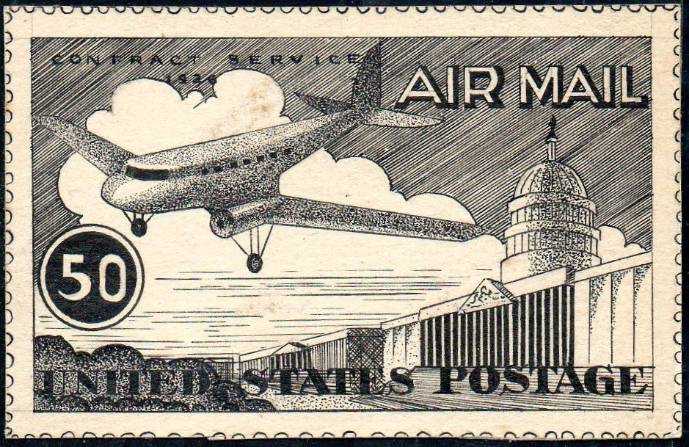
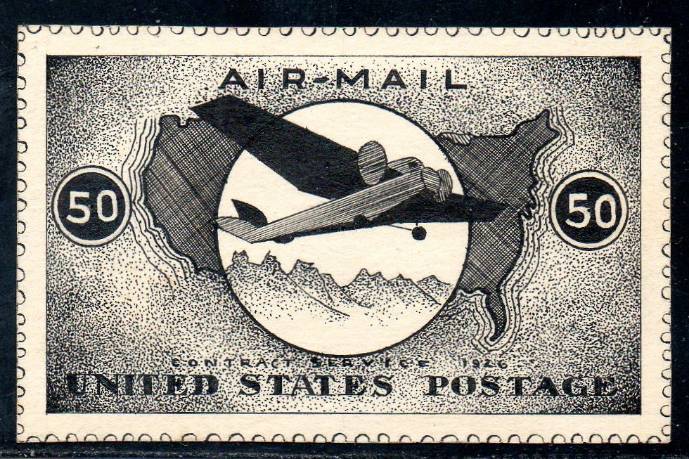
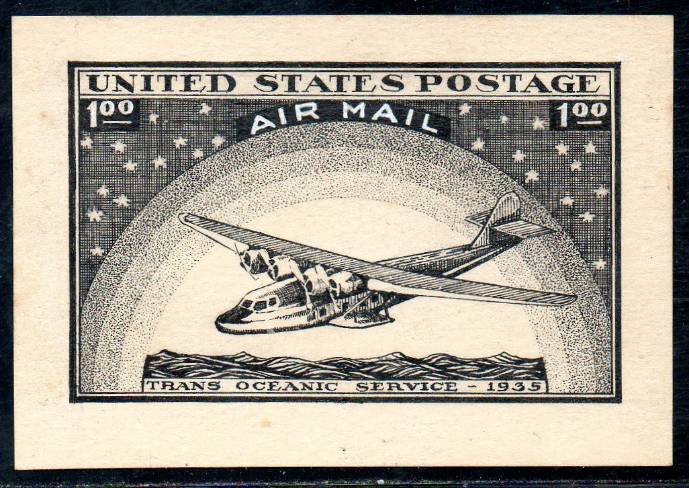


You could also add the post office bulletin sheets which the USPOD used between 1960 and the change-over to the USPS in 1971-72 period. Here's an example:
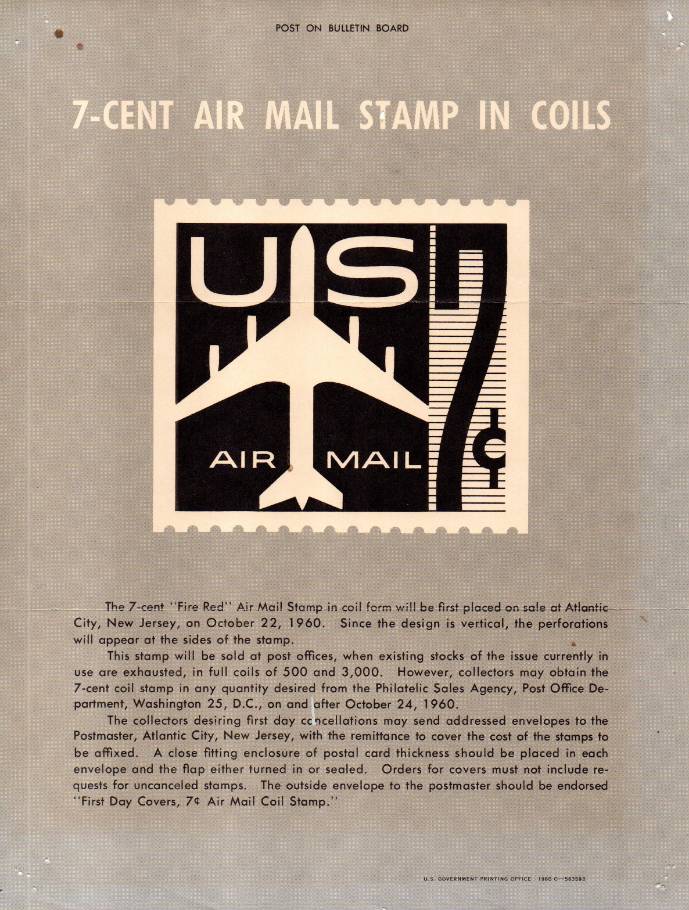


Postally used items - not FDC - are a nice addition, showing the stamps fulfilling the purpose for which they were meant. Here's a couple of colorful examples of airmail stamps used commercially and in the period of the stamp's use:
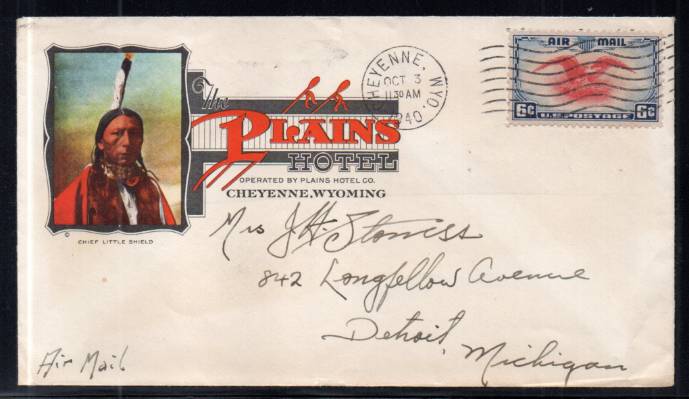
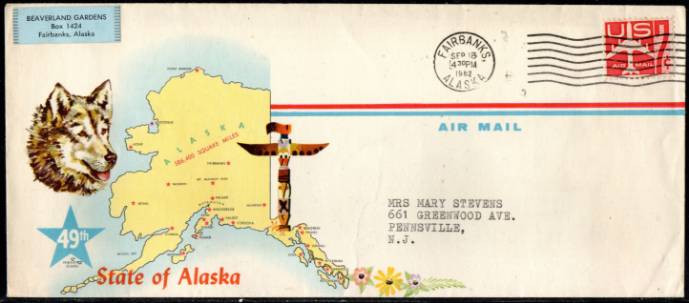
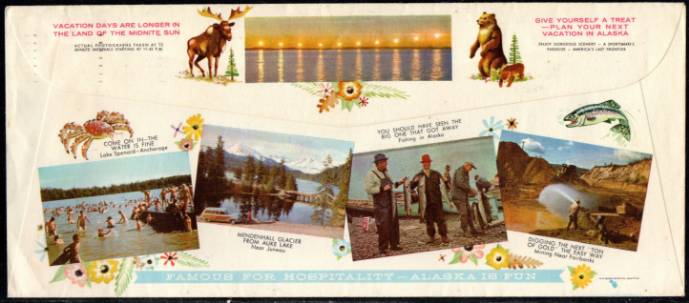


Exotic uses are always attractive. Here's an example from a sailor on Midway Island, less than a year before Pearl Harbor was attached.
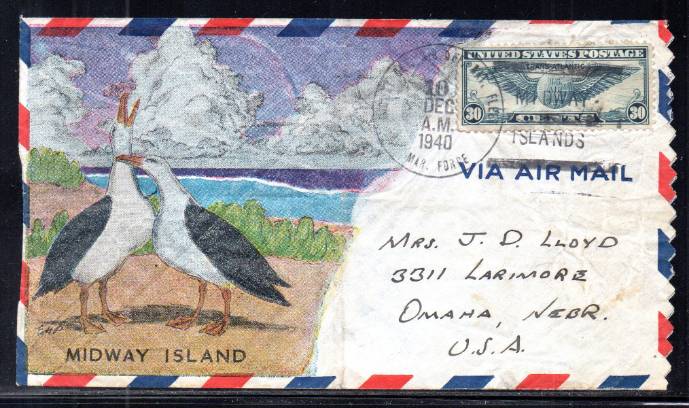


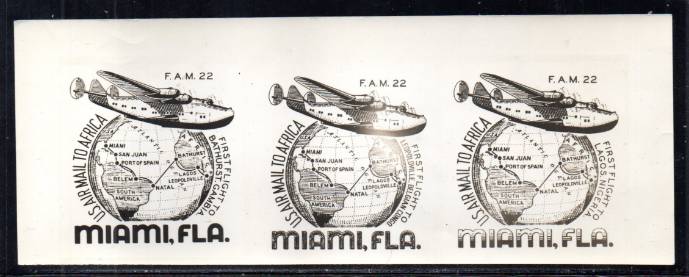
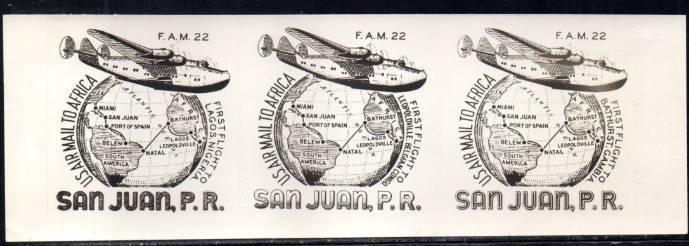
You could look into adding some of the Foreign Air Mail route covers. An adjunct to that would be the photographic essays for the cachets which required USPOD approval. Here's a couple of examples of those:


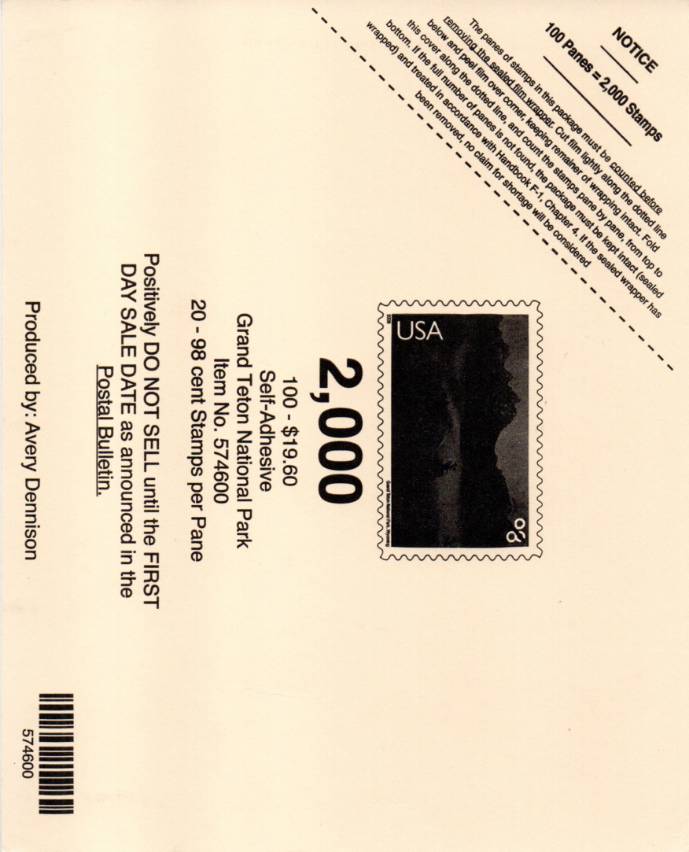
An interesting type of collateral item is the deck cards for the blocks of stamps. Each "brick" of stamps would have a card cover explaining what it was on top with a black card on the bottom. These have been in use for decades, at least. My earliest one is for one of the Overrun Nations issues of 1942. The more modern ones are a little easier to find, but still a challenge. Here's an example:


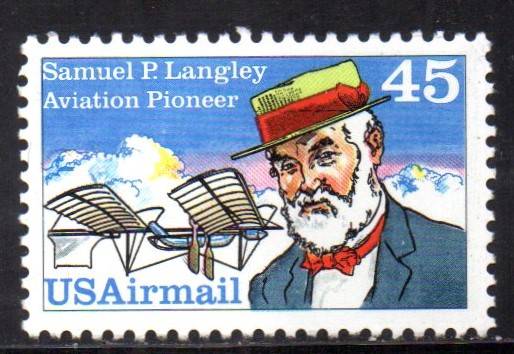
If you still need something to add to your burgeoning airmail collection, you can add programs and first day covers. Here are examples of each. along with the stamp they represent.
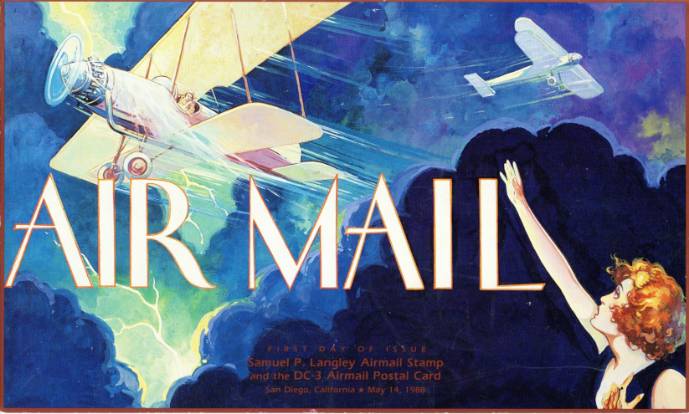
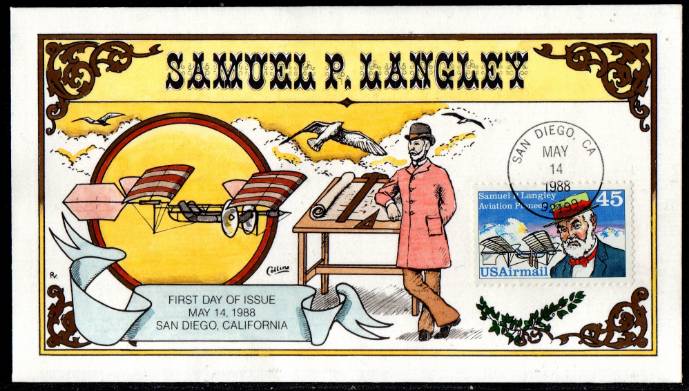


The final item up for consideration are the USPOD/USPS issued souvenir pages. Here's an example:
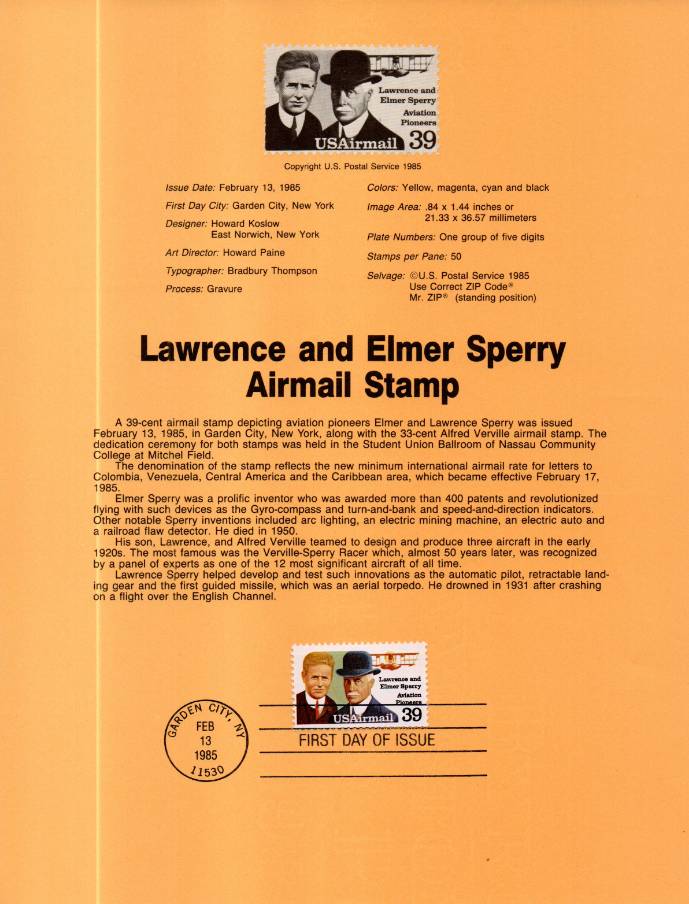


So, when you get this finished, let me know and I'll add a few more items to your collection list!

Send note to Staff  Go to Top of Page
Rest in Peace
United States
1189 Posts
Posted 09/17/2018   10:32 pm  Show Profile Bookmark this reply Add Stampman2002 to your friends list  Get a Link to this Reply
Jimbo,

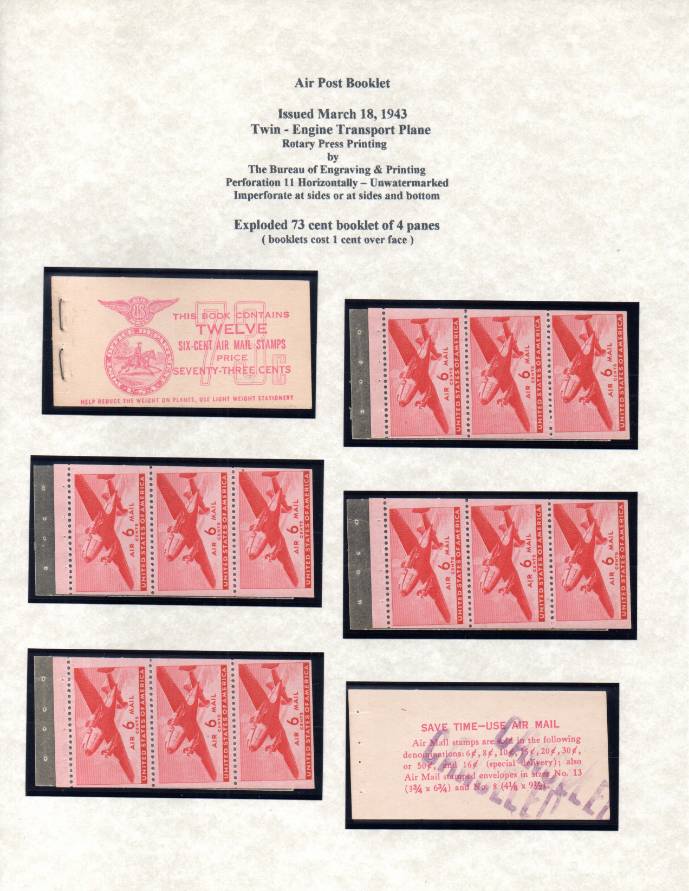
Here's one way to display the booklets. I explode them, then use all parts (except the staples) on the album page.


I think it makes for a visually appealing display which beats just having the booklet complete laying there. I do keep the staples, labeled in a bag for each one, so that should I ever decide to put them back together, it will be all original parts.
Send note to Staff  Go to Top of Page
Valued Member
United States
333 Posts
Posted 09/18/2018   12:41 pm  Show Profile Bookmark this reply Add ddreisba to your friends list  Get a Link to this Reply
I am one Zepp short of a full collection.

Don
Send note to Staff  Go to Top of Page
Valued Member
United States
12 Posts
Posted 09/19/2018   2:37 pm  Show Profile Bookmark this reply Add Jimbo to your friends list  Get a Link to this Reply
paperhistory suggests collecting all of the plate blocks by number and position.

I thought about that. I am not a collector of plate blocks generally--for reasons often discussed on this forum. But I did decide to collect at least one plate block for each airmail stamp beginning with C7 (again, with the exception of C13-C15) as part of my focus on my airmail collection. I even debated doing that.

The reason I decided against not collecting all of the plate blocks by number and position for the airmail stamps is due to the number. Take C11 for instance. There are 135 plate numbers. With a catalog value of about $40 each. Or take C18. Collecting the 4 plate numbers in 4 positions (16 total) for C18 would be pretty expensive--catalog value over $7,000. Other examples--C25 or C32 with 39 and 32 plate numbers respectively. Times 4 for the different positions. That's 156 and 128 different plate blocks for just those two stamps. Granted, the catalog value for each is not great for those two stamps and it might be a fun endeavor to see if you can collect them all, but what do you really have in the end.

Don't get me wrong. Others may have impressive plate block collections which might be based in part on different plate numbers and different positions. That is fine. It is simply not something that appeals to me.

Now, paperhistory's other suggestions--postal stationery or focusing on one series such as the C4-C6 involving the three zones--has some appeal.

I am especially intrigued with paperhistory's idea of developing a collection of the airmail from one state. I could concentrate in my home state of Indiana. I wonder what such a collection or exhibit would include and how and where would one go to acquire items for such a collection?
Send note to Staff  Go to Top of Page
Valued Member
United States
12 Posts
Posted 09/19/2018   2:49 pm  Show Profile Bookmark this reply Add Jimbo to your friends list  Get a Link to this Reply
Walkman82--Scott--suggests expanding my airmail collection to include basically everything related to airmail in the Scott and Mellone catalogs.

That's sort of where I was heading. I am not as knowledgeable as many of you and it will involve a learning curve for me about some of the color or perforation or tagging varieties that are out there. I am especially inexperienced when it comes to any kind of postal stationery collecting.

So much to learn!

Hence the joy of stamp collecting.
Send note to Staff  Go to Top of Page
Valued Member
United States
12 Posts
Posted 09/19/2018   3:16 pm  Show Profile Bookmark this reply Add Jimbo to your friends list  Get a Link to this Reply
WOW Stampman2002!!

So many examples of various suggestions. Your reply is amazing!

I also appreciate your separate response about displaying booklets. I had not considered the idea of simply "exploding" the booklet and mounting everything from that booklet.

Is this how many collectors commonly do this?

I think I still like the idea of including in my collection one mint (un-exploded) booklet for each booklet that was issued. And along with that also mounting separately a pane--or several panes if there are different varieties or different slogans. That is what I've done with my airmail collection.

Send note to Staff  Go to Top of Page
Pillar Of The Community
United States
612 Posts
Posted 09/19/2018   4:38 pm  Show Profile Bookmark this reply Add Walkman82 to your friends list  Get a Link to this Reply
Jimbo,

I have included the various booklet panes with different varieties and slogans in my airmail collection, but Stampman2002 has given me a different way of looking at including entire booklets. I like your idea of including an un-exploded booklet and his idea of the exploded booklet to show the different varieties. Thanks for the idea, guys.

Scott
Send note to Staff  Go to Top of Page
Valued Member
United States
12 Posts
Posted 09/19/2018   5:35 pm  Show Profile Bookmark this reply Add Jimbo to your friends list  Get a Link to this Reply
I have not fully decided about the best way to mount the "un-exploded" mint booklet on my custom album pages. Right now the booklets are in 104 Dealer Cards (or whatever size I have--maybe 102 or 107). I want to mount these with the rest of the airmail collection. I assume I should use acid free photo mounting corners--I have not tried using Showgard mounts, but I assume the bulk of the booklet would not work well in the mount.

Thankfully there are not that many booklets in the airmail collection. I suppose 12 or so. That means if they are all included in my custom album, their total bulk should not be very significant and hopefully should not detract from the overall appearance of the collection.

Certainly exploding the booklet as suggested by Stampman2002 solves the issue of the bulk of mounting a whole booklet. I still prefer to include a mint booklet--together with separate panes in Showgard mounts.

Any other ideas for mounting a booklet in an album other than with photo mounting corners?
Send note to Staff  Go to Top of Page
Pillar Of The Community
United States
612 Posts
Posted 09/19/2018   6:07 pm  Show Profile Bookmark this reply Add Walkman82 to your friends list  Get a Link to this Reply
An option may be clear pages made for baseball cards. They have enough space to hold an un-exploded booklet and hold 9 per page. I haven't used these for stamps, but they may be a good option.
Send note to Staff  Go to Top of Page
  Previous TopicReplies: 13 / Views: 2,515Next Topic  
 
To participate in the forum you must log in or register.

Go to Top of Page

Disclaimer: While a tremendous amount of effort goes into ensuring the accuracy of the information contained in this site, Stamp Community assumes no liability for errors. Copyright 2005 - 2026 Stamp Community Family - All rights reserved worldwide. Use of any images or content on this website without prior written permission of Stamp Community or the original lender is strictly prohibited.
Privacy Policy / Terms of Use    Advertise Here
Stamp Community Forum © 2007 - 2026 Stamp Community Forums
It took 0.28 seconds to lick this stamp. Powered By: Snitz Forums 2000 Version 3.4.05