I was puzzling a while ago about some strange transit times on items of mail travelling to and from Russia, and would like to share the solution. Here are two examples:
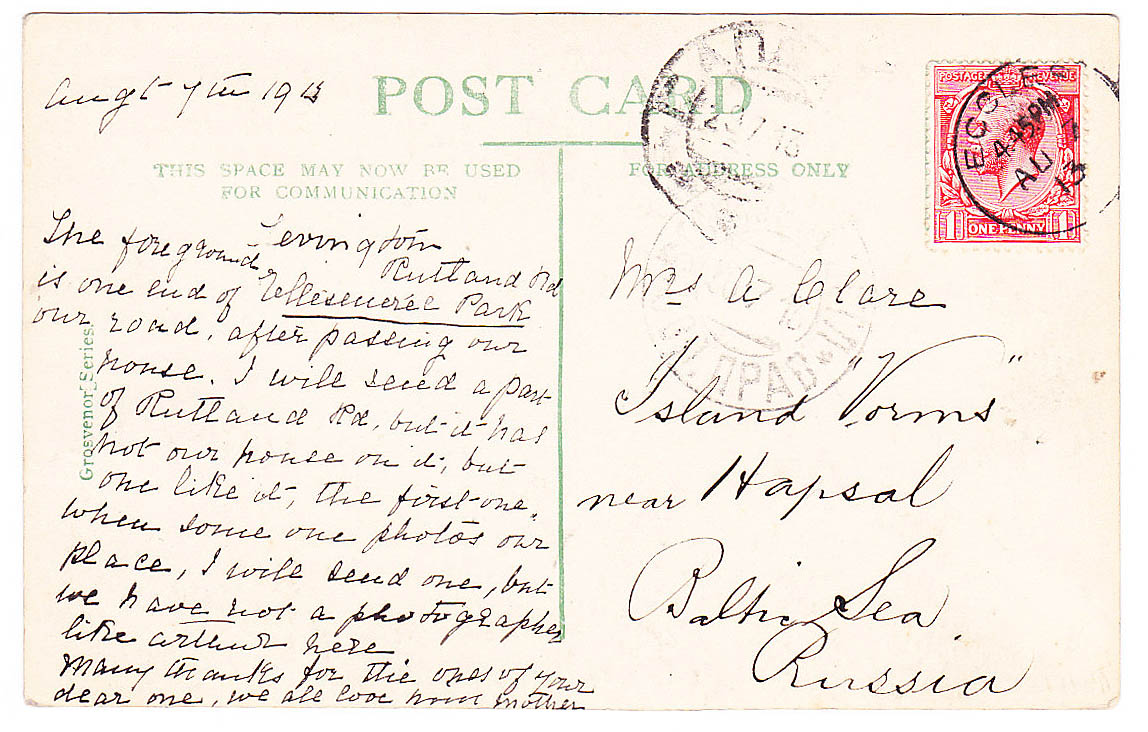
A picture postcard from the UK, cancelled Eccles 7 August 1913, to Vormsi Island in the Baltic Sea west of Estonia, with Gapsal (Haapsalu) transit CDS 29 July 1913, received Vormskoe (Vormsi) 30 July 1913. The card appears to have arrived a week before it was posted.
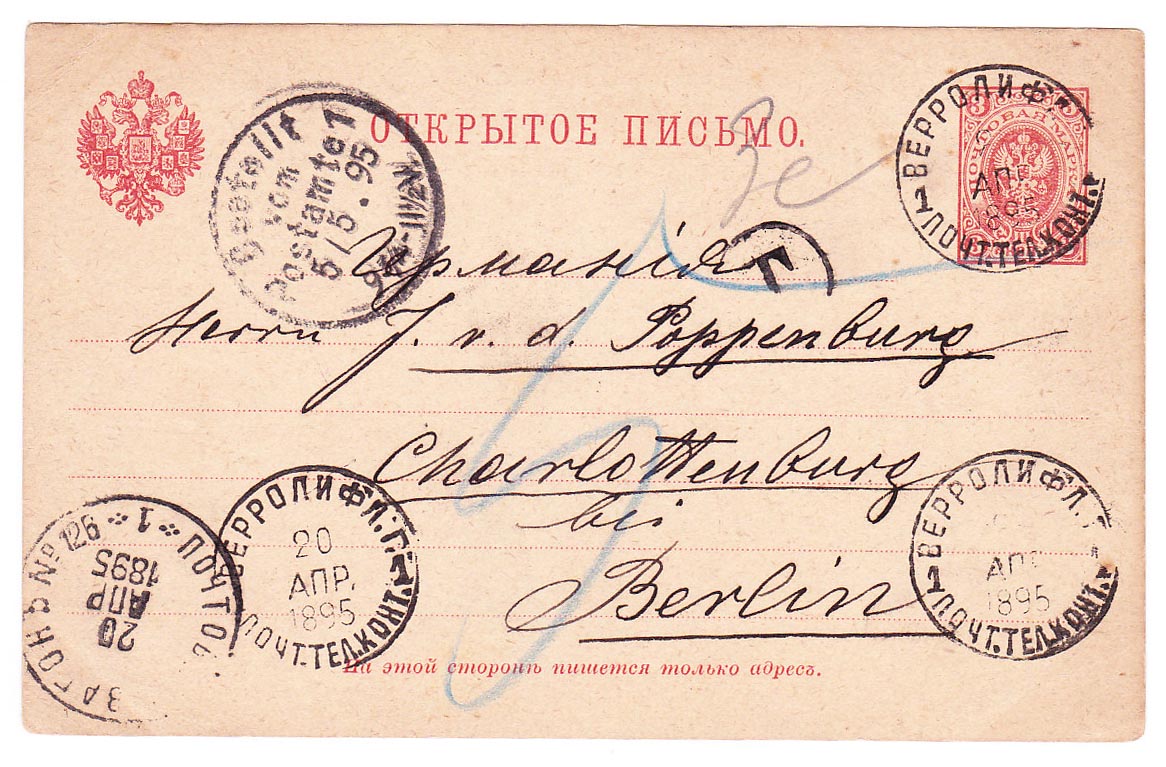
A 3 k Imperial Russian Postal Stationery Card (H&G 13) cancelled Verroli on 20 April 1895, also with Postwagon No. 126 cancel dated 20 April 1895, to Berlin where it was received on 5 May 1895. The card has also been taxed at 3 c in Germany as the correct rate for foreign postcards from Russia was 4 k. This is apparently 15 days for a journey of about 1,450 km, even though the card was cancelled on a travelling post office on the main railway line between St. Petersburg and Berlin.
The difference in the dates is due to the difference between the Julian calendar used in Russia at the time, and the Gregorian calendar used in the rest of Europe. When the card were posted, the Julian calendar was 13 days in advance of the Gregorian calendar, and the difference was only removed from Estonia and Russia in 1918. More fun-filled facts can be found at
https://www.timeanddate.com/calenda...-switch.htmlThe transit time for the card from Verroli to Berlin is in fact 2 days in absolute terms, whilst the transit time for the card from UK to Vormsi is 5 days in absolute terms.
It would be fun to collect other items from around the world with similar calendar challenges.





 Posted 09/21/2018 06:31 am


