Ok, this is starting to get frustrating because I cannot find a definitive answer.
Rod, thank you for your input. I was so focused on the RHM catalog I didn't notice the notation in Scott about the 3 types.
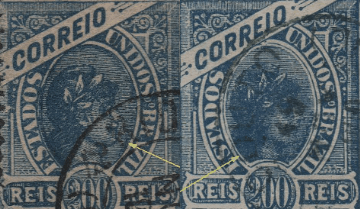
From what I am reading, the early printings were indeed printed from 2 plates, one for the frame and one for the vignette. This does account for the registration issues, where the vignette looks shifted and overlaps the outline on one side or another.
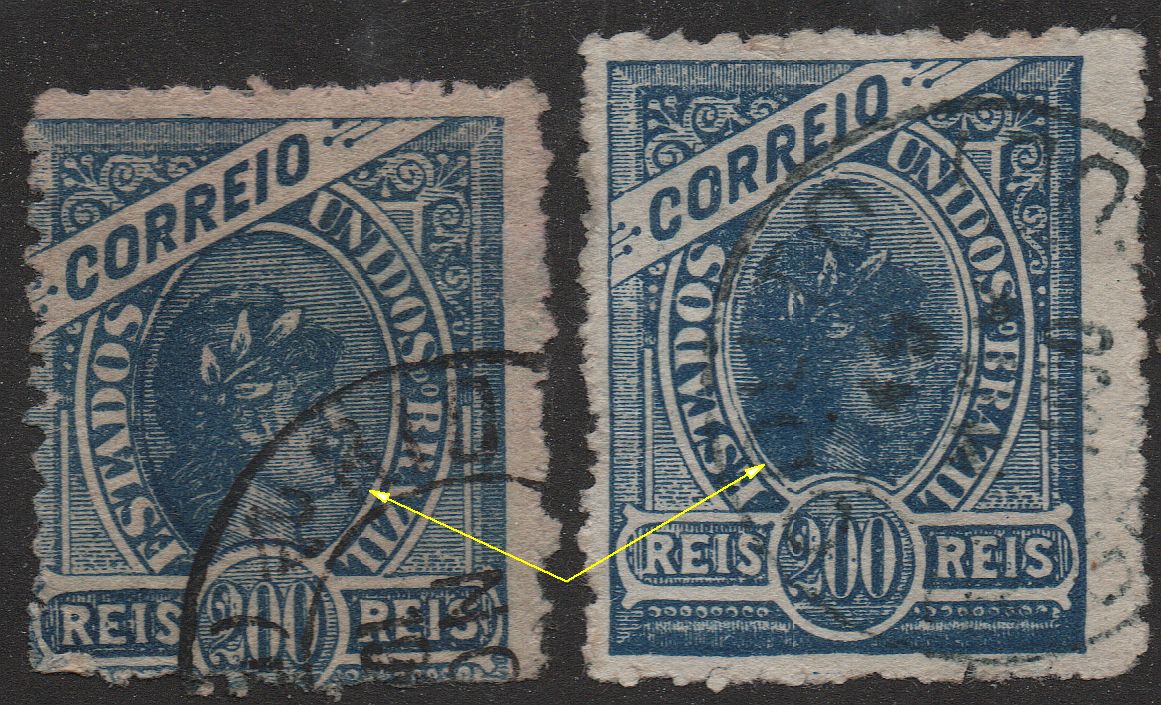
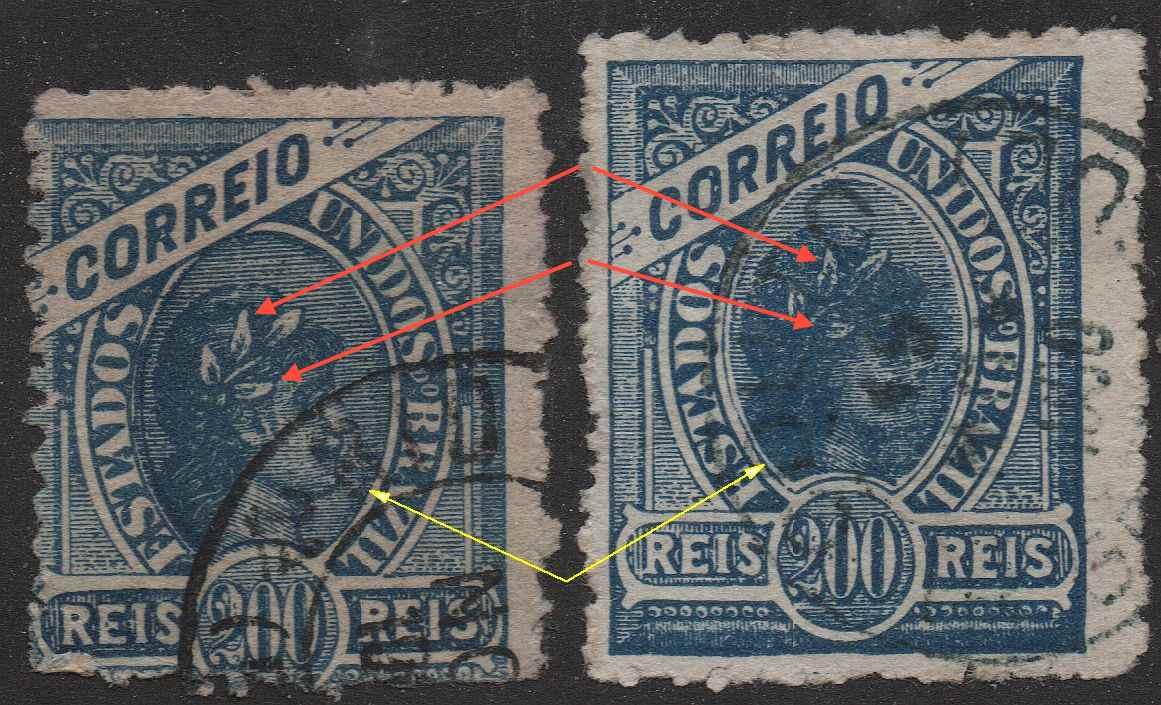
However, the one on the right, I don't believe, is exemplifies that. Having gone through
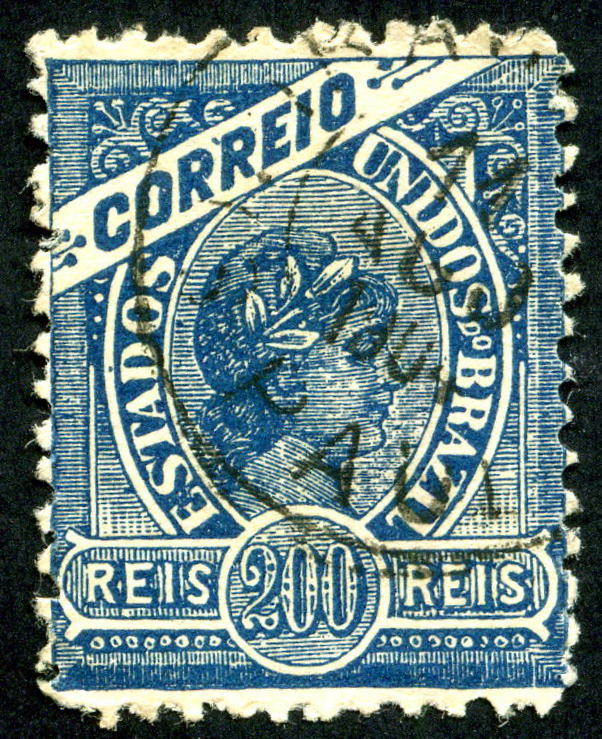
ebay, Hipstamp, stamp2go and Google, looking at as many examples of this stamp as I can possibly find, I'm find it's relatively easy to pick out the ones printed from 2 plates. It's also easy to spot the ones that you included, with the extra ornamentation within the numeral "200".
The vignette on the right hand copy appears to be noticeably smaller. Also, the white space is of pretty consistent thickness around the vignette, with no overlapping. I could not find a single copy showing this smaller vignette with a shift of any kind. I have, however, found a few other examples of this same "type", with the exact same white space surrounding the vignette.
Strange thing is that I cannot find anything in the RHM catalog that mentions this.
The listings in the RHM are thus:
97 200 réis, azul e azul, com linhaThis, I believe is the type printed from 2 plates. 'Com linha" translates to "with line"
98 200 réis, azul, sem linhaThis may be one printed from a single plate, and "sem linha" translates to "no line". I haven't seen a single copy, anywhere, where there was no line. Maybe my copy is this one? Yes, there is a line, but it doesn't touch the vignette anywhere.
103 200 réis, blue, algarismos enfeitadosThis one has to be like the one you posted. Algarismos enfeitados" translates to "ornate figures".
Maybe





 Posted 11/20/2018 8:30 pm