| Author |
 Replies: 13 / Views: 1,126 Replies: 13 / Views: 1,126 |
|
|
Pillar Of The Community
United Kingdom
570 Posts |
|
|
I have just got this envelope for the censor lable but was surprised to see from the inside it was apparently made from re-cycled suggar bags. It is obviously machine made with a cross flap construction and fully gummed flaps. I have attached 2 images to so you can see what I mean (sorry about my thumb but taking the inside was not easy. Does anyone know anything about these I have not seen anything like it before. Was it really recycled or just T&L advertising. The cover was sent to the UK paid at 3c surface rate. The date of the postmark is 10th Jan 1943 from somewhere in Ontario. Any info would be welcome. AQ 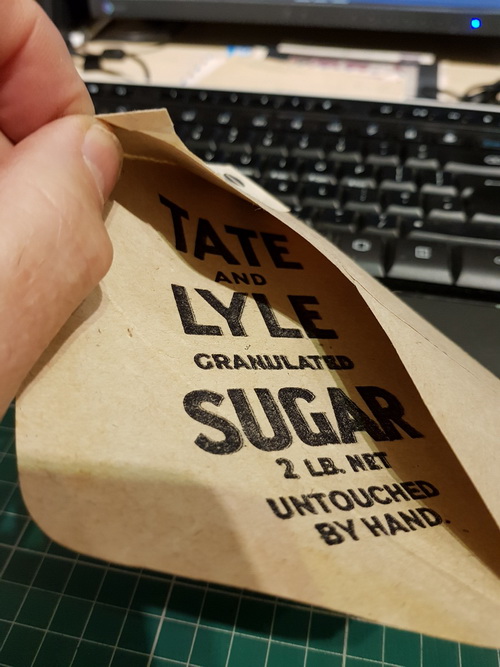 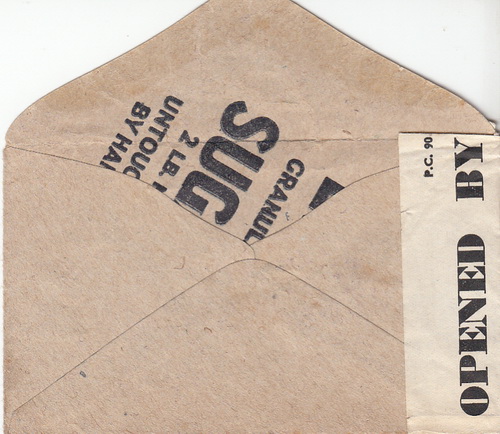 |
|
Send note to Staff
|
|
|
|
|
Rest in Peace
United States
4052 Posts |
|
|
Covers like these are a specialty amongst collectors of US Civil War philately et al. My memory says " distress covers", but that isn't googling-up. My interest is piqued by the ones made from wallpaper, but that's me. Cheers, /s/ ikeyPikey (who finally googled-up "Adversity Covers" by googling envelopes made from wallpaper civil war) https://postalmuseum.si.edu/exhibit...-covers.html ... at the Smithsonian National Postal Museum https://www.linns.com/news/us-stamp...ortages.html ... from Linn's ... Confederate adversity covers from paper shortages |
Send note to Staff 
|
| Edited by ikeyPikey - 11/22/2018 1:07 pm |
|
|
Pillar Of The Community
United States
2782 Posts |
|
|
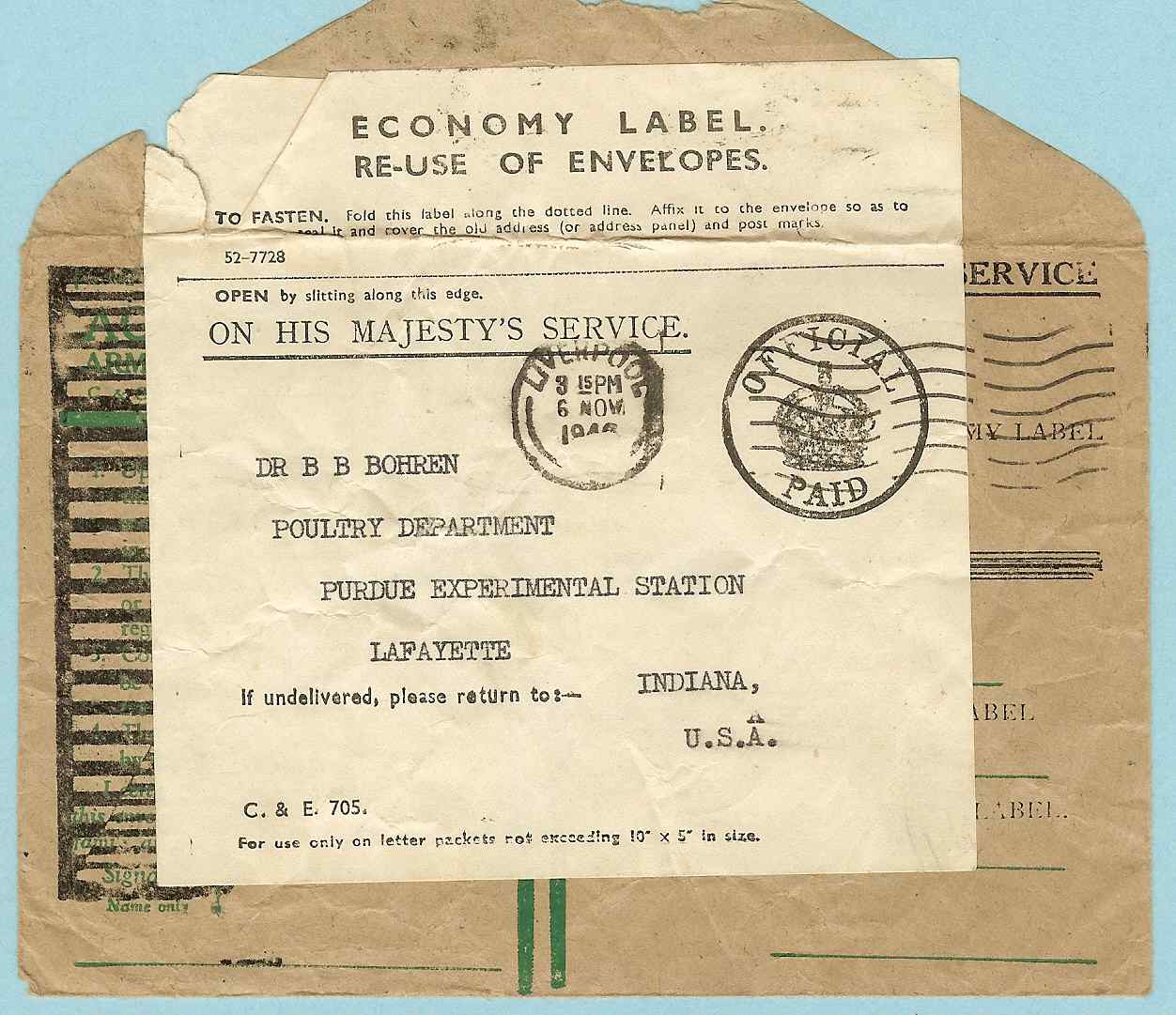
World War II and the period shortly afterwards is a good period to find reused covers. That's the first one I've seen made from a sugar package, but you can find them made from maps from a number of European countries. They would also turn the envelope inside-out which is called a turned cover. The British also sold small sheets of paper to affix to the front of a cover so it could be used again and sometimes again and again. |
|
Send note to Staff
|
|
|
Rest in Peace
7742 Posts |
|
|
Paper rationing was part of ALL rationing during WW2 Quote:
Wood pulp was bought into Britian from Norway and once Germany had taken occupation, this supply became very short.
Paper was rationed from September 1939 and newspapers were limitedto the amount they could use. |
|
Send note to Staff
|
|
|
Rest in Peace
United States
4052 Posts |
|
|
. Avery Labels sells 3-1/2" by 5" labels, four to a sheet, suitable for running thru your printer, that can be sued used to re-face a small envelope. Yes, that's a First World solution.  I bought them with the thought of re-posting previously posted 'vintage' picture postcards that one person or another might like but, in the end, it was simpler to toss those into an envelope ... not to mention that USPS mail-handling equipment is tough enough on stamps ... would the re-facing sticker ever survive passing thru the mails? Cheers, /s/ ikeyPikey |
|
Send note to Staff
|
| Edited by ikeyPikey - 11/22/2018 1:49 pm |
|
|
Pillar Of The Community
United Kingdom
570 Posts |
|
|
Battlestamps Quote:
The British also sold small sheets of paper to affix to the front of a cover so it could be used again and sometimes again and again. I am sure I have some Canadian covers like that. AQ |
|
Send note to Staff
|
|
|
Pillar Of The Community
United States
3224 Posts |
|
|
"Untouched by hand" -- but, but, but, you touched it!!  Makes sense in a way. Sugar was fairly strictly rationed in the US during World War 2 so I assume Canada was in a similar situation. Makes me wonder about the availability of candy then. Anyway, I'm pretty sure this would have left Tate and Lyle with a lot of unmade sugar sacks in this size. Since they were preprinted, sanitary, possibly in rolls that could be handled by envelope-making machinery, then why not recycle the paper? Could we see the front, please? |
|
Send note to Staff
|
|
|
Pillar Of The Community
Canada
877 Posts |
|
|
Candies (or sweeties as we called them in Britain) were most definitely rationed. The weekly allowance per coupon in our ration books varied and was as little as one ounce - that is, if the shops had any. If memory serves, rationing continued into the 1950s. When rationing first ended, everybody went wild and bought (and presumably ate) as much as they could get their hands on. So rationing went back on for a while. |
|
Send note to Staff
|
|
|
Bedrock Of The Community
Australia
38679 Posts |
|
|
Pillar Of The Community
Canada
1462 Posts |
|
|
Very interesting - hard to imagine this repurposing in our time of (over)abundance. |
|
Send note to Staff
|
|
|
Rest in Peace
United States
4052 Posts |
|
|
Quote:
... then why not recycle the paper? ... Jargon alert: this is repurposing, not recycling. The 5 Rs: Refuse, Reduce, Reuse, Repurpose, Recycle. That's ree-FYOOZ, not REF-yooss  Cheers, /s/ ikeyPikey |
|
Send note to Staff
|
|
|
Pillar Of The Community
6357 Posts |
|
|
Pillar Of The Community
United Kingdom
570 Posts |
|
|
Hy-brazil said Quote:
Since they were preprinted, sanitary, possibly in rolls that could be handled by envelope-making machinery, then why not recycle the paper? That has also been suggested by someone outside of this forum. I like this explanation and think it is probably correct mainly as the envelope is machine made and gummed in a normal pattern. Luckily the envelope was very lightly sealed so the flap has come open with no damage. If it had been properly stuck down and cut open I probably would not have found it I also think it had to be from a "large printing" whatever that may have been, not just one or two sheets of paper?, so there should be other examples in the wild. AQ |
|
Send note to Staff
|
|
|
Pillar Of The Community
United Kingdom
570 Posts |
|
|
Quote:Also, here is the link to a thread about WWII-era military maps recycled into envelopes: https://goscf.com/t/57333&whichpage=1#562124 Probably the best examples of this sort of thing are the Latvian map stamps printed on old German military maps just after WW1 and also the Latvian stamps printed on the back of uncut sheeets of obsolete banknotes that had only been printed on one side. AQ |
|
Send note to Staff
|
|
| |
Replies: 13 / Views: 1,126 |
|




 Posted 11/22/2018 12:46 pm