Stamp Community Family of Web Sites
Thousands of stamps, consistently graded, competitively priced and hundreds of in-depth blog posts to read


Stamp Community Forum
 
Username:
Password:
Save Password
Forgot your Password?

This page may contain links that result in small commissions to keep this free site up and running.

Welcome Guest! Registering and/or logging in will remove the anchor (bottom) ads. It's Free!

1882 Hawaii #38, 1886 Hawaii #43 And #43A - Color Identification. Help Needed.

Previous Page
 
To participate in the forum you must log in or register.
Author Previous TopicReplies: 19 / Views: 2,484Next Topic
Page: of 2
Moderator
Learn More...
United States
12330 Posts
Posted 12/04/2018   3:20 pm  Show Profile Bookmark this reply Add 51studebaker to your friends list  Get a Link to this Reply
Hi Sewall,
You did a color analysis of the stamp images, not the stamps.

Walking through the assumptions needed for digital imaging
1. An image is scanned, so the first assumption is that your scanner is calibrated and color accurate. Even high end (non-consumer grade scanners that are >$1000) scanners are not considered perfectly color accurate when new from the factory. Expensive color calibrations must be made to account for variation and degradation of a scanner over time or every time the scanner is shipped.
2. Once the scanner has captured the image, the assumption is that the scanner firmware algorithm will accurately capture the colors. Another assumption is that the user does not use any image filters to make the scan look better or 'match' (only on THEIR computer display) how the stamp looks in real life.
3. The scanner firmware then sends the data to a computer application and it is saved to the computer in the form of a file. Unless you saved the file as a uncompressed image (ie. TIFF file format) then another software algorithm is used to change the image including color blending (to compress file size).
4. The we post images online, often using another software algorithm (or optimizer) to make the imager smaller.
5. Each one of us then views the online images on our own displays and monitors.

Generating accurate digital color images takes an incredible amount of specialized equipment, calibration, and processing.

Consumer scanning and digital cameras are fine for generating images of the family vacation. But it is a leap to consider that it is acceptable to use for a scientific analysis.

Don
Send note to Staff  Go to Top of Page
Valued Member
135 Posts
Posted 12/04/2018   4:15 pm  Show Profile Bookmark this reply Add SewallH to your friends list  Get a Link to this Reply
Don, You make great points and in the past I have read about these problems with color analysis with scanners, computer display, file formats, and software. Comparing one image from one scanner to another from another scanner, each run on different computers and different software creates potential problems. However, my objective was not so much to identify a specific real life color, but to identify which stamps have the same color and which were of a different color, regardless of what one call that color. As long as I used one single scan to scan all the images and then used the same file formats, same software program, same computer to analyze each image, etc, on that basis, then the relative differences in color should be measurable. In fact, this is what my analysis is indicating. I have 24 of these stamps all scanned in one pass. I have now analyzed seven of the 24 stamps. The desired results should be such that there are three statistically different colors found, as there are three color varieties. If I come up with four colors, either my approach is faulty or I have found a new color variety (Chances of that are slim to none). If I find less than three relative colors, then I probably have only two of the three stamp varieties in my group of 24 stamps. So far, with seven stamps done, I have three clearly defined colors identified. The "common" color stamps are almost exactly matched by RGB values, certainly by any statistically significant measure. The difference between relative colors I found is meaningful, even though these color differences are a matter of shades. To further test my approach, I measured the color of all four margins on each stamp (top, bottom, right and left). This served to test the robustness of my approach as each border of each stamp should have the same RGB values and those values should be a good match between stamp to stamp. I found that the margins (which are not perfectly white as you can see). I found that the margins all have RGB values of R 240-242, G 224-227, and G 189-195. The other three (reddish/rose shades) variety colors are also closely defined in their respective RGB values. The grouping of the stamps into these three color RGB levels indicates that my analysis is accurate. All of my stamps so far fall into one of these three types.

Color Type 1 R 180 G 72 B83
Color Type 2 R217 G99 B115
Color Type 3 R196 G118 B120

There is absolutely no question that these color types are random or just dispersion. Every stamp so far falls into one of these types. There has been no fourth type.

I have to finish the final 17 stamps, but I strongly expect to see them all fall into the above groupings.

The final exercise will be to determine which of my color types is the #38, #43, and #43a stamp.

My approach solves one of the great color analysis problems in stamp collecting. However, it requires that the collector acquire a statistically significant number of appropriate stamps, scan them all at once on one scanner in one pass, and then analyze them with the same software on the same computer. To further enhance the accuracy of my analysis, I took 7 separate RGB color measurement on each stamp all from various, different place on the stamp and I did this for identical positions on each stamp. Those seven measurements do not include the four stamp margin color measurements I made.

Had I scanned the images separately on different scanners, downloaded images from different web sources, used different software programs, my analysis would be subject to some color analysis issues as you point out. This then would manifest itself in a massive dispersion and range of colors I measure for what should be a set of stamps with only three relative colors. This dispersion did not happen with my approach. I have found only three different colors, as should be the case.

More to follow.
Send note to Staff  Go to Top of Page
Moderator
Learn More...
United States
12330 Posts
Posted 12/04/2018   4:57 pm  Show Profile Bookmark this reply Add 51studebaker to your friends list  Get a Link to this Reply
Ok, never mind.
Don

http://stampsmarter.com/features/Color_Images.html
http://stampsmarter.com/learning/Ge..._colors.html
http://stampsmarter.com/features/Co...Extract.html

You might also search this forum for previous discussions which cover all the things you mention.
Send note to Staff  Go to Top of Page
Pillar Of The Community
France, Metropolitan
3745 Posts
Posted 12/04/2018   6:03 pm  Show Profile Bookmark this reply Add perf12 to your friends list  Get a Link to this Reply
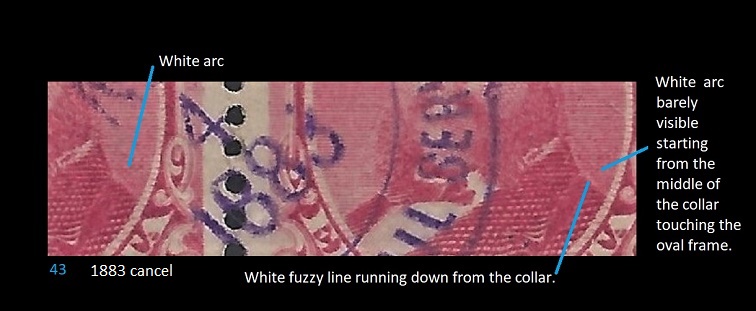
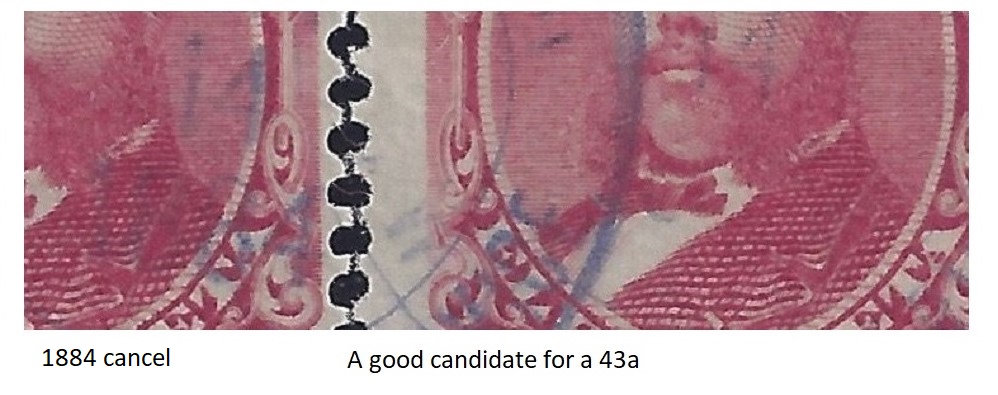
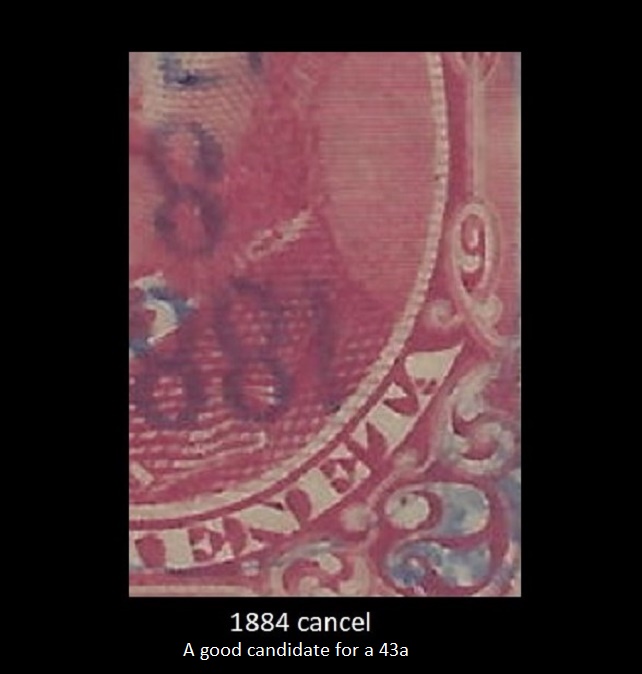
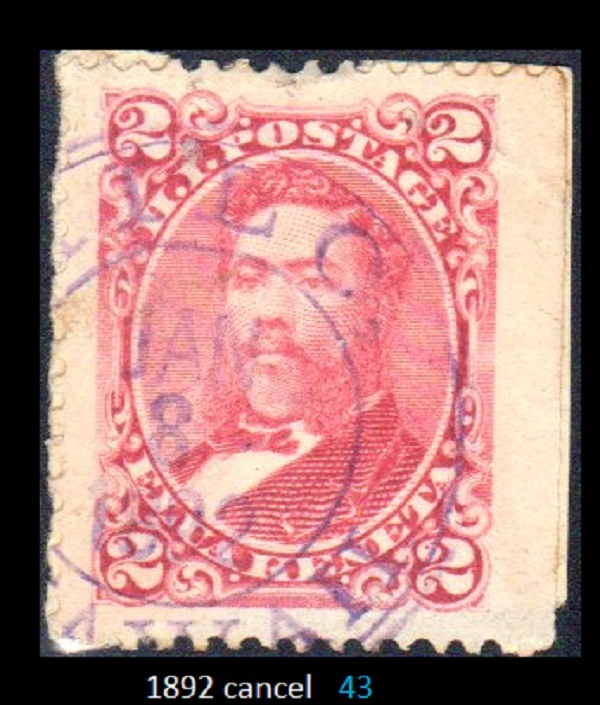
A few clues regarding the collar area.


Hip stamp pic below:


Send note to Staff  Go to Top of Page
Edited by perf12 - 12/04/2018 6:23 pm
Page: of 2 Previous TopicReplies: 19 / Views: 2,484Next Topic  
Previous Page
 
To participate in the forum you must log in or register.

Go to Top of Page

Disclaimer: While a tremendous amount of effort goes into ensuring the accuracy of the information contained in this site, Stamp Community assumes no liability for errors. Copyright 2005 - 2026 Stamp Community Family - All rights reserved worldwide. Use of any images or content on this website without prior written permission of Stamp Community or the original lender is strictly prohibited.
Privacy Policy / Terms of Use    Advertise Here
Stamp Community Forum © 2007 - 2026 Stamp Community Forums
It took 0.12 seconds to lick this stamp. Powered By: Snitz Forums 2000 Version 3.4.05