| Author |
 Replies: 15 / Views: 1,363 Replies: 15 / Views: 1,363 |
|
|
Pillar Of The Community
United States
939 Posts |
|
|
Anyone know a safe way to clean a Sc 11A on paper? I came up with a horizontal pair of 11A's on paper, but they need cleaning. Thoughts? 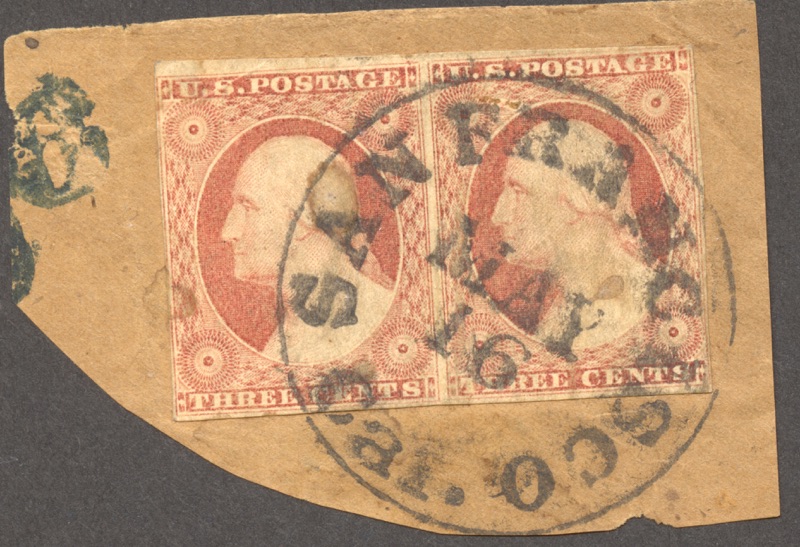 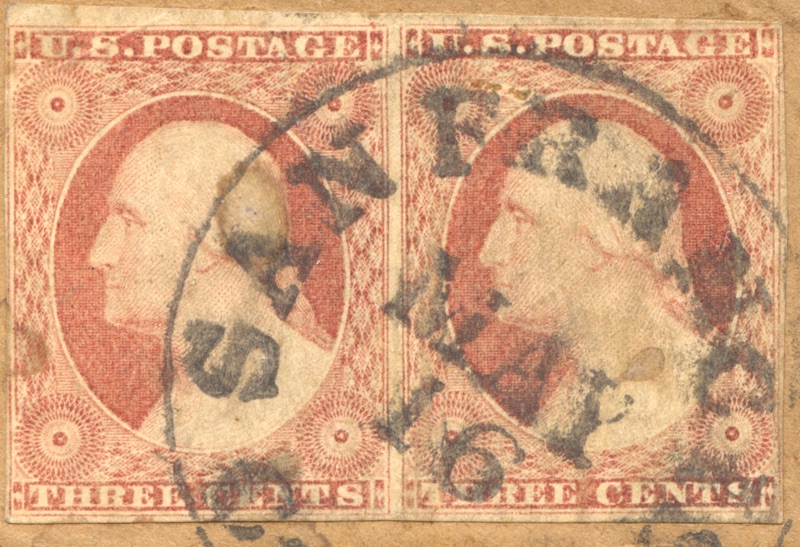 |
|
Send note to Staff
|
|
|
|
|
Moderator

United States
12330 Posts |
|
|
The acids in very low quality paper is toning the stamps, so cleaning is not going to address the underlying problem. You could remove the stamp and use a little bleach to lighten the toning from the stamps along with permanently changing the stamp forever. This would certainly brighten the stamps considerably and make them cleaner looking. This would also land you on the 'Most Wanted' list of collectors who do dumb things.
So rather than clean this piece you should be thinking 'neutralize' so that the stamps do not tone more (and eventually become brittle and crumble into dust). There is a commercial 'neutralize' spray (I think Subway is one dealer who sells it); I assume that it is just baking soda (sodium bicarbonate) mixed with water. Calcium bicarbonate would also work well.
Of course, you would need to use a very light mists from the back, and use a number of small applications.
Don |
Send note to Staff 
|
|
|
Pillar Of The Community
United States
939 Posts |
|
|
Thank you, Don! After composing myself from gales of laughter over the, "This would also land you on the 'Most Wanted' list of collectors who do dumb things." comment, I'm able to type. Yup, don't want my picture on the Post Office wall! Thanks Don, I needed that this morning!  Have no fear! I'm not about to do dumb things. This is the reason I asked here. I figured that you all would have a sensible, way smarter idea. |
|
Send note to Staff
|
|
|
Valued Member
213 Posts |
|
|
What tones the stamps is the brown gum. The envelope paper shown here is manila in origin (jute fiber), made by an alkaline process, and is largely inert. However, once the stamp paper is toned there's really no going back (except in cases where preservation has been exceptional).
To answer the original question, when the stamps are soaked off-piece any residual gum is removed and the toning process arrested. IMHO, the pair will look just fine alongside its contemporaries, enjoy it for what it is.
51Studebaker--Late 19th century papers are made of wood pulp, and the kind you are referring to (acid paper) is made by the sulphite (acidic) process. However, papers from earlier decades are rag based, and as such are not subject to acid embrittlement. Check-out "Rag Paper Manufacture in the U.S., 1801-1900" to gain a better perspective on the subject. |
|
Send note to Staff
|
|
|
Pillar Of The Community
United States
939 Posts |
|
|
To preserve the cancel I would not remove the stamps from the paper. I would have preferred the entire cover. My overall concern with cleaning the stamps was to remove or improve on the water spot stains and associated grime.
Interesting learning about paper types, Thanks. |
|
Send note to Staff
|
|
|
Moderator
United States
12330 Posts |
|
|
AJ,
Lignin is found in ALL vascular plants, it is the cellular component which a plant derives its structure. It is found in not only in within plant cells but also in plant cell walls. Jute fiber, made from plants, has plenty of lignins.
The mid-1800 western rag paper was typically made from cotton and linen cloth rags by a process that preserved the long fibers. But note that cotton also has lignins. Long fibers do not break down to form acids as readily as more highly processed pulp, but stored incorrectly acids can certainly form (just much less likely or at the rate of wood pulp).
And also note that acids do not just come from the paper used during manufacturing; they can also enter during storage over the years.
For example, nitrogen dioxide is an air pollutant that can create nitric acid which reacts with the moisture in paper and oxidize the hydroxyl groups in the fibers to carboxylic acids, increasing the acidity of the paper. Sulfur dioxide is another air pollutant that can form sulfuric acid on reacting with the moisture in the paper. Any paper type can suffer from this kind of acidification.
He can check the pH of the paper and verify this, brown papers of this era that I have checked all have had a low pH.
Don |
|
Send note to Staff
|
|
|
Pillar Of The Community
United States
939 Posts |
|
|
Don, how would I check the Ph of the brown paper?
Bet it's on Stamp Smarter, huh?
Ken |
|
Send note to Staff
|
|
|
Moderator
United States
12330 Posts |
|
|
Pillar Of The Community
United States
939 Posts |
|
|
Valued Member
United States
97 Posts |
|
|
Moyock,
Three things I've been told (and two of which I've tried, with slight success) are: add a small amount of dish detergent to lukewarm water and pat (don't rub) the stamps with a fingertip repeatedly while they're submerged in the water. Be sure to rinse in clean water, using same technique. [2] Leave stamps in 3% hydrogen peroxide for several minutes, again gently rinsing before drying and pressing them. (Peroxide is also wonderful for restoring sulfide-browned orange inks, e.g. on the 4c Columbian issue.) [3] I haven't tried this one, but have heard that the enzymes in meat tenderizer will remove some kinds of stamp browning. All three techniques, of course, would involve your soaking the stamps off the piece -- they can reattached with hinges or using stamp selvage glue. |
|
Send note to Staff
|
|
|
Pillar Of The Community
6364 Posts |
|
|
Pillar Of The Community
United States
939 Posts |
|
|
Appreciate the info wyostamp, sounds like decent advice. But, I'm going to leave it alone. As I stated earlier, it's too bad I don't have the complete cover.
Any ideas about plating? |
|
Send note to Staff
|
|
|
Pillar Of The Community
United States
3528 Posts |
|
|
Pillar Of The Community
United States
939 Posts |
|
|
Valued Member
213 Posts |
|
|
(From my Exhibit on American Papermaking) Manila paper invented in 1837, and this is the earliest known sample thereof (was only used as wrapping paper at that time). 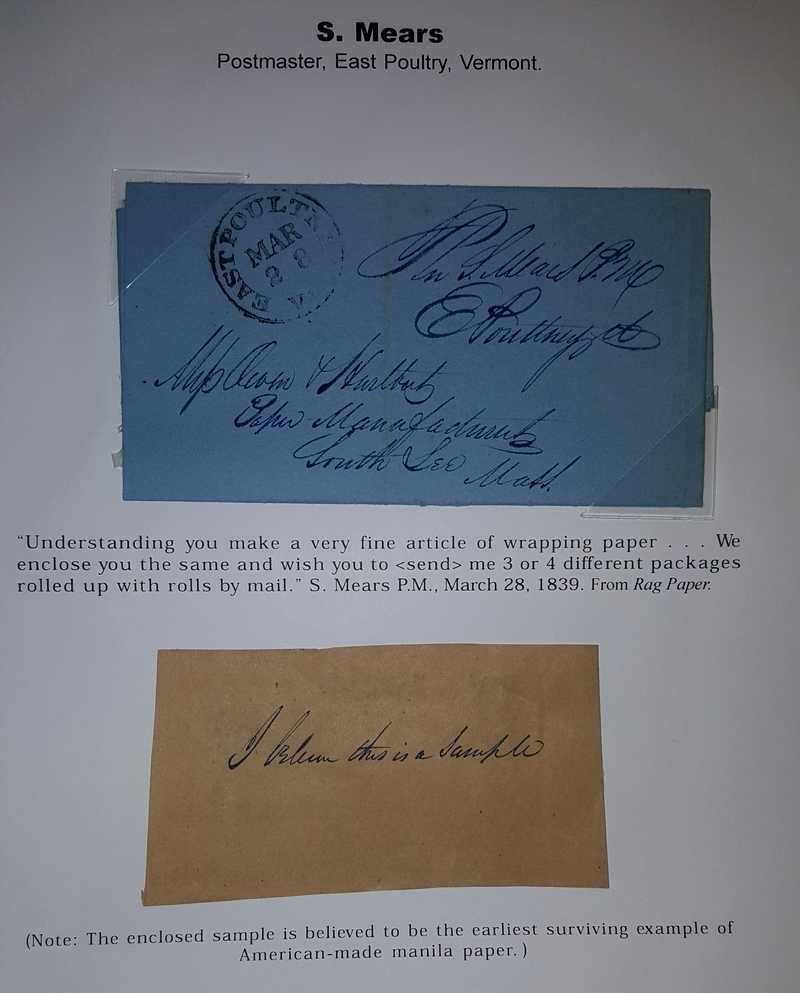 |
|
Send note to Staff
|
|
|
Pillar Of The Community
United States
2230 Posts |
|
|
Quote:
Thanks! How do you do that? txstamp, Moyock13 likely used the guide dots at the top of your two stamps among other diagnostics to determine the plate positions 1L1L and 2L1L for your #11A pair. The great majority of #11a from the top row show guide dots at top right. The guide dots on other rows on the plate were placed at the bottom right of the stamp design. The top dots help narrow down possible positions quite a bit. Here is another stamp from position 1L1L, in the experimental orange brown color:  |
|
Send note to Staff
|
|
| |
Replies: 15 / Views: 1,363 |
|




 Posted 12/16/2018 06:29 am


