| Author |
 Replies: 45 / Views: 3,006 Replies: 45 / Views: 3,006 |
|
|
|
Pillar Of The Community
6364 Posts |
|
|
It would be possible and easy. Single straight edged sheet stamps and booklet stamps of Scott 300 can still be differentiated by the fact that the paper is printed 90 degrees apart for sheet vs booklet. The watermark is thus rotated and the shrinkage of the paper grain as the dampened paper dries makes the booklet stamps slightly shorter and wider than sheet stamps. This has been discussed as "aspect ratio" in other threads. (Since the OP's example had the horizontal line, I had limited my examples to those also.)
|
Send note to Staff 
|
|
|
Pillar Of The Community
1375 Posts |
|
|
how to include into this system also the horizontal watermark error of the 300b booklet :) ? |
|
Send note to Staff
|
|
|
Pillar Of The Community
6364 Posts |
|
|
Determination of singles of that variety would seem to be determinable only by other the features.
I do not see it in my 2011 Scott, where is it documented in the literature? |
|
Send note to Staff
|
|
|
Pillar Of The Community
1375 Posts |
|
|
Pillar Of The Community
1375 Posts |
|
|
so singles of that variety can only been detected by guide line with perforation? |
|
Send note to Staff
|
|
|
Pillar Of The Community
6364 Posts |
|
|
It would seem to be so, or in horizontal pairs. Both would have fake potential. |
|
Send note to Staff
|
| Edited by John Becker - 12/17/2018 5:27 pm |
|
|
Pillar Of The Community

United States
1773 Posts |
|
|
Valued Member
131 Posts |
|
|
Thank you. According to seigal booklet panes with guide lines are rare and have the water makes inverted by the guide lines. And the ones closet to the left is a little rarer then the ones closer to the right horizontal guide line. I've never really wanted stamps with guide lines before lol 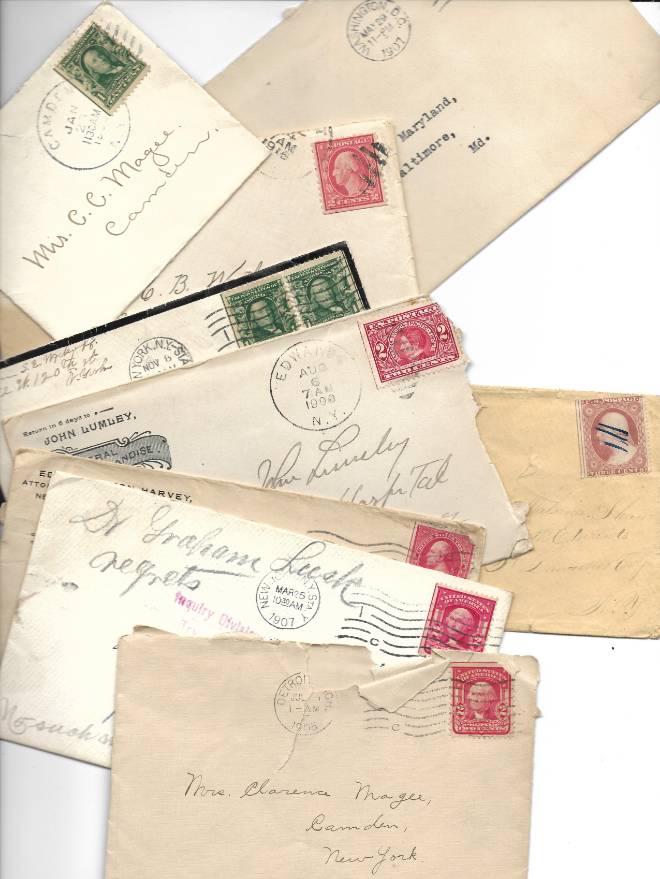 |
|
Send note to Staff
|
| Edited by richar babcock - 12/17/2018 11:02 pm |
|
|
Pillar Of The Community
6364 Posts |
|
|
I would suggest you are misinterpreting the website. Not all lines are equal. For example, the tatty cover from Detroit at the bottom with the guide line at the top is from a pane of 100, not from a booklet. Nothing rare or special. |
|
Send note to Staff
|
|
|
Valued Member
131 Posts |
|
|
Yes John and Thank you.this 610 on the right would also be common 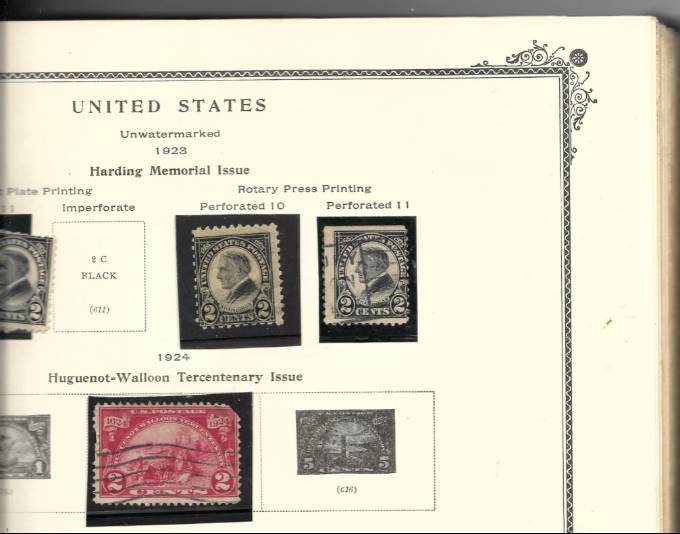 |
|
Send note to Staff
|
| Edited by richar babcock - 12/17/2018 11:18 pm |
|
|
Valued Member
United States
319 Posts |
|
|
So the watermarks is rotated 90 degrees on the booklet stamps, which makes perfect sense. Even after reading more on aspect ratio, I'm still not sure I'm grasping the paper shrinkage concept. Is there actually a measurable difference between a booklet pane and a sheet pane stamp, or is it so negligible that the watermark position is the definitive diagnostic? Furthermore, could this difference be detected with the stamps on a cover? |
|
Send note to Staff
|
|
|
Pillar Of The Community

United States
542 Posts |
|
|
The difference between sheet and booklet singles is noticable and provable for the applicable stamps from at least the 1st through 3rd Bureau Issues (perhaps later ones as well - not my area). As has been stated by John Becker, the design of the booklet single is shorter and wider than that of its sheet single counterpart. This results in the booklet single having a more "squarish" look than the sheet stamp. Direct comparison of a sheet stamp and booklet stamp will show this difference definitively. |
|
Send note to Staff
|
|
|
Valued Member
United States
319 Posts |
|
|
I am looking at John's images of the sheet stamp next to the booklet stamp, and as far as the design elements are concerned, I can not discern a difference. Assuming they were both photographed at the same time, the dimensions of the actual designs are virtually identical. Even when I enlarge both and measure each with a caliper, the difference is so trivial that I could never make that distinction with my naked eye. Now I will grant you, that the actual booklet stamp is more square in it's overall shape and the sheet stamp is more rectangular, but this seems to be a bi-product of the perforation placement and not the design elements. Am I missing something here, because I really want to have a clear understanding of this distinction. |
|
Send note to Staff
|
|
|
Pillar Of The Community
6364 Posts |
|
|
A picture is worth a thousand words, so let's try it with more pictures. The differences are small. This is the reason many collectors make measuring templates from (damaged) stamps with known characteristics: flat/rotary, sheet/booklet, etc. Here are some of mine including the 300 sheet stamp at the upper left, fully perforated with corners cut away. 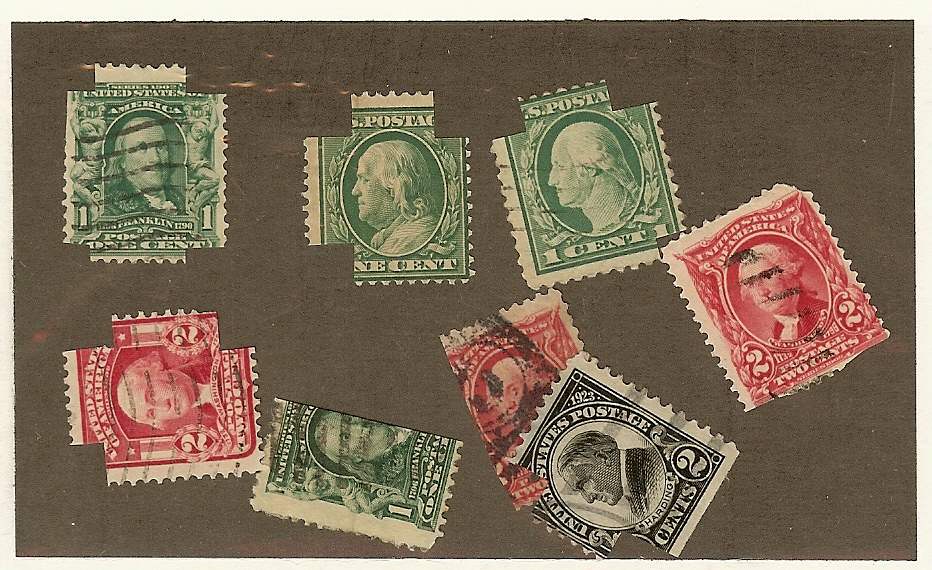 Here is a pair from a booklet pane, note the straight edges at far left and right: 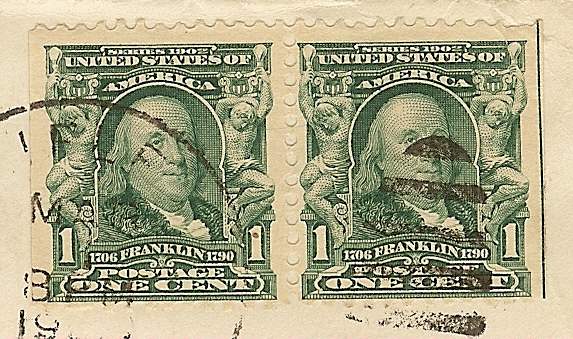 When the 300 sheet template is overlaid on the left stamp of the booklet pair with the left edge and bottom edge of the image aligned ... the template made from the sheet stamp is slightly taller at the top side AND narrower at the right side. (Or conversely, the image area of the booklet stamp is shorter and wider.) All due to the grain of the paper being turned 90 degrees for the two printings. 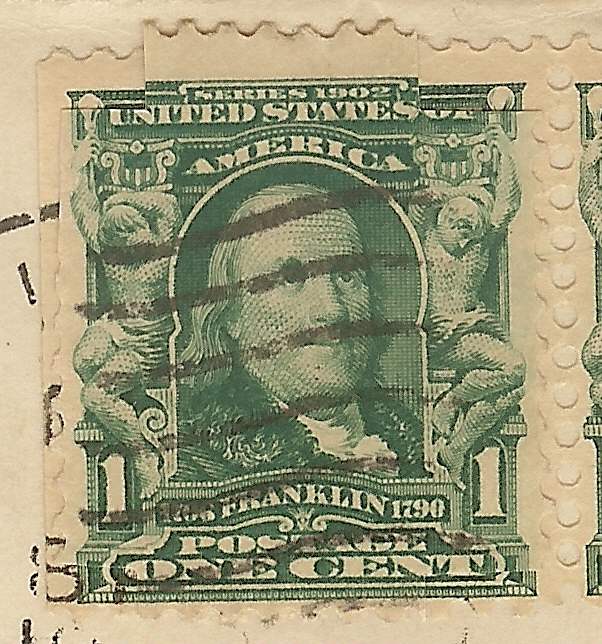 |
|
Send note to Staff
|
| Edited by John Becker - 12/18/2018 6:19 pm |
|
|
Valued Member
United States
319 Posts |
|
|
Thank you, John. I could not pick up that subtlety no matter how many times I enlarged and compared your first two images. This present post absolutely clarifies the size difference. Unfortunately, no matter how far I dug into SSUSC, I could not find this explained as clearly as you have here. Thanks again for the clarification. |
|
Send note to Staff
|
|
|
Replies: 45 / Views: 3,006 |
|




 Posted 12/17/2018 4:23 pm


