| Author |
 Replies: 38 / Views: 3,282 Replies: 38 / Views: 3,282 |
|
|
|
Pillar Of The Community
Australia
2156 Posts |
|
|
I'm glad there are people interested in these kinds of stamps. I discovered mine after I bought two huge lots of KGVI-era letter rate definitives in the reasonable hope of finding rare postmarks and less reasonable hope of finding a rare inverted or reversed watermark. Unfortunately, I went through the Emus before I was aware of thin paper varieties and sold them on at a very early stage.
The varieties I have are all used, which probably makes them of less interest, but I'll try to post scans of the best one today. |
Send note to Staff 
|
|
|
Pillar Of The Community
Australia
1692 Posts |
|
|
Hi jimjamtwo
There are a few people that have a specialised collection I'm one of them, and on the contrary, a used thin paper KGVI is very much in demand and is considered scarce, and if it is still on cover, it will attract big dollars.
So to say that a used thin paper would probably be of lesser interest, you're short changing yourself.
Looking forward to seeing what you have.
Rob
|
|
Send note to Staff
|
| Edited by Rob041256 - 01/07/2019 02:07 am |
|
|
Pillar Of The Community
Australia
2156 Posts |
|
|
Hi, Rob. I said that because my ACSC does not price used thin paper varieties. I drew from that the conclusion that people only collect these stamps in mint condition. Anyway, on with my 'presentation.' The first is, I think, the best. This is ACSC 256, which in my catalogue does not have a thin paper listing. In case you have any trouble distinguishing the two, the thin paper variety is on the left and the normal on the right. I don't think you'll find it difficult, however. 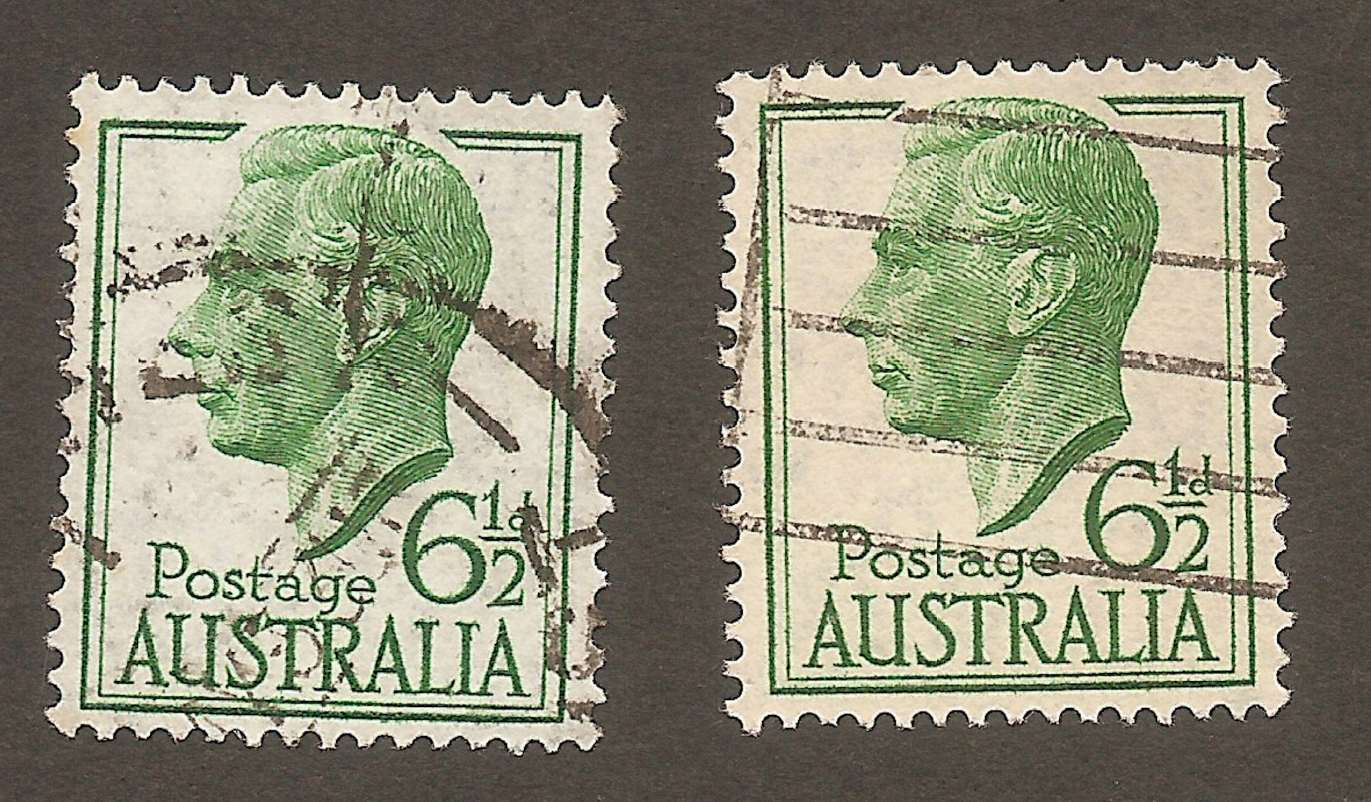 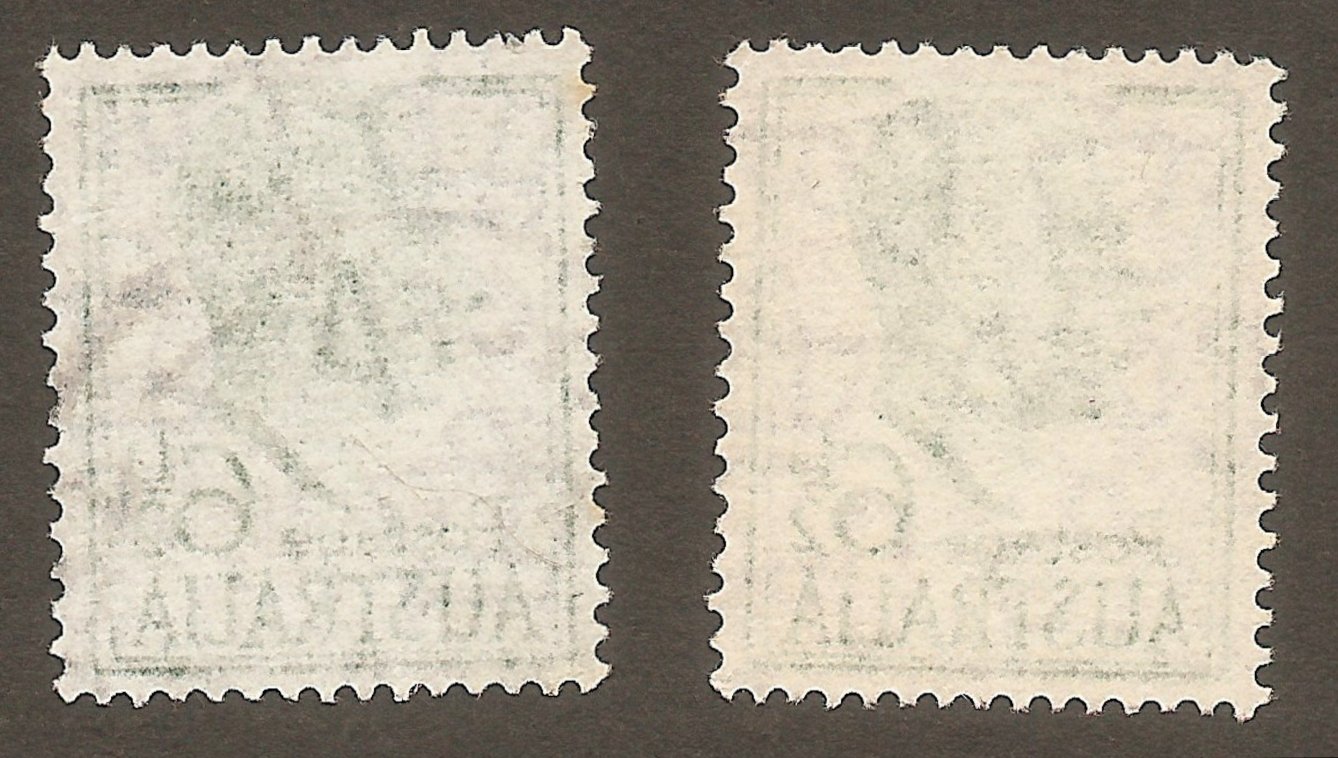 |
|
Send note to Staff
|
|
|
Pillar Of The Community
Australia
2156 Posts |
|
|
The next one I have that does not have a listing in my ACSC is #228. 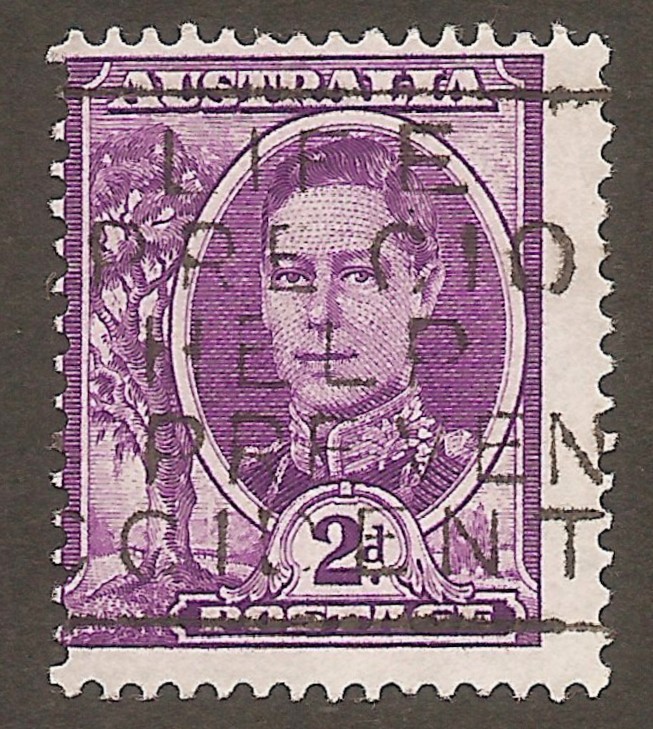 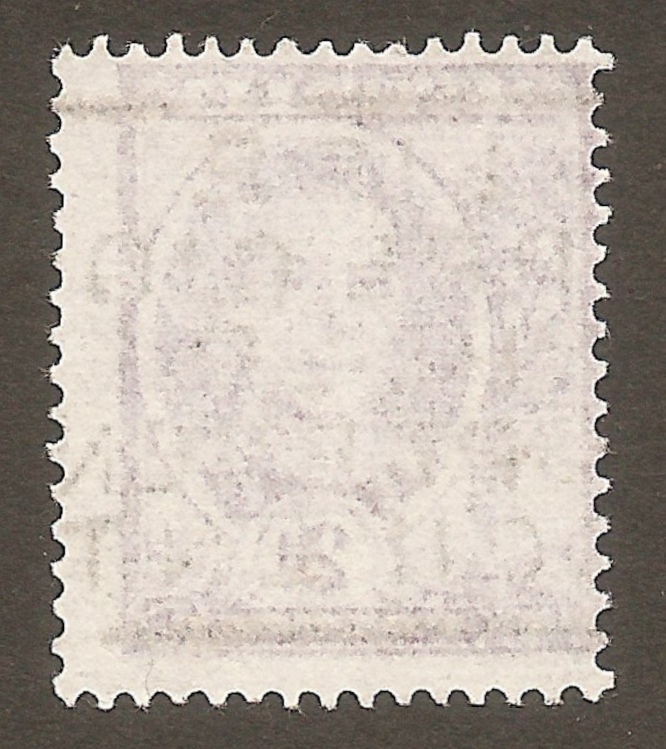 The others I have are all listed, but are just unpriced for used. The exceptions are 4d Koalas (1 each of #197 and #198) that seem somewhat thinner than the normal issues, but perhaps are not thin enough, so to speak. |
|
Send note to Staff
|
| Edited by jimjamtwo - 01/07/2019 01:36 am |
|
|
Pillar Of The Community
Australia
2156 Posts |
|
|
Rest in Peace
Netherlands
963 Posts |
|
|
Varieties are haphazard instances, variation of thickness of paper in the sense of distinguishable categories of "thick" versus "thin" has NOTHING to do with varieties!
Everything else is small-talk! |
|
Send note to Staff
|
|
|
Rest in Peace
Netherlands
963 Posts |
|
|
Another aspects that has NOT YET been studied by Australian specialists is the sieve-structure of the paper: Linen-bindng: 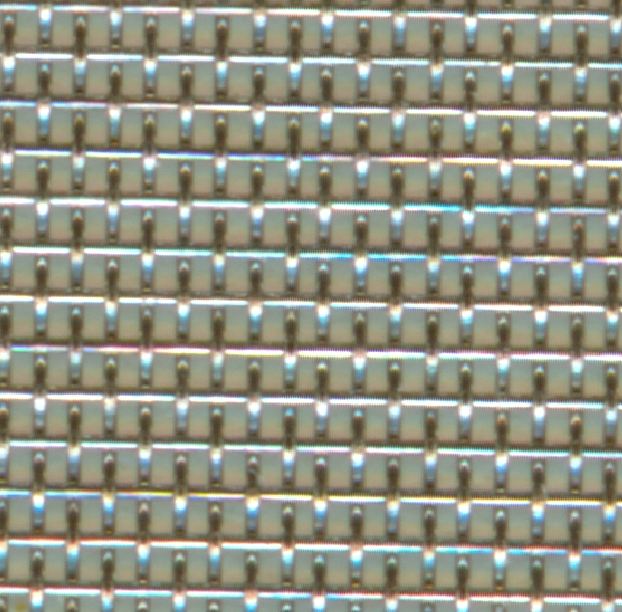 after connecting the cross-overs by a blue line: 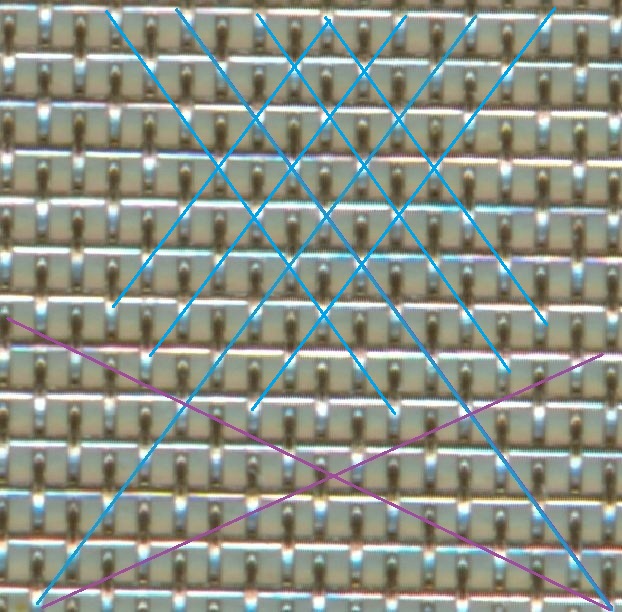 Twill-binding: 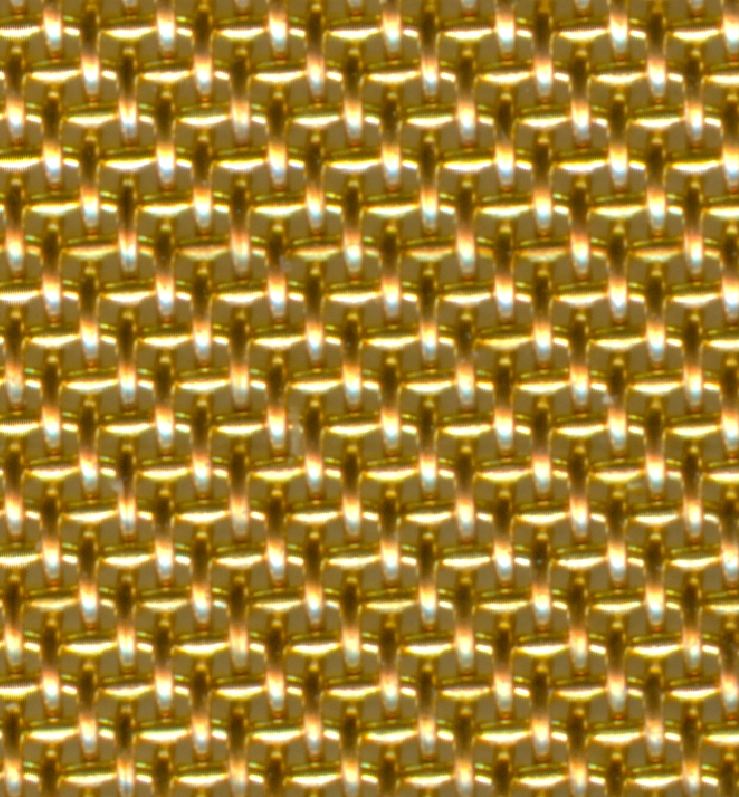 after connecting the cross-overs by a blue line: 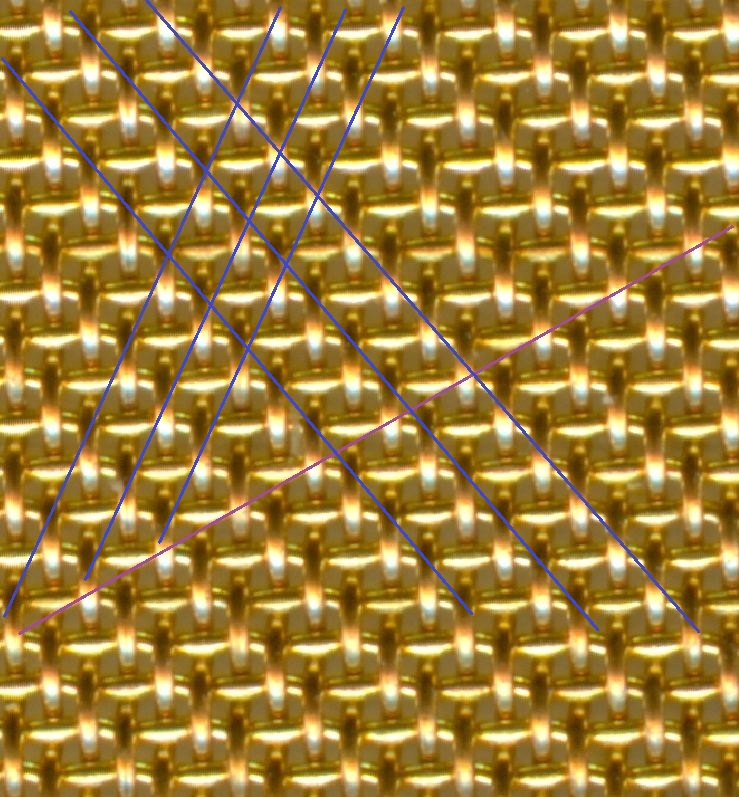 The purples lines represent diagonals our eyes are less likely to see, but still! In the linen-binding the diagonals are symmetrical and are equidistant - the next parallel blue line is just as far way in the case of the ascending lines as of the descending lines. In the twill-binding, however, the ascending blue lines are nearer to each other! I hope this will make it clear why I refer to the linen-binding as symmetrical and to the twill-binding as asymmetrical. It is not just the angles of the blue lines but also the density! |
|
Send note to Staff
|
|
|
Rest in Peace
Netherlands
963 Posts |
|
|
Quite common was the 28/18 lines per cm horizontally/vertically! But occasionally other densities can be found although not so common. The most often met other version is the 24/22 density which is called "Tela" in Argentina and originated from the Wiggins Teape paper mill in the UK! Outside Argentina Tela can be found for UK and most British Commonwealth countries in the 1939-1950 period. Even in Australia and NEW Zealand. Apart from the Argentina collectors ONLY the NZ collectors have been aware of this type of paper!
|
|
Send note to Staff
|
|
|
Rest in Peace
Netherlands
963 Posts |
|
|
Pillar Of The Community
Australia
1692 Posts |
|
|
Hi jimjamtwo Sorry for the delay, the two stamps are not thin paper, the stamps are printed on translucent (oily) paper, although they have the appearance of thin paper. Translucent paper: The watermark and some of the design can be seen through the back of the stamp, although thin paper can be translucent, not all thin paper are, and normal (thick) paper can be translucent. Translucent paper allows light and the outline of shapes and some colour but not detailed shapes to pass through; otherwords the paper is semi-transparent. Unfortunately for many collectors these stamps can be mistaken for thin paper. Here is an example of thin paper. 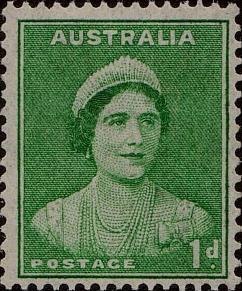 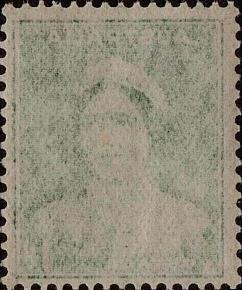 Thin paper (pelure) 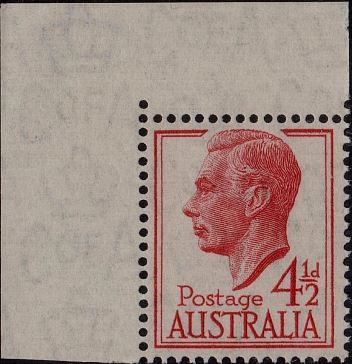 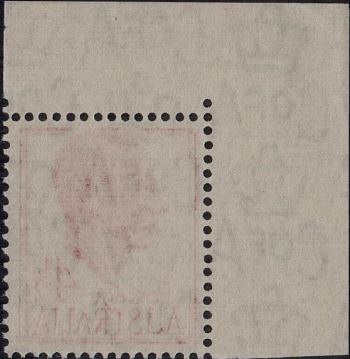 Thin paper (unlisted) Rob |
|
Send note to Staff
|
| Edited by Rob041256 - 01/07/2019 6:25 pm |
|
|
Pillar Of The Community
Australia
1692 Posts |
|
|
Hi Galeoptix Quote:
Varieties are haphazard instances, variation of thickness of paper in the sense of distinguishable categories of "thick" versus "thin" has NOTHING to do with varieties!
Everything else is small-talk! I beg to differ, in some cases thin has a lot to do with varieties, and can itself be deemed a variety, and if a collector is looking for specific varieties, is everything but small-talk. For example, take the £2 Coat-of-Arms, it is found in both very thin paper and thick paper, and both are found with and without a roller flaw variety, both thin paper types are very rare. A very small printing of the thin stamp without the roller flaw is known and is worth nearly $2,000, the one with the roller flaw, only two exist and is worth nearly $3,000. The £2 regular stamp (thick paper) is worth $195 and the roller flaw on thick paper is worth $395. So yes, thin paper has EVERYTHING to do with varieties. Rob |
|
Send note to Staff
|
| Edited by Rob041256 - 01/07/2019 6:21 pm |
|
|
Pillar Of The Community
Australia
4034 Posts |
|
|
Looks like stamps have been printed on fly screen going by the abstract images. The not real images are for what purpose? The real images of stamps paper grain/structure is a better place to be. Quote:
The purples lines represent diagonals our eyes are less likely to see, but still!
In the linen-binding the diagonals are symmetrical and are equidistant - the next parallel blue line is just as far way in the case of the ascending lines as of the descending lines.
In the twill-binding, however, the ascending blue lines are nearer to each other!
I hope this will make it clear why I refer to the linen-binding as symmetrical and to the twill-binding as asymmetrical. It is not just the angles of the blue lines but also the density! |
|
Send note to Staff
|
|
|
Valued Member
United States
182 Posts |
|
|
Quote:
There are a few people that have a specialised collection I'm one of them, and on the contrary, a used thin paper KGVI is very much in demand and is considered scarce, and if it is still on cover, it will attract big dollars. Hi Rob, Just curious - how do you tell a thin stamp if it is still on cover? |
|
Send note to Staff
|
|
|
Pillar Of The Community
Australia
1692 Posts |
|
|
Hi Prexie3c
Normally by the intensity of the colour, thin paper absorbs more ink, also a white fluorescent light placed over the stamp will show clearly the watermark which would not be the case if the stamp was on thick paper.
Rob |
|
Send note to Staff
|
|
|
Rest in Peace
Netherlands
963 Posts |
|
|
Rob,
you misundertood my interpretation of "varieties". Thick and thin paper are NO varieties, they are structural variants in the context of what instruments and ingredients the printer has available and he is conscious in using it. Everything that comes from coincidence and bad luck is a variety. Varieties are everything we call "printer's waste" and what was to be destroyed. ;)
not haphazard like speck-flies... |
|
Send note to Staff
|
|
|
Replies: 38 / Views: 3,282 |
|




 Posted 01/06/2019 6:39 pm


