Stamp Community Family of Web Sites
Thousands of stamps, consistently graded, competitively priced and hundreds of in-depth blog posts to read


Stamp Community Forum
 
Username:
Password:
Save Password
Forgot your Password?

This page may contain links that result in small commissions to keep this free site up and running.

Welcome Guest! Registering and/or logging in will remove the anchor (bottom) ads. It's Free!

DIY Longwave UV To Explore The World Of Paper Types & Luminescent Inks

 
To participate in the forum you must log in or register.
Author Previous TopicReplies: 11 / Views: 1,838Next Topic  
Valued Member
Learn More...
United States
257 Posts
Posted 02/17/2019   4:39 pm  Show Profile Bookmark this topic Add mstocky2 to your friends list Get a Link to this Message
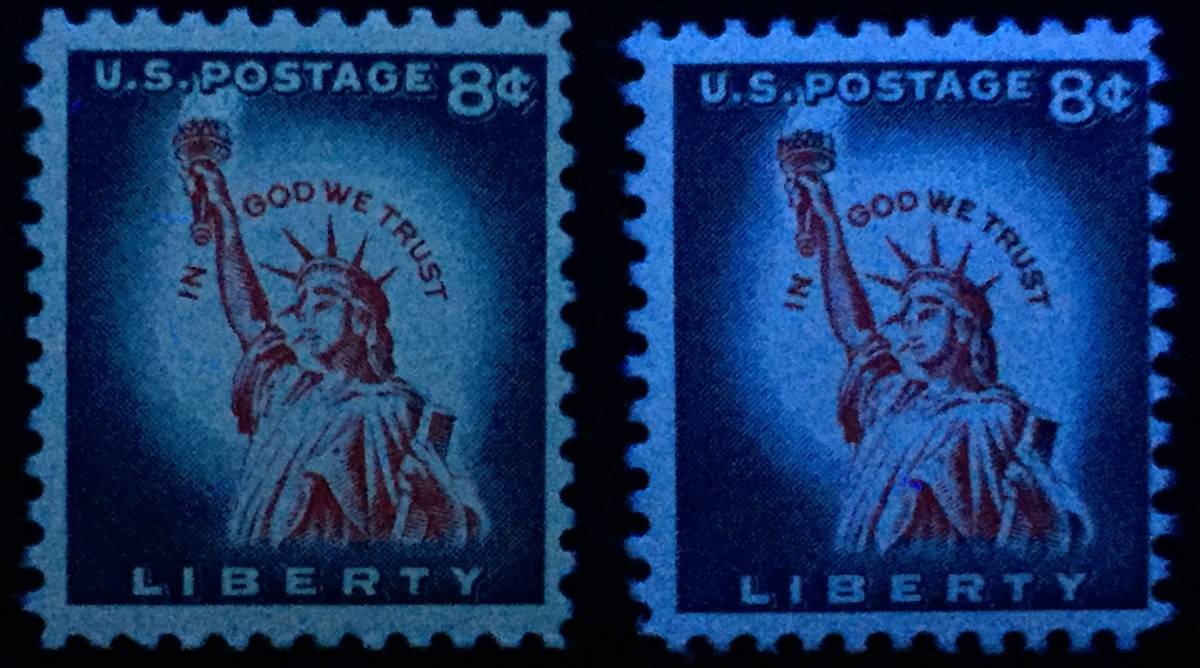
Having a Longwave (LW) UV lamp opens up a whole new world of stamp collecting. With it you can look for and identify different paper types or look for stamp varieties that come printed with luminescent and non-luminescent inks.

An example of paper varieties and ink types that can be identified is shown in the examples below.

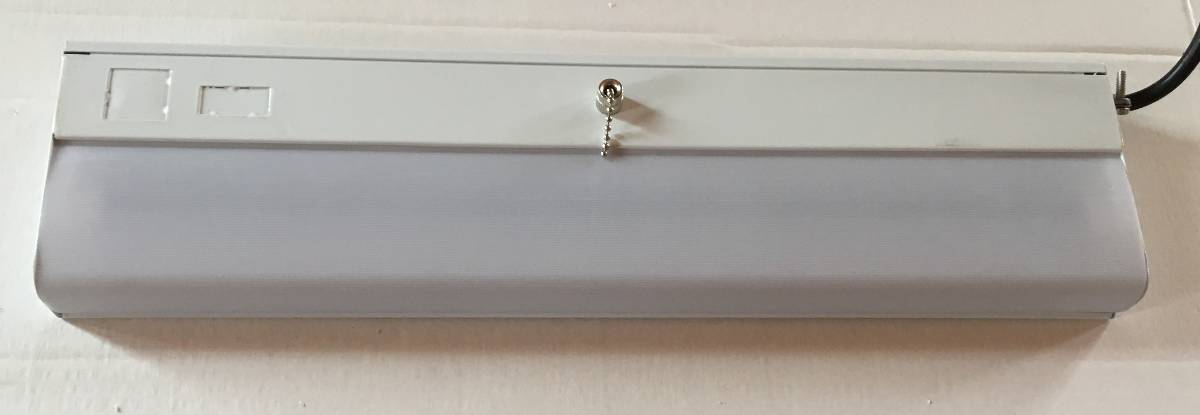
So how does one go about building their own LW UV lamp. The easiest and cheapest way is to purchase a fluorescent light fixture designed to be hung under a cabinet. They can be purchased online or at your local home improvement store for under $20US. You want the model that takes an 18" lamp. Below is an example of these types of fixtures. They come with and without pull chain. I like the pull chain version.
You with also need a cable screw clamp connector typically 1/2", an electrical cord and an 18" fluorescent black light. The screw clamp connector looks like this.
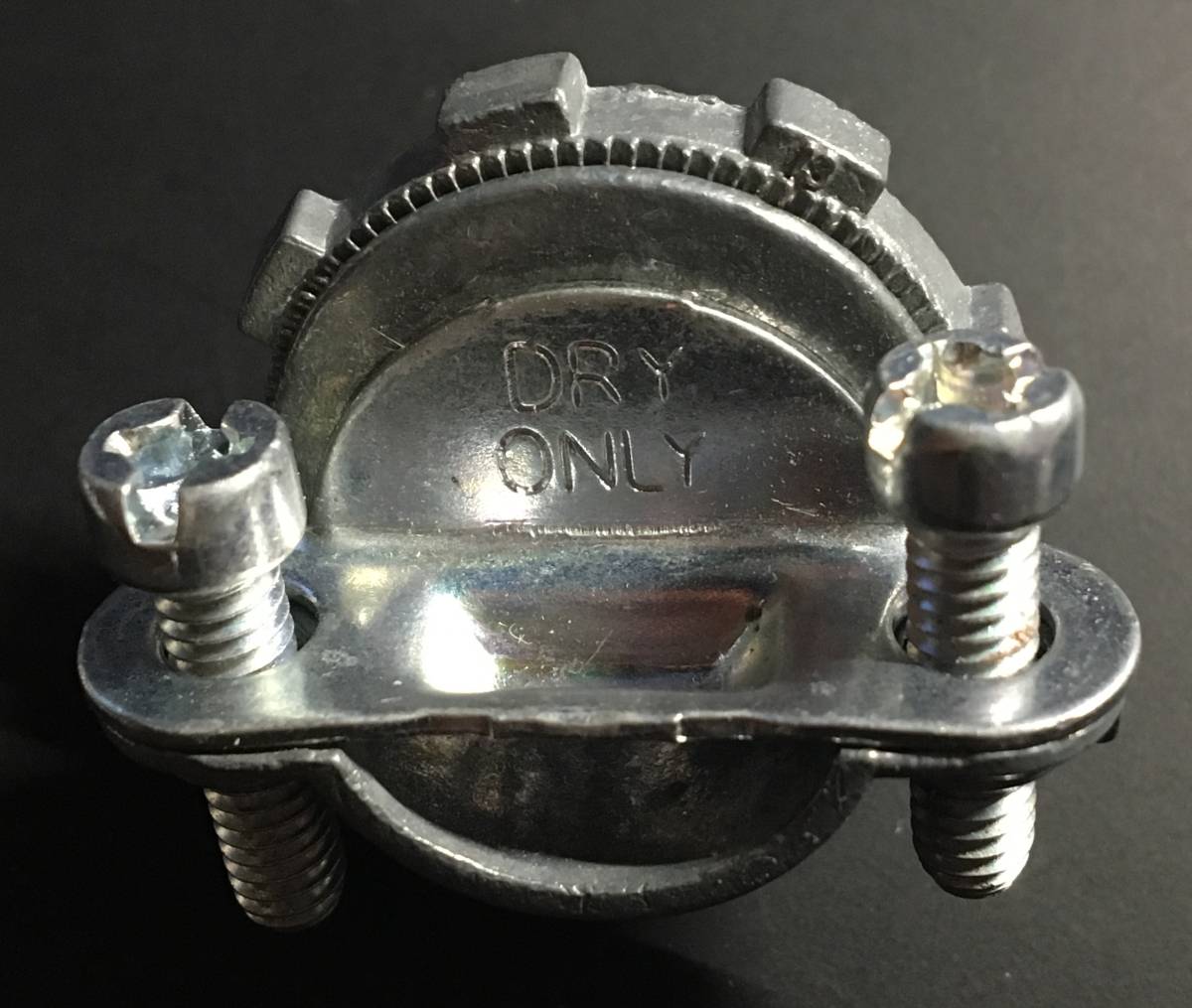
Your need one to securely attach the electrical cord to the fixture.

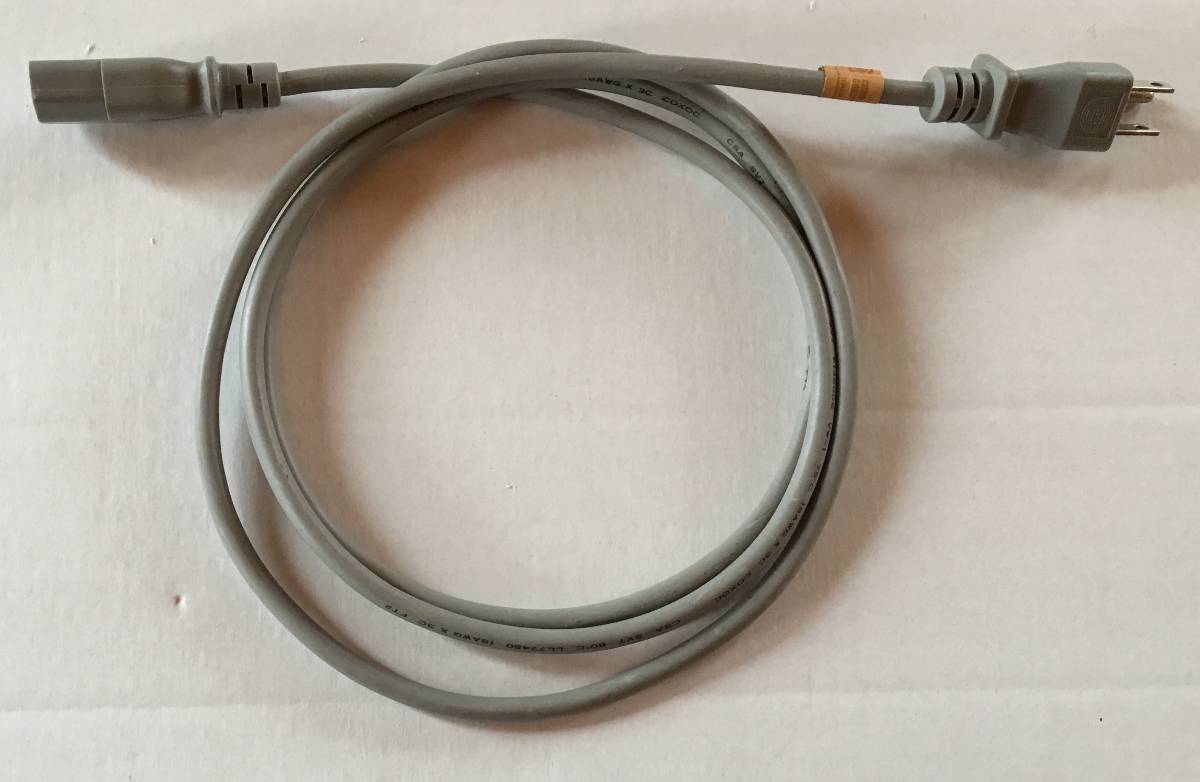
You also need an electrical cord. Rather than purchasing one find yourself an old power cord for a computer such as below.
These tend to be easy to come by. If you don't have one ask around, it will save you money as heavy power cords aren't cheap.
Remove the plastic shield that would cover the bulb and set it aside. When you remove the cover you need to get at the internal wiring. This is done by squeezing the metal shield near the areas highlighted in red to pop the shield out from under the tabs holding it.
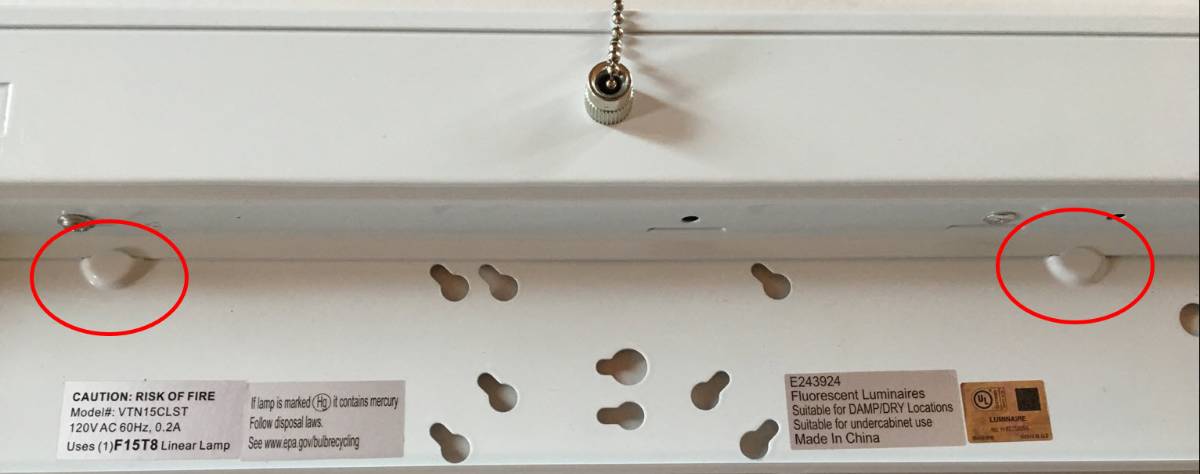
This will allow you to expose the internal wiring.
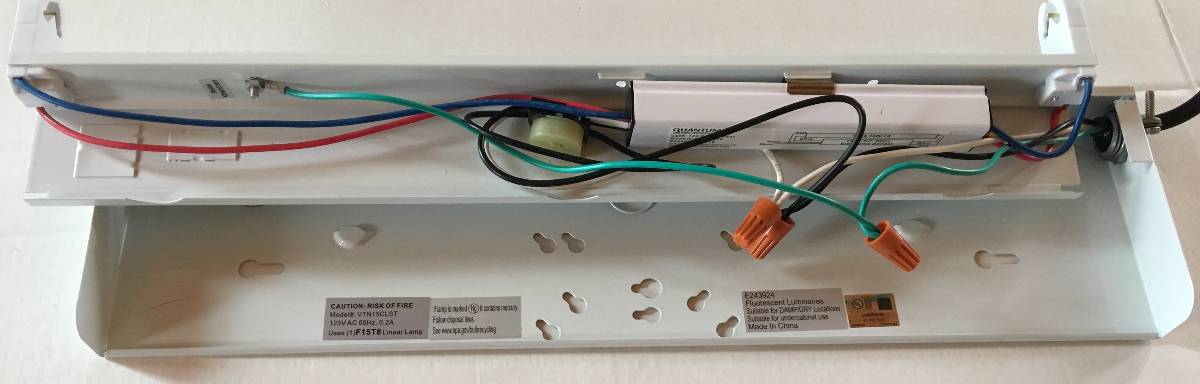
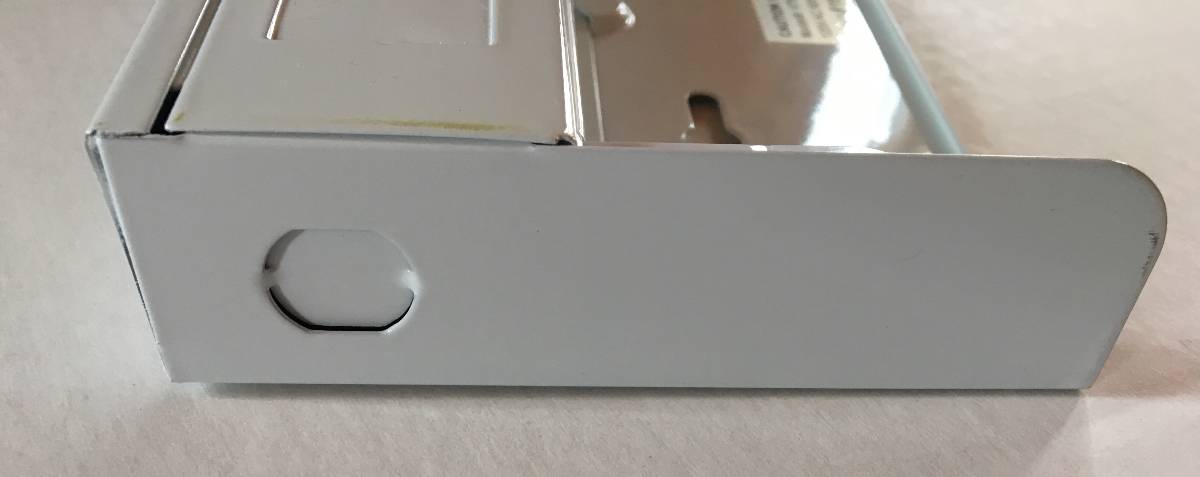
On either end you will find a metal knock out. Chose a side and knock only one out.
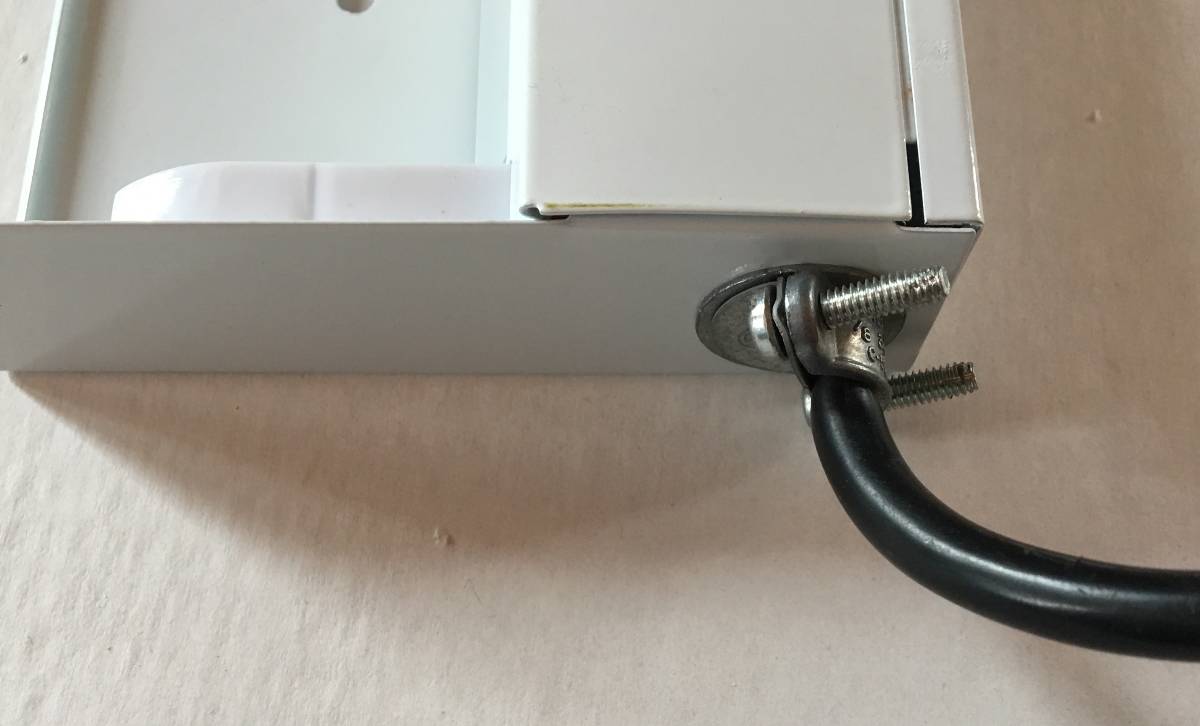
You then want to insert the clamp connector apply its screw ring and tighten it down. Take the cord you found and cut off the female end (gender should be obvious). Thread a 6-8" length of cord through the connector and tighten down the two screws on the clamp connector. It should look like so when done.
Strip back the shield on the cord exposing the three wires in the cord. You can strip it back to about an inch from the connector. Then strip about 1/2-3/4" of insulation off the end of the wires. Now twist the white wire of the cord with the white wire of the fixture. Screw one of the wire nuts (those orange things) on the end of the twisted wires. The wire nuts typically come with the fixture. Do this for the black and green wires. When done it should look like this.
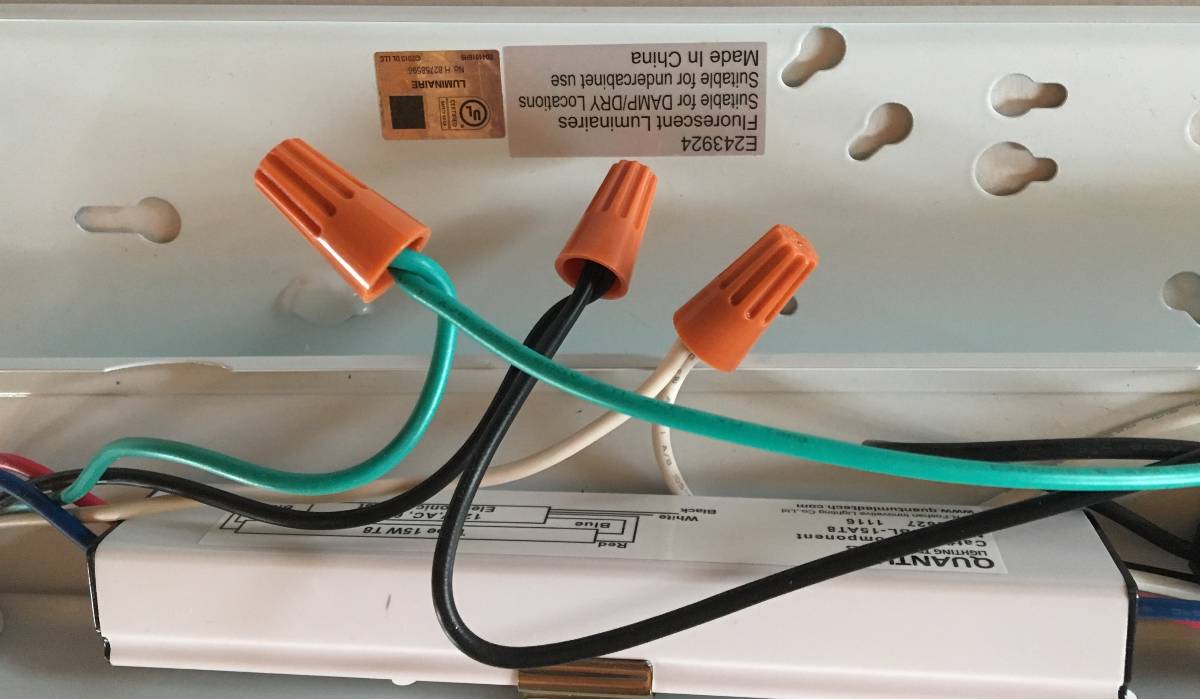
Now carefully close the unit back up being careful not to pinch the wires. These units have various holes on top for mounting so you will want to cover these.
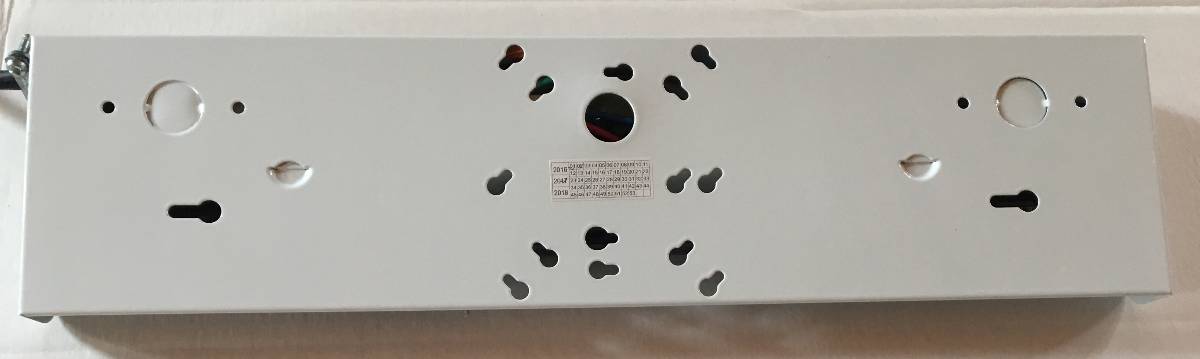
Use something very opaque as you will see in the image below. The light can be harmful to you eyes so you want to minimize exposure. To use elevate the unit approx. 3" above the surface you plan to use to view your stamps. In my case I just used some boxes on a card table.
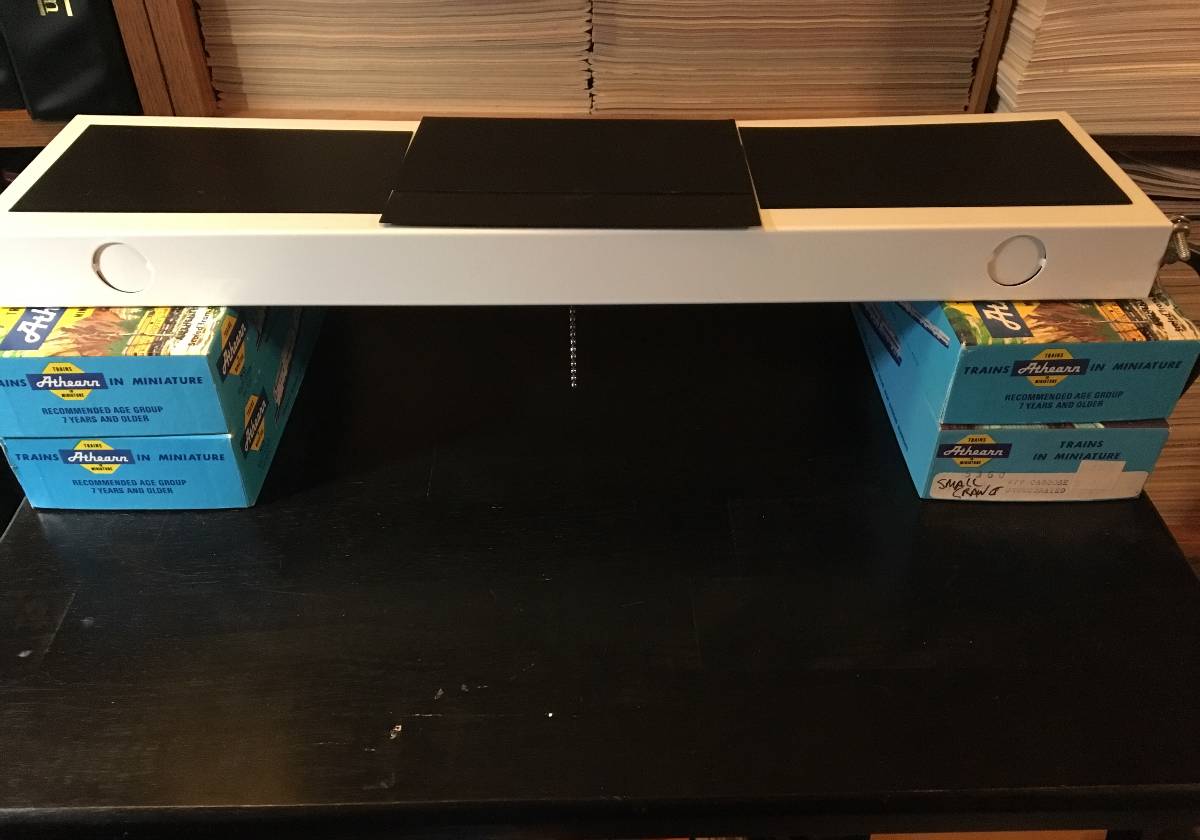
When using the unit do not look directly into the light. When not in use you can cover the bulb using the plastic shield you removed. The nice thing about this DIY version is that it is quite portable.

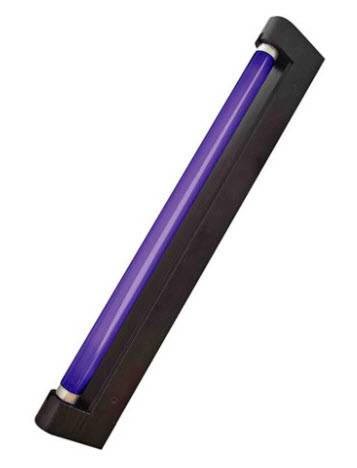
What about incandescent black lights or UV LEDs. I have found neither one works as well. You can also find various units such as the one shown below. The downside to this unit and other similar ones are several fold. Much more of the bulb is exposed which means you need to come up with some form of shield so that only the stamps are exposed. With the under cabinet approach the light is aimed down limiting direct eye exposure (assumes you covered mounting holes. Another downside is that the bulb is not protected in any fashion. With the under cabinet fixture you can cover the bulb as I mentioned with the shield when not in use. Since the under cabinet fixtures are fairly wide they also sit nicely on almost any flat surface you set them on.
Send note to Staff

Pillar Of The Community
United States
713 Posts
Posted 02/17/2019   5:35 pm  Show Profile Bookmark this reply Add wkusau to your friends list  Get a Link to this Reply
Thanks for posting this. I love DIY projects.
Send note to Staff  Go to Top of Page
Pillar Of The Community
Learn More...
United States
1951 Posts
Posted 02/17/2019   7:43 pm  Show Profile Bookmark this reply Add jkelley01938 to your friends list  Get a Link to this Reply
mstocky2,

I like those Athearn blue boxes. That's my first hobby; even before stamps.

Jack Kelley
Send note to Staff  Go to Top of Page
Valued Member
Learn More...
United States
257 Posts
Posted 02/17/2019   9:52 pm  Show Profile Bookmark this reply Add mstocky2 to your friends list  Get a Link to this Reply
This is one of my other hobbies. Got into them both about the same time.
Send note to Staff  Go to Top of Page
Pillar Of The Community
Canada
1637 Posts
Posted 02/17/2019   10:05 pm  Show Profile Bookmark this reply Add No1philatelist to your friends list  Get a Link to this Reply
Mstocky2, that is another great way to use those economical longwave flourescent tubes, similar to my desk lamp suggested method in another previous thread about black lamps. I like your idea of using an undercounter design as it will suit anyone who has a desk hutch. And of course they can install a push button, rocker switch, or twist type if mechanically inclined to do so. As far as the cover, you can fabricate a cover from clear plastic, or lexan, or similar and sized to the original or made a little bigger and clipped or screwed on. If you can buy one with a clear lens you have it made as it will not effect the performance of the lamp. Just make sure you are buying a longwave blacklamp tube.


But for the person who is not mechanicaly inclined, most hardware and building supply places offer these types of fixtures with switch and cord complete and often cheaper than building your own from pieces and in differing lengths. The only thing a person has to then do is to find a lamp size they like, make sure they can obtain that flourescent black light tube online, and they are off to the tagging.


As an electrician, I have to make a recomendation. In order to prevent Fire please do not allow the fixture ends containing the lamp ends to sit on paper, cardboard, or boxes as in the photo previously posted or other flammable material. These flourescent tube lamp ends contain a filament which glows and emit a large amount of heat which builds up over time. And if you think it can't happen, think again. I have experienced a lamp/paper fire 35 years ago at university where I worked. It took a while but it did ignite and did a fair amount of damage. Thanks for sprinkler system, it put it out but also caused more damage. Make a stand to allow ventilation, or trace the slotted screw holes under your cabinet, leave them a little loose and you will be able to remove and take the lamp with you.


As for the longwave black lamp tubes, they are designed to be used in public places and are safe to use at home. The low power UV-A emitted by black lights is not a hazard to skin or eyes and can be viewed without protection. If you are going to use it for long periods of time it may cause some eyestrain, so you could use glasses or wear clear lenses as it will act as a filter. As for blacklights, you see them in nightclubs, bug zappers and bug traps in grocery stores.


UV-B, sanitization or shortwave uv is the hazardous one. It is also used for G.B. phospers, tagging and papers, etc. and the fixture for collectors to use is designed to avoid exposure to the skin and eyes. And filter glasses is then also recommended for safety.
Send note to Staff  Go to Top of Page
Valued Member
Learn More...
United States
257 Posts
Posted 02/18/2019   09:37 am  Show Profile Bookmark this reply Add mstocky2 to your friends list  Get a Link to this Reply
Thanks No1philatelist, some good points. I tend to be a DIY person and couldn't find any nice corded units at the time. If one can find a corded unit that could be ideal as well.

Your point on Fire hazard is a good one. While I have not experienced the boxes getting warm that does mean it wouldn't happen over extended use time.

As far as UV-A emitted from these lamps the packaging says the radiations emitted "are not considered harmful to normal skin & eyes". The labeling does go on to say persons sensitive to ordinary sunlight should take similar cautions as they do to normal sun light. That coupled with closer examination of stamps under LW UV, I wanted to err on the side of caution in general about use.

As you probably know LW UV doesn't work for US stamp tagging one needs a SW UV lamp with appropriate filter.

Thanks again to all for feedback. The whole point is to get more people to experience a whole new side of stamp collecting and to show it can be done for modest investment.
Send note to Staff  Go to Top of Page
Pillar Of The Community
United States
1847 Posts
Posted 02/18/2019   10:59 am  Show Profile Bookmark this reply Add cjpalermo1964 to your friends list  Get a Link to this Reply
Jack Kelley, same here!
Send note to Staff  Go to Top of Page
Valued Member
United States
65 Posts
Posted 02/18/2019   11:34 am  Show Profile Bookmark this reply Add oldbeeg to your friends list  Get a Link to this Reply
Ahh, brings back to memory the light box my dad built for me about 35-40 years ago. Now that I may be getting back to my stamps, I'll need to dig it out.

Mstocky2, would you mind my posting pictures here, or would you prefer I start another topic?

B.G.
Send note to Staff  Go to Top of Page
Valued Member
Learn More...
United States
257 Posts
Posted 02/18/2019   11:37 pm  Show Profile Bookmark this reply Add mstocky2 to your friends list  Get a Link to this Reply
I have no problem with you posting pictures here. I would enjoy seeing them.
Send note to Staff  Go to Top of Page
Valued Member
United States
65 Posts
Posted 02/19/2019   09:15 am  Show Profile Bookmark this reply Add oldbeeg to your friends list  Get a Link to this Reply
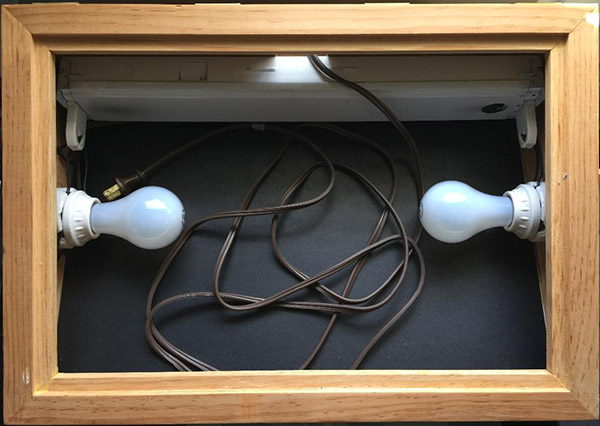
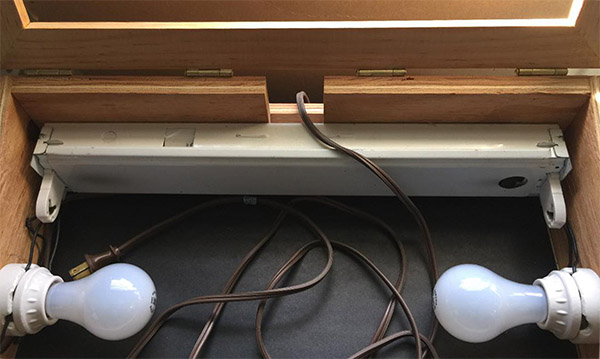
My dad made this out of mostly stuff he had available (the bottom of the base has some streaks of paint). He loved doing woodwork.
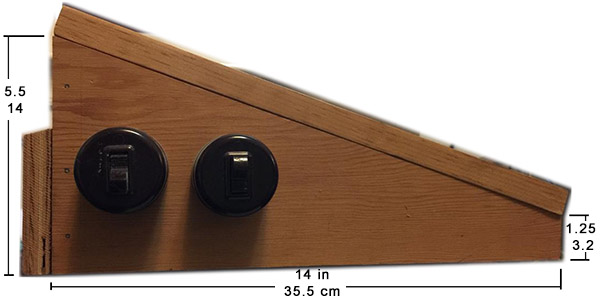
The base is 5/8 inch plywood, the lid is 3/4 x 1-1/2 inch wood; the ledge for the glass inset is 1/2 inch and deep enough to allow for the poster board to be kept in place.

The base is 20 in. / 50.8 cm wide.


There are four brass hinges across the back.


The two switches go to the florescent and 2 regular lights.
I bought every color of 18" florescent bulb I could find, in case they would come in handy for various projects.


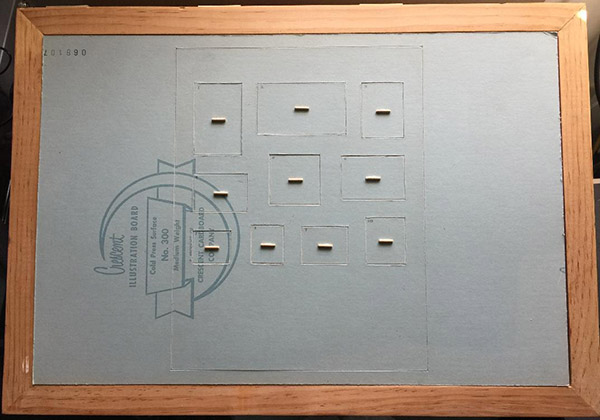
Here's my part: the poster board has cutouts for sheets and various sized stamps.
I also have lots of strips of black poster board for covering any needed spaces.


Thanks, mstocky2!

B.G.

Send note to Staff  Go to Top of Page
Edited by oldbeeg - 02/19/2019 09:17 am
Valued Member
United States
65 Posts
Posted 02/19/2019   1:25 pm  Show Profile Bookmark this reply Add oldbeeg to your friends list  Get a Link to this Reply
Since I have no woodworking abilities, I would follow mstockys2's pictures/instructions and come out with a fine UV viewer. The only difference I can see is there would be bricks under the fixture to hold it up -- I am partial to stacking bricks for such things.

I am lucky that my dad not only enjoyed woodworking, but also making "goodies' for his children: non-crushable boxes; cam-legged, pull behind you dinosaurs; end tables to the proper size, etc.

B.G.
Send note to Staff  Go to Top of Page
Pillar Of The Community
Learn More...
United States
4415 Posts
Posted 02/19/2019   5:36 pm  Show Profile Bookmark this reply Add angore to your friends list  Get a Link to this Reply
I favor wood. I use cut 2x4's to support my UV Raytec lamps.
Send note to Staff  Go to Top of Page
Al
  Previous TopicReplies: 11 / Views: 1,838Next Topic  
 
To participate in the forum you must log in or register.

Go to Top of Page

Disclaimer: While a tremendous amount of effort goes into ensuring the accuracy of the information contained in this site, Stamp Community assumes no liability for errors. Copyright 2005 - 2026 Stamp Community Family - All rights reserved worldwide. Use of any images or content on this website without prior written permission of Stamp Community or the original lender is strictly prohibited.
Privacy Policy / Terms of Use    Advertise Here
Stamp Community Forum © 2007 - 2026 Stamp Community Forums
It took 0.2 seconds to lick this stamp. Powered By: Snitz Forums 2000 Version 3.4.05