| Author |
 Replies: 13 / Views: 1,740 Replies: 13 / Views: 1,740 |
|
|
Valued Member
United States
16 Posts |
|
|
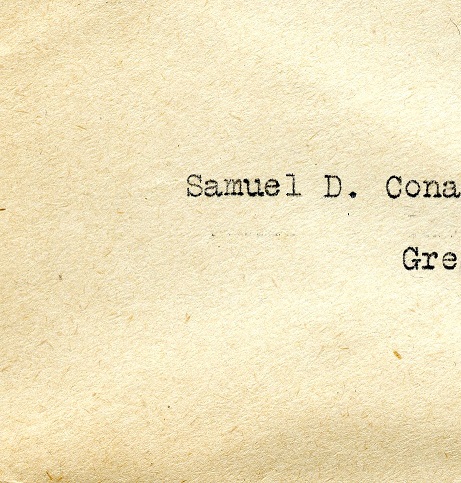
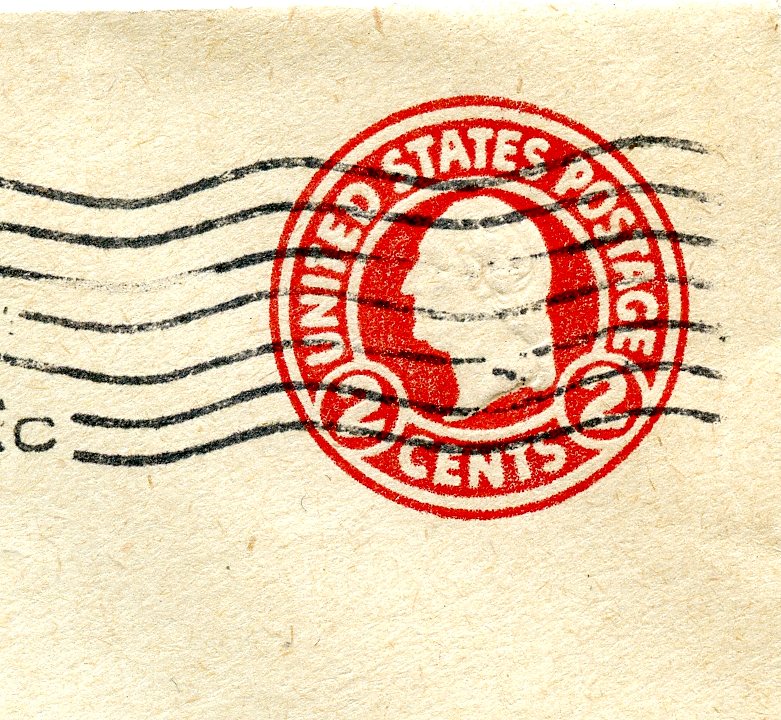
Hello Everyone! This cover has wood pulp and fragments mixed in with the unwatermarked paper. If Manila, there is no #U associated with it? Did I miss something?   |
|
Send note to Staff
|
| Edited by Monheganisle - 02/27/2019 3:52 pm |
|
|
|
|
Pillar Of The Community
1375 Posts |
|
|
Pillar Of The Community
Australia
3299 Posts |
|
|
Bedrock Of The Community
Australia
38679 Posts |
|
|
I believe Great Britain had "Printed to order" stationery,
where the client supplied their own envelopes.
Would the US have had a similar scheme?
|
Send note to Staff 
|
|
|
Valued Member
United States
16 Posts |
|
|
Rest in Peace
United States
1189 Posts |
|
|
The cover you picture is not manila. It appears to be one of the seconds, or the cheap seat covers. These would have had a higher wood pulp content as opposed to linen or rag content. There were options on the grade of paper which one could order and many businesses opted for the lesser grade. Here's U433, the same die, on manila:  Hope this helps. |
|
Send note to Staff
|
| Edited by Stampman2002 - 02/27/2019 8:02 pm |
|
|
Pillar Of The Community
1375 Posts |
|
|
I also would say that the envelope is not manila, but only as it does not "look like it". As I am not an expert, I hope for ThomasGalloway to give his opinion here, as some points are still not clear for me, too. As the color is not relevant for telling a paper a manila paper, it is the paper structure and the fibers, maybe watermark. Under magnification: - do we search for manila fibers (abaca)? - or just longer fibers (how long?) - what is the difference to the white war paper under magnification? - is the (missing) watermark or its orientation any help? --- to add examples (all same magnification macro photo): The first two envelopes are not manila in my opinion, the third one is, but why exactly :) ?    |
|
Send note to Staff
|
| Edited by stamperix - 02/28/2019 03:58 am |
|
|
Pillar Of The Community
673 Posts |
|
|
Monheganisle,
This envelope just looks toned, not manila. Look at the darker edges compared to the material around the cancellation.
Also note that, postal stationary has been extensively studied for more then a 100 years. The probability that you have something that doesn't have a SCOTT# means you should keep looking for what it is, and not stop at what it is not... |
|
Send note to Staff
|
|
|
Pillar Of The Community
United States
607 Posts |
|
|
Just cheap white paper. There are a few catalog listings for the 2c circular die on white war paper in the UPSS catalog.
|
|
Send note to Staff
|
Bill Lehr
US Postal Stationery Specialist |
|
|
Pillar Of The Community
1375 Posts |
|
|
Thank you. So we are now 4 people who think that this is not manila. But why? Is it just the look? Could the view under magnification help in difficult cases between manila and white war paper (see my images above)? |
|
Send note to Staff
|
|
|
Pillar Of The Community
621 Posts |
|
|
Make it 5 people.
Let's do a little analysis. If it IS manila, then either:
a. The government had the envelope contractor manufacture 2-cent manila envelopes, or
b. One or more were produced in error.
There is no evidence that the USPOD asked for any to be made. The Scott catalog has no listing for manila envelopes. The UPSS catalog recognizes a single manila envelope (cat val $30,000!!), commenting that it appears to be "wrapping paper". We have to assume it was made in error. It was made with a high back knife (K57) and the envelope in the OP is low back.
So, there would have to be a separate set of error conditions to result in the OP envelope. I.e., this isn't simply a second copy of the manila envelope in the UPSS catalog.
I call it white war paper. |
|
Send note to Staff
|
|
|
Pillar Of The Community
1375 Posts |
|
|
Thank you. So we are now 5 people who think that this is not manila. But why? :-)
Indeed this must have been an error if it was manila (which it is not). What would an expertizer do to prove that it is white war paper and not manila? He has to give more than "it does look like it". So the only guess I could give is that this is done under magnification, as the manila paper has a different paper structure and different fibers (manila or similar). Actually the three examples under magnification I gave above were pretty obvious. The two first ones show many and long inclusions which could let you think that this is manila. But the third picture shows what could be the difference - the manila-paper-type fibers and especially the more rough look of the paper (although this is in each case the same magnification).
So after all it should be looking closely at the paper to define a paper.
I was joining this thread as I think that the manila paper is a mystery to most of the collectors. If they once have understood that manila is not a paper color, they still don't really know what it is then. I did not find any image under magnification which could be helpful or any thread here. But people ask questions about manila very often and collectors look at the catalog and see the manila entries everyday. |
|
Send note to Staff
|
| Edited by stamperix - 03/03/2019 11:56 am |
|
|
Bedrock Of The Community
Australia
38679 Posts |
|
|
Any Help? Manila is a type of buff-coloured fibre which comes from a plant called Musa textilis, which is a relative of a banana tree, native to the Philippines. It is often referred to as Manila hemp or Abacá, although the term Manila Hemp is incorrect as it is not hemp ( which comes from the plant Cannabis Sativa, which is no realtive of the banana). It is likely that the 'hemp' name was attached because both Hemp and Manila were major sources of fibre for both papermaking and ropemaking and it is likely that the words then became connected - this was back in the 19th century. Manila fibres, which are hard fibres, are long and strong and it is for these properties that it was used for specific papermaking uses, where are hardwearing, durable paper or board was required. In it's unbleached state, it produces a buff coloured pulp which makes a brown shade of paper or board, which became synonymous with brown envelopes and files. The term Manilla paper and board, now describes either a light brown colour or a smooth type of coloured board. Sadly it is unlikely that Manila fibres will be found in either! Brown envelopes, which are called manilla enevlopes are usually just made from poor quality 100% recycled fibres and manilla file board is usually from normal wood pulp fibres. Where Manila fibres are used is in specialised paper products such as tea bags, filter paper and banknotes. http://justinsamazingworldatfennerp...manilla.html |
|
Send note to Staff
|
| Edited by rod222 - 03/03/2019 1:18 pm |
|
|
Pillar Of The Community
1375 Posts |
|
|
Thank you. It's interesting but the question is if that this is also the manila paper the US envelopes and wrappers were made with. It seems that the manila paper is a mystery for experts, too. I don't find any definition when it comes to US stationery. It may be possible that there are manila fibers in the "manila paper", maybe not. The only thing I know is that it's not a paper color and that the fibers should be somewhat longer or rougher. But the white war paper has this, too. That is why I tried to continue this topic with some photos under magnification, as it's there were the manila paper should be defined. But until now we still don't know why some paper is called manila paper and what defines it?
(Are there manila fibers or not, or other fibers, or is the paper thicker or stiffer or less stiff, or is there a pattern before light and so on...)
I have my thoughts (as shown above), but I am not an expert in this area :). |
|
Send note to Staff
|
| Edited by stamperix - 03/05/2019 04:06 am |
|
| |
Replies: 13 / Views: 1,740 |
|




 Posted 02/27/2019 2:43 pm