| Author |
 Replies: 10 / Views: 1,489 Replies: 10 / Views: 1,489 |
|
|
Valued Member
United States
42 Posts |
|
|
|
|
Valued Member
United States
42 Posts |
|
|
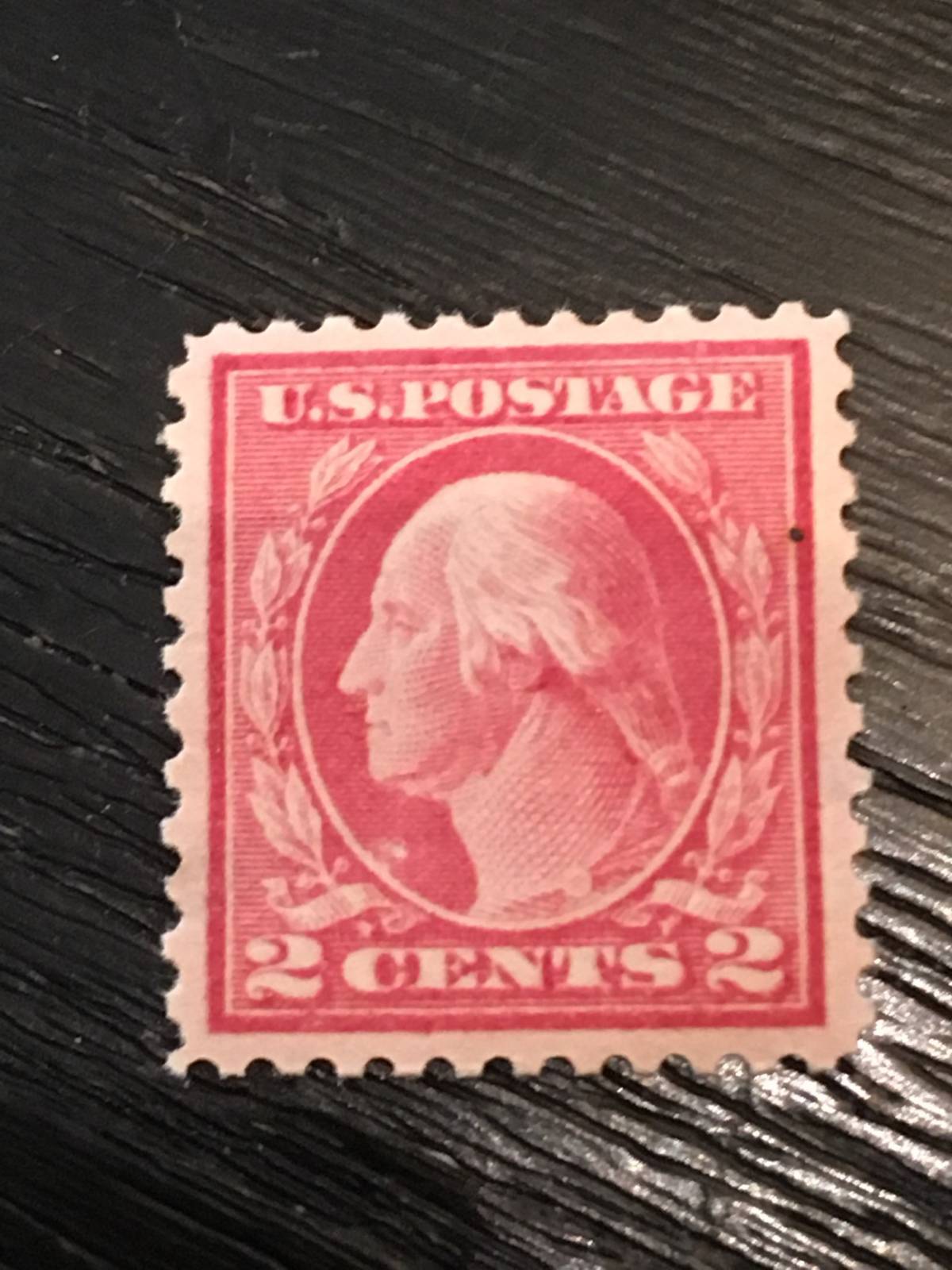
Edit: I just checked the Scott specialized catalogue, and the best guess would be the rotary sheet waste stamp, Scott 546. Out of curiosity, is this stamp more difficult to fake than others in the washington/franklin series? I was just thinking how, as far as I'm aware, imperforate rotary stamps in the washington franklin series are a rarity in themselves, so it would be difficult to cut perfs into. |
Send note to Staff 
|
|
|
Pillar Of The Community
United States
1414 Posts |
|
|
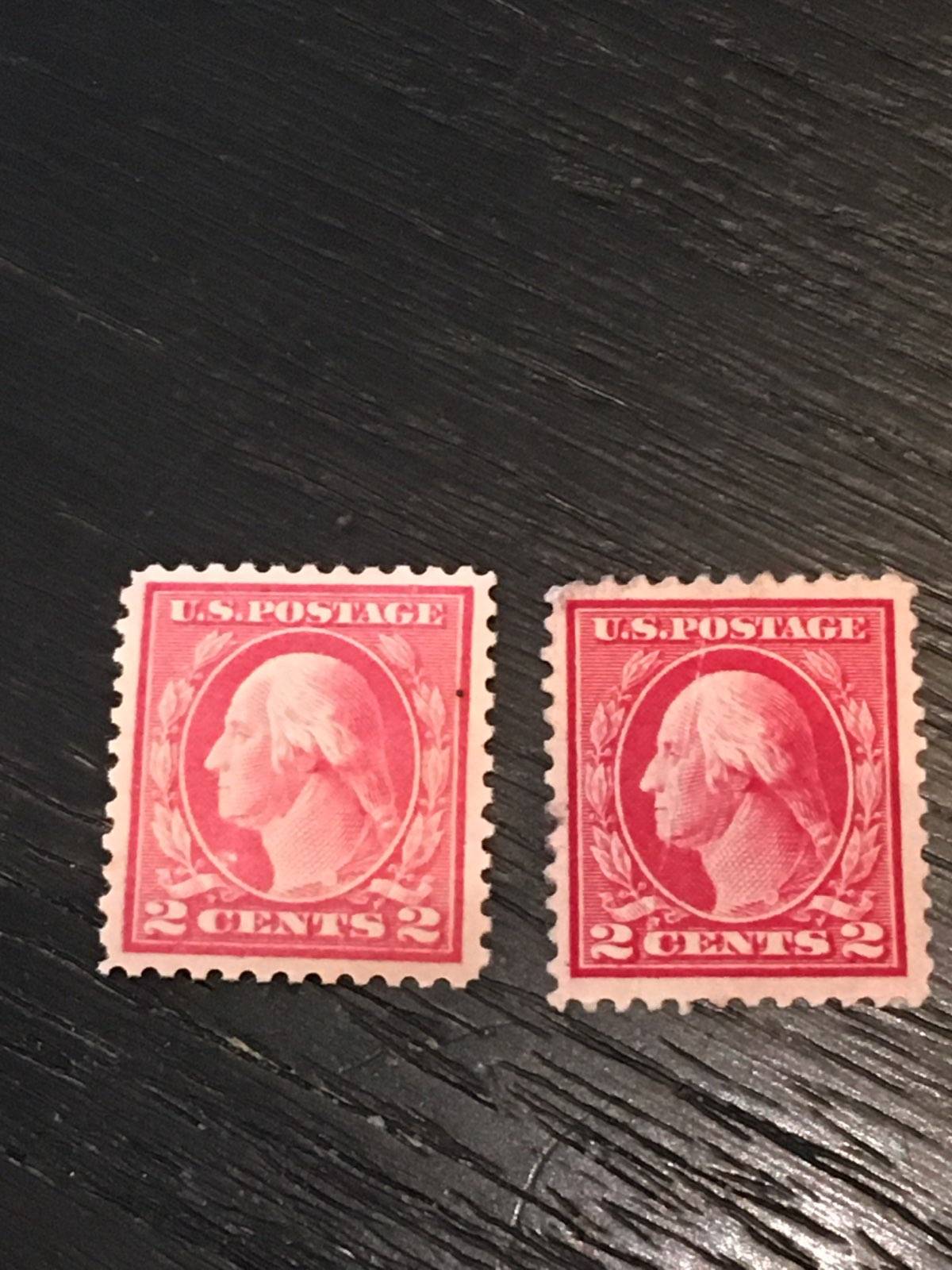
Both stamps pictured are type I flat plate printings. The perf 11 rotary press coil waste Scott 546 would be type III. Compare width with a known booklet pane single. It is possible that the stamp is an AEF booklet pane single. Stamps interior to the pane were perforated on all four sides. Also, please check the long recent thread on paper mesh (grain). |
|
Send note to Staff
|
| Edited by cfrphoto - 03/12/2019 9:52 pm |
|
|
Pillar Of The Community
1375 Posts |
|
|
Do the left and right side of perforation look ok?
I am not an expert in this, so I still don't really know if this genuine perforation should be:
- in one straight line vertically?
- same distance of the perforation holes?
I read that the perforation pins could also be damaged or bent.
So for example on the left side some holes have different distances and also not all are in one line.
What would tell me that the perforation is not genuine or indeed genuine in this case?
(So it it's all genuine perforation, I would agree with the AEF single.) |
|
Send note to Staff
|
|
|
Pillar Of The Community
United States
1414 Posts |
|
|
The most effective and reliable way to check perforations on Washington/Franklin stamps is to compare perforations with two or three other stamps. Lay the stamps in an approval card with the perforation tips touching and aligned at one end. Perforations should remain aligned (on average) over the length or width of the stamp. If not, gauges are different, or the perforations may be bogus. Note that rotary press perf 11 is not the same as flat plate perf 11. The Kiusalas Specialist gauge or a Multi-Gauge from Sonic Imagery can also be used. A 10x or 15x magnifier will be helpful when matching perforations, especially when comparing genuine and fake perforations. More advanced tests can establish that perforation rows on opposite sides of the stamp are parallel. |
|
Send note to Staff
|
|
|
Pillar Of The Community
1375 Posts |
|
|
Thank you. Yes, the comparison to other stamps always helps a lot.
But if a perforation pin or two pins were bent, the distance between genuine perforation holes, as well as the alignement of themselves below each other, can be irregular, correct? So if this is was the case in this stamp it could explain some holes looking strange on the left side, and we would have to continue with all the other perforation checks (that you just described)? |
|
Send note to Staff
|
|
|
Valued Member
United States
42 Posts |
|
|
Are these AEF stamps catalogued in Scott specialist as 499e and 499f? And are these approval cards similar to Varios pages? I'm still pretty new to the terminology.. |
|
Send note to Staff
|
|
|
Pillar Of The Community

United States
542 Posts |
|
|
Pillar Of The Community
1375 Posts |
|
|
Here is a sale at Siegel of a single used: https://siegelauctions.com/lots.php...1078-lot-561You could make a scan and compare the ratio and size of your stamp to this or any other 499f sale at Siegel (scans). If the size is good, question come to if the perforation is genuine or not. I am sure SCF can be a help here, too. |
|
Send note to Staff
|
|
|
Pillar Of The Community
United States
542 Posts |
|
|
The regular 2 cent perf 11 booklet pane of 6 is Scott 499e. Booklet pane singles of this issue are flat plate printed and have designs that are slightly shorter and wider than their perf 11 flat plate sheet stamp counterparts. All booklet pane singles from 499e have one or two straight edges. The 2 cent AEF pane 499f does yield some stamps that are fully perforated in addition to those that have straight edges. If the design size of your stamp is truly shorter and wider than that of a flat plate sheet stamp, then it is possible it is a single from 499f. It could also be a single from 499e that has been reperforated on one or two sides to eliminate the straight edge(s). |
|
Send note to Staff
|
|
|
Valued Member
United States
42 Posts |
|
|
Thanks for the responses thus far! I purchased a 499e pair to make a comparison, should see that in the mail fairly soon. When eyeballing the stamps size compared to a 'standard' flat plate stamp, it appears slightly wider, but not necessarily taller nor shorter. I'll be looking to make a more detailed comparison when the booklet stamps come in. |
|
Send note to Staff
|
|
| |
Replies: 10 / Views: 1,489 |
|




 Posted 03/12/2019 6:58 pm