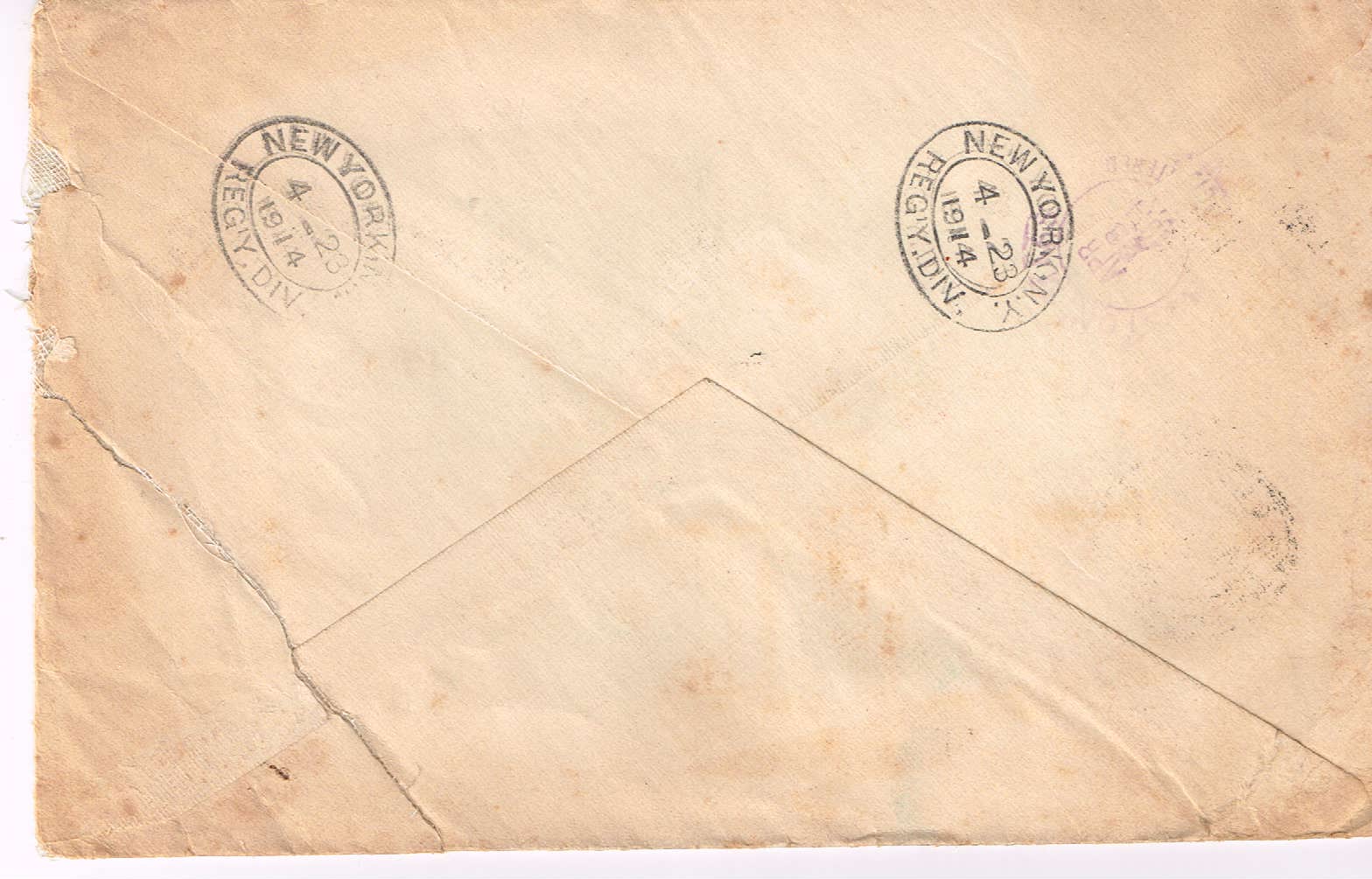
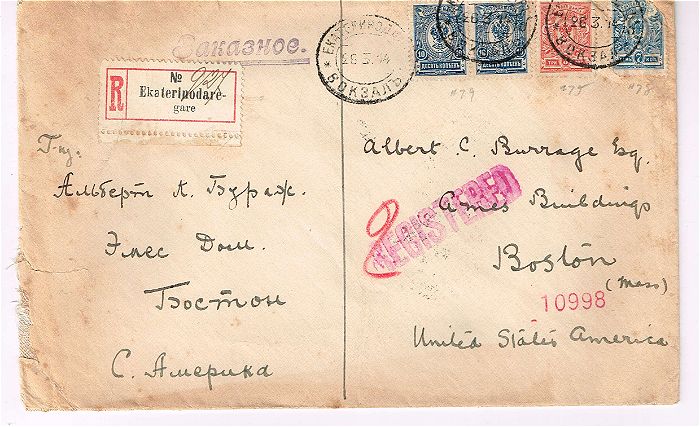
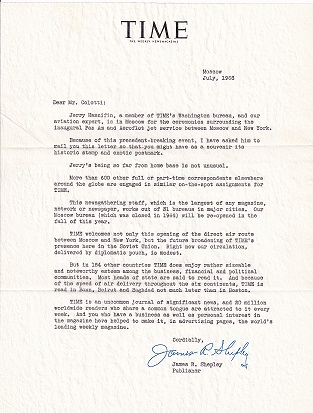
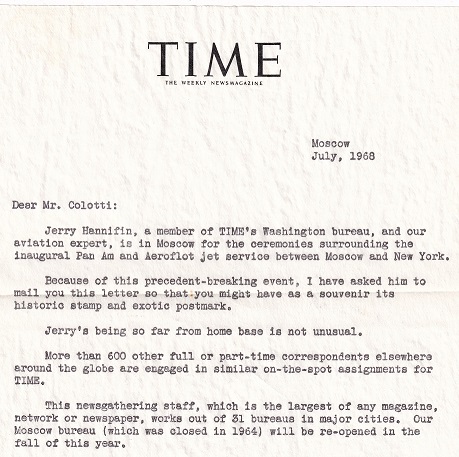
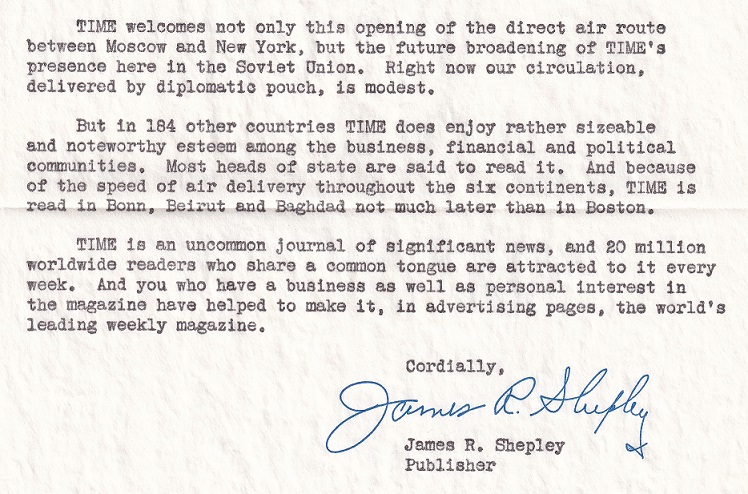
Came across this interesting cover with correspondence enclosed. The following info about the sender was found online:
"This is a digitized version of an article from The Times's print archive, before the start of online publication in 1996. To preserve these articles as they originally appeared, The Times does not alter, edit or update them.
James R. Shepley, a tenacious reporter who rose through the corporate ranks at Time Inc. to become president and chief operating officer, died of complications due to cancer yesterday at the M. D. Anderson Clinic in Houston. He was 71 years old and lived in Hartfield, Va.
Once he arrived on the business side of Time Inc., Mr. Shepley, a hard-driving executive, acquired the nickname ''Brass Knuckles Shepley'' and it clung to him, along with the aura of his colorful past in Washington, Europe and Asia.
During Mr. Shepley's tenure as president and chief operating officer, from 1969 to 1980, Time Inc. diversified broadly into new video ventures. Mr. Shepley is credited with championing the company's cable television subsidiaries, American Television and Communications Corporation and Home Box Office.
''Without any doubt, Jim was the father of HBO,'' J. Richard Munro, chairman and chief executive officer of Time Inc., said. ''He nurtured it and believed in it. The same was true in cable television, with American Television and Communications.'' Correspondent in World War II
Mr. Shepley was hired by Time magazine in 1942 in its Washington bureau, then became a war correspondent reporting from Europe and the Pacific.
In 1945, he joined the staff of General George C. Marshall, the United States Army Chief of Staff. Mr. Shepley served with General Marshall at the Potsdam Conference and helped him draft the official report at the end of World War II. He accompanied General Marshall on his unsuccessful mission to obtain a truce between the Nationalist and Communist Chinese.
He returned to Time as a diplomatic correspondent in 1946 and was Washington bureau chief from 1948 to 1957.
''Shepley was a great boss - tough, curt, no-nonsense but absolutely loyal,'' recalled Hugh S. Sidey, Time's Washington contributing editor who was hired by Mr. Shepley. ''He put his faith in reporters and let them go.'' Book Provoked an Uproar
With his excellent State Department and Defense Department connections from the war, Mr. Shepley cut a swath through Washington. ''He knew the power people and moved easily in the upper levels,'' Mr. Sidey said. ''He was very plugged into the military establishment.''
His book, ''The Hydrogen Bomb,' written with Clay Blair Jr., provoked an uproar with charges that the bomb's development had been delayed by liberal scientists and that the Los Alamos laboratory was infiltrated by Communists.
In a 1956 interview for Life magazine, John Foster Dulles, then Secretary of State, told Mr. Shepley that during the Eisenhower Administration, the United States had been on the brink of a war three times, thus introducing the word ''brinkmanship'' into cold war terminology.
In 1957, Mr. Shepley became head of Time's news service in the United States and Canada. He left Time in 1959 to work in the unsuccessful Presidential campaign of Richard M. Nixon. 'A Fairly Explosive Nature'
When he returned the next year, it was as assistant publisher of Life. ''We held our breath then, because Jim had a fairly explosive nature,'' Andrew Heiskell, former chairman of Time Inc., said. ''But he applied his very, very sharp mind and his enormous drive to a series of jobs.'' As a corporate leader, Mr. Shepley rose quickly to become publisher of Fortune and Time, and finally president of Time Inc. in 1969.
''He was everybody's living symbol of a hard-nosed newsman and hard-nosed executive,'' said Frank W. McCulloch, managing editor of The San Francisco Examiner who worked for Mr. Shepley for 20 years. ''He was abrupt, rude and he had no patience for subtleties or even niceties. But you always knew exactly where you stood. He was honest and fair. And he was a superb journalist.''
James Robinson Shepley was born in Harrisburg, Pa. His first job was at The Harrisburg Daily Patriot, where his father had been editor. He worked for United Press International in Washington before moving to Time. He stepped down as president in 1980 and retired from Time Inc. in 1982."
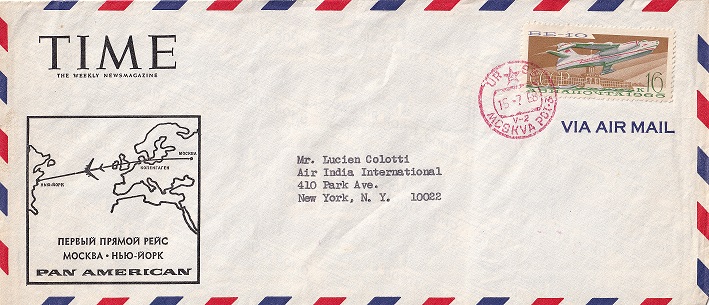
Scanned the letter into 2 parts for ease of reading.
Looking at the envelope I've noticed the lack of postal markings which would indicate it was actually mailed to the NY addressee.





 Posted 03/18/2019 3:38 pm