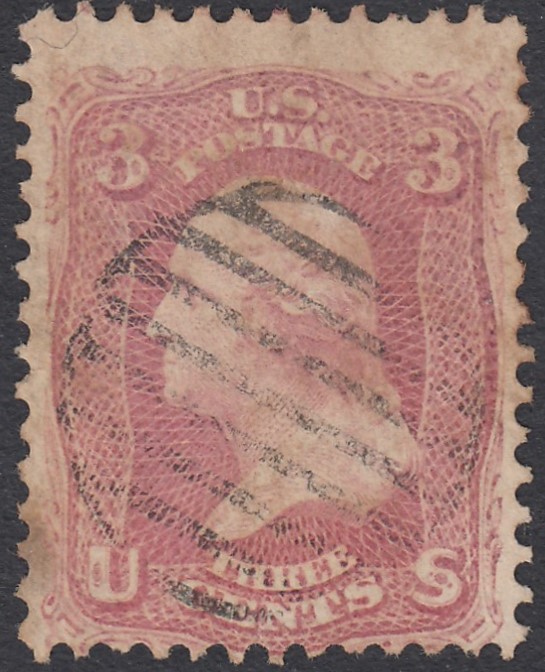
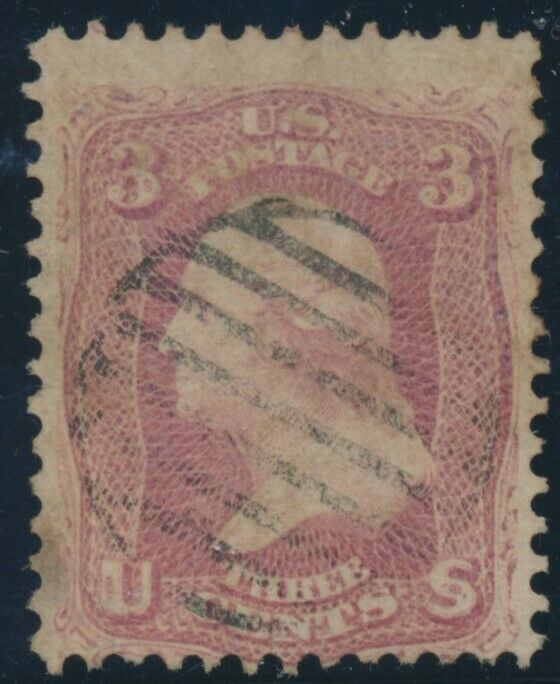
Martin,
You're now experiencing the difficulty of color technology. While our technology is awesome, there still isn't a "color as you see it" fool proof way of either capturing and/or presenting the result. Subtle changes (or drastic ones) in the capturing and reproducing process introduce lots of variation. What I see on my monitor (and I have 4 arranged so that I can compare across monitors for some level of confidence they are at least calibrated reasonably and I'm not seeing something drastically different from one to another (if I do, then I know to go back, re-calibrate, and then view again, and you'd be surprised how often that needs to be done).
And even that's not enough... so the difficulty with giving an opinion on the very very subtle variations of these stamps from photos is challenging, and there's nothing like having the stamp in hand.
That said, let me give another perspective on your cert dilemma.
Step outside of philately for a moment, and consider the humans involved.
Think about getting the second cert like you would seek a medical opinion. That word is critical... OPINION. There is a certain implicit "this is a best guess" when utilizing the word opinion, and it's offered that way for a reason.
Now, let's consider that, with the exception of some of the forensic tools available (there were tools available in 2005 too, so it hasn't evolved by massive leaps as some might otherwise suggest). Those tools when it comes to expertizing do not do things like analyze ink composition or paper content. They do utilize a lot of capabilities with various light waves, and magnification (ala the Forester + Freeman VCS devices). I believe the PF have this, but it's not going to tell them what color the stamp is, it is used to do forensic analysis on stamps to detect alterations. So let's put the forensic tools aside, and 90% of expertizing is about stamp examination, and not some analyzer that spits out "the stamp is x, or has x properties, and there for is a <stamp#>".
The call is ultimately made by a human.
Now, if we examine human fallibility, we discover very quickly that people make mistakes. And as it turns out, the make a TON of them. (My doctoral thesis is in this area, so I'm not just talking out my hat). On average, humans make a mistake every 4 minutes. (This can also be called a "human failure"). Now, the more skilled a person is, the less likely they are to make a mistake in a particular area, but you can never reduce human error to zero. This is because there are 6 categories of human error (as identify during my research, prior there were essentially 4, recognized by the Aviation and Nuclear power industries). One of those is "skill based" errors. So that is most effectively "treated" with education + experience. But that doesn't solve any of the other 5 issues. Others relevant to expertizing include impairments (including distractions, medical/physical/substance, imagine vision issues), Bias, Complacency (not everyone is at their best 100% of the time), Sabotage (in this case an unscrupulous examiner who is "doing a favor for a friend", would apply, it's not human error in this case as much as it is human intent, but applied to philatelic expertizing, I think this definition is appropriate).
So you can probably see now from my description the inherent problem with human based activities. You can probably site examples of each of these in other areas where you have had such errors your self (or been the victim of such events).
The point is, this is why having more than one cert, whether it concurs or not, is not at all a bad thing where there may be some added value. No one needs a second cert (at least for ID), for an obvious stamp like a #39 or a #100. (Condition however is a different issue, especially if the condition has degraded, but that becomes a second reason for certain a stamp). Stamps like the 70, 78, 64, 5-9, may all be worth a second cert if there is some question about plate position or color variation.
Personally, from what I see, I think you have a 64. It doesn't (if I'm seeing it correctly) have the characteristic of a 64a. It's not likely a 64b either, not enough rose in it. The stamp itself is poorly centered, so the $700 CV of a 64 is actually closer to $200 - $350. If I had a cert already in hand for a stamp of that value, I'd unlikely seek a second one, without really solid reason to do so. But if I had solid reason to do so, I wouldn't hesitate.
|





 Posted 04/19/2019 2:05 pm