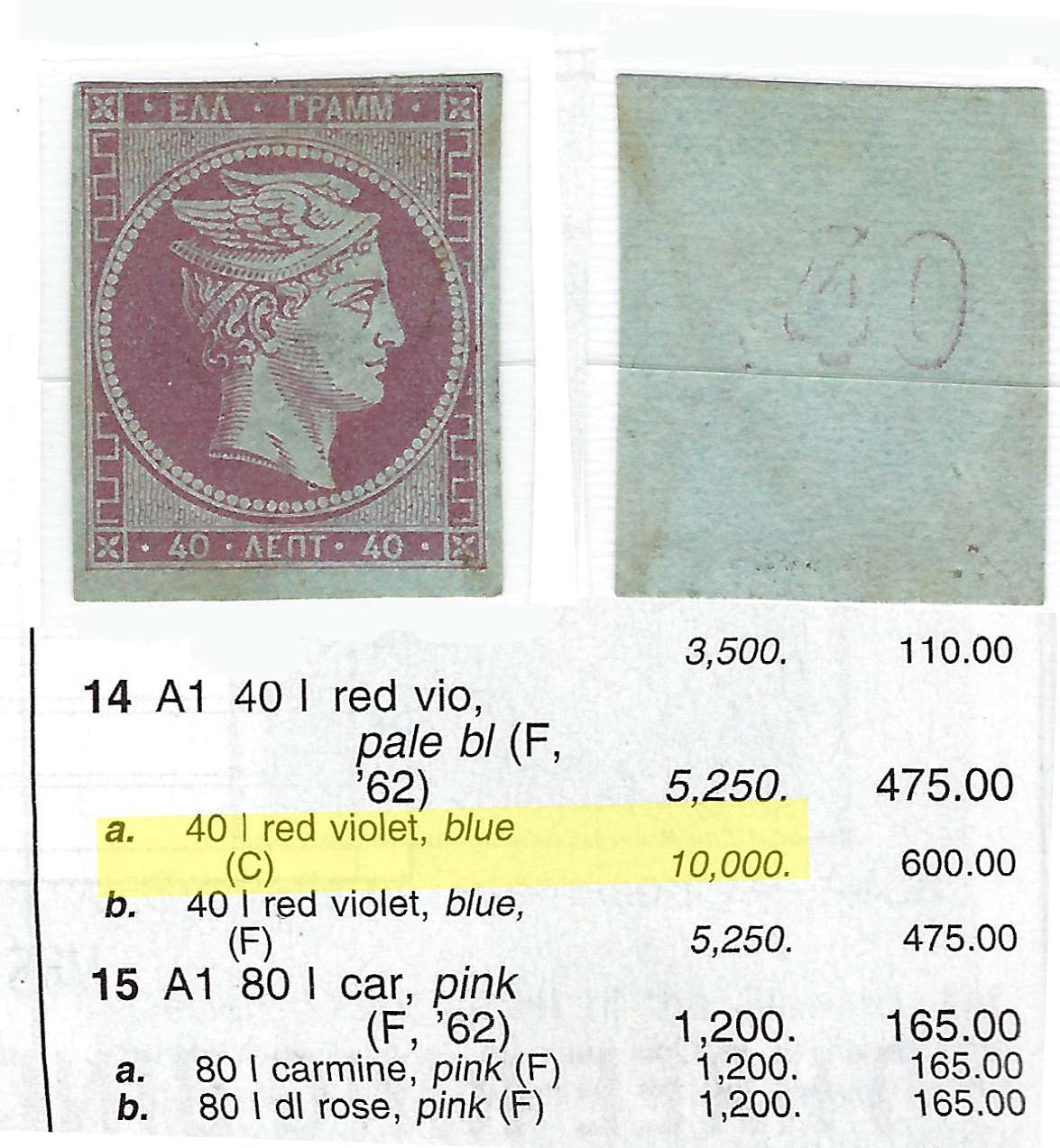
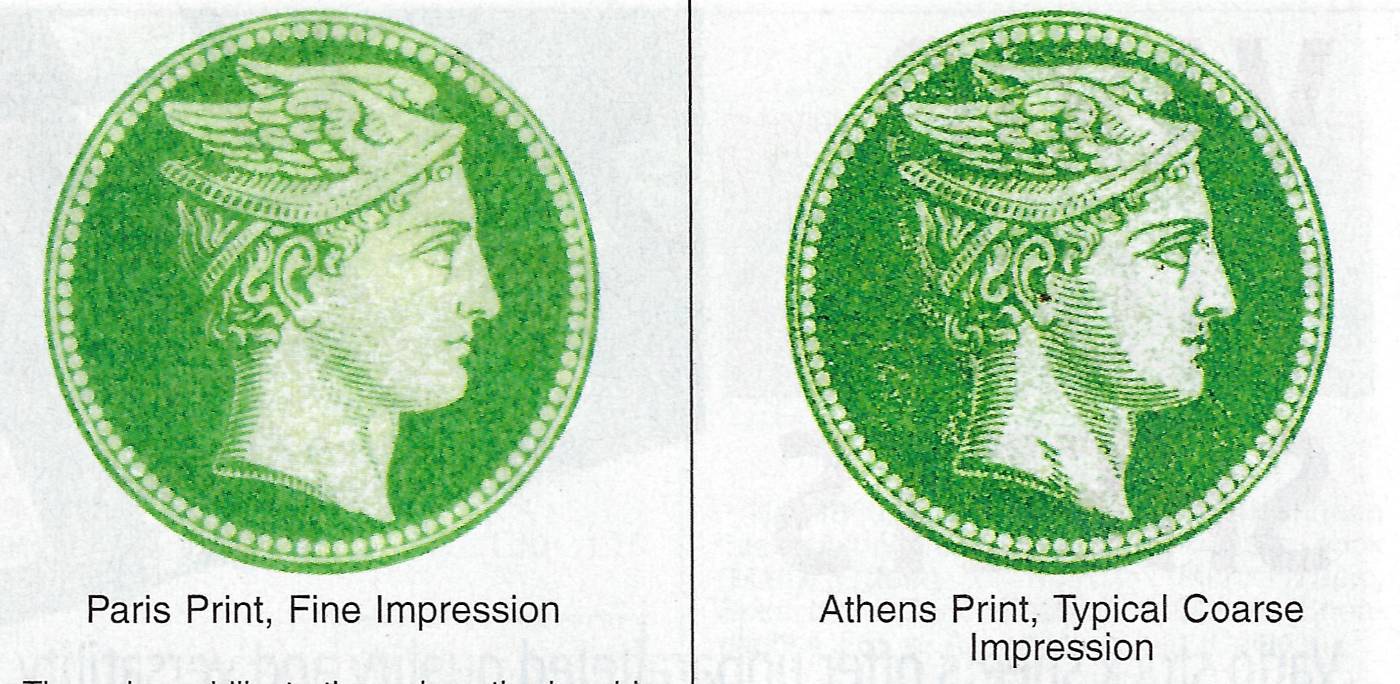
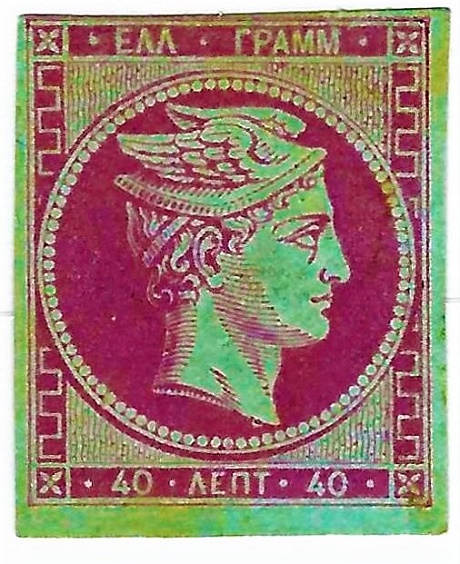
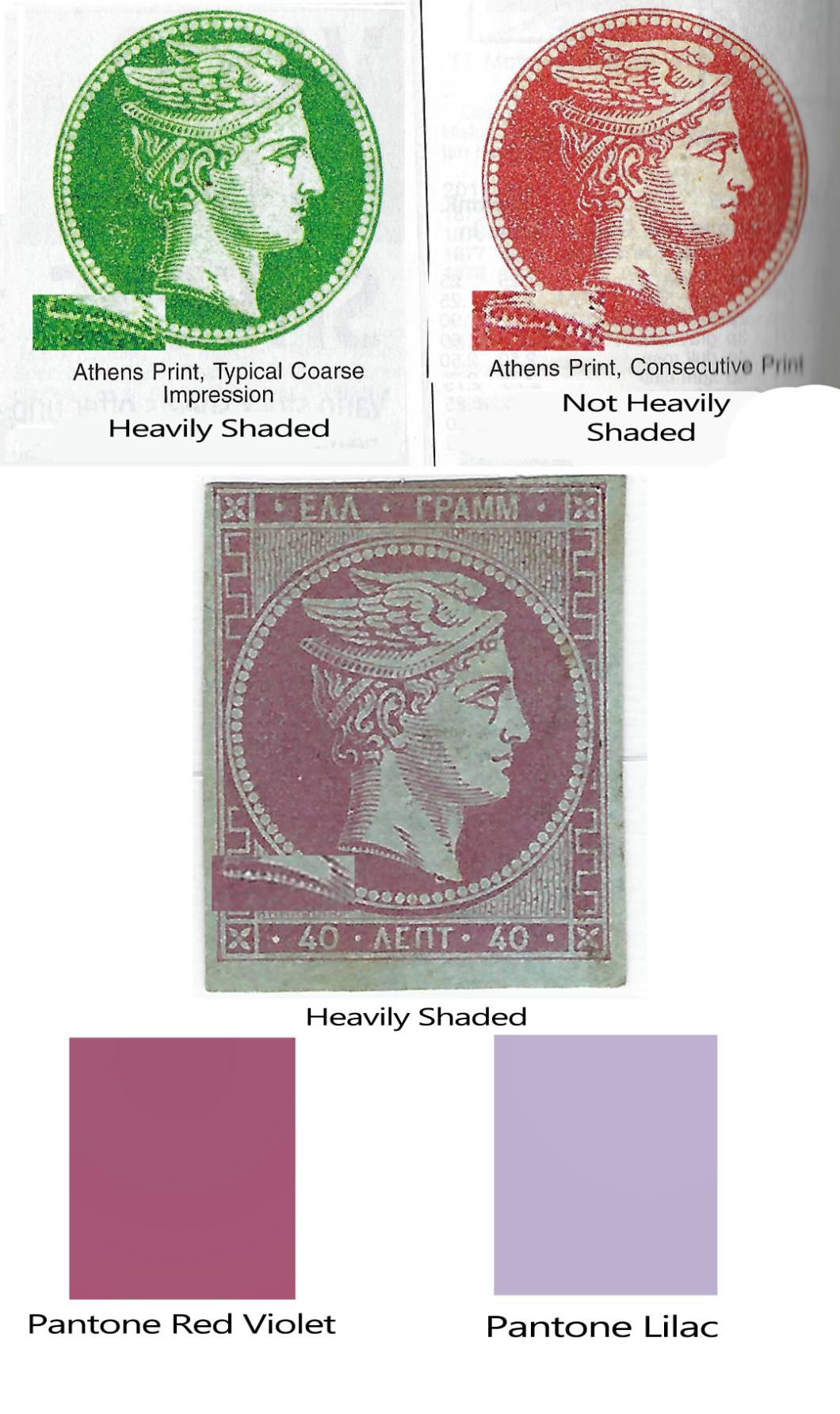
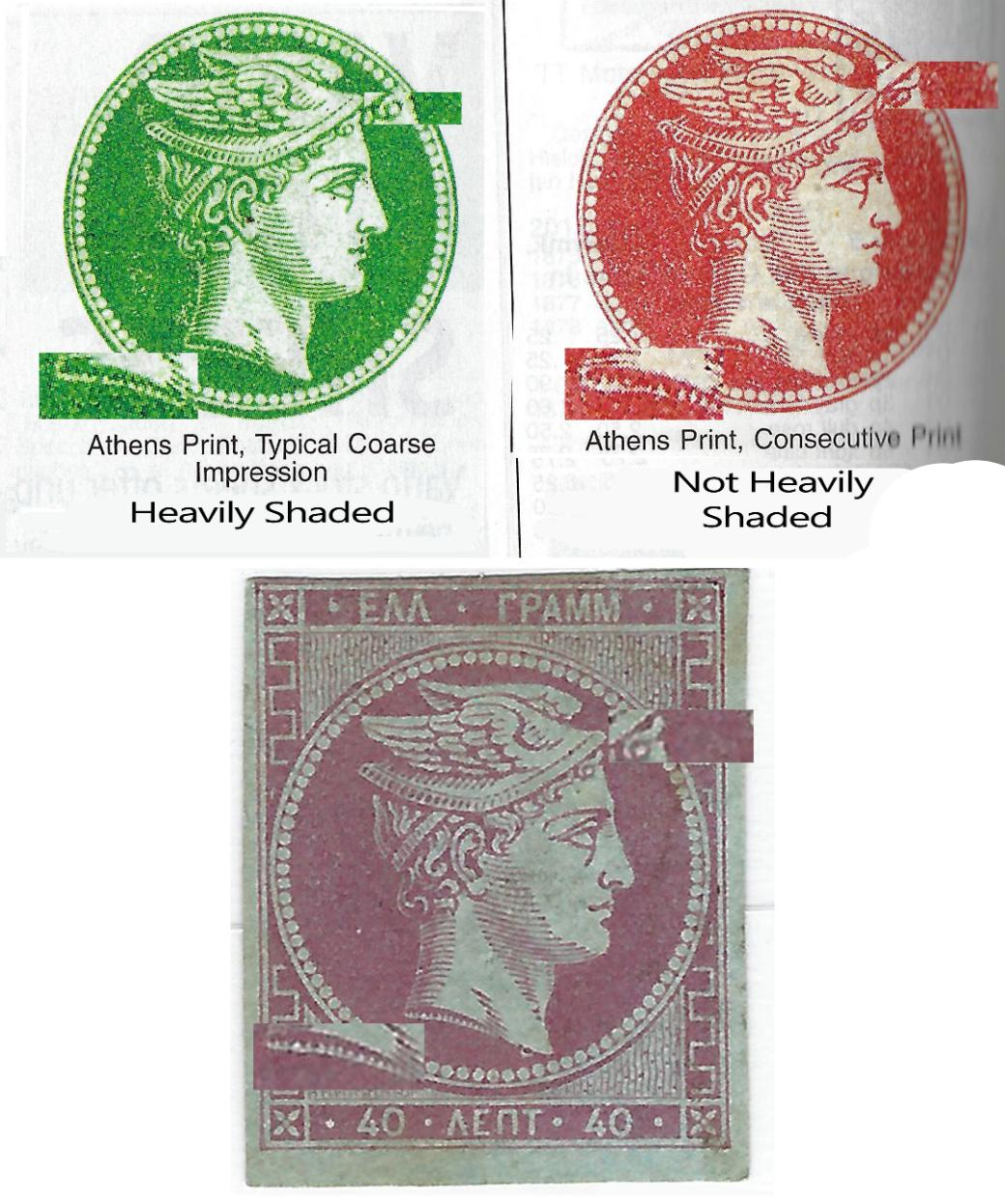
Having looked closer at your stamp we can say that it is No.14.Certain defects in the
printing like the red bleeding (dark ink residue) in the right frame and upper corners;and
under the "A" in PAMM..These darker ink defects are frequent in the 1st Athens printing.
(Chemical effect,the varnish yellows)
This might have contributed in the occurrence of the famous yellowish wash evident in some
of the 1st Athens prints of the 5,10,20,40 lepta
___________________________________________________________________________________
My conclusion is based on the "yellowish wash " that covers most of the stamp.This is
in fact a varnish residue.Varnish as principally a mixture of solvent,binders and additives.There are 2 main types of varnishes:oleoresinous and nonoleoresinous
The former was used in our case and incorporated linseed oil as a drying oil,
manufactured at much higher temperatures and under vigorous conditions than the
latter. Solvent used (as petroleum distillate.
(extract from The Large Hermes Heads of Greece_Printing Observations
K. Papathanassiou)
*So this yellow residue is a remnant part of the printing process in this issue.(so it is normal)
Link too the extract:
https://www.academia.edu/4348347/Th...Observations__________________________________________________________________________________________
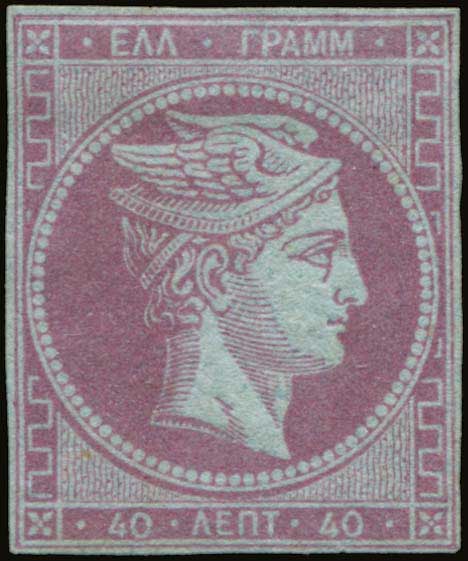
A No.14Ib with strong yellowish wash.A stamp with imperfections that sold 300 euros(Karamitsos pic)





 Posted 04/20/2019 07:30 am