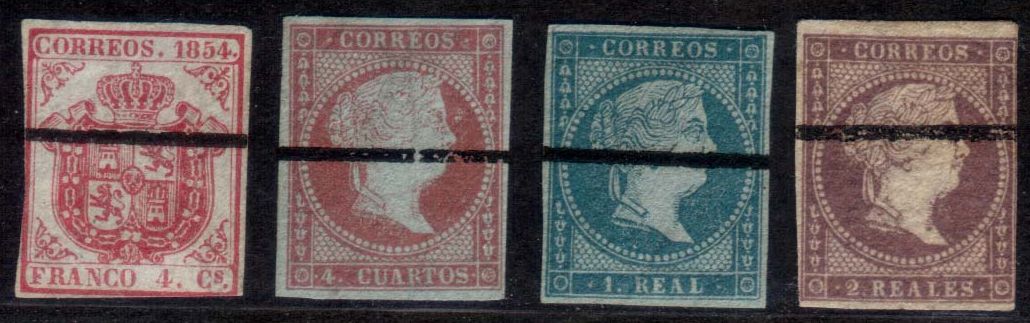
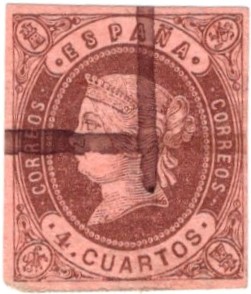
Translation from Filaposta:
message
by Hades »Wed 8-Feb-2006 20:45
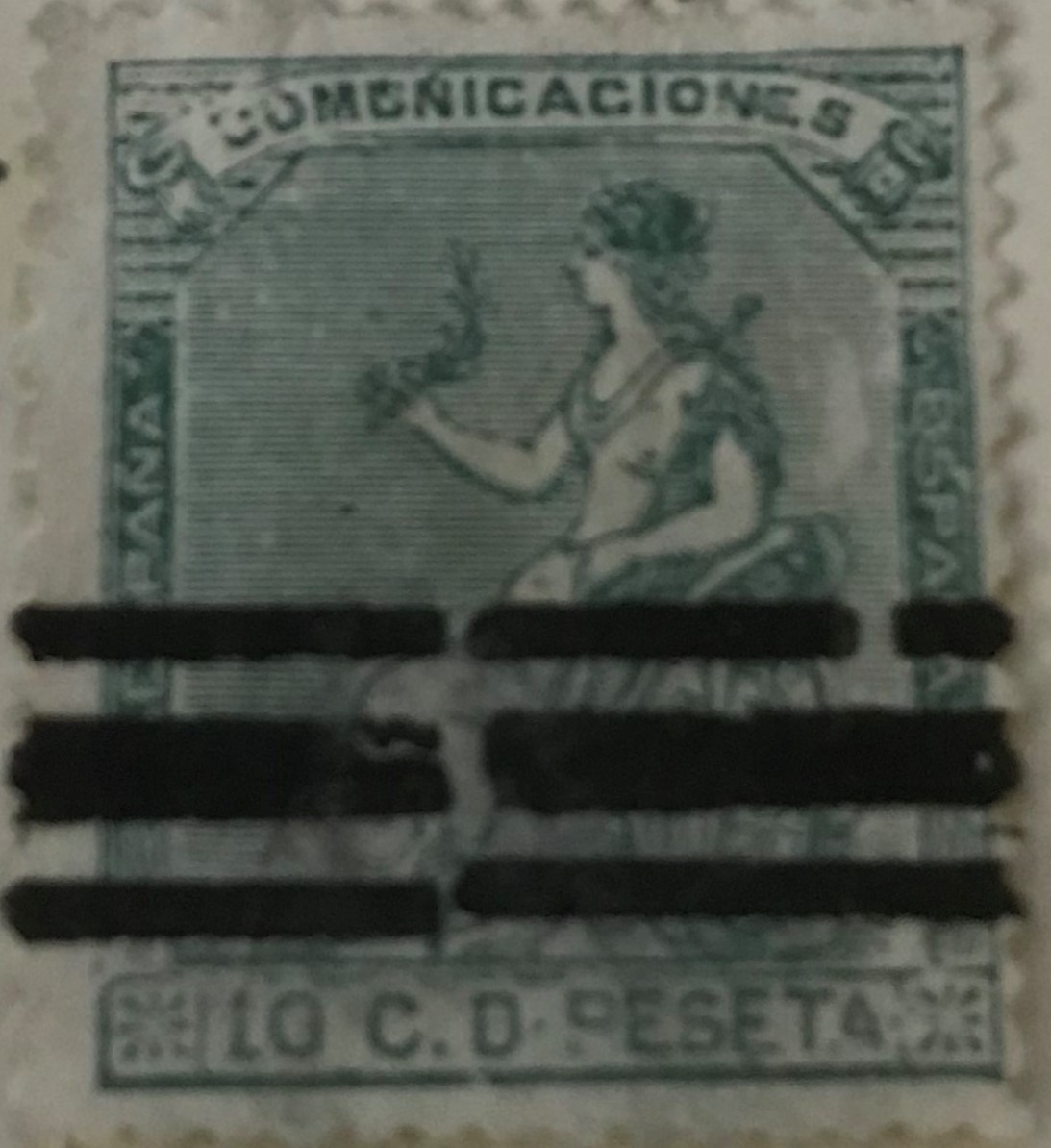
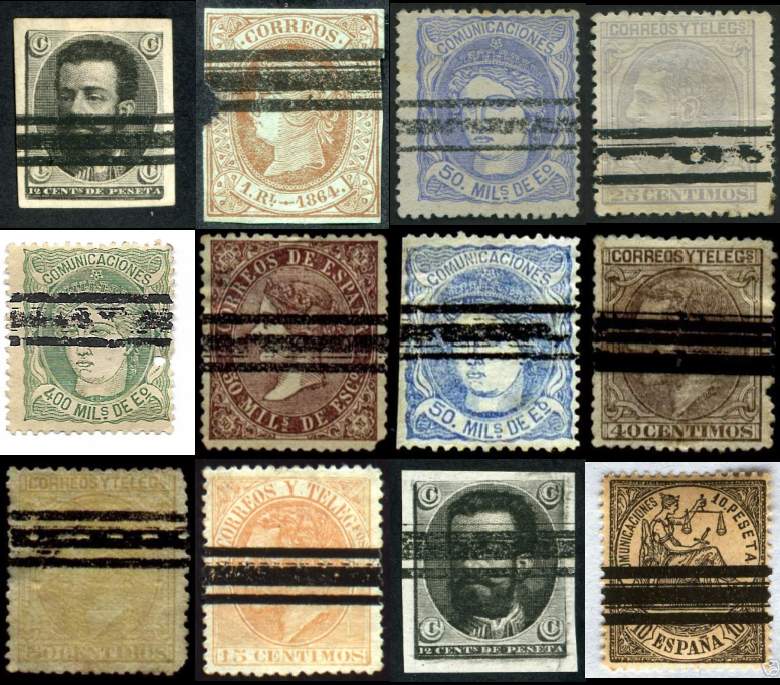
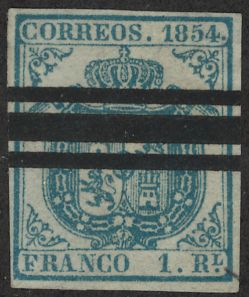
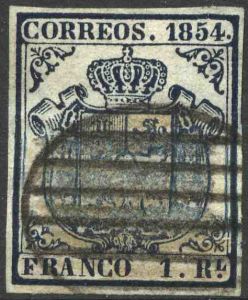
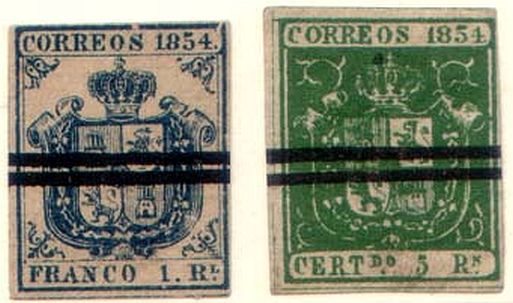
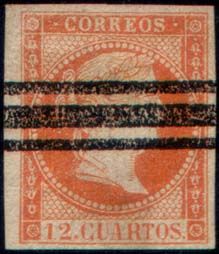
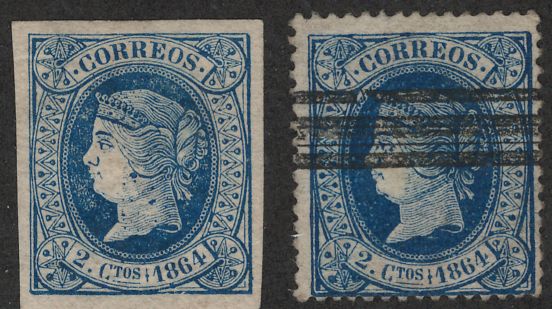
Exactly, the barrado was used to cancel the sheets already issued and demonetized. It consists of a coarse impression of five lines, the second and fourth of which are very thin, so much so that sometimes it comes together with the center, filling the impression.
It was used to cancel complete sheets in the hands of the Factory, the Ministry or whoever was, but still to be sold.
The loose copies of a demonetized issue in the hands of individuals were "exchanged" for their equivalents of the new issue. In this topic a swap document is displayed.
Another use of the barrado was to cancel false documents seized by the Administration.
Taking into account the strict control of the time, it is practically impossible that a barrado had circulated. I, at least, do not know him.
They are usually cheap, and I do not understand why. They are still new stamps and give a lot of information about the original print.
Anyway, the question about prices suggests an error of approach ... Being the barrado typical of the classics, the price distinction is not between new, used and barred. It's between new, barred, with this postmark, with this other, with this brand, with this dater, etc ... That's where the (huge) price differences are.
http://filaposta.com/foro/viewtopic.php?t=2511As it has been possible to verify in the successive interventions, the subject of the BARRED or unused stamps with typographic fillets, little is studied, not having generated enough interest within the collecting and having been discredited by the commercial sector.
It has been tried to elucidate its state of rarity, as well as why the stamps, once demonetized, were canceled in this way after 1854. Both issues require a different treatment. Personally, I consider the second question more interesting, although I admit that at the level of collecting in general it could be the first.
Known is that the collector is usually motivated to get the stamp that is missing. In the classic period of Spanish philately, the barred stamp fulfills a subtle function, sometimes unnoticed by many collectors, and this is none other than to provide this, the possibility of getting certain stamps even in this state, barred.
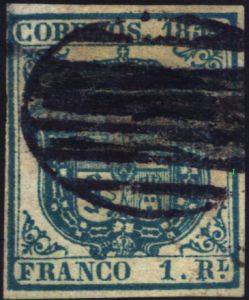
Let's develop this question with a couple of examples: We have the value of 1 REAL of the 1854 issue, in thick bluish paper and printed in light blue (Edifil 34A). To this stamp the catalog, does not give you any quotation in new condition (it may not exist), in used round 6,000 € How many collectors can incorporate it into your collection? In usual conditions to collect in new or used the stamp. The truth! very few can be the privileged ones that can do it. On the other hand, this same barred stamp does not have excessive difficulty in obtaining.
Another emblematic case is the NE 1, of this stamp they conserved a hundred of copies in new state, since the totality of the emission was unusable sweeping it. The catalog gives a quote of about € 2,000 in new and as in the previous case barred can be obtained by a few.
The moral of this whole matter is instructive, on the one hand, as indicated by an earlier intervention, we have rare stamps that by the simple fact of being barred lose this condition, on the other hand, their price in the catalog does not decrease proportionally. It would be the case of the two previous examples that are the fourth and second in the price of barred stamps. On the other hand, the fourth quarter of the 1866 issue has a quote of € pair and how many do you see? The one from 1867 is not even cataloged and exists.
Exposed all the above, it can be concluded that the value and not the rarity of a barred seal, is not in its condition of being, but rather in that the stamp is intrinsically rare. The collector usually goes to cover holes in the album and these are covered with whatever.
For today it is enough, perhaps in a next occasion I will explain more.
Greetings.
http://www.filaposta.com/foro/viewtopic.php?t=4541





 Posted 04/23/2019 3:46 pm