Turtle2900,
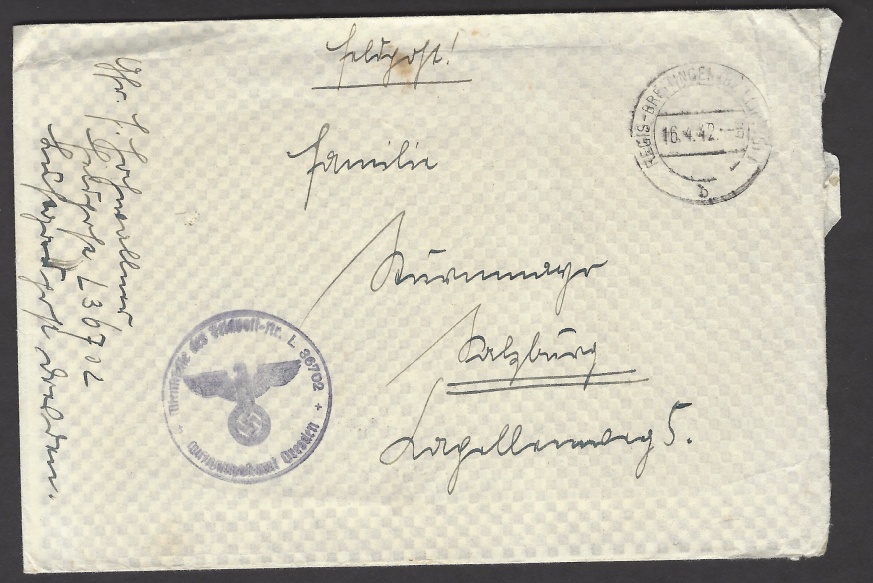
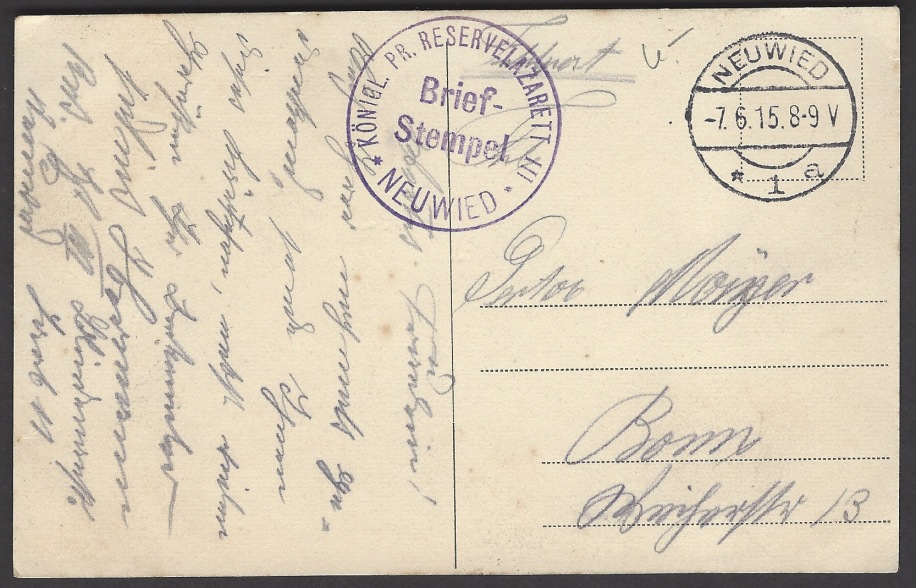
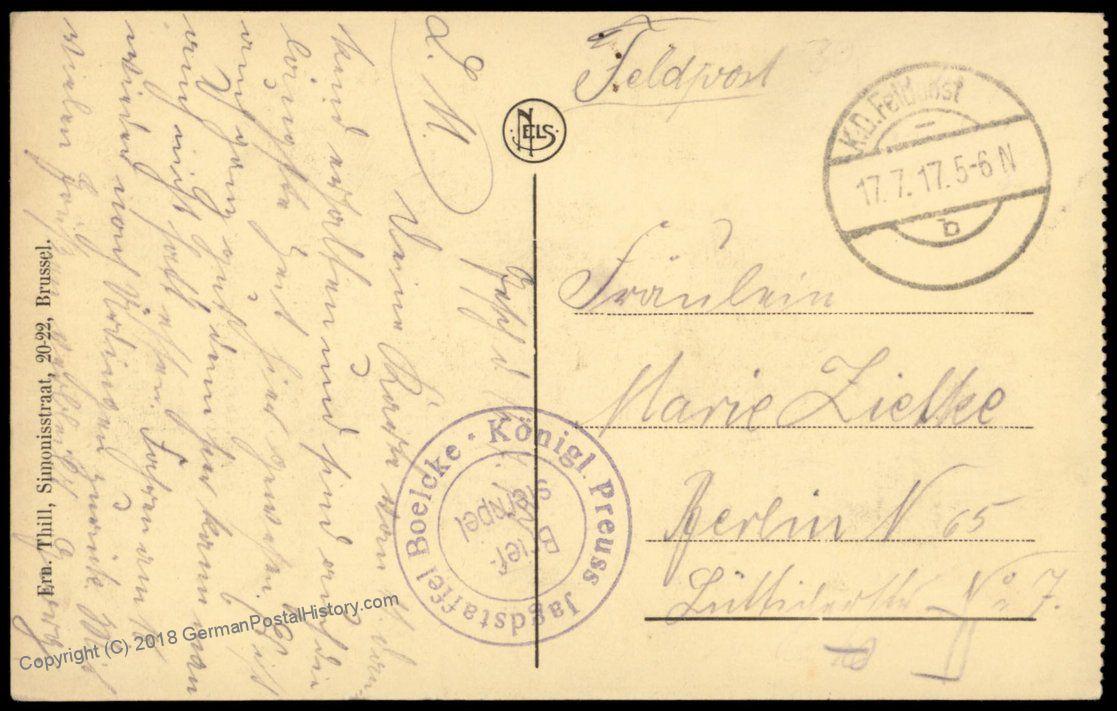
Nice items; rather common, however, as Germans tend to be prolific writers and much material abounds. I have collected
FELDPOST (soldiers' mail, usually free-franked) for nearly forty years, and the prices for the vast majority have remained static or declined on average. I usually pick up unusual
FELDPOST topical cards/covers, paying extra for seldom-seen auxiliary markings. Either addressed to or from interesting family names (not from among the more common German surnames like
Schmidt/Mueller/Gaertner/Richter usw) for a
Euro (US$1.18) or two.
Unusual or no-longer existing
place names can command a bit of a premium as well, mostly for (n)
Ostalgia-minded German speaking collectors not unlike myself.
If you ever find any German-language (or less likely, Dutch, Czech, Polish, or French) correspondence with sender or recipient's named
Wentzell, Habisrittinger, Denner, Compart, Henneberg, Morawski, Nowotny, van Koenen/Fabelmann, or the more common
Gessler, I would
pounce on them like white on rice be
appreciative if you contact me as I'd
definitely be interested, from a genealogical viewpoint. My family surnames going back a couple generations.
The pencilled numeral "6" marked on one cover might have been a dealer's wishful selling price, in either DM's or Euros (asking about US$4 to $7 at today's exchange rate).
===========================================
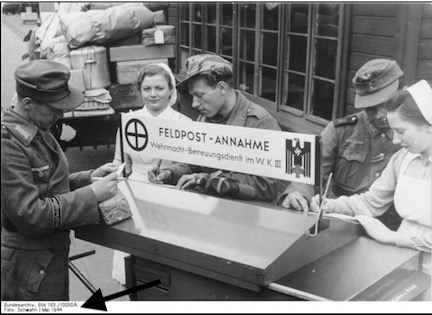
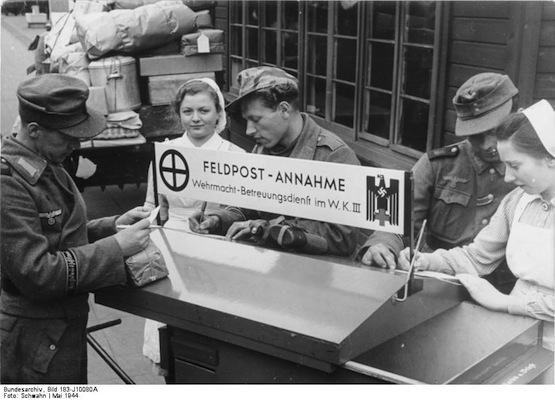
The last postcard--shown above --if it even exists, I believe to be a
post-WWII reproduction or a
reprinted postcard, as the
Bundesarchiv notation (SEE ARROW) on the postcard indicates it could not be from the
NAtional-SoZIalistiche-era (1933-1945). I have never seen the one pictured above, if indeed it is a postcard.....and I've seen a lot.....
There exist today countless
excellent reproductions of propaganda-type post cards from the N-S (Nazi) era; this particular
original postcard by itself, if it was mailed and expertise by the
BDP (federation of German Philatelists--the ultimate authority on faked pricier German material), could easily bring
quite a number of Euros by itself, if marketed optimally at auction. It shows a public desk-writing area, with two nurses assisting three Wehrmach soldiers writing home; the sign loosely translates as "Accepting soldier's mail here for the Front" mentioning the German version of USA's
USO"
Propaganda type postcards, especially postally used, in-period, can sometimes command
outrageous premiums, especially if the usage is not overtly philatelic.
For English-speakers there is of course the
GPS (German Philatelic Society) an affiliate of the US-based
American Philatelic Society. My favorite German go-to site is "
philaseiten.de" and they do have a decent English translation option; if you can navigate the tremendous amount of postings you will learn a lot about
Feldpost there!
Meantime I try to help decipher old German script
(Suetterlin and others) when I can, as I was forced to learn when my late grandfather wrote to me weekly in his neat, but hard-to-read
Suetterlin script. If I didn't write back my
Opa wouldn't send me any stamps!. Today I can read German-language material a bit better, perhaps, than the average German. One tends to get better at it
with practice, especially if it's from the same person!
--Jim Wentzell
stampguyaps177-681





 Posted 05/02/2019 1:07 pm