Stamp Community Family of Web Sites
Thousands of stamps, consistently graded, competitively priced and hundreds of in-depth blog posts to read


Stamp Community Forum
 
Username:
Password:
Save Password
Forgot your Password?

This page may contain links that result in small commissions to keep this free site up and running.

Welcome Guest! Registering and/or logging in will remove the anchor (bottom) ads. It's Free!

Wide Stamps Explanation

 
To participate in the forum you must log in or register.
Author Previous TopicReplies: 9 / Views: 1,224Next Topic  
Valued Member

United States
25 Posts
Posted 05/31/2019   10:45 pm  Show Profile Bookmark this topic Add martin53545 to your friends list Get a Link to this Message
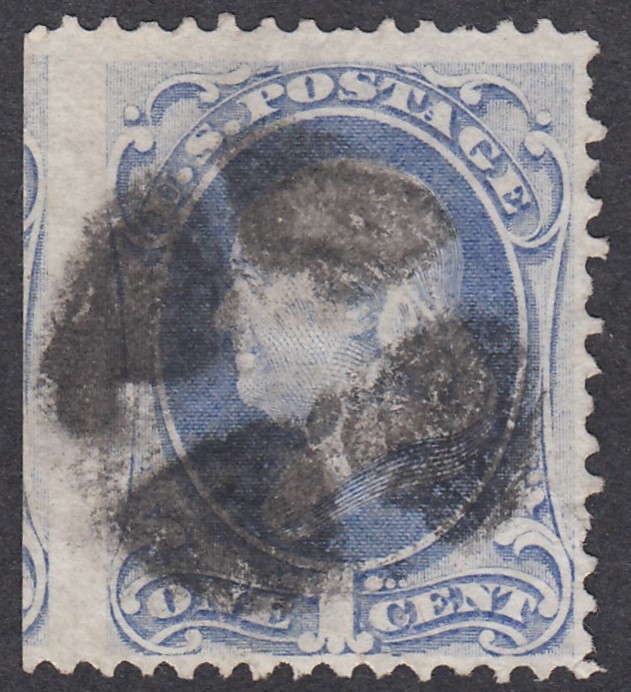
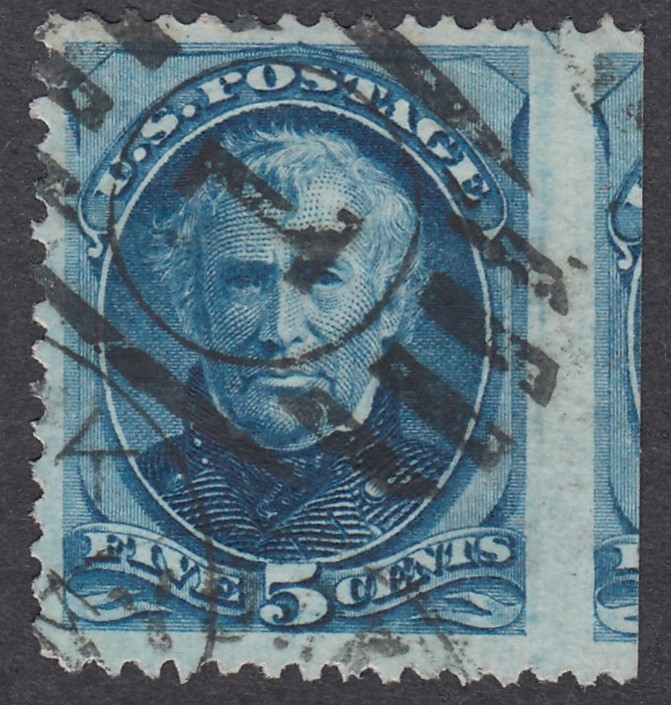
I have a 156 and 185 which have a second image and no perfs on one side. The 156 was sold as a 156f. Can someone comment on how this condition occurred and is it common?
Thanks,

Send note to Staff

Pillar Of The Community
United States
4092 Posts
Posted 05/31/2019   11:16 pm  Show Profile Check eyeonwall's eBay Listings Bookmark this reply Add eyeonwall to your friends list  Get a Link to this Reply
"The 156 was sold as a 156f"
Yikes. To be a 156f, you have to have 2 full designs, not one and a sliver of another. The ones you showed are called a margin straddle - it os from the edge of a pane (which for these issues always have a natural straight edge) and is miscut enough to show a little of the pane next to it. While not real common, hardly rare (although your 5c shows mare of the next stamp than usually seen on these miscuts).
Send note to Staff  Go to Top of Page
Pillar Of The Community
1375 Posts
Posted 06/01/2019   02:44 am  Show Profile Bookmark this reply Add stamperix to your friends list  Get a Link to this Reply
I think those are very interesting and collectible stamps, and I wonder how this can happen in the printing process, perhaps someone could explain a little. Why should the cut be made so badly, and in addition not straight?
Send note to Staff  Go to Top of Page
Bedrock Of The Community
United States
10632 Posts
Posted 06/01/2019   06:37 am  Show Profile Bookmark this reply Add revcollector to your friends list  Get a Link to this Reply
These are called "straddle margin" examples. This is where the sheet was cut into panes before being shipped out to post offices. Precision was not always employed.
Send note to Staff  Go to Top of Page
Pillar Of The Community
1375 Posts
Posted 06/01/2019   07:43 am  Show Profile Bookmark this reply Add stamperix to your friends list  Get a Link to this Reply
So this was made with scissors?
And along the guide arrows?
Send note to Staff  Go to Top of Page
Pillar Of The Community
6330 Posts
Posted 06/01/2019   08:41 am  Show Profile Bookmark this reply Add John Becker to your friends list  Get a Link to this Reply

Quote:
I wonder how this can happen in the printing process, perhaps someone could explain a little


To elaborate on revcollector's post. There are several steps in the production process, in the case of your 2 stamps:
1. The printing process occurred normally.
2. The perforating process occurred normally.
3. The cutting of the press sheet into panes for retail sale was slightly off.

Yes, the cut should align with the guide arrows. The point of one arrow appears at the top of your 5 cent stamp. I am sure these were cut in a stack of multiple sheets at once, with this sheet not being aligned perfectly with the top sheet. Also, no doubt cut with a large industrial-sized knife machine of some sort ... not scissors. Relatively common and within quality control standards of that era. Interesting, but not valuable beyond a normal stamp.
Send note to Staff  Go to Top of Page
Pillar Of The Community
1375 Posts
Posted 06/01/2019   4:40 pm  Show Profile Bookmark this reply Add stamperix to your friends list  Get a Link to this Reply
Thank you for the explanation, I understood it now better, especially the possibility that more than one sheet was done at once. Unfortunately those are not my stamps, but I think the OP will be glad to know all this about his stamps.
Send note to Staff  Go to Top of Page
Valued Member
United States
25 Posts
Posted 06/01/2019   10:40 pm  Show Profile Bookmark this reply Add martin53545 to your friends list  Get a Link to this Reply
Thank you for the clear explanation. I can assume that there were 10 of these stamps on this particular sheet and the opposing 10 stamps have a straight cut on the left!
Send note to Staff  Go to Top of Page
Pillar Of The Community
United States
1414 Posts
Posted 06/02/2019   6:47 pm  Show Profile Bookmark this reply Add cfrphoto to your friends list  Get a Link to this Reply

Quote:
I am sure these were cut in a stack of multiple sheets at once,


Bureau sheets were split into half-sheets or panes by the perforator. A circular cutting knife was located between the perforation rings. It seems likely that 19th century sheets were perforated horizontally and the vertically, cutting the sheet into panes in the same step. Would it would be possible to cut a stack of sheets into panes with a guillotine without rupturing fragile perforations?

It is difficult enough to understand 19th and early 20th century stamp production when documentation is scant. Were small snippets of information frequently filling space in publications, like MeKeel's, fact, fantasy or guesswork? It is difficult enough to refute the myth that sheets of stamps were grilled more than one sheet at a time by the National Bank Note Company in 1870 and 1873. Why create new ones?
Send note to Staff  Go to Top of Page
Edited by cfrphoto - 06/02/2019 6:49 pm
Rest in Peace
7742 Posts
Posted 06/02/2019   7:03 pm  Show Profile Bookmark this reply Add wert to your friends list  Get a Link to this Reply
martin53545...They even done the same thing with Canadian stamps.

Send note to Staff  Go to Top of Page
  Previous TopicReplies: 9 / Views: 1,224Next Topic  
 
To participate in the forum you must log in or register.

Go to Top of Page

Disclaimer: While a tremendous amount of effort goes into ensuring the accuracy of the information contained in this site, Stamp Community assumes no liability for errors. Copyright 2005 - 2026 Stamp Community Family - All rights reserved worldwide. Use of any images or content on this website without prior written permission of Stamp Community or the original lender is strictly prohibited.
Privacy Policy / Terms of Use    Advertise Here
Stamp Community Forum © 2007 - 2026 Stamp Community Forums
It took 0.18 seconds to lick this stamp. Powered By: Snitz Forums 2000 Version 3.4.05