Condition is the most important factor in how much a collectible is worth. Nobody, be it a serious collector or outside speculator, will not want to put large amounts of money into collectibles, unless they can guarantee condition. Speculators in particular (who may not know much about stamp collecting) need a standard that does the grading work for them and that the philatelic community respects. Having such a standard also makes rare stamps fungible, allows you to directly compare realizations between stamps to establish an actual market value for a stamp in a specific grade, and makes it easier to make a market for high-grade stamps which brings in money which (arguably) helps the hobby. That last bit is a leap, but let's say it's true for now.
Quote:
I wonder about the consistency of the standards that they apply, at least with regard to centering
I do too. This is a serious issue for graded stamps. They are subjective; different graders on a different day might give you a slightly better or worse grade, and people can and do resubmit for better grades. I'm not against graded stamps in principle -- the arguments "for" grading that I wrote above are true -- but this a serious, serious issue, and if stamp grading is to actually succeed in the long run it has to be addressed.
The fact that a stamp's condition can change over time means that old grades will eventually have to be re-evaluated, much as stamps with old certs are re-expertised. If a 95 actually can be a 90 or a 98 depending on who's looking at it, collectors and speculators alike should also be aware that the stamp for which they paid 98 money might sell for 90 or 95 money in twenty years; assuming numeric grading is still a thing then, of course. And even if stamp prices have gone up then, they'll still lose money because the numeric grade they relied on is actually subjective and not reality.
We also don't want the situation that occurred with the coin graders in the 1990s to arise: grade inflation (and later, deflation). Basically, with coins in the late 80s/early 90s, there was an "easy" grading service and a "hard" grading service. A coin that the "hard" grading service gave an MS-65 might get MS-67 from the "easy" grading service. For a while the market could adjust, the "easy" graded coins were knocked down, the "hard" graded coins were priced high.
But the "easy" grading service got the most coins submitted, because people knew they'd get the better grade. And they made a ton of money on commissions, while the "hard" grading service wasn't even turning a profit. Soon, the "hard" grading service relaxed its standards, and even became
easier than the "easy" service. "Easy" grading was what the market wanted, after all. It was a quick race to the bottom, and soon the grades meant nothing at all, because both services were ridiculously "easy" and changed their standards from month to month. Needless to say the prices of high-grade slabbed coins dropped like a rock. This problem occurred even between specific graders at a single service (there were ways to game the system even at the "hard" grading service, such as resubmitting until you got one of the easier graders, thereby having both the cachet of the "hard" service but the "easy" high grade), and there's nothing stopping it from happening again with stamps. Even if there is no specific market pressure, standards can and will drift over time just because there are subjective elements involved.
And to be frank, I don't support speculation in the hobby. People speculating in stamp prices, unless they are paying six or seven figures for the world-class rarities that don't need a PSE number to sell for high prices, are dreaming. We don't need to attract speculation to the hobby, it drives people out when things turn south, and creates a circus that draws negative publicity. Collect for fun, don't mix your hobby with money.
There is also the "destroying unique multiples" thing, which is a terrible philatelic sin.
IMO, as a collector, you have the knowledge to determine yourself whether a stamp's condition is acceptable to you. Your eyes are the only grading instrument that you need. A stamp grading service can be a useful tool that serves the hobby, but at least as they stand now come with a number of pitfalls that should be acknowledged.





 Posted 07/25/2019 10:50 am


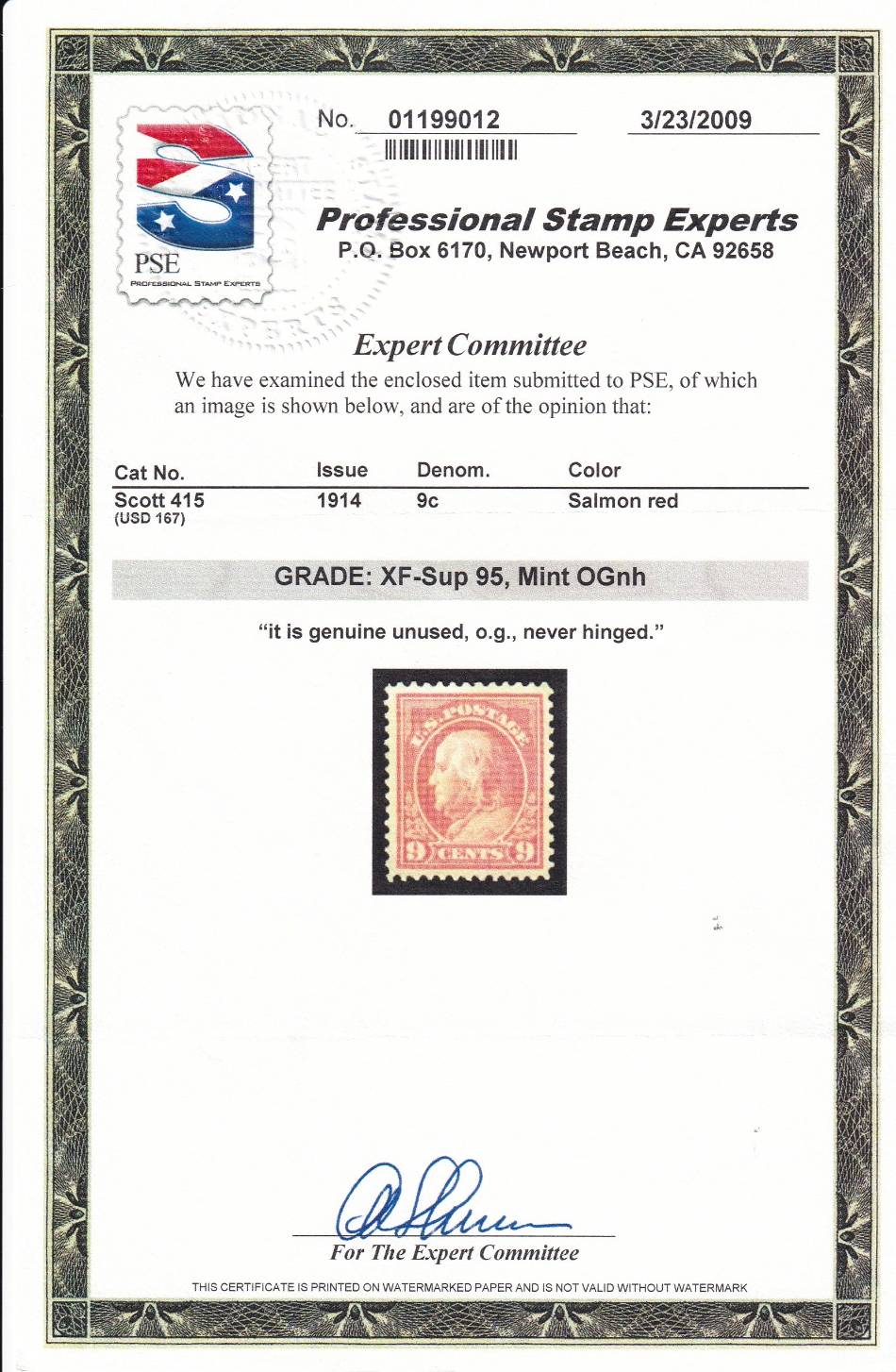
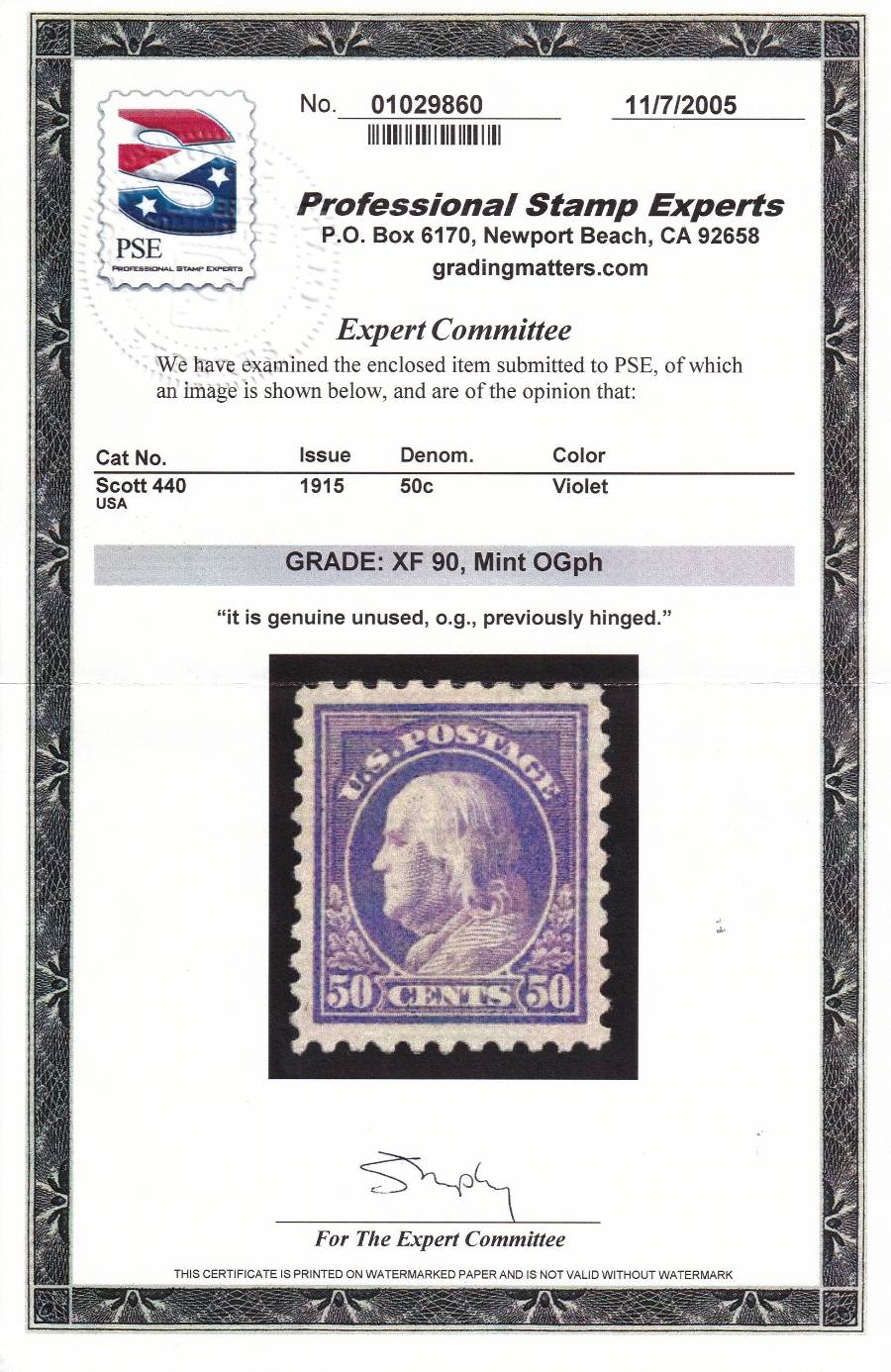
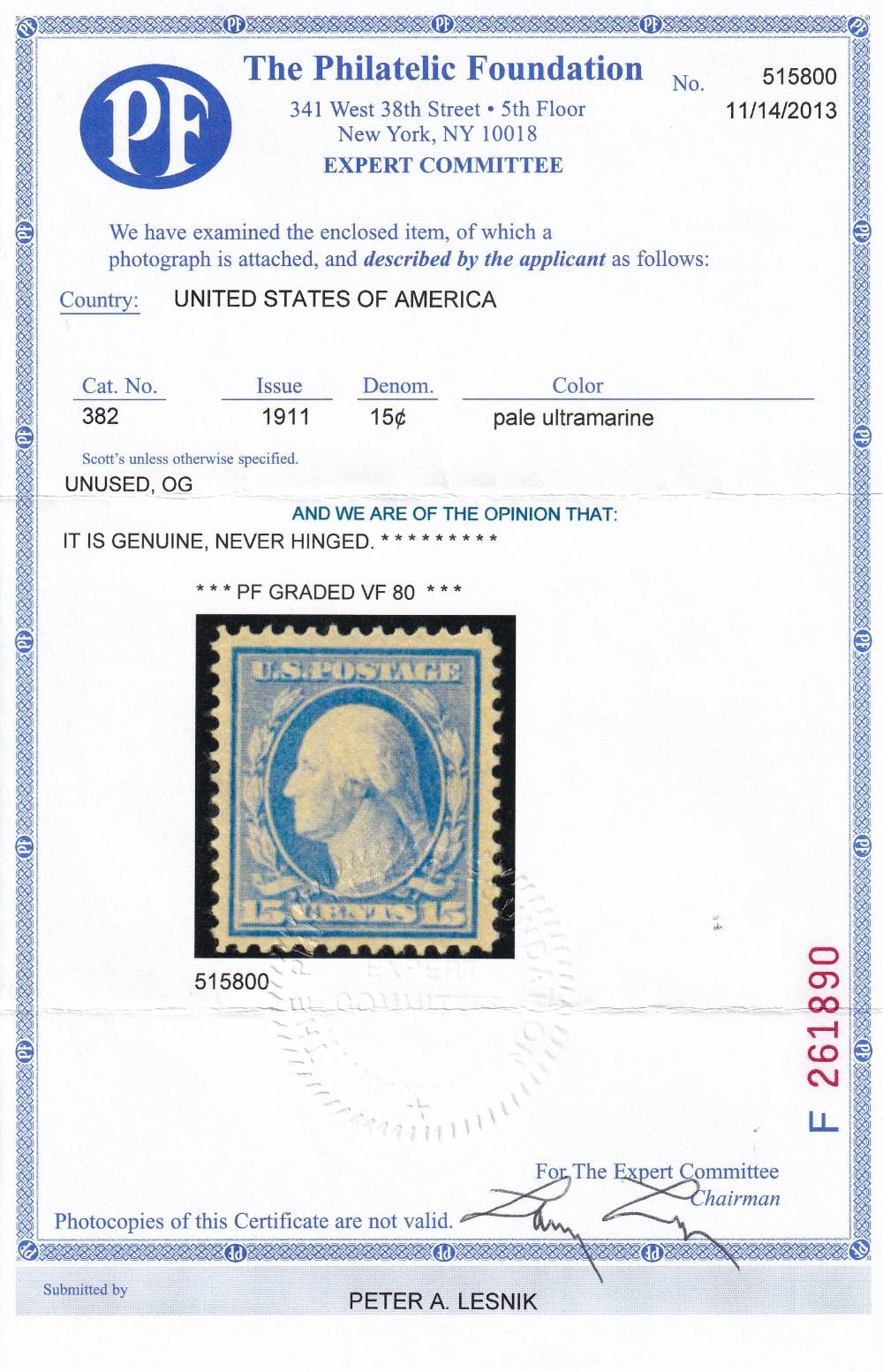


 s over at PSE. I would not get a grade on a stamp I wouldn't get a ungraded cert on. I ask for a grade if the stamp would score an 80 or above. If I buy a stamp with a recent ungraded cert, I don't sent it in for a grade unless I think there is a shot that it would get a 95 (and the recent deal at PF had me looking at my PF-certed stamps to see if any were worth grading.) I don't think there are a ton of collectors chasing the absolute top grades on stamps, but some do, and that's cool. The scorn and disdain from many folks here towards those that want to collect that way is at least distasteful. And the assumption that graded certs always come with slabbing or that those that appreciate grading only collect certificates is ignorant and elitist. You don't have to collect the way anyone else does - that's one of the things that makes our hobby great.

