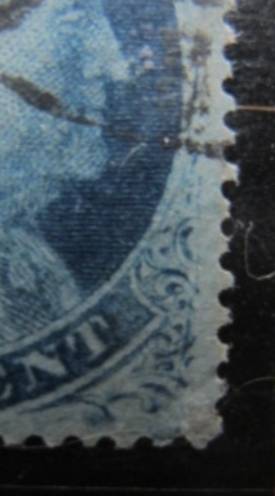
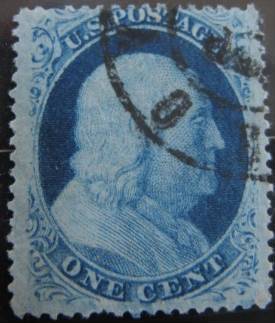
No. These scratches were most likely made during the process of creating the transfer roll that was used to enter the reliefs on the plate. In other words, they were part of the design as the plate was created.
"In addition to showing very incomplete ornaments at both right and left sides we find many stamps of this type with heavy scratches through the right ornaments, or through the left ornaments, or both. These type V stamps are glaring examples of poor workmanship and no trouble should be encountered identifying the common type".
One school of thought here is that Toppan Carpenter & Co., were now having to deal with new perforating machines - the Howard government perforator in 1857.
The narrow margins between stamps caused them to literally shave off the sides of the reliefs on the transfer roll to make room for perforations. Not, however, before they tried an entry with more complete sides first, on Plate 5. What remains of those is where we get Ty Va's from. Partway through the entry of Plate 5, either a new transfer roll was made with the sides shaved off, or the one being used was modified, rather crudely as your stamp shows.
Note the similar issue with Ty V of the 10c stamp, Scott #35. It also has short side-ornaments, albeit without the horrible filing-down residue which you see in your stamp. The Ty V 10c stamps are from Plate 2, and were made well after Plate 5 of the 1c stamp. The 10c Plate 1 stamps were a bit tight when taking perforations into account, so these two data points seem to support this theory - that the side-shortening was related to perforations.
Disclaimer: While a tremendous amount of effort goes into ensuring the accuracy of the information contained in this site, Stamp Community assumes no liability for errors. Copyright 2005 - 2026 Stamp Community Family - All rights reserved worldwide. Use of any images or content on this website without prior written permission of Stamp Community or the original lender is strictly prohibited. Privacy Policy / Terms of UseAdvertise Here





 Posted 08/02/2019 09:58 am