You are asking good questions, which are illustrating the difficulties in differentiating these reliefs.
One of the problems with telling these, is that some of the differences are so small in places, that a minute difference in printing can mislead one very easily.
I always note guide dot status first. That doesn't tell you the relief, as the guide dot is on the plate, not the relief. It does, however, tend to make me favor one relief over another, based upon dot-present/not and location. It is true that guide dots can be obscured or cut off, so you just don't know. Also, some are small and not easily seen. Also, there are misplaced reliefs in some spots on some plates.
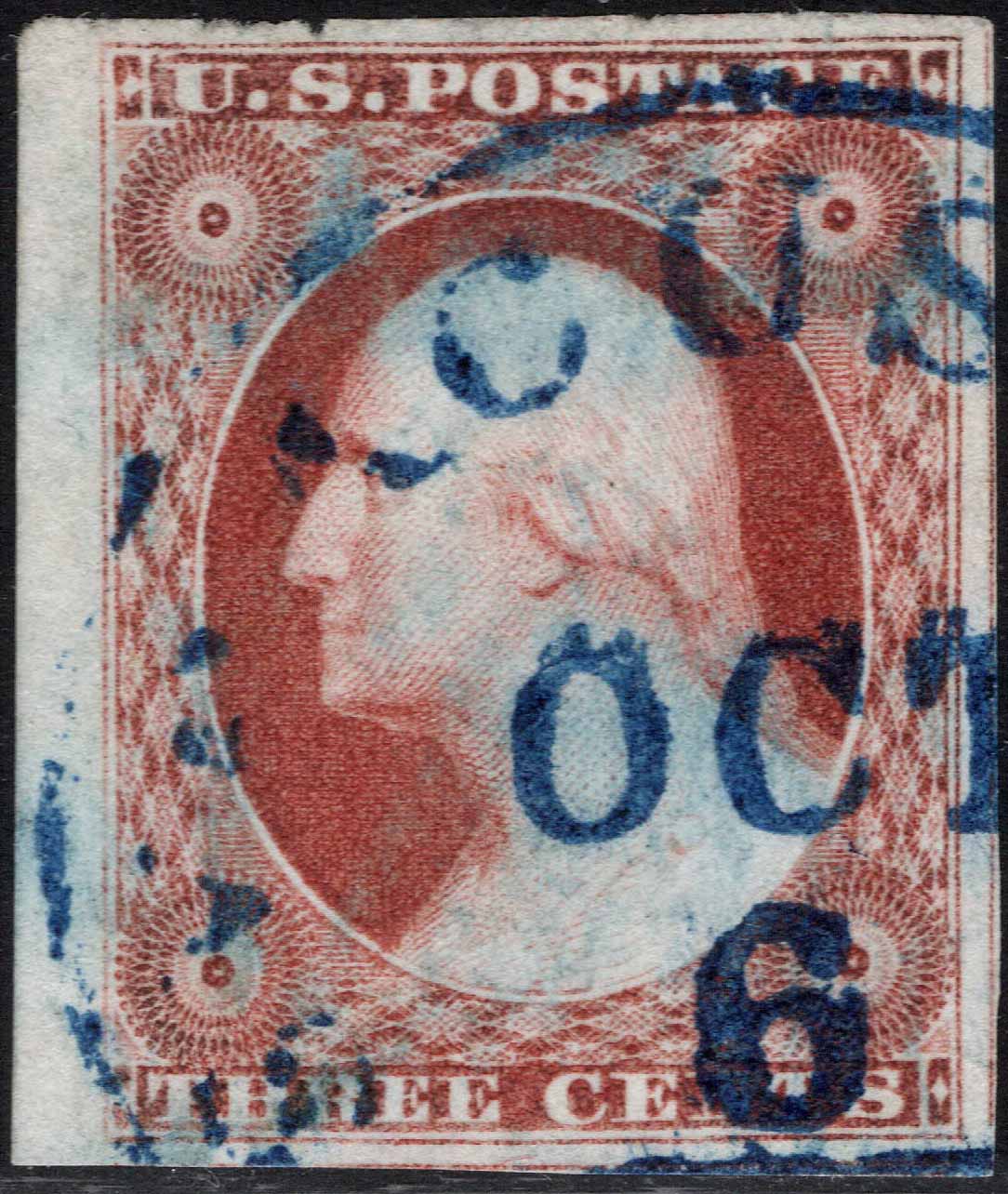
With your stamp, I don't see any guide dots, so that starts me out looking at A reliefs.
I have tended to key at least initially off of the thick outer oval line indicating A relief. Also, I do see the 'notch'. I also see the outer oval is still thick at 3:00. After seeing these, I'm mostly convinced its an A.
I see what you are asking about at 12:00. I believe that this will be another example of where these reliefs can be difficult, due to minute differences in printings. The blue cancel is also blurry in that area, making it a bit harder to see that spot perfectly.
Determining the relief, is part of eliminating candidate plate positions. If you just can't be sure of the relief, then don't eliminate any and look at everything.
I certainly invite other 3c platers to comment on things that they key off of to determine reliefs, and what difficulties are found.
For the benefit of others, an article on 3c reliefs is the second article on this page:
http://stampplating.com/reliefs





 Posted 08/18/2019 11:15 pm