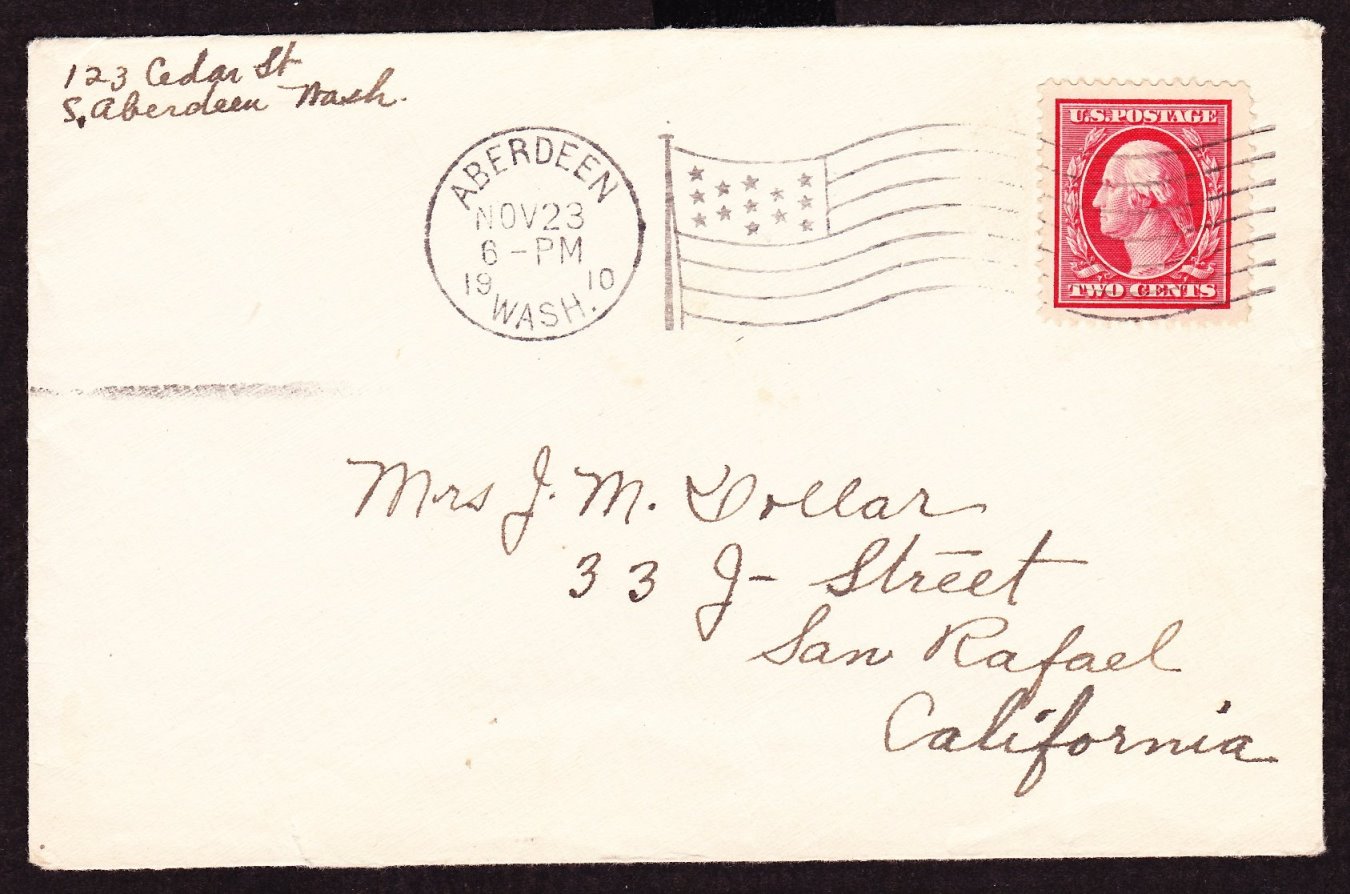
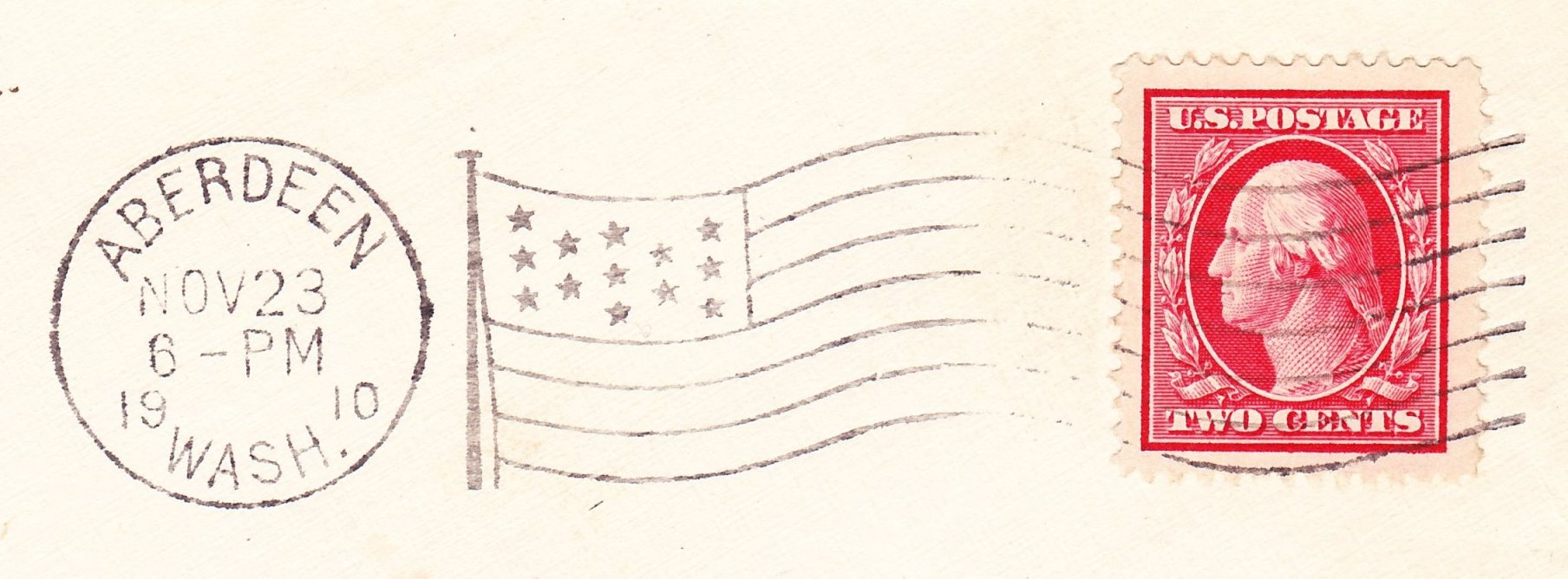
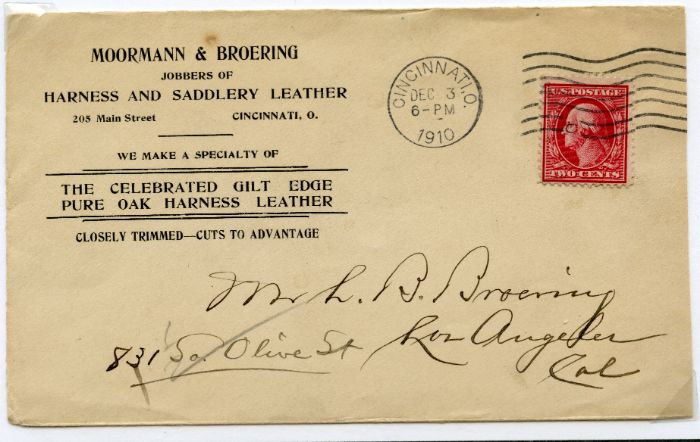
This is an area I became interested in several years ago when I thought I had a rare stamp on a cover but couldn't prove it. Turned out to be a fake as others have pointed out. But in the process I looked at a fair number of possible ways of determining the watermark on a stamp on cover. Some showed promise but none were practical.
Recently I got to thinking about Occam's Razor and I came up with the following possible approach. Everyone has done it as a child, making a rubbing with a crayon.
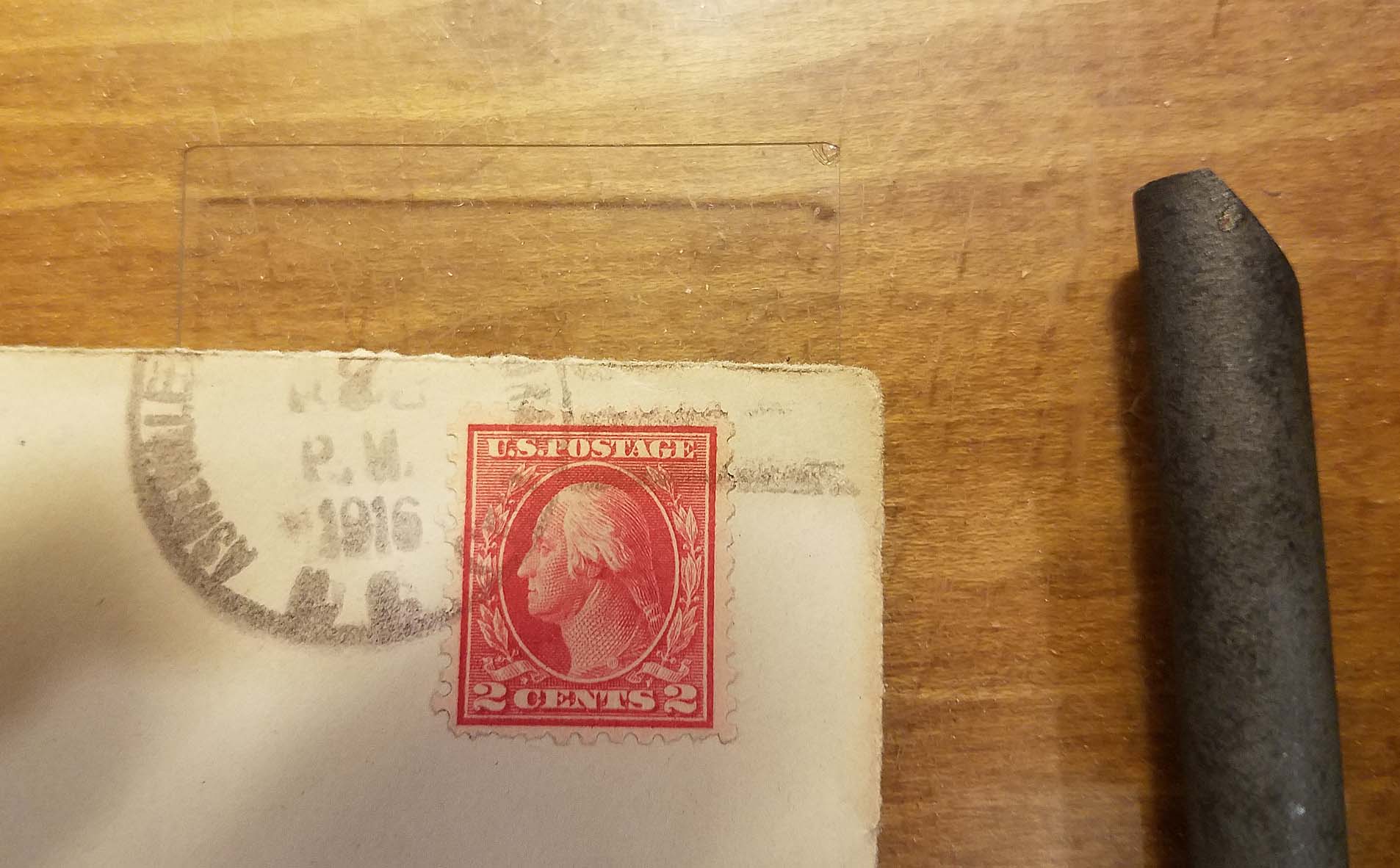
I ended up making a rubbing using a graphite "crayon". The materials needed are shown below. The critical one being the graphite "crayon".
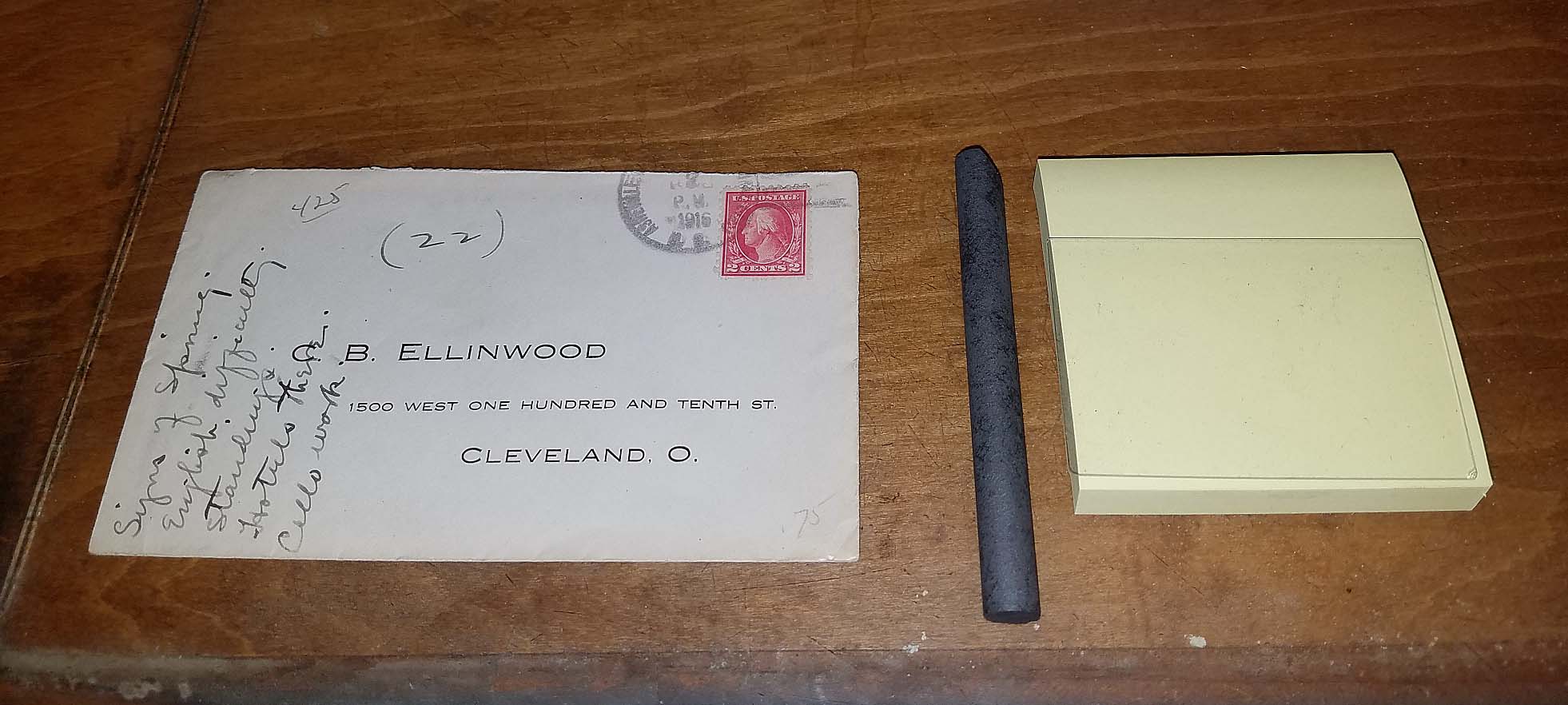
The stamp on cover, graphite "crayon", 2"x3" microscope slide and Post-it notes. I am looking at other papers, but the Post-it notes work. I tried numerous artist graphite rubbing sticks, but found them to be too soft. The ones I use are from
Amazon.
https://www.amazon.com/gp/product/B...e=UTF8&psc=1The following sequence of photos illustrates the technique. It has taken me a good bit of practice to get good images but it does seem to work.
1) Glass slide inside envelope under stamp to provide a hard surface for resistance against the "crayon". Note the flat on the end of the graphite "crayon".
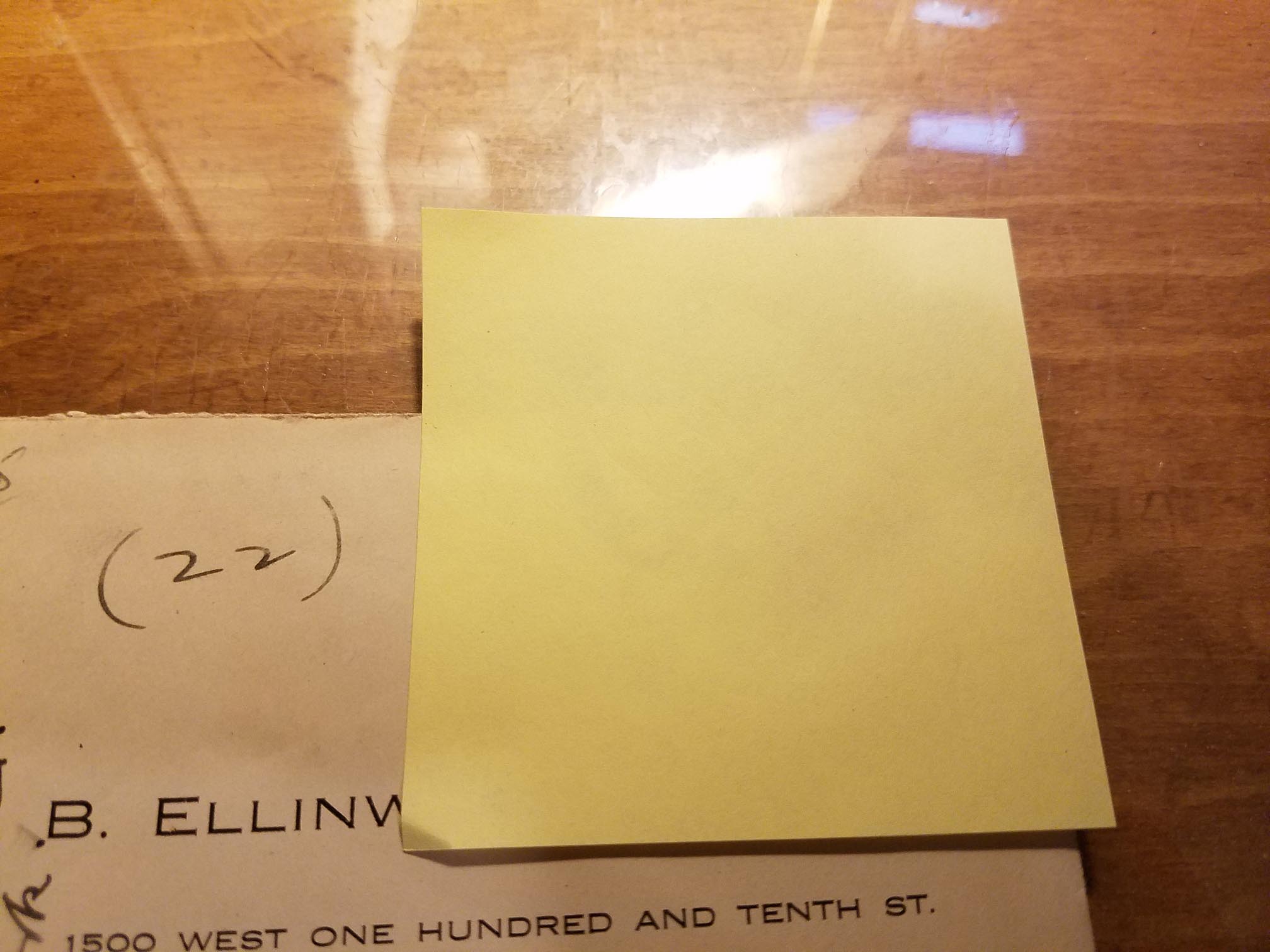
2) Post-it Note centered over stamp, adhesive on left side to help hold it steady when rubbing.
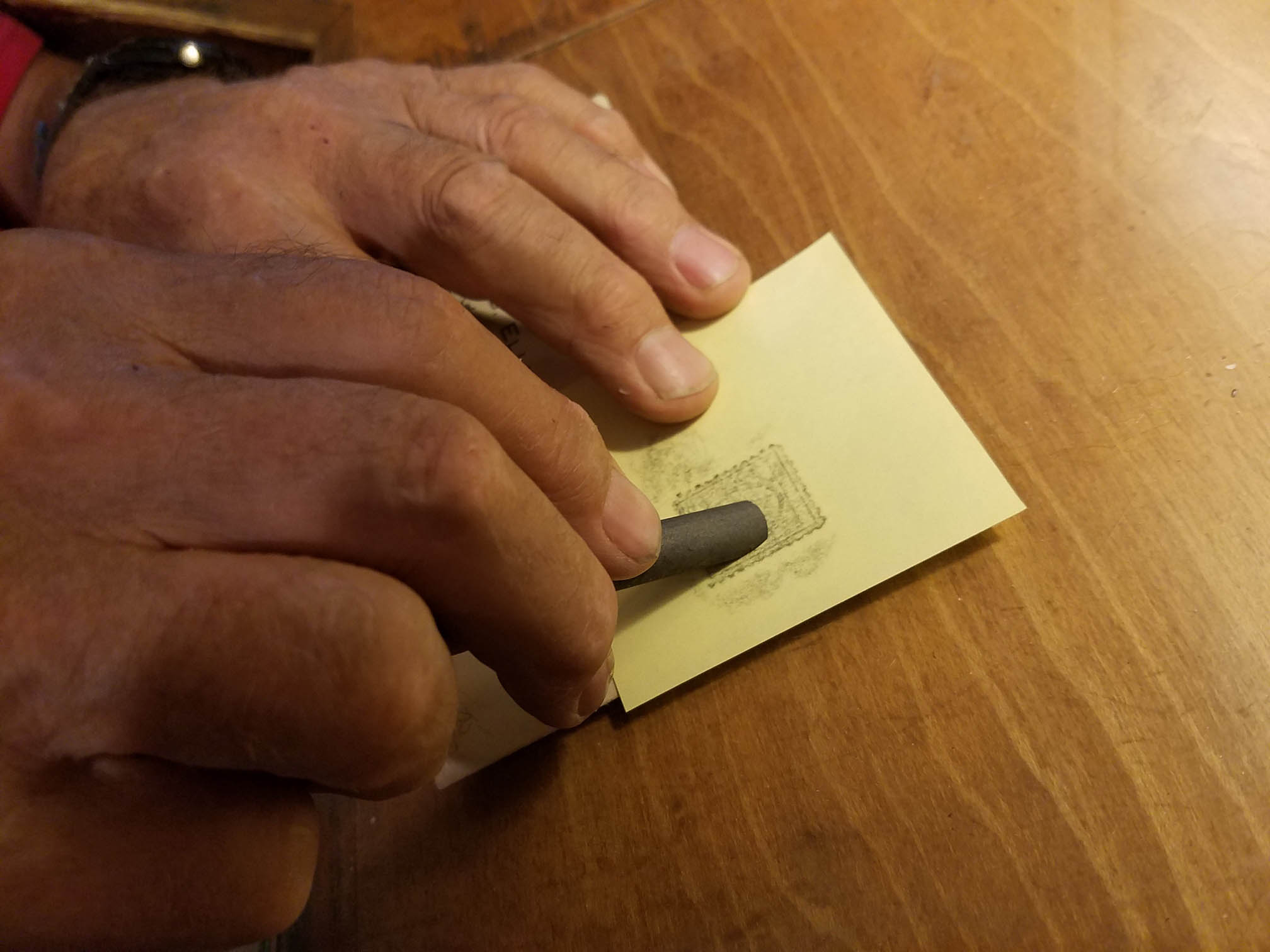
3) Rubbing the graphite, flat surface down, against the Post-it note over the stamp.
4) Resulting image, single line U watermark visible at bottom of image.
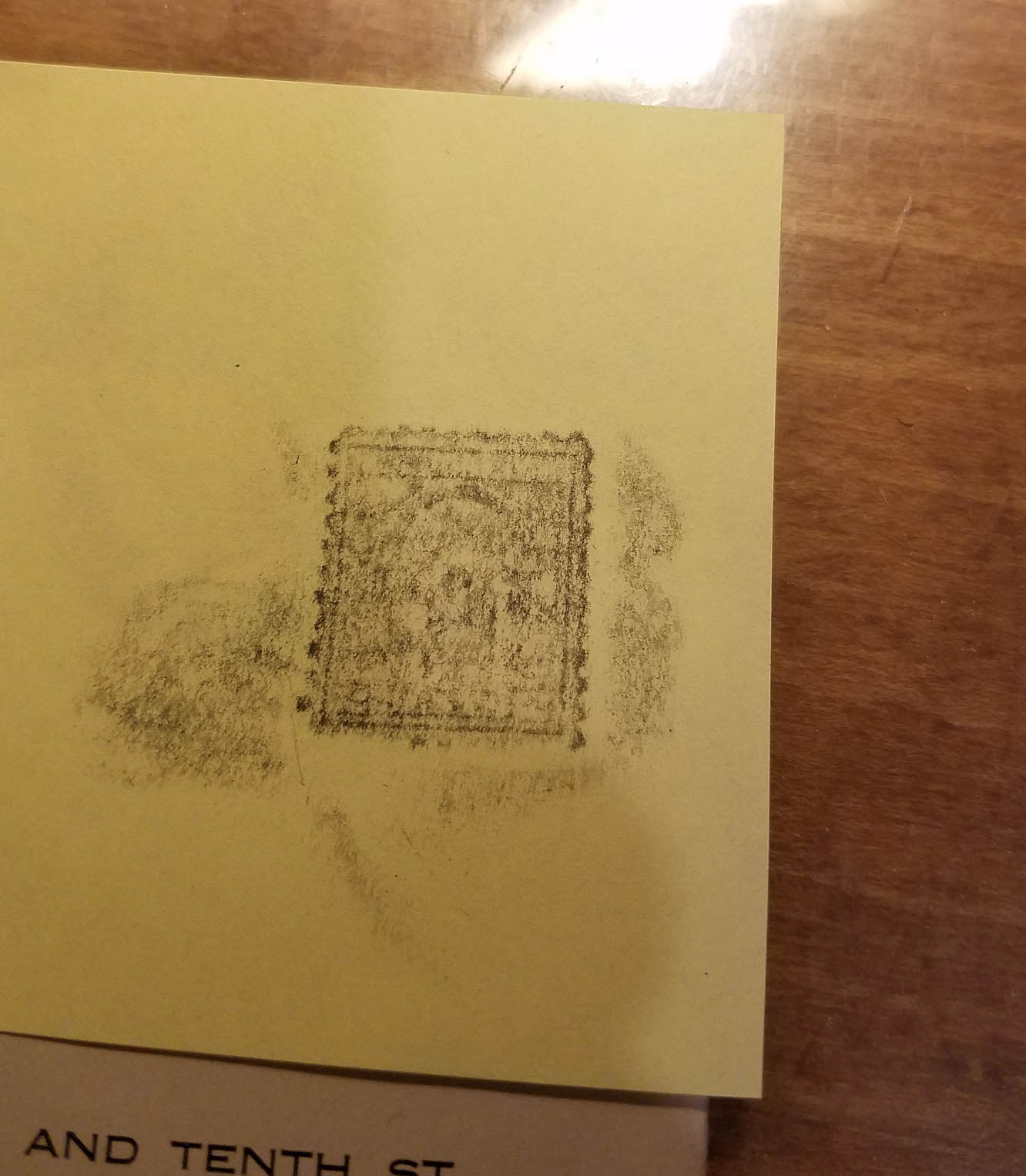
5) Rubbing image compared to stamp. Single line U watermark fairly visible.
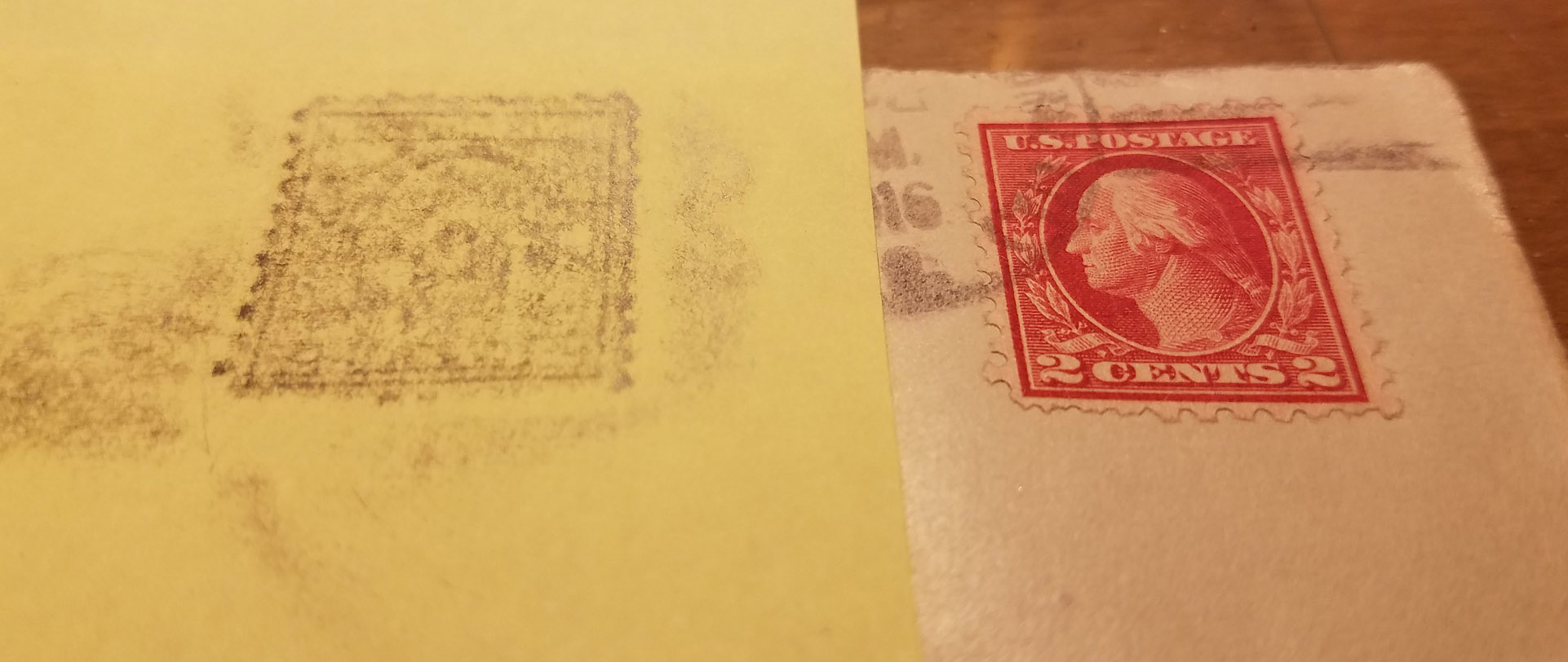
I scan the rubbing and further process the image in Photoshop.
Hope this is useful. Don't get discouraged, it does take some practice, and not all stamps have watermarks. I started off with a stamp with a known strong watermark, laid it face up on an envelope and developed the technique from there, knowing what I was looking for. I also looked at probably 20 covers where I could not identify a watermark, so concluded there was none.
Good luck.
Gary





 Posted 08/27/2019 4:58 pm