| Author |
 Replies: 10 / Views: 1,454 Replies: 10 / Views: 1,454 |
|
|
Valued Member
United States
51 Posts |
|
|
What is the difference? You said start from the engraving, but can you show me how to learn about this type of stamp? I have several of these. But what is the difference between these two stamps? For one the size is not the same but can you show me? 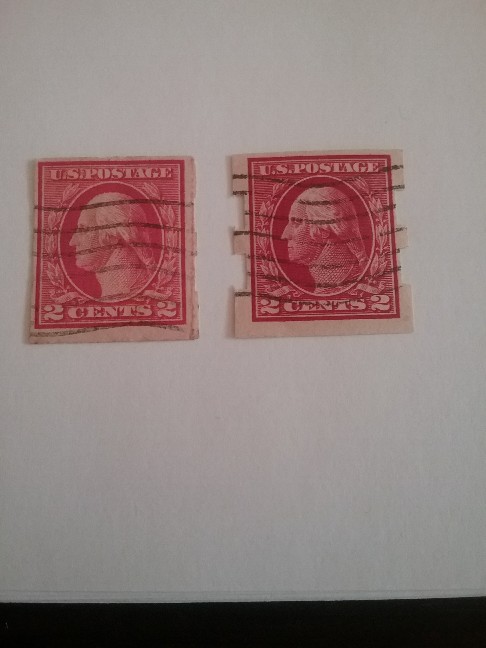 |
|
Send note to Staff
|
|
|
|
|
Pillar Of The Community
United States
6667 Posts |
|
|
Valued Member
United States
51 Posts |
|
|
Okay thanks.... I have to figure it out but it is difficult with having no tools in hand to guage correctly. |
Send note to Staff 
|
|
|
Valued Member
United States
51 Posts |
|
|
Valued Member
United States
51 Posts |
|
|
Pillar Of The Community
United States
6667 Posts |
|
|
You are barking up the wrong tree. No need to measure the design at this point. To learn these stamps and other stamps here is a list of must have items / tools for help in the identification.
1. Perforation gauge
2. Reference material. I recommend Scott Specialized for U.S. Stamps
3. A good magnification tool, I recommend a decent scanner which can be had for around $85
4. Patience
5. Black plastic tray for watermark locating and identifying
6. Watermark fluid / lighter fluid to put into the black tray
7. Stamp tongs
One must have the proper tools to achieve the desired results. |
|
Send note to Staff
|
|
|
Pillar Of The Community
United States
2830 Posts |
|
|
Collect4daze, many folks here have provided advice about acquiring and learning to use the tools of the hobby. You seem to resist the idea. Why do you resist? |
|
Send note to Staff
|
|
|
Pillar Of The Community

United States
5469 Posts |
|
|
Bedrock Of The Community
12731 Posts |
|
|
Pillar Of The Community
United States
624 Posts |
|
|
Collect4daze, I'll provide a different answer than Sherame, but with the same result.
People on this forum are generally pretty serious stamp collectors; and while they like helping people, most are oriented towards directing people towards finding out answers on their own so they (you) can learn about what you have and become more expert. I'm guessing there are probably 20 or more people, including myself that have seen this post and either know the answer to your question or know how to answer it in 5 minutes by going to their Scott or other catalog, but we want to help educate people to learn on their own. I won't put words in anyone else's mouths, but people here generally want to help people by showing them how to help themselves.
Don't take anything personally, especially with the Washington/Franklin issues that you posted as there are so many varieties of the 2 cent Washingtons that it takes some time to be able to identify all of them. I had a lot of pissed off moments trying to identify some of the 2 red Washingtons.
What people want you to do is to teach you how to learn on your own what you have; and that takes time.
If it makes you feel any better, I spent literally a full Saturday going through a US revenue collection my dad handed down to me. Freely admit I thought I might have some rare stamps, but there were not any. (A couple of $10 stamps, but no fortune.) What I did learn was about literally everything I know about early US revenues now, and although I don't collect them per se, I now know what my dad handed me, and organized them neatly in a stock book as part of "Dad's" stamps; which to me is cool. Some day, might form the basis of a real collection, but in any event I got my Scott catalog out and just started hunting.
Guess this comes down to, do you want to collect and learn, or just to ask if something is worth a buck to be sold.
FYI, used Scott catalogs are pretty affordable on many sites. I just bought a world-wide used set from 2015 for about 80 bucks. A single US only book will be a lot less.
~Andy
|
|
Send note to Staff
|
|
|
Valued Member
South Africa
229 Posts |
|
| |
Replies: 10 / Views: 1,454 |
|




 Posted 09/03/2019 5:11 pm


