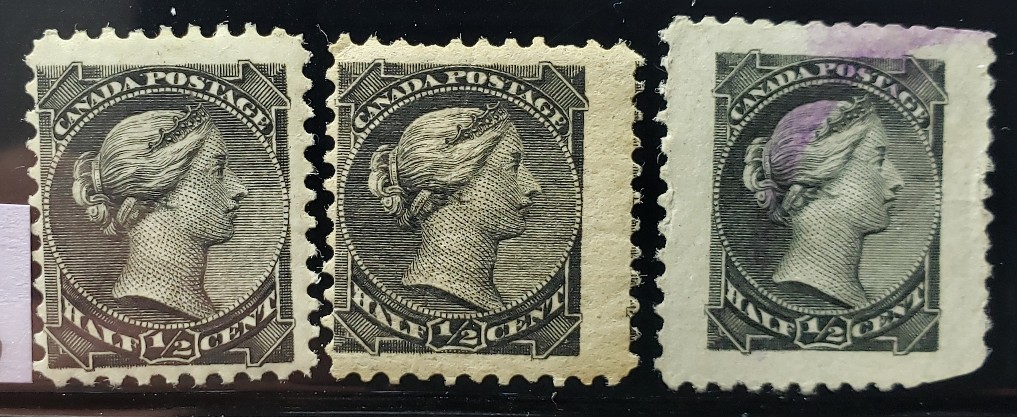
1. While perforation was done mechanically, spacing of lines of perforation was variable for a long time. It got more accurate as time went on, but there was still very small variations even up to the 1950s and 1960s. Look at the sheet margin of this and it's easy to see how variable overall stamp size could be, in this case, the width:
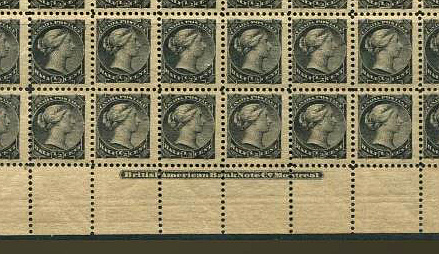
(not my block)
You might wonder, where are the stamps with no margins at all due to wonky perforation? Probably rejected by the printers and destroyed, or later, ignored and possibly destroyed by collectors.
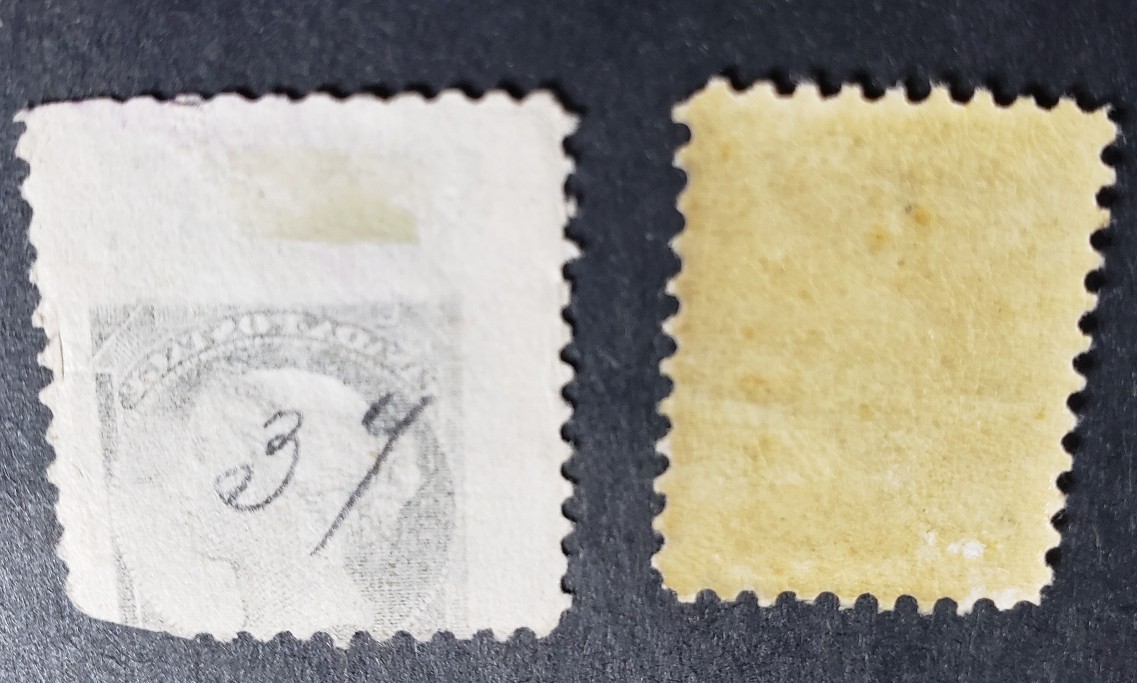
2. By the last comparison scan, It appears that the difference in paper colour is due to incomplete wiping of the printing plate so that a thin film of ink appears on the parts that are not printed. Here it's a sort of bluish black tinge. Flip the stamps over and compare the backs; they should be much more similar. This is not a flaw or variety, and is fairly common as you will find. There will also be differences due to ageing/storage, of course.
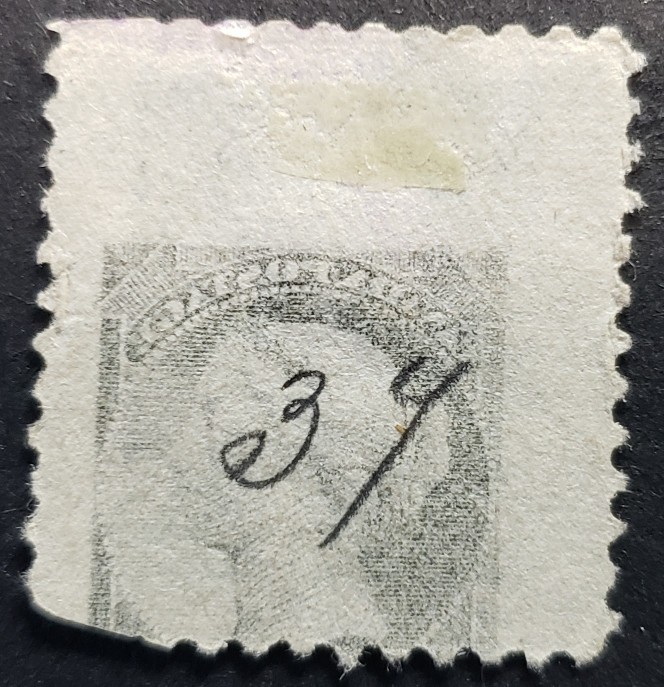
3. Where this is often called an offset, it is probably more properly called a set-off. Ink can be transferred to the back of printed sheets when the sheets are stacked up and the ink is not perfectly dry. However, in this case, I think the design(s) was transferred from the backing plate of the printing press, where the printed image of the sheet has been transferred for whatever reason. When another sheet is fed into the press soon after that happens, the image is applied to its back like this. Again, this happens occasionally and is not considered valuable.
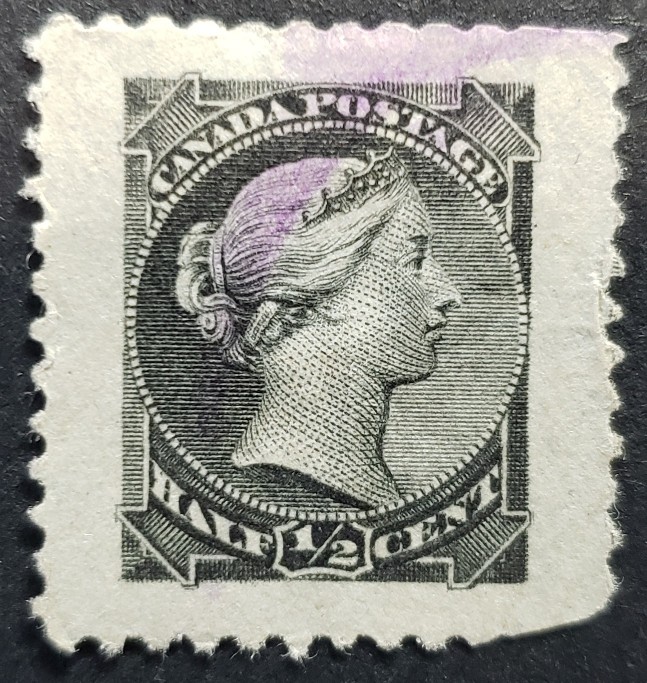
The top scan certainly can be considered a jumbo/jumbo margined stamp albeit very faulty. Being well centered, it would be worth a decent premium today if it were sound, but it is what it is. Jumbos were not a big deal with collectors long ago, but centering was and still is.





 Posted 09/07/2019 10:46 am