Dan,
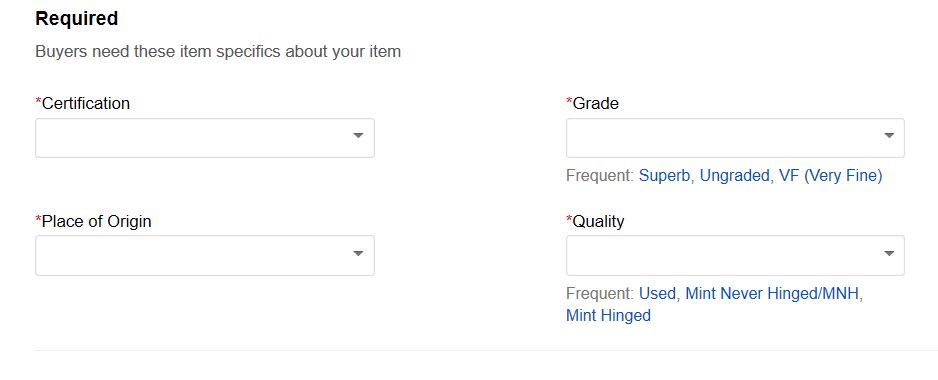
The listing add item specifics are not simply used by
ebay when a buyer clicks on them; they are used by
ebay and in others ways too. For example, they are being used in the
ebay's internal Cassini 'virtual catalog'...
Quote:I've been to a number of meetings where
ebay staff has discussed the increasing importance of item specifics. Here are some take-aways:
ebay is tending to become more inventory-centric — that means it wants to identify items by standard quantifiable inventory terms that are easier to catalog, rather than relying on a single title or wordy item descriptions.
1) New items should use UPC codes in order to correctly autofill the item specifics. That is why UPCs are now mandatory.
2)
ebay is developing its own "catalog" of items and encourages sellers to list against the catalog whenever possible. A catalog item is defined by either UPC or item specifics.
3) When a seller has an older product,
ebay encourages sellers to use as many item specifics as necessary to describe the product. When another similar product is listed with similar item specifics, a virtual catalog item will be created based on those item specifics.
4) As more unknown items add more item specifics, similar items become "known" by those item specifics, and a virtual catalog item can be created or can be cut away from less similar items.
5) When a google keyword search queries
ebay,
ebay will match those keywords against its own catalog of real or virtual items (matching against item specifics) and will return those search results that match item specifics. This is particularly important exposure for items that have no persistence, like auctions or short term BINs.
6) Item Specifics that become well defined in a particular product group will tend to appear in the left column of search for fine-tuning the search.
In short, Item Specifics are extremely important if you do not have a UPC or if the UPC covers multiple attributes of a single item (like different versions).
All,
ebay, like other search resources, closely hides how they rank and return searches. But keep in mind that
ebay prefers sellers who 'tend' their stores. For example, I have read that
ebay rewards sellers who make individual listings over listings which are batched.
But the one thing that is no doubt true, it is
ebay's game and they hold all the cards. Whether or not you agree with them, it is best to 'think like
ebay' and play the game they want it played if you want your listings to be ranked well.
Previously, it has been known that
ebay search rewarded listings that are linked on other places online. This makes sense, any additional traffic that comes their way is viewed as a benefit for them.
But this may be a double edged sword. Ask yourself, again thinking like
ebay, if you would reward or penalize a seller who replicates their listings on a competing online venue (like HipStamp etc.).
Don





 Posted 10/17/2019 08:05 am