| Author |
 Replies: 13 / Views: 1,276 Replies: 13 / Views: 1,276 |
|
|
Pillar Of The Community
United States
1170 Posts |
|
|
|
|
Pillar Of The Community
United States
1817 Posts |
|
|
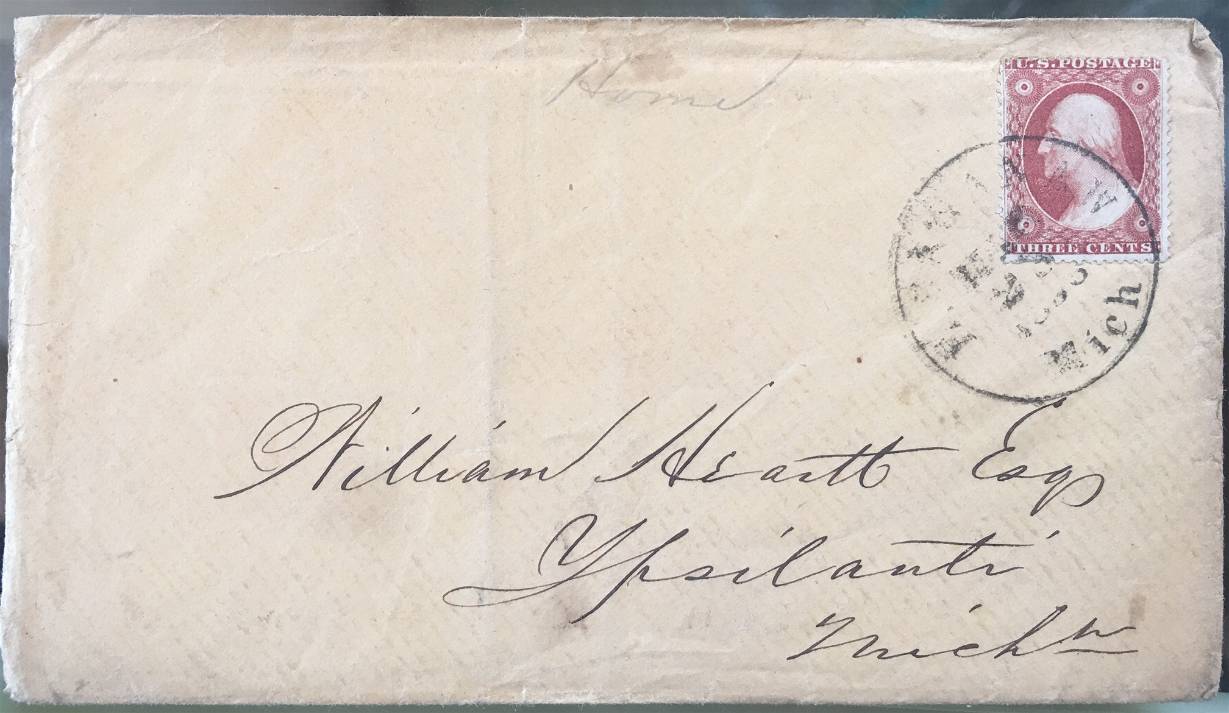
This stamp was invalid for postage after 1861, so 1865 is extremely unlikely. My guess would be 1858. |
Send note to Staff 
|
|
|
Pillar Of The Community
United States
3528 Posts |
|
|
If it is an in-period use for the general stamp issue (1857-61), then, ignoring all else, the only possible date would be 1858. |
|
Send note to Staff
|
|
|
Pillar Of The Community
United States
1170 Posts |
|
|
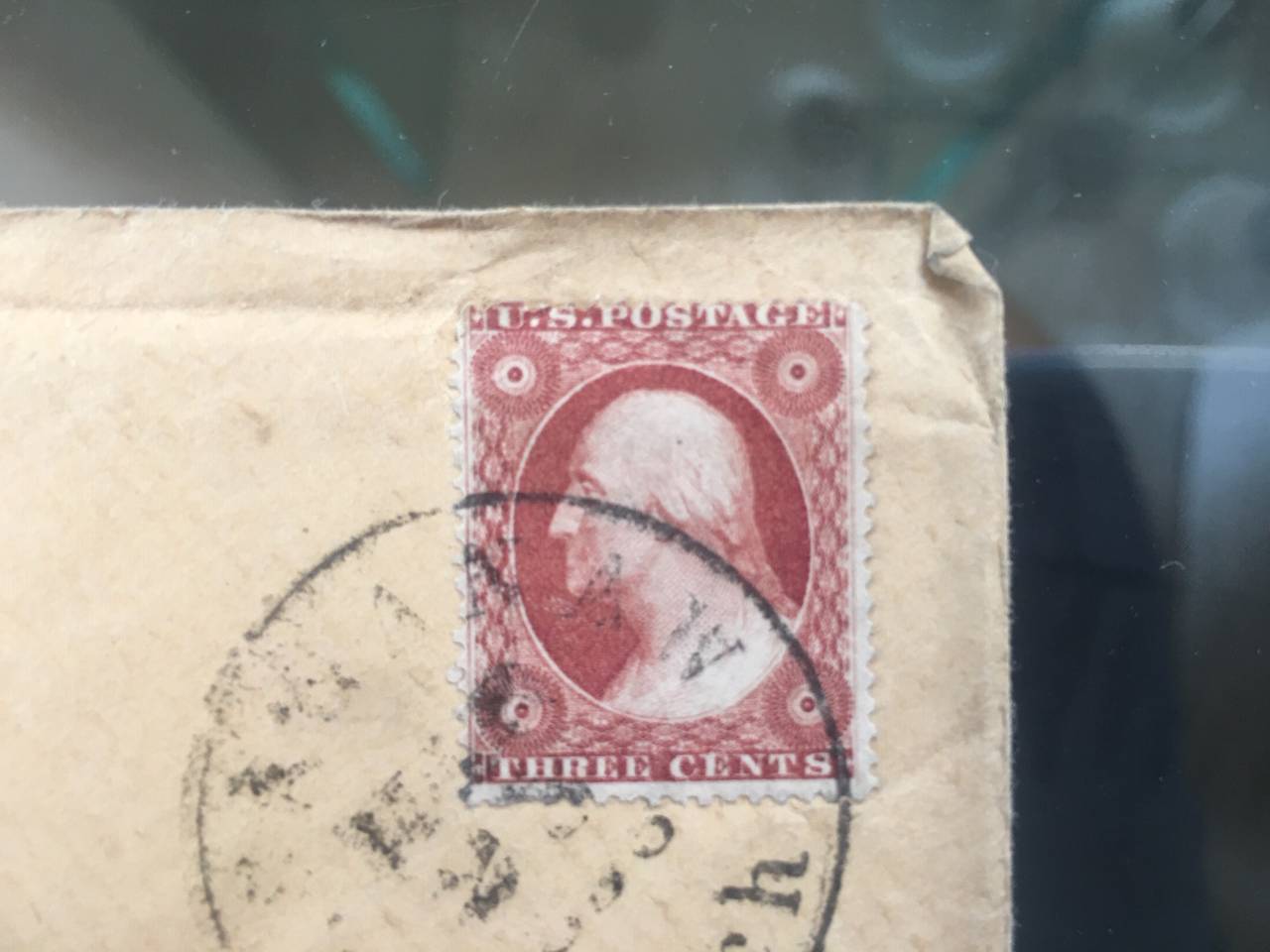
Thanks Guys for the help! I would agree that 1858 looks like it can match what little is showing of the postmark.
|
|
Send note to Staff
|
Michael Darabaris |
|
|
Pillar Of The Community
United States
2555 Posts |
|
|
It would almost always be a 26A on ebay but it is actually a bottom row #26. The year date is most likely 1859. |
|
Send note to Staff
|
|
|
Pillar Of The Community
United States
2555 Posts |
|
|
Pillar Of The Community
United States
1170 Posts |
|
|
The last numeral if a nine would go straight up or curve out ward but instead it curls back toward the middle like an eight or six. So 1958? |
|
Send note to Staff
|
Michael Darabaris |
|
|
Pillar Of The Community
United States
1170 Posts |
|
|
also the right outer frame line goes past the stamp design. Is that not 26a? I see on the left side the outer frame line stops at the design. |
|
Send note to Staff
|
Michael Darabaris |
|
|
Pillar Of The Community
United States
1170 Posts |
|
|
So if one outer line stops at design and the other goes past, which stamp is it? 26 or 26a? And it can't be postmarked 1859 due to shape of last numeral. its a 6or8. The left line is also heavier than the right. |
|
Send note to Staff
|
Michael Darabaris |
|
|
Pillar Of The Community
United States
3528 Posts |
|
|
Think of drawing a line vertically continuous and straight, using a straight-edge, through 10 stamp positions. The top and bottom lines of each parallel line might not end at exactly the same orientation relative to adjacent ones, but close. That's how 26's were done.
26A's were recut by hand for each position. No straight-edge, with predictable results: crooked & not continuous. |
|
Send note to Staff
|
| Edited by txstamp - 12/23/2019 10:19 am |
|
|
Pillar Of The Community
United States
1170 Posts |
|
|
Got it! So its more the shape of the outer lines plus the length. Not just where they end. |
|
Send note to Staff
|
Michael Darabaris |
|
|
Pillar Of The Community
United States
3528 Posts |
|
|
Yes, its anything that gives one a clue as to which way the plate was made. Sometimes, as in your case, there is no obvious break in the lines vertically between stamps, due to centering - stamp above not visible. Also top and bottom row 26s confuse the issue, hence Winston's comment about " ebay" 26As, from sellers who don't understand the method of production. Looking for crooked lines, by holding the stamp at an angle is what I always do, and the crooked lines if present, will pop out usually. |
|
Send note to Staff
|
|
|
Pillar Of The Community
United States
2555 Posts |
|
|
The frame lines on Plates 10 and 11, the Type IV plates, were clearly intended to be discontinuous and it was also probably intended for them to stop nice and neatly at the top and bottom of the stamp. The actual result was frame lines ending all over the place but very frequently a little on the long side.
Much like the recut lines on the 1c Plate 1L, the recut framelines of the 3c Type IV plates tend to be thin and sharp in addition to not being very straight. Crooked frame lines on Type III stamps are sometimes encountered. |
|
Send note to Staff
|
|
|
Pillar Of The Community
United States
2555 Posts |
|
|
I am fussy. It would be nice if the OP would post one decent image of the stamp rather than several small pieces. |
|
Send note to Staff
|
|
| |
Replies: 13 / Views: 1,276 |
|




 Posted 12/21/2019 3:35 pm