| Author |
 Replies: 21 / Views: 2,783 Replies: 21 / Views: 2,783 |
|
Valued Member
282 Posts |
|
|
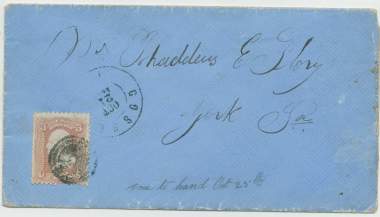
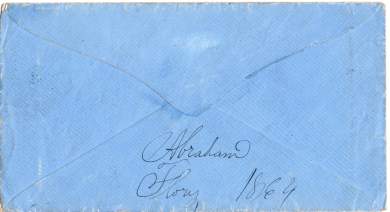
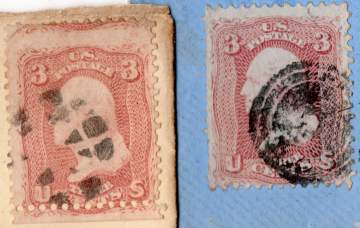
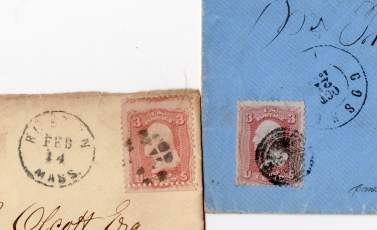
Hello Everyone; First I hope everyone is in good health and are ready for a great new year. So I want get to the point I have been puzzling about this stamp for a couple of days . I researched this stamp and if you are color blind like me and don't have the right tools and knowledge which I may not have its very difficult to know what this stamp is. All I can say is what I found out about this stamp and report what I see.It seems like a chameleon so many colors with this variety I can see why people have difficulties with it. This stamp is on a cover which is helpful ,the year it was sent was 1864 I believe the colors of this stamp is debatable here are some picture's of the closest colors I could find of this stamp .What to me is real striking it the detail of this stamp compared to most of the stamps I have seen, but that's just my opinion. Here are some pic's you be the judge. I used the wonder color gauge I dont know how close to the colors they are.The first close up was done using my Camera and the rest were done with my scanner. the first and second were done with the scarlet bloc The second was with a carmine red and the last was with the cerise bloc .To me it it looks like the carmine red what do you think? I also what to mention the stamp being this old if it were cleaned the color might be even more intense of a color. 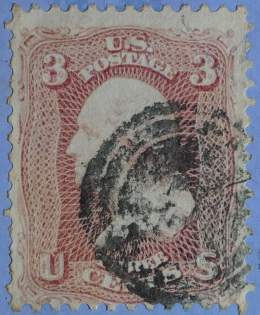 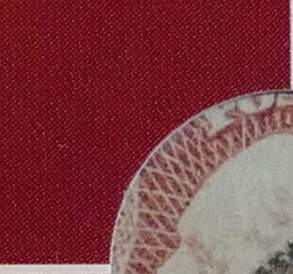 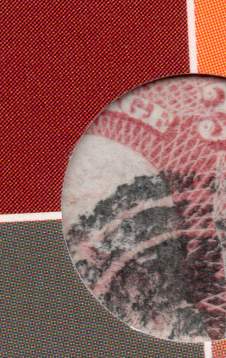 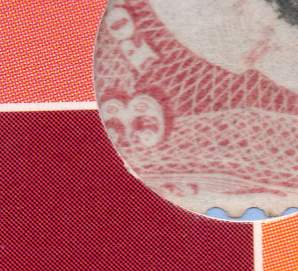 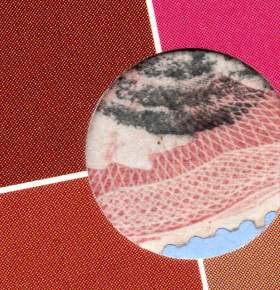 |
|
Send note to Staff
|
|
|
|
|
Pillar Of The Community
United States
6667 Posts |
|
|
Looks like a bog common Scott 65. I don't see evidence of a grill unless it's under the cancel. There are quite a few shades of these so I don't bother unless it's pink. |
Send note to Staff 
|
|
|
Valued Member
282 Posts |
|
|
Thanks Stallzer;
I'm not familiar with a bog common so you might be right. I looked and the 65"s don't have grills later in the 1867 as I see in the book this made in 1864 or earlier.
Thanks Dan |
|
Send note to Staff
|
|
|
Valued Member

United States
356 Posts |
|
|
Dan, I do have a similar appearing 65 and accept the fact it is just a variation of the color of the "common" stamp. I am amazed at the detail you have posted and complement you on setting it up. |
|
Send note to Staff
|
|
|
Valued Member
282 Posts |
|
|
Thank You chipshot;
Maybe this might help in identifying a stamp use a comparison color bloc for other members.
Its in the hunt looking for the secrets hidden in a stamp.
What color do you think this stamp is for the record any guess.
|
|
Send note to Staff
|
|
|
Pillar Of The Community
6361 Posts |
|
|
Guessing a color is a fool's game as one can read on many dozens of threads here. That said, the presentation could be enhanced by a scan of the entire cover and a scan with several other 65's of known color/date in the same frame. So far to me, it looks like any other common 65. |
|
Send note to Staff
|
|
|
Valued Member
282 Posts |
|
|
Valued Member
282 Posts |
|
|
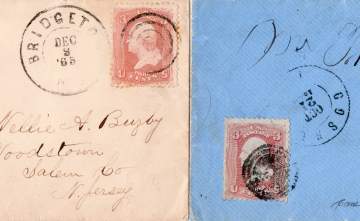
These new pic's dont do it justice in seeing the color .So I think a closeup is needed, here you can tell the difference .I don't know if it matters because of the year 1865 .But I want to throw it out their anyway to show the color difference when closeup its pretty cool to see it in these new pic's. And again these pic's were all scanned with the scanner next to the Wonder color gauge just like the scarlet stamp or crimson looking 1864 stamp. The first color was the salmon rose The second color was rose red The third was pale red tint And the last one was a rose tint You be the judge and tell me what you see. 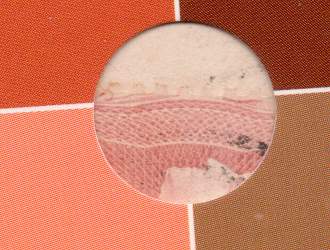 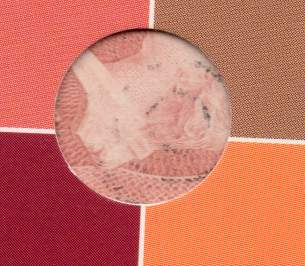 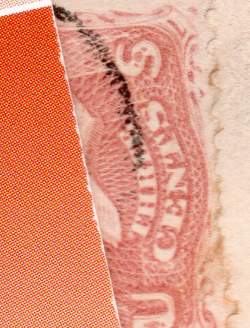 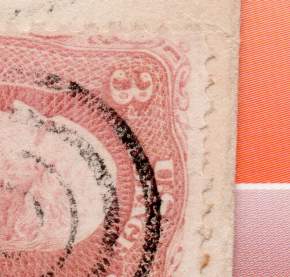 |
|
Send note to Staff
|
|
|
Pillar Of The Community
United States
1835 Posts |
|
|
Valued Member
282 Posts |
|
|
Valued Member
282 Posts |
|
|
Hello again; I finally found a answer to this problem of what is happening with this Washington 3 cent stamp ,maybe. I had to go back and review all the pages to see what I missed. I happened to find a interesting read from Historical DNA Collector in and older Topic. Their was so much their I can not tell you all .Here are the most important parts . For some reason and I found many shades of color and dates not listed in my Scott's catalog. Here is some colors and dates issued, that are very rare and not so rare , http://chronicle.uspcs.org/pdf/Chro...66/11600.pdf http://chronicle.uspcs.org/PDF/Chro...65/11568.pdfAlso here is a nice article about pigeon blood pink. It sounds like a can of worms to organize this mess don't know how they can do it any idea's. I have a few idea's my self if any one is interested .First thing you need to get these stamps identified using a "color meter". they have app's on you smart phone that can be color meters for free,how good I don't know ? and use the color numbers values not a word like rose red .Use "red 173, green 88, blue 91 ". That way every thing is true. Second you need a data base to go to put your info into and check the colors out there by number value of color this maybe the problem once you do that you need to name the color or something. I think this will increase the value of your stamp knowing what you really have. |
|
Send note to Staff
|
| Edited by Dan Townsend - 01/05/2020 2:06 pm |
|
|
Pillar Of The Community
6361 Posts |
|
|
Most collectors are going to be content to ID the stamp as a 65 and move on, ignoring the shades and colors except the most unusual. In most cases of a 65 on cover, the value is going to be driven by the postal history aspects and not the stamp's shade. |
|
Send note to Staff
|
|
|
Pillar Of The Community
1375 Posts |
|
|
Yes, but only because Scott does not list some scarce color varieties :).
in any case, interesting article of the colors in the first link (for example who has a 3c in brown, carmine lake, claret, brick red and crimson?) |
|
Send note to Staff
|
|
|
Valued Member
282 Posts |
|
|
Valued Member
282 Posts |
|
|
Hello Everyone;
Im back to let you know ,these article's by Michael McClung were shocking to me.
I haven't heard anyone to admit their is something wrong here ,25 years ago this article was written
by Michael C. McClung. And nothing in the Scott's catalog mentions anything of it. Like it doesn't mean anything. Michael claims their are three shades of certified copies of pigeon blood pink he knows of. So what is the true color of pigeon blood pink I would want to know if I was forking out that 2500.00 dollars
It seems like people are missing the point this stamp hobby or business runs with trust and if you don't try to make things more accurate how do you keep people interested in something that will eventually be found out ,at what cost now.Now may be the time to change this ,we have the technology.
Thats what I think and if it takes a web site to help id these colors that maybe all it takes is to get your color tested before you take the stamp in to to get certified, but what I found out you almost need to know what your stamp is before you do that, which doesnt really help, its there word with no proof.
People will say well the stamp is just faded at least you can have the proof the the stamp you have and check it out through the years and test it again to see. If you don't have base to start with it will be impossible to tell.
If you want to sell some day you may want to know what it is ,and have proof .
Its not this stamp but many stamps like the Washington A10 and a few others.
It may be harder than it seems ,if you have any idea's that would be great!
Thanks Dan |
|
Send note to Staff
|
|
|
Moderator

United States
12330 Posts |
|
|
Put technology aside for a minute. If you had 100 people and one stamp, under the exact same ambient light conditions, how many would see the same color? Fact is everyone sees color differently . Yes, all 97-98 would probably all be able to say that stamp is red and not green. But all bets are off when it comes to subtle deltas in hues, shades, and tints.
And all bets are really off when the 100 people look at the same stamp under different ambient lighting conditions.
But lets put the subjective nature of seeing color aside for a moment and talk about the stamp itself. A used stamp has, by definition, literally been through the wash. It is also 100+ years old and no one has any idea of its provenance. How much light exposure has it seen? Has it been treat with hydrogen peroxide? What other environmental conditions has it been through? It is well documented that old inks and paper chemically change over time. Point is and at best, we can only determine what hue, shade or tint it is today. 50 years from now who knows what color it might be.
Now lets add in extra layer of complexity with technology. I have four calibrated Epson scanners sitting in my office right now. I can scan the same stamp, with the same computer, same Epson drivers, same video driver, same monitors. Two of the scanners are the exact same model (Perfection V600s), one is brand new and one if at least 7 years old. Yet all four images reflect a different hue for the same stamp.
Also note that at 8PM Windows 10 changes the display to remove the blue LEDs, making a softer yellow based light. So if I look at the four images before 8PM the hues are quite different than when I view them after 8PM.
Now consider how many different computers, scanners, drivers, display monitors, ambient lighting conditions (which also impacts how you see colors on your monitor) etc. everyone is using.
But lets assume that everyone agrees to calibrate their computers, scanners, monitors (very costly and arduous) and agrees to save the image files in an uncompressed format like TIFF. Historically no one else has every used this technology to ID colors. Historically, we have different authors and different publishers all doing their own thing AND using their own color nomenclature. Did they highly define their ambient lighting conditions? And if so, can we emulate their ambient lighting conditions?
Now keep in mind that I have been married to technology my entire life and career. But my opinion is that using technology for color ID has only made things worse for our hobby (for now). The only way to become good at ID color shades is to build a large reference collection, define (and test) your ambient lighting conditions, and develop a good color eye.
One day there will be a non-destructive atomic level chemical analysis process which will accurately ID the original ink chemistries. I think that when this happens the existing color ID will need to be revisited and some startling surprises will be uncovered.
Don |
|
Send note to Staff
|
|
|
Replies: 21 / Views: 2,783 |
|



 Posted 12/30/2019 6:44 pm