Quote:
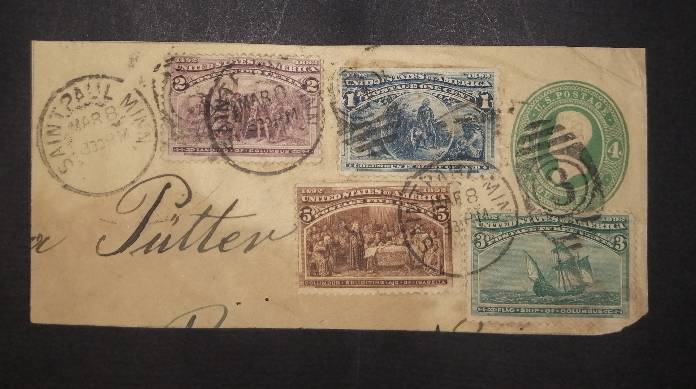
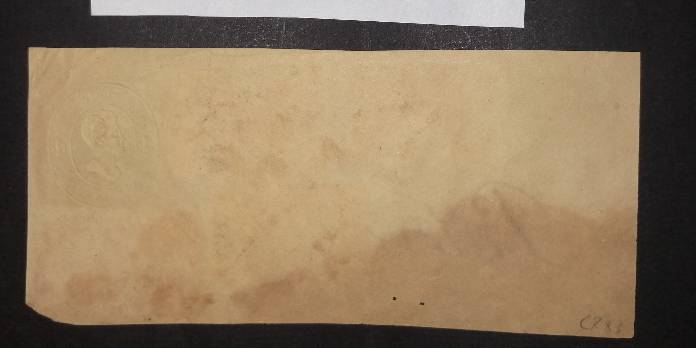
You have only a piece of an envelope. Most of the postal history value has been destroyed by the trimming. The waterstaining makes the original paper color problematic.
I agree because of the trimming and waterstaining the cover loses significant value. Thanks John for your opinion.
Quote:
As John mentions, it's only a piece of a cover, and stained to boot. The stamps are common, so personally I don't believe it to have commercial value, but if you like it that's all that matters.
Yes the stamps are common but not so common on a cover of four in a row, but as John mentioned its cutted and have water damage so you're maybe right.
Quote:
Hard to determine the envelope paper color, the toning damage is significant (so bad that the stamps are also heavily toned).
Don
I don't see significant toning on the stamps whatever I agree with you that identification of the paper colour because of the staining of the paper would be difficult. thanks for your opinion Don.
Quote:
nternational rate was 5c per ounce. If I counted properly this envelope paid three times the one ounce rate OR this envelope was put together or for a stamp collector (or both). Probable cover color is white but toning and staining make a proper determination from a scan difficult. As previously mentioned the toning, staining, and partial nature all serve to remove value. Any philatelic value in this piece would probably be in the St. Paul cancels (not my field of expertise).
I think it was a larger package that was sent to europe. I don't think that the stamps were put on the envelope after the shipment. The cancels are on the stamps and not under the stamps.
Interesting remark abouth the St. Paul cancels there are three on it.





 Posted 01/24/2020 4:00 pm