| Author |
 Replies: 16 / Views: 2,344 Replies: 16 / Views: 2,344 |
|
Valued Member
Canada
209 Posts |
|
|
|
While learning about the various paper groups in the SQ era, I note many times that the term pebbly is used. What does this actually mean? Is it the surface of the face side, to the touch or when the paper is viewed in front of a light (the weave of the paper)? Thanks - Chris
|
|
Send note to Staff
|
|
|
|
|
Rest in Peace
7742 Posts |
|
|
Pillar Of The Community
United States
8956 Posts |
|
|
Pillar Of The Community
United States
3288 Posts |
|
|
Thank you for the link Petert4522. There is probably quite a difference in the papers DickBlick is selling and the pebbly papers used 150 years ago. If possible could someone post a scan or photo of this paper? |
Send note to Staff 
|
|
|
Moderator

United States
12330 Posts |
|
|
Soak the stamp, press dry between quilted paper towels...bingo... pebbly paper.  Don |
|
Send note to Staff
|
|
|
Valued Member
Canada
209 Posts |
|
|
Thanks for the info Robert. I had seen this and Shoemaker's data before, but still unable to be sure what the pebbly means. I think it pertains to the appearance of thin and thick portions of the wove paper giving a pebbly appearance with back lighting. Probably wrong though... |
|
Send note to Staff
|
|
|
Pillar Of The Community
607 Posts |
|
|
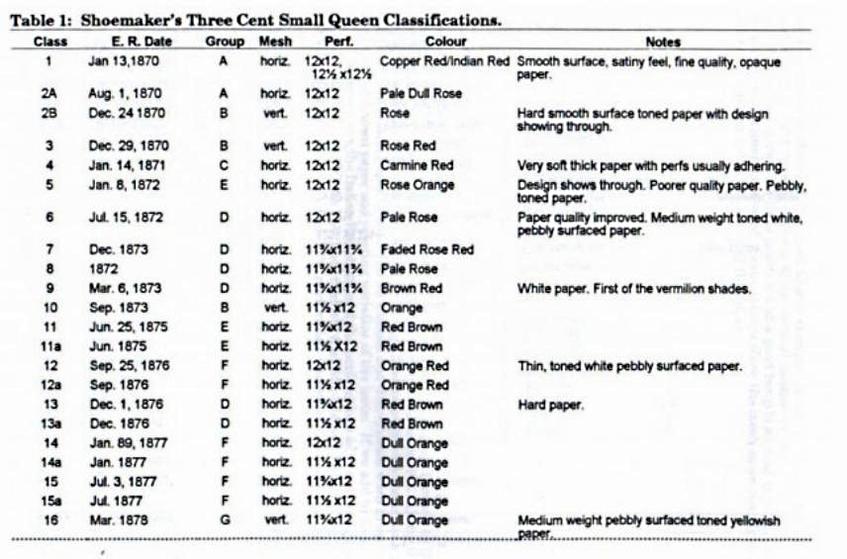
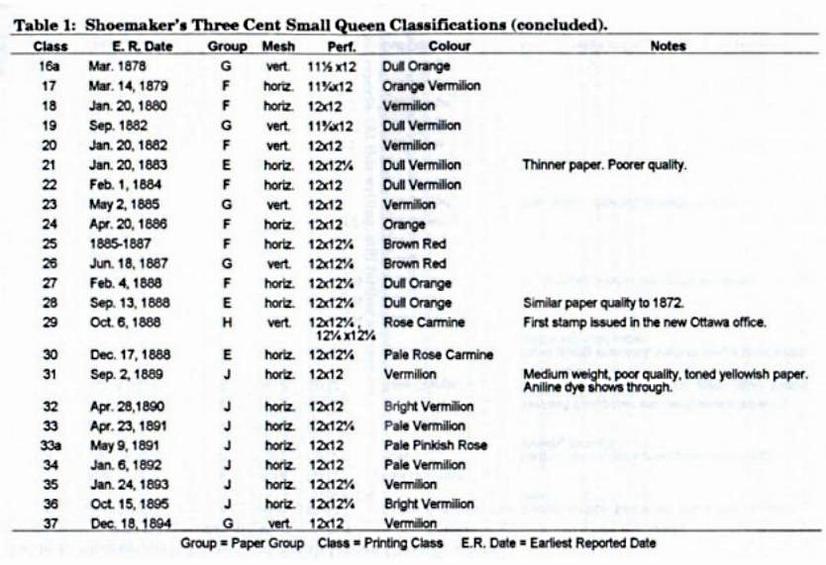
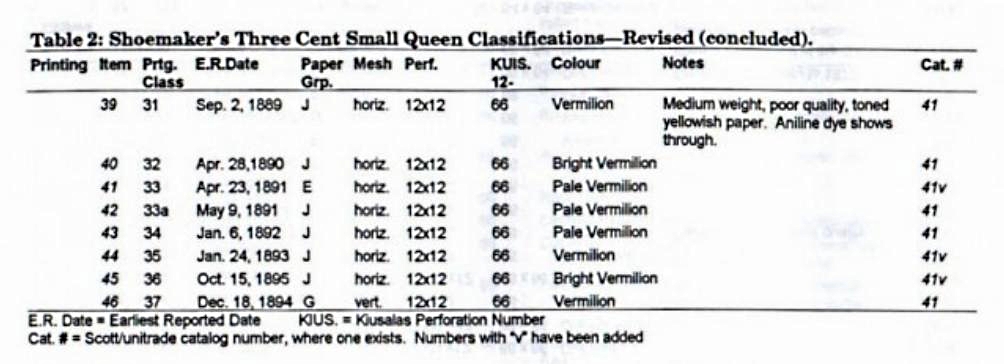
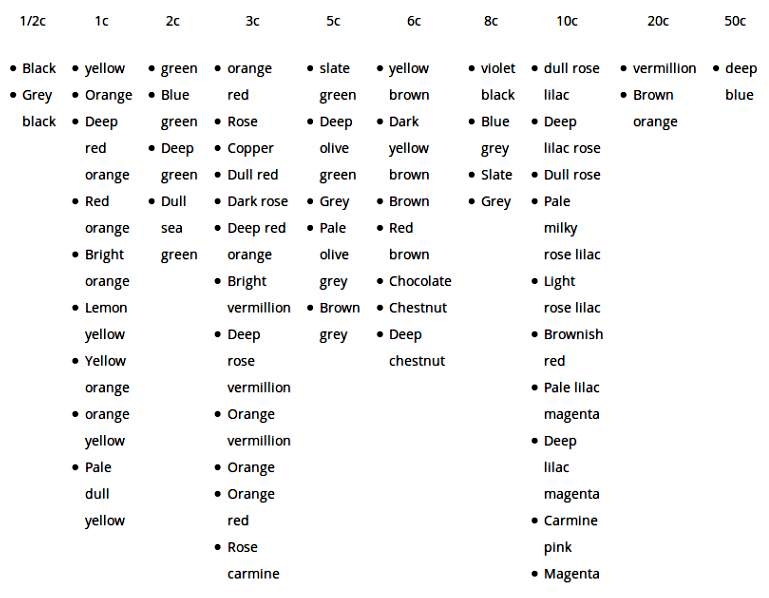
That papers table should be attributed, not just scanned and reproduced. |
|
Send note to Staff
|
|
|
Pillar Of The Community
607 Posts |
|
|
Pebbly refers to the stamp having a bumpy surface, looking somewhat unfinished, and showing the imparted mesh pattern of the papermaking roll. It is best seen with side lighting. If rein or Galeoptix is lurking, they will have a better description than I. |
|
Send note to Staff
|
| Edited by archerg - 01/25/2020 11:32 pm |
|
|
Pillar Of The Community
Canada
644 Posts |
|
|
I have a collection of SQ that was purchased intact (and had been originally labelled) using the Shoemaker crtieria.
It has an example labelled as "pebbly paper" as per the chart that Wert provided.
For clarification, it does indeed have a "pebbly/bumpy" feel/surface on the face side (smoother on the back).
It is unlike any other paper feel for the SQ.
Whether how it was dried had anything to do with it, I feel that it should be "pebbly" the back as well if that were the case. Also, they did not have modern paper towels back then (when this collection was put together) and would likely have used newspapers to dry them. |
|
Send note to Staff
|
| Edited by 3Dadeo - 01/26/2020 10:34 am |
|
|
Bedrock Of The Community
12723 Posts |
|
|
Pillar Of The Community
3860 Posts |
|
|
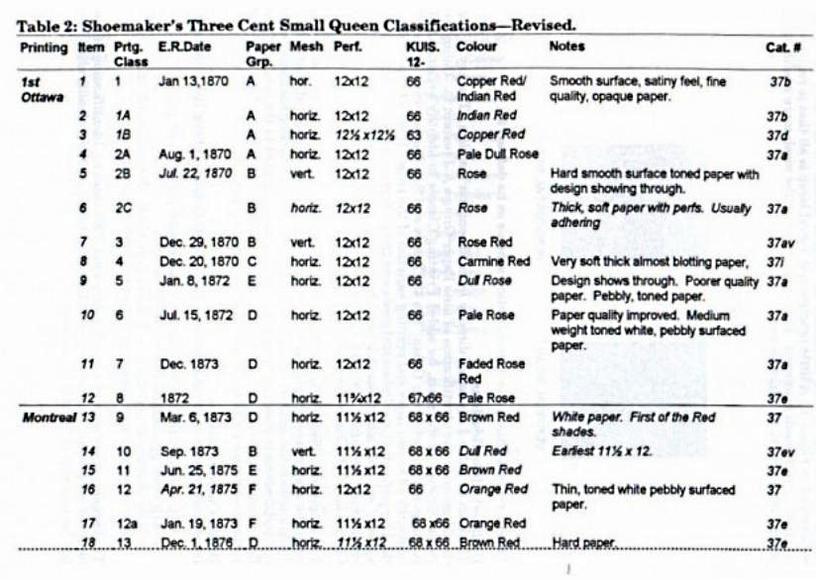
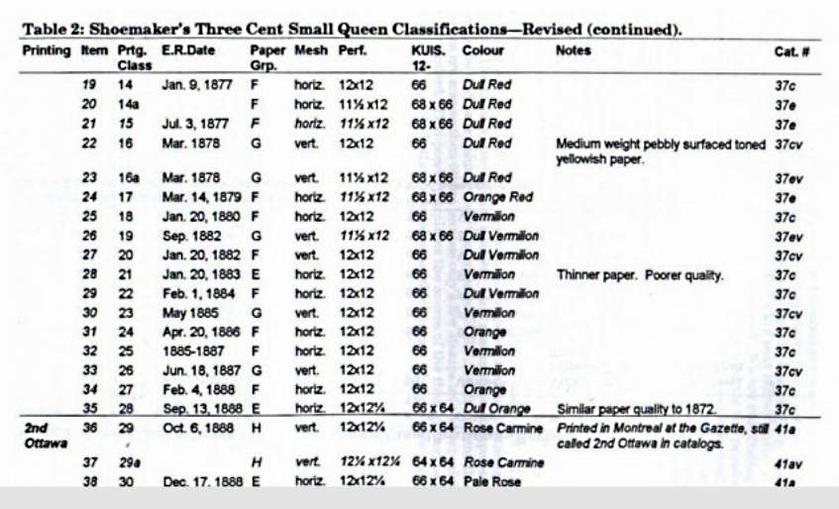
I am confused as to why the charts show SQ Kiusalas 64 (12.3 for 12.25) but not Kiusalas 65 (12.11) at all.
Are the following dates correct for the following perforations?
Kiusalas 68 (11.58) 1873-1882
Kiusalas 67 (11.75) 1858-1882
Kiusalas 66 (11.93) 1862-1967
Kiusalas 65 (12.11) 1863-1897
Kiusalas 64 (12.30) 1883-1895
Kiusalas 63 (12.50) 1870 |
|
Send note to Staff
|
| Edited by jogil - 01/26/2020 5:34 pm |
|
|
Pillar Of The Community
United States
3288 Posts |
|
|
Quote:
It has an example labelled as "pebbly paper" as per the chart that Wert provided.
For clarification, it does indeed have a "pebbly/bumpy" feel/surface on the face side (smoother on the back). Could you please show your example, with what ever lighting technique works? |
|
Send note to Staff
|
|
|
Pillar Of The Community
Canada
644 Posts |
|
|
I'll do my best. I'll do a scan and try a sidelight photo as well.
Give me a few days though. |
|
Send note to Staff
|
|
|
Valued Member
Canada
209 Posts |
|
|
Moderator
United States
12330 Posts |
|
|
Dandy rollers   In my opinion paper is (and was) a commodity with a lot of variance from one manufactured lot to another. The component ingredients of the paper slurry used to make the paper changed depending upon availability, seasons, the guy who mixed it, etc. And 'reverse engineering' paper types after 100+ years on a stamp with completely unknown provenance can be an incredible challenge. Don |
|
Send note to Staff
|
|
|
Valued Member
Canada
209 Posts |
|
|
Great photos, Don! Thank you - clearly shows the wire mesh that would lead to the pebbled appearance. Appreciate it -
Chris |
|
Send note to Staff
|
|
|
Replies: 16 / Views: 2,344 |
|



 Posted 01/25/2020 09:02 am