| Author |
 Replies: 16 / Views: 2,882 Replies: 16 / Views: 2,882 |
|
Valued Member
United States
9 Posts |
|
|
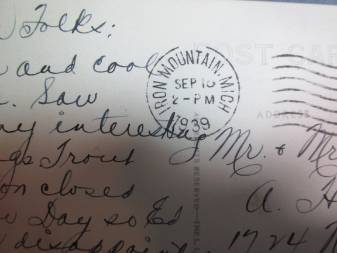
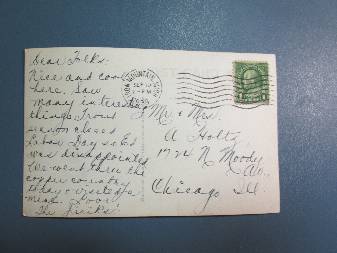
I am new at this and need some assistance. I have several cancelled stamps that are attached to postcards and I find it very difficult to measure. I do not understand everything yet either. I keep reading and researching though. Can anyone tell me if this is a rotary Scott 632? I think it is and that will help me with the research of the others. Kind Regards, Deborah      |
|
Send note to Staff
|
|
|
|
|
Pillar Of The Community
United States
6668 Posts |
|
|
Valued Member
United States
9 Posts |
|
|
Pillar Of The Community

United States
1499 Posts |
|
|
Valued Member
United States
9 Posts |
|
|
I did that but how on earth do you measure with the stamp attached. I can't seem to figure that out.
Thank you,
Deborah |
Send note to Staff 
|
|
|
Pillar Of The Community
United States
1820 Posts |
|
|
Valued Member
United States
9 Posts |
|
|
Pillar Of The Community
United States
1820 Posts |
|
|
Valued Member
United States
9 Posts |
|
|
Ok. I got my very small gauge and I have this conclusion. It reads 11.25 H and 11 V. I had to use my magnifier to read the scale but that is what I come up with. What scott is that? I can't find anything. In addition, it measures a little under 19mm H and 22mm V. As I said, I am new to this but I do believe I am measuring correctly. Any help is greatly appreciated.
Kind Regards and thanks all.
Deborah |
|
Send note to Staff
|
|
|
Valued Member
United States
9 Posts |
|
|
I know everybody is really busy but could someone please help. I can take pictures with the microscope if that would help.
Kind Regards,
Deborah |
|
Send note to Staff
|
|
|
Moderator

United States
12330 Posts |
|
|
If the perforations are 11 x 11 then it is a #552, if the perforations are 11 x 10.5 then it is a #632.
Don |
|
Send note to Staff
|
|
|
Valued Member
United States
9 Posts |
|
|
Pillar Of The Community
United States
1499 Posts |
|
|
Don't know if this will help, but Scott sometimes truncates a perf measurement. I measure 632 as 11.25x10.5 and 552 as 11x11. The first number is for the horizontal perfs, the second for the vertical.
Added: After taking a longer look at the vertical perfs, I'm of the opinion that this is a 632. Is is possible that your 11.25 measurement was of the horizontal perfs? |
|
Send note to Staff
|
| Edited by JLLebbert - 03/05/2020 3:54 pm |
|
|
Valued Member
United States
9 Posts |
|
|
Yes, sorry. I reversed them in the latest post but had them correct in the previous one. This is very confusing. Why would they do that if the famous ones 597 & 594 are both 11 X 11. Could it be a 552 if this is the case?
Kind Regards,
Deborah |
|
Send note to Staff
|
|
|
Moderator
United States
12330 Posts |
|
|
When trying to ID stamps, always start with the assumption that you have the most common varieties. This prevents you from having your hopes clouding your decision making process. A search of this forum will return hundreds of threads of folks who thought they had a rarity (none had). Stamps are as common as rocks. If you went into your backyard and gathered 1000 rocks, would you expect one of them to be a diamond?
Stamp collecting has a lot to offer including learning about other cultures, history, and peoples. Its a great hobby but thinking that you might find a rarity is like thinking if you take up art as a hobby that you might find a Rembrandt in a garage sale. If you set your objective to learning new things, philately can deliver for years to come.
Don |
|
Send note to Staff
|
|
|
Pillar Of The Community
United States
1499 Posts |
|
|
Sorry, I missed the earlier post where you specified that 11.25 was for the horizontal perfs. Scott may truncate perf measurements whenever they decide that no confusion can result from this … the point here is that the 10.5 vertical perfs are unique to 632 and sufficient to id the stamp. Hence they felt free to truncate 11.25 to 11.
Since you have other similar stamps to identify, you should be aware that 552 was printed on a flat plate press whereas 632 was printed on a rotary press. As a result, the 632 design will be slightly taller than that of 552. With both varieties in hand, it is easy to see the difference. If you compare "perf 11" Franklin stamps of the same design, you can probably assume the short ones are 552 & the tall ones are 632.
552 was issued in 1923, 632 in 1927. The date on your postcard (1939) is closer to the 1927 date … this makes 632 the more likely choice. If you happen to find a Franklin that is perf 10 rather than perf 11, you have a stamp that can be used to help identify your other Franklins. At about the time 552 was issued, the Bureau of Printing & Engraving was in the process of switching from the Flat Plate to the Rotary press. So, after the flat plate 552 was issued, in the same year they issued the rotary 581. Being a rotary press stamp, it's design will be the same height as that of 632 (taller than 552).
As for 596, one has a far better chance of winning a multi-million dollar lottery than stumbling across one (fewer than 20 copies are known to exist). 594 is slightly less rare, but I wouldn't consider the odds of finding one all that much greater.
|
|
Send note to Staff
|
|
|
Replies: 16 / Views: 2,882 |
|



 Posted 02/14/2020 09:29 am




 Let us know what you conclude.

