| Author |
 Replies: 35 / Views: 5,651 Replies: 35 / Views: 5,651 |
|
|
|
Pillar Of The Community
United States
7239 Posts |
|
|
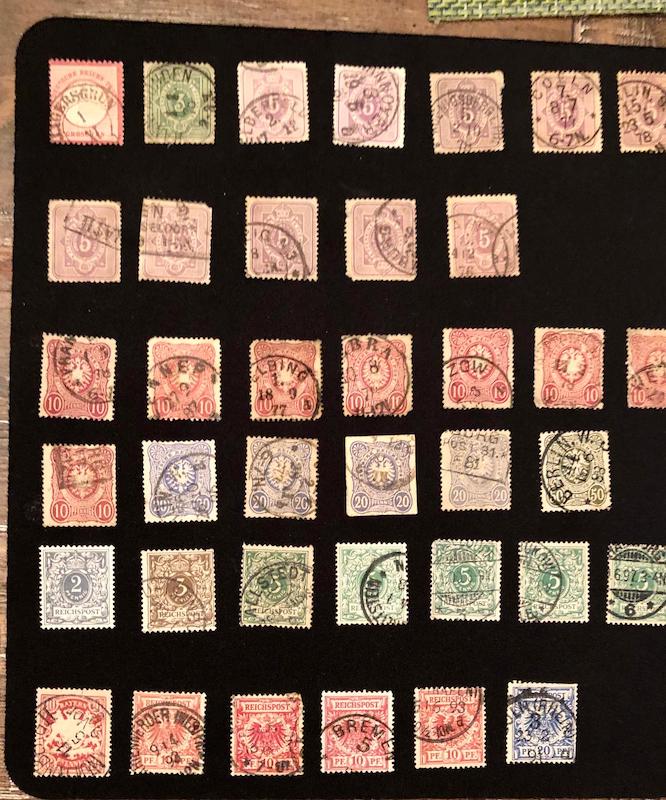
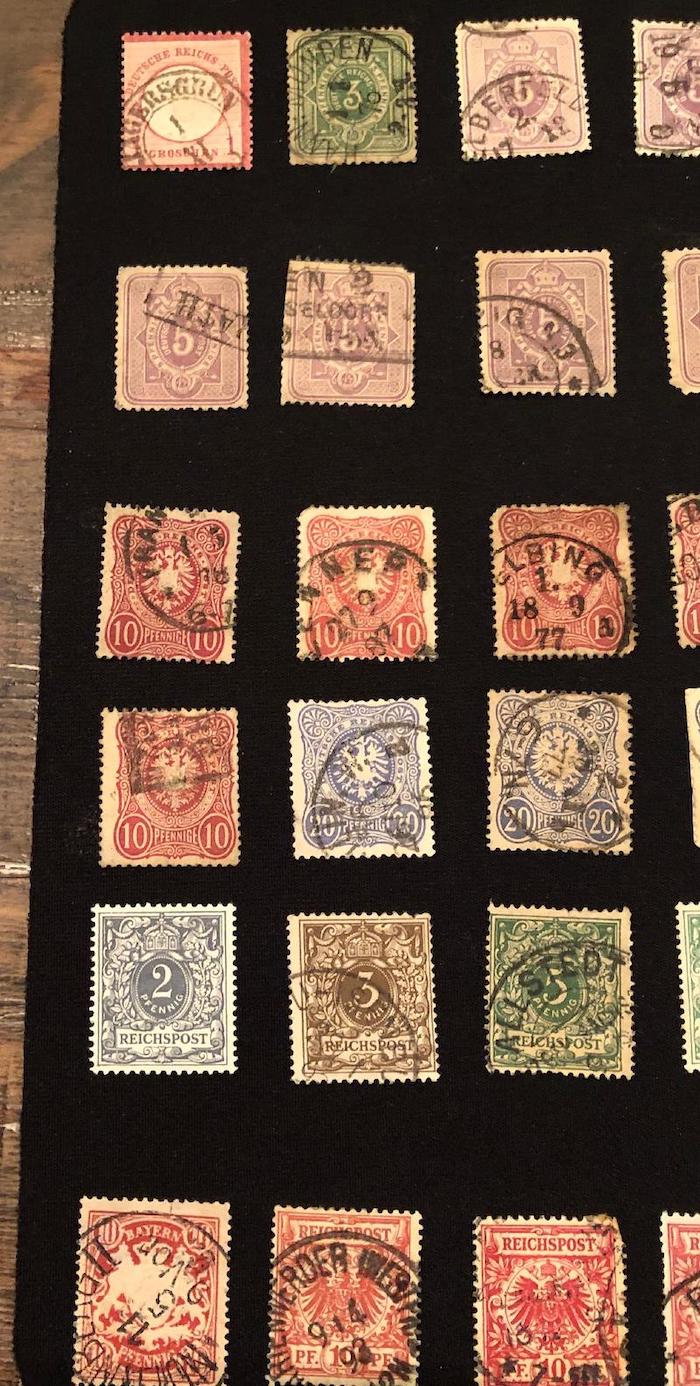
The German 1 Gr. large shield stamp has a nice JAEGERSGRUEN (Saxony) cancel.
The Nachverwendete Altdeutschland-Stempel Spezialkatalog (Peter Feuser, 1995) gives a 30 DM. ($15 US) premium for use on the Breastshield stamps. |
Send note to Staff 
|
|
|
Pillar Of The Community

United States
1012 Posts |
|
|
Pillar Of The Community
United States
6667 Posts |
|
|
Pillar Of The Community
United States
1012 Posts |
|
|
Ok will do stallzer.... now to look up inverted and reversed watermarks :) |
|
Send note to Staff
|
|
|
Pillar Of The Community
United States
1565 Posts |
|
|
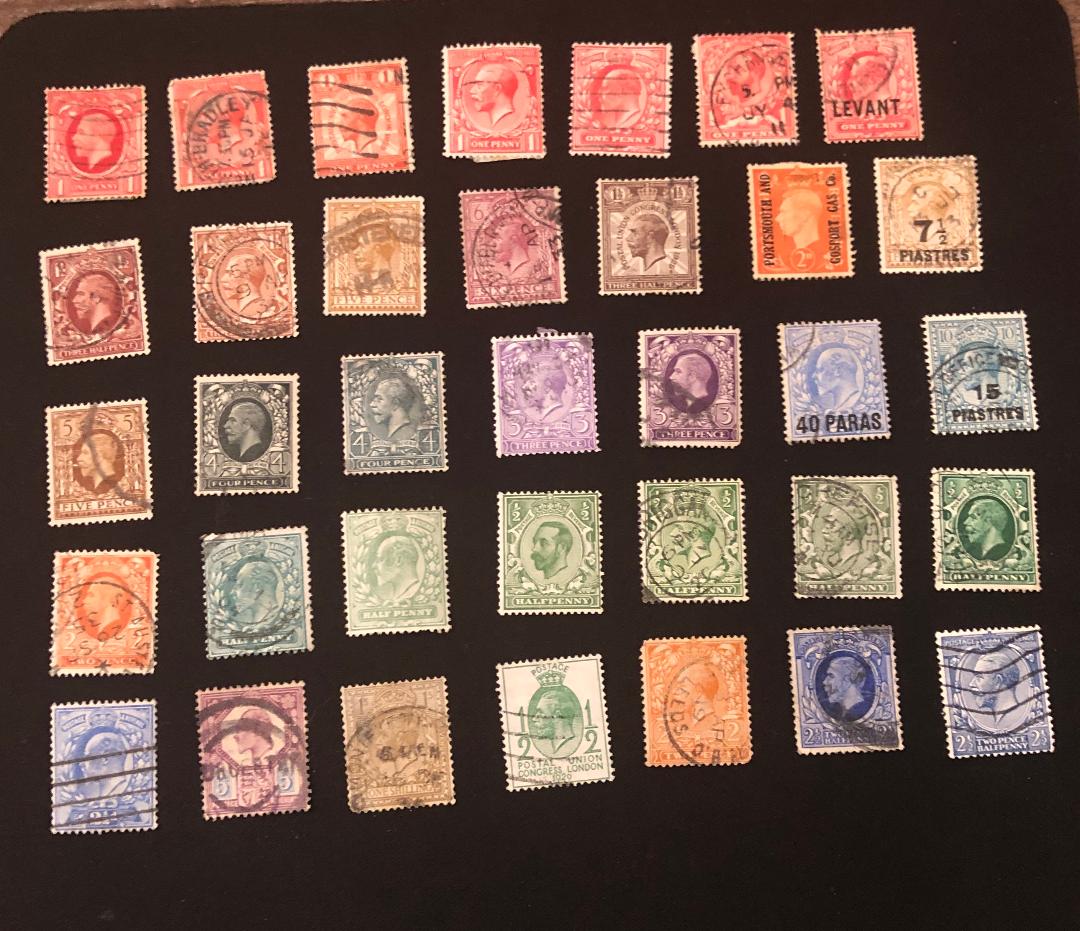
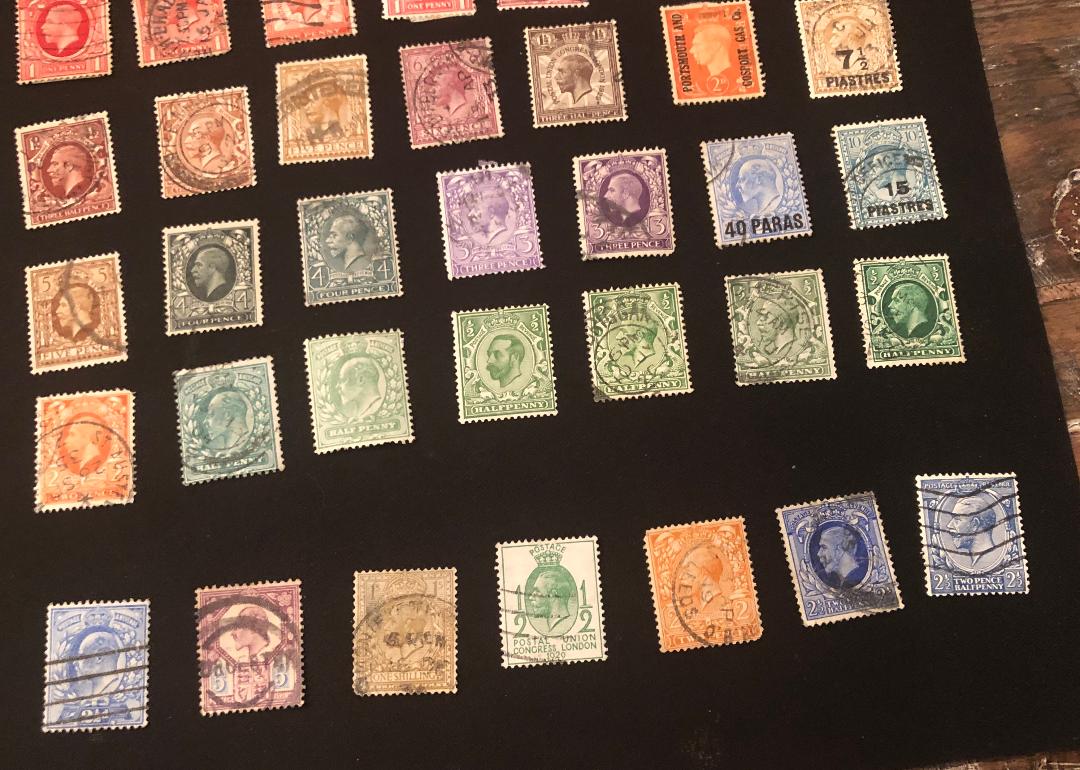
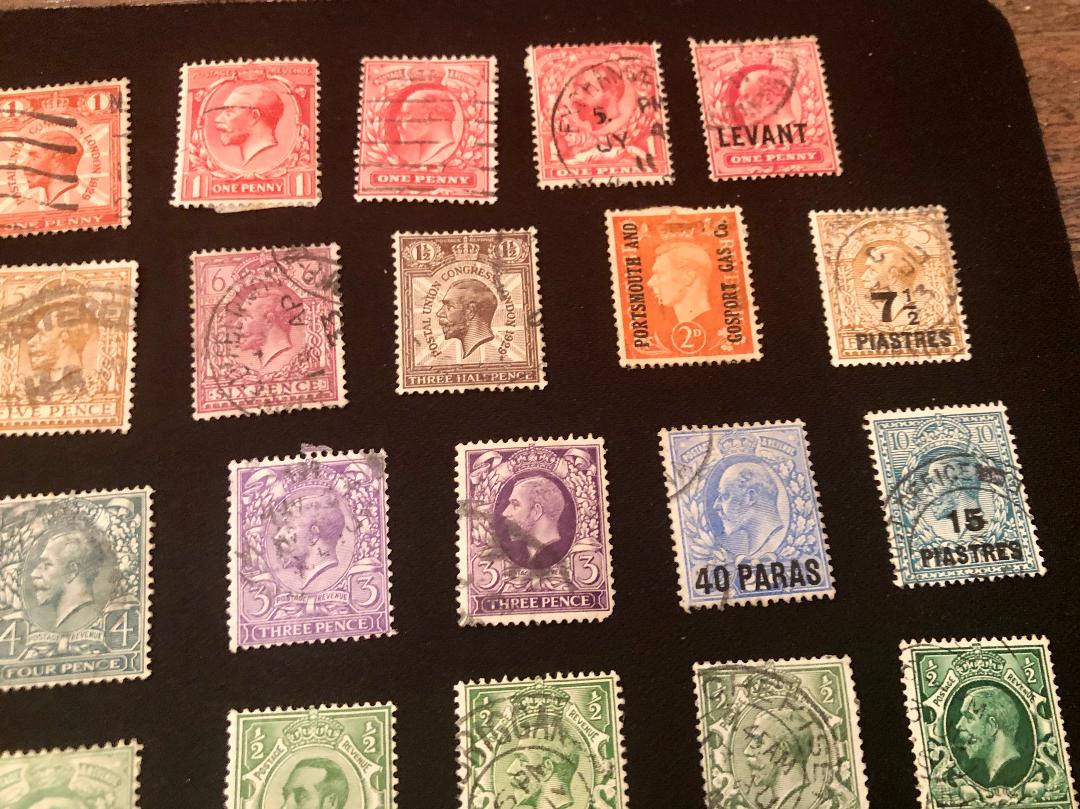
Nora: thanks for sharing the UK items. Very interesting stuff. I do note the second stamp from the right, in the second row, with a "Portsmouth and Gosport Gas Co." overprint. I'm wondering if this is some sort of revenue usage, or a pre-cancel, as I have not seen its like in the past.
Perhaps one of the UK experts can weigh in with an answer. Steve |
|
Send note to Staff
|
|
|
Pillar Of The Community
Netherlands
6639 Posts |
|
|
Top row:
1d. 1934 "Photogravure" George V, upright watermark from sheets and booklets, inverted watermark from booklets and sideways watermark from coils. Exists in three formats (the printed area).
1d. Mackennal (also known as profile) head, see my remark about the three different watermarks. Exists with inverted watermark from booklets
1d. 1929 Postal Union Congress (London) commemorative. Exists with watermark inverted from booklets and sideways from coils.
1d. Mackennal (see above)
1d. Edward VII, either Harrison with perf 14 or perf 15 (top & bottom) x 14, or from De La Rue on ordinary paper perforated 14.
1d. George V Downey Head (1911-1912), comes with Imperial Crown (Dies 1A, 1B and 2), Simple Cypher (script GvR) (Die 1B and 2), or Multiple Cypher (only Die 2)
1d. Edward VII, only De La Rue on ordinary paper perforated 14. Overprinted "Levant" for use at offices in the Ottoman Empire (issued 15 August 1905).
Row 2
1½d. red-brown 1934 "Photogravure" George V, upright watermark from sheets and booklets, inverted watermark from booklets and sideways watermark from coils. Exists in three formats (the printed area).
1½d. Mackennal Head (see 1d for remarks about watermarks: only Simple Cypher (1912-1922) and Block Cypher (1924 – 1934)).
5d. Mackennal Head (only Simple Cypher (1912-1922) and Block Cypher (1924 – 1934), upright watermark, inverted or reversed watermarks come from sheets fed incorrectly into the printing press and are rare).
6d. Mackennal Head (only Simple Cypher (1912-1922) and Block Cypher (1924 – 1934), upright watermark, inverted or reversed watermarks come from sheets fed incorrectly into the printing press and are rare). Block Cypher stamps exist on Ordinary and Chalky papers, both printed by Harrison (more reddish shade) and Somerset House.
1½d. 1929 Postal Union Congress (London) commemorative. Exists with watermark inverted from booklets and sideways from coils.
2d George VI orange or pale orange (second world war issue, saving ink)
5d. Mackennal Head only Simple Cypher (1912-1922) overprinted with Turkish currency for use at "Levant" offices (issued august 1921).
Third row
5d. 1934 "Photogravure" George V known in yellow-brown and deep yellow-brown shades, watermark varieties are errors and thus scarce.
4d. 1934 "Photogravure" George V known in deep grey-green and deep blackish green shades, watermark varieties are errors and thus scarce.
4d. Mackennal Head (only Simple Cypher (1912-1922) and Block Cypher (1924 – 1934), upright watermark, inverted or reversed watermarks come from sheets fed incorrectly into the printing press and are rare).
3d. Mackennal Head (only Simple Cypher (1912-1922) and Block Cypher (1924 – 1934), upright watermark, inverted or reversed watermarks come from sheets fed incorrectly into the printing press and are rare).
3d. 1934 "Photogravure" George V known in reddish violet and violet shades, watermark varieties are errors and thus scarce.
2½d. Edward VII, only De La Rue on ordinary paper perforated 14. Overprinted in Turkish Currency for use at offices in the "Levant:" Ottoman Empire (issued March 1902).
10d. Mackennal Head only Simple Cypher (1912-1922) overprinted with Turkish currency for use at "Levant" offices (issued august 1921).
Fourth row
2d. 1934 "Photogravure" George V, upright watermark from sheets and booklets, inverted watermark from booklets and sideways watermark from coils. Exists in formats intermediate and small (the printed area, so not large format). The small format exists with sideways watermark from a coil.
½d. Edward VII, Blue-green colour (later changed to yellow-green) only De La Rue on ordinary paper perforated 14.
½d. Edward VII, yellow-green colour, either Harrison with perf 14 or perf 15 (top & bottom) x 14, or from De La Rue on ordinary paper perforated 14.
½d. George V Downey Head (1911-1912), comes with Imperial Crown (Dies 1A, 1B and 2), Simple Cypher (script GvR) (Die 1B and 2), or Multiple Cypher (only Die 2)
½d. Mackennal Head (see 1d for remarks about watermarks: only Simple Cypher (1912-1922) and Block Cypher (1924 – 1934)).
½d. Mackennal Head (see 1d for remarks about watermarks: only Simple Cypher (1912-1922) and Block Cypher (1924 – 1934)). Note the distinct shades for these two stamps. This one looks very bluish.
½d. 1934 "Photogravure" George V, upright watermark from sheets and booklets, inverted watermark from booklets and sideways watermark from coils. Exists in intermediate and small formats (the printed area).
Fifth row
2½d. Edward VII, either Harrison with perf 14 or perf 15 (top & bottom) x 14, or from De La Rue on ordinary paper perforated 14.
5d. Edward VII, either Somerset House or from De La Rue on ordinary and Chalky paper, always perforated 14. Somerset House stamps are from 1911, so a cancellation before 2011 is De La Rue.
1s. Mackennal Head (only Simple Cypher (1912-1922) and Block Cypher (1924 – 1934), upright watermark, inverted or reversed watermarks come from sheets fed incorrectly into the printing press and are rare).
½d. 1929 Postal Union Congress (London) commemorative. Exists with watermark inverted from booklets and sideways from coils.
2d. Mackennal Head (only Simple Cypher (1912-1922) and Block Cypher (1924 – 1934), upright watermark, inverted come from sheets fed incorrectly into the printing press and are relatively common). Remember the Simple Cypher one exists from two dies.
2½d. 1934 "Photogravure" George V.
2½d. Mackennal Head (only Simple Cypher (1912-1922) and Block Cypher (1924 – 1934), upright watermark, inverted come from sheets fed incorrectly into the printing press and are).
|
|
Send note to Staff
|
|
|
Pillar Of The Community
Netherlands
6639 Posts |
|
|
The Downey Heads derive their name from the three-quarter face portrait taken by the court photographers W. & D. Downey. Stamps for King George V were prepared on the basis of this portrait. They, generally, were disliked by the public. After issuing the ½d and 1d stamps, the set was abandoned and a new set was issued using the head used for coins that was designed by Bertram MacKennal. This is why the second set of George V stamps is known as "Profile Head" or "MacKennals."
The ½d stamps of both sets have similar frames. The Downey Heads show both eyes of the King and the MacKennals only the left eye.
To distinguish between type 1 and type 2 ½d stamps, look at the beard of King George V. If this is undefined – a blob -, it is type 1. If it is defined, it is type 2. The ornament below the king's neck and over the P of halfpenny has two comma-like thin lines at left for type 1 and a thick line for type 2.
To distinguish between type 1A and type 1B ½d stamps, look at the tail of the right-hand dolphin. The top scale of the type 1A stamp is a triangle. That of the type 1B stamp only has the right line of the triangle: i.e., it is open to the left.
To distinguish between type 1 and type 2 1d stamps, look at the lion at the bottom. If this is unshaded – the lower parts -, it is type 1. If it is shaded, it is type 2.
To distinguish between type 1A and type 1B 1d stamps, look at the right-hand ribbon of the wreath over the king's head (at 1 o'clock). The type 1A stamp has a very short and then an uninterrupted line of shading. The type 1B stamp has two short lines of shading. The third line is uninterrupted in both types. |
|
Send note to Staff
|
|
|
Pillar Of The Community
United States
809 Posts |
|
|
NSK: Beautiful page of KGVs. I admire—not sure whether to say your powers of discernment or your courage in making such decisions about color shade and hue. In any case, a treat for the eye. |
|
Send note to Staff
|
|
|
Pillar Of The Community
United States
1012 Posts |
|
|
Valued Member
United States
397 Posts |
|
|
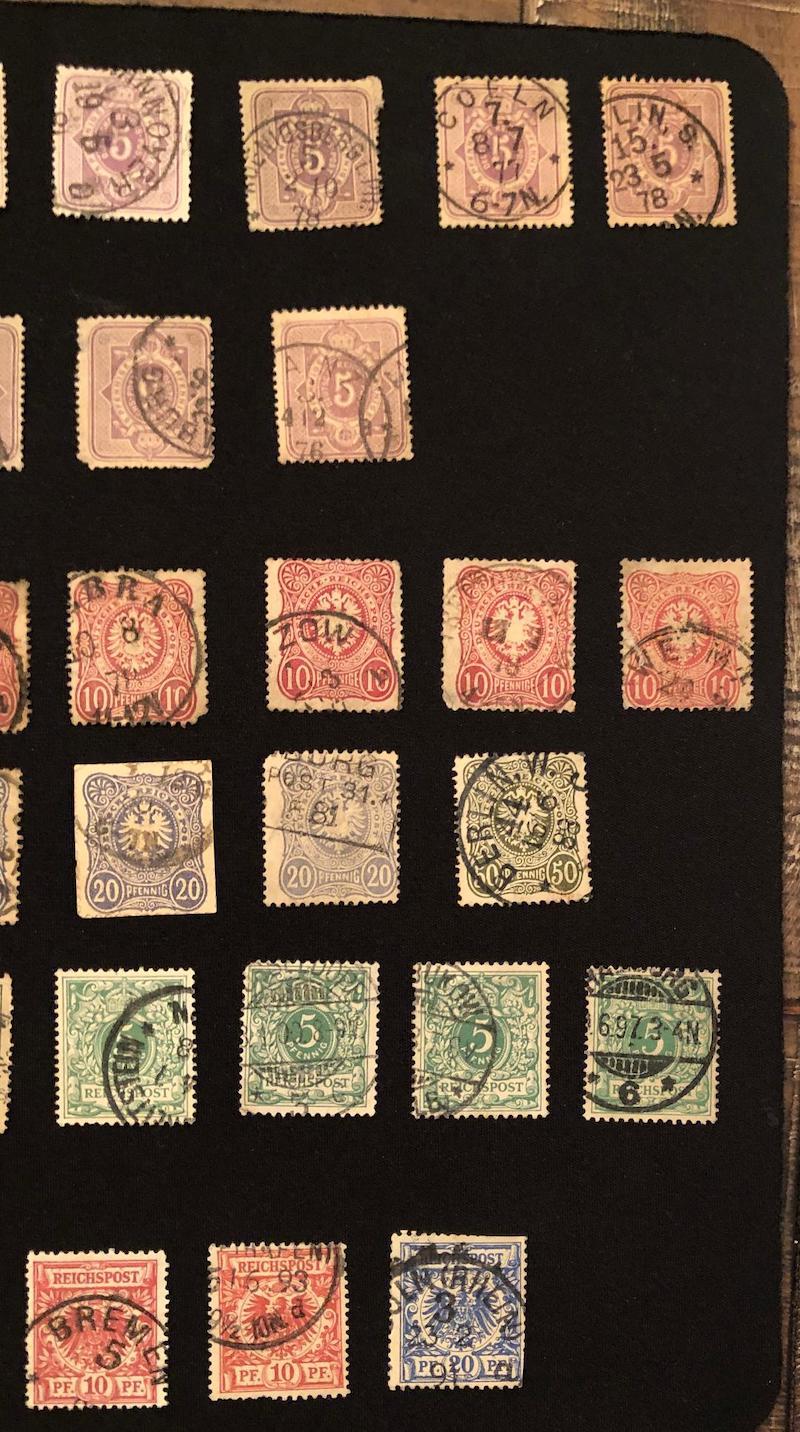
The 20 pfennig one, fourth from the left in the fourth row, I suspect is a cutout from a printed envelope - a piece of postal stationery. It is imperforate and Scott doesn't list an imperforate variety of an otherwise perforated stamp. Also the color seems a little faded. Scott lists the colors for that stamp with "pfennig" (issued 1880-1883) instead of "pfennige" (issued 1875-1877) as either bright ultramarine or grayish ultramarine. Yours definitely looks on the grayer side. But, I agree, some great cancellations. |
|
Send note to Staff
|
|
|
Pillar Of The Community
United States
1012 Posts |
|
|
Pillar Of The Community
United States
1012 Posts |
|
|
thanks waddsbadds. Actually the 20 pfennig is on a paper/postacrd - it is hard to see from my photo. I just go these so they need some cleaning up for sure :) so now just getting them a little sorted and out of glassine - maybe this weekend I will have time to soak a few of these. just started browsing Germany in my Scott catalogue... |
|
Send note to Staff
|
|
|
Pillar Of The Community
Netherlands
6639 Posts |
|
|
Quote:
NSK: Beautiful page of KGVs. I admire—not sure whether to say your powers of discernment or your courage in making such decisions about color shade and hue. In any case, a treat for the eye. I did not make those decisions. I bought them, from a very reliable source that identified them. Naturally, this dealer priced them accordingly. I am afraid the scan does not do the shades justice. |
|
Send note to Staff
|
|
|
Pillar Of The Community
United States
1565 Posts |
|
|
NSK: thanks very much for your analysis in the "shade department." Like you, I'm into shades, with my collections of classic (1914 and before) Portuguese colonies. Scott or Mundiphil may list a given stamp as 'blue,' but for me, every variation of that blue color represents a different stamp. |
|
Send note to Staff
|
|
|
Pillar Of The Community
United States
1012 Posts |
|
|
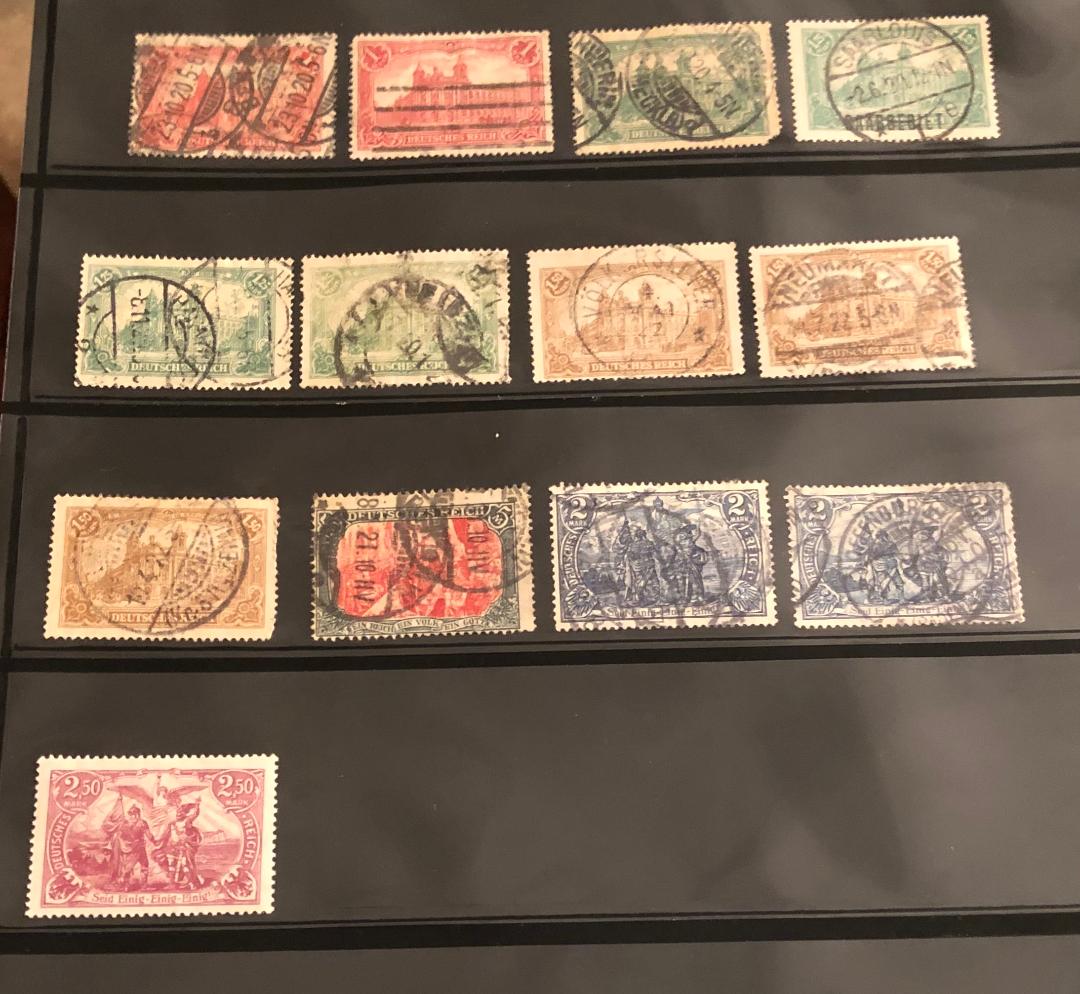
Hello my fine stamp loving friends. I finally got a break from the work madness (and the kids are visiting grandparents :) so I get to relax and stamp. I have been cataloguing and investigating my large lot of German stamps. I was hoping you might guide me on the following - in particular the surcharges? and the office overprints/ German occupation? - I. believe two are Romania - not pictured here I have 30-40 with Belgien overprint. Some of these are tricky for me in my Scott classic specialized catalogue. Muchas Gracias! 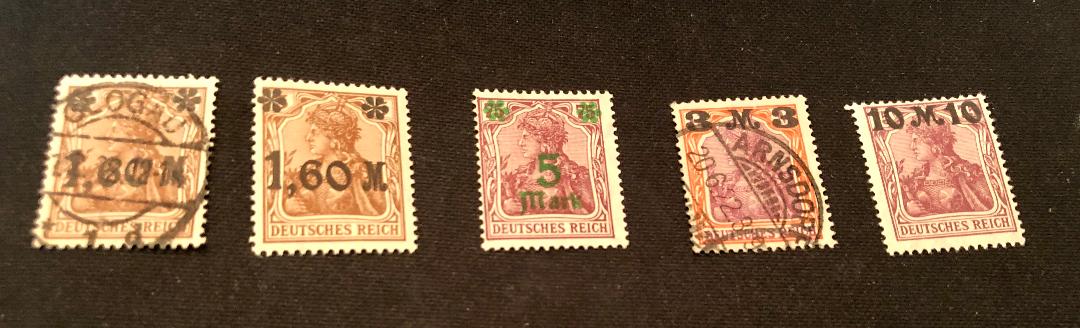 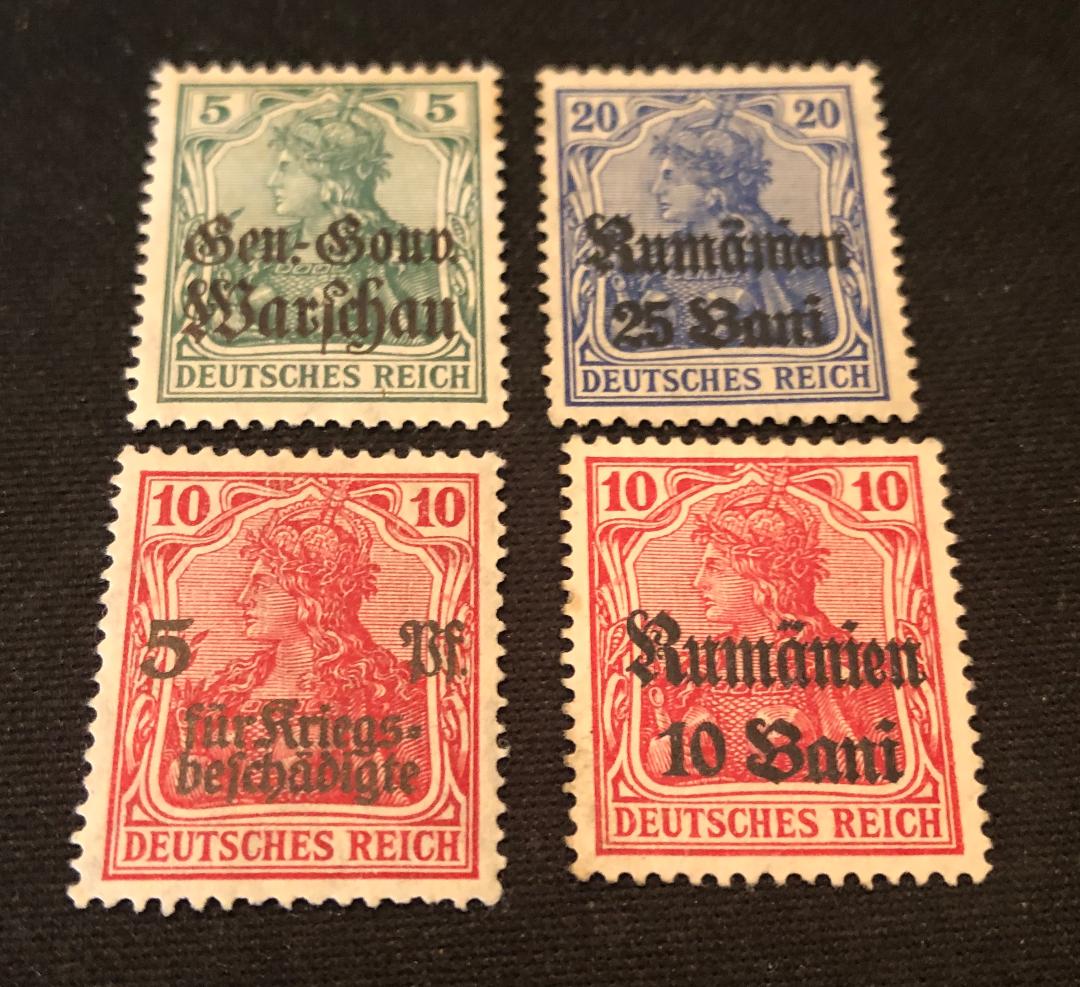 |
|
Send note to Staff
|
| Edited by Mrita75 - 03/10/2020 9:09 pm |
|
|
Replies: 35 / Views: 5,651 |
|




 Posted 03/01/2020 4:36 pm