| Author |
 Replies: 7 / Views: 1,489 Replies: 7 / Views: 1,489 |
|
|
Valued Member
United States
154 Posts |
|
|
Scott RA4 for Angola is a Charity Stamp and in Scott's catalog the image has an inscription, the same stamp listed on StampWorld.com the image does not have the inscription. Neither location has mention if the inscription should be there or not. I have both stamps, without inscription the image on the stamp is quite blurry, while the one with inscription is sharp.  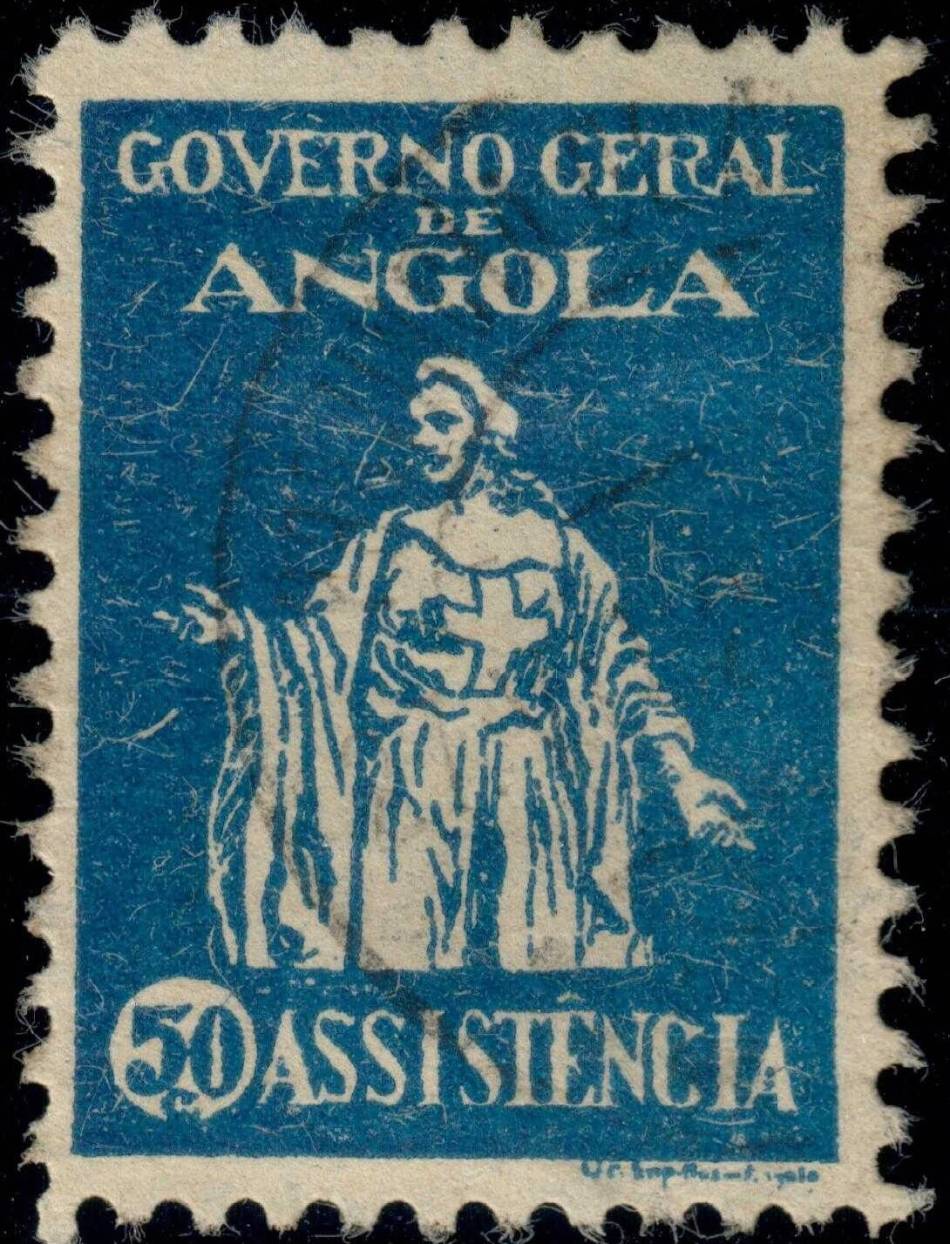 any idea which way this should be. Are they both legit stamps Thank You |
|
Send note to Staff
|
|
|
|
|
Pillar Of The Community
United States
2830 Posts |
|
|
Very interesting. Wonder if since the stamp w/o inscription is so roughly printed that it might be a postal forgery. And the perfs are extremely rough. Not valuable enough to be a philatelic forgery. |
Send note to Staff 
|
|
|
Pillar Of The Community
France, Metropolitan
3753 Posts |
|
|
Valued Member
Canada
100 Posts |
|
|
A bit difficult to read the Portuguese translation in perf12's website and couldn't see anything specifically describing the variations with and without the inscription. However it was clearly a stamp used to collect tax in times of economic difficulty. It appears there was difficulty getting the stamp issued in time and there were several issue dates possibly with modified types. Here is the first paragraph of the description using a web translator site;
"The economic and financial situation in Angola, like the Metropolis and other colonies, was catastrophic. In the midst of a recessionary cycle and rampant inflation, the Angolan authorities had enormous difficulties in assisting a population that felt the hardships of the lack of financial means.
In order to cover the great burden that the government incurred with assistance services, both for Europeans and for the indigenous population, it decided to obtain significant revenue, with the creation of a tax to be collected in certain acts and on certain dates, through the application of a specific seal called "ASSISTANCE". It was based on this assumption that the Legislative Diploma No. 49 of 8 April 1929 is published in the Official Bulletin No. 14 of 13 April 1929.
The tax was a one-time fee of $ 50, charged through a stamp to be edited by the National Press of Angola, according to a model to be published in the Official Bulletin." |
|
Send note to Staff
|
|
|
Pillar Of The Community
2340 Posts |
|
|
As far I understand the Portugese text (not so diferent from my own Language), it was a tax levied twice a year: from june 1st to 30th (later modiffied to July 1st to July 31st) and from December 8th to January 8th. It was levied on all out coming postage, regardeless of destination.
On the letters, shown on the article I can see stamps with and with lower right text. I don't thing it makes any difference. |
|
Send note to Staff
|
|
|
Pillar Of The Community
United States
1496 Posts |
|
|
Perhaps another printer got a contract to print additional stamps?
If mine, I would include both in my album, with the no inscription stamp labeled as a variety of Scott RA4.
Robert |
|
Send note to Staff
|
|
|
Pillar Of The Community
United States
2830 Posts |
|
|
Pillar Of The Community
United States
1565 Posts |
|
|
My 2019 Mundifil catalog for the former Portuguese colonies shows the stamp with the imprint. There are five additional varieties based on the paper used. I confirmed the illustration in Stamp World does not show the imprint. Also checked my old, falling apart, 1982 edition of the Eladio de Santos catalog. It shows a stamp without imprint, but lists just two varieties, not five.
There are real differences between Leejb1's stamp without the imprint and the one with imprint. On the stamp without imprint, note that the lines on the cape are heavier, particularly the lines around the cross. Compare the letters at the top of both stamps. The 'G' and 'V' in governo are especially different in the non-imprint stamp. Look at the 50 centavo value in the imprint stamp and compare with the non-imprint stamp.
I hesitate to call the non-imprint stamp a crude forgery. Mundifil makes no mention of "falsos" with this issue. In addition, the stamp was printed in Luanda, not Lisbon, which may account for the differences in quality. I agree with Shermae that they are two different stamps. To address Robert's point, according to Mundifil, the same printer was used (Imprensa Nacional de Luanda).
Overall, these stamps add yet another reason as to why I find the pre-World War II issues of the Portuguese colonies so fascinating. Steve
|
|
Send note to Staff
|
|
| |
Replies: 7 / Views: 1,489 |
|




 Posted 04/19/2020 3:36 pm


