| Author |
 Replies: 14 / Views: 1,283 Replies: 14 / Views: 1,283 |
|
|
Valued Member
Australia
123 Posts |
|
|
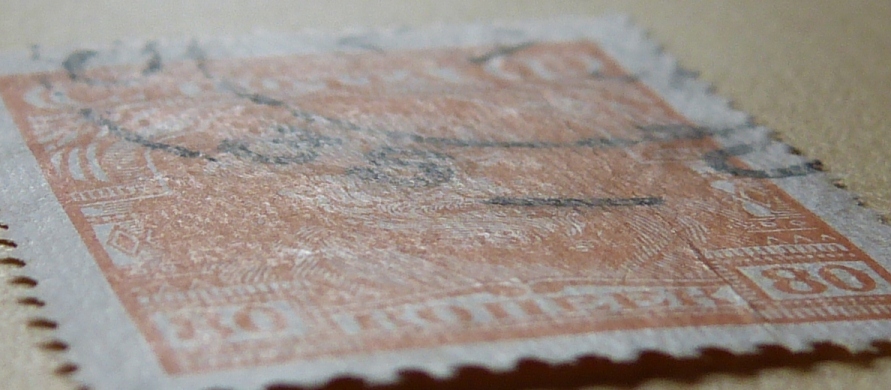
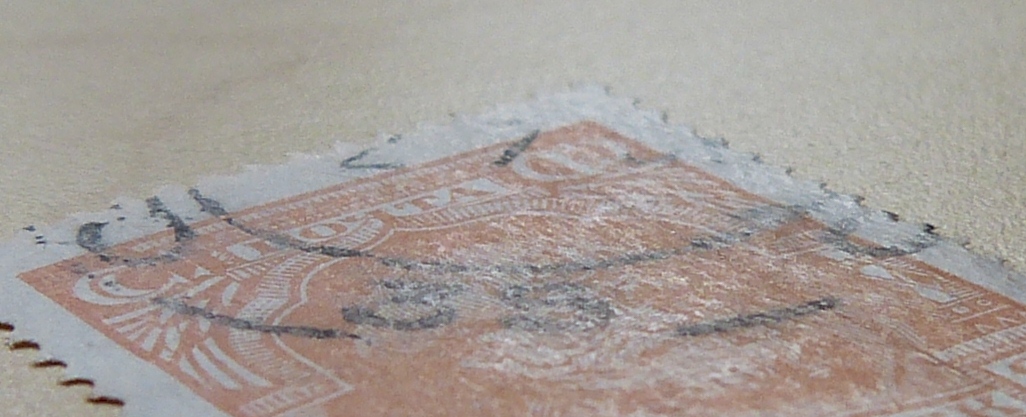
Hello all, been a while ;) Bit rusty at this so here goes. I've noticed a couple of things with this stamp, 1st. what looks to me like a paper join but more interesting was a clear coating or sheen over the face of the stamps printing. It looks to be on top of the printing. I've never laid eyes on a "printed on gum side" or a 'paper join" stamp so I don't really know what I'm looking at. Hence I'm going to ask you all what you think & see please. I've done the best I can with light & pics. etc. so I hope this all works when I load it....... Nope ! can't get the scans to up load at present will try tomorrow night again :( Thanks for any input. 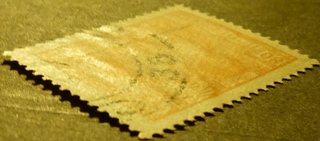 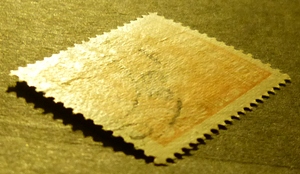 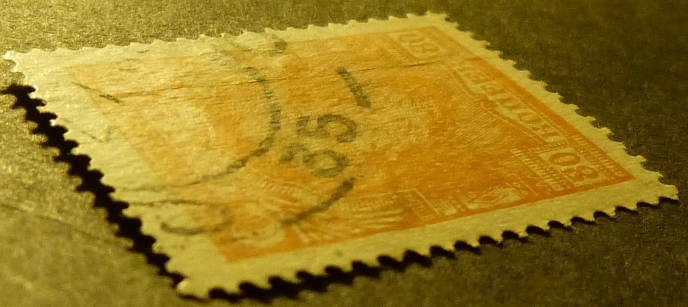 |
|
Send note to Staff
|
|
|
|
|
Pillar Of The Community
United Kingdom
1255 Posts |
|
|
Jad, the stamp looks creased to me. The "joined paper" variety is most reliably identified with multiples. You will see the repair as a plain streak across the stamps where the paper failed during printing and the paper had to be joined. An example, herewith, showing the skill with which the paper can be repaired. 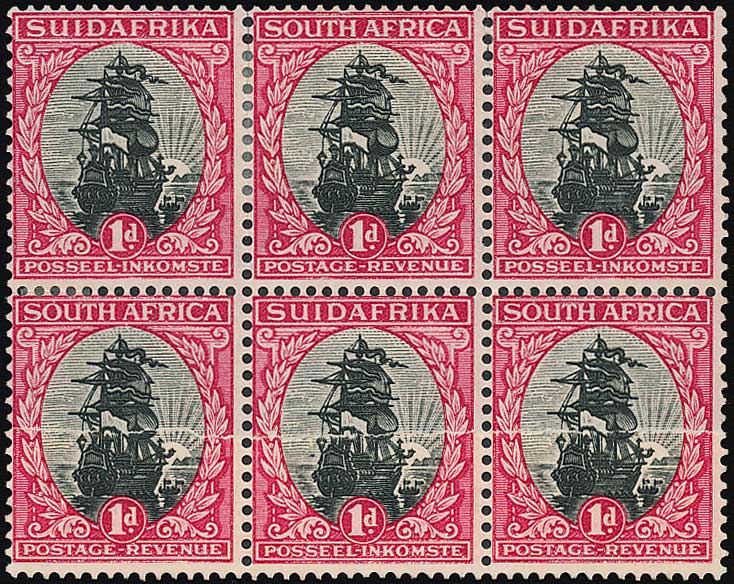 |
Send note to Staff 
|
|
|
Valued Member
Australia
123 Posts |
|
|
Thanks Tim H for your reply. It does look more like a crease on the front but it doesn't want to bend when a little pressure is put on it, & when you look at it with light from behind it looks different & has a slightly more transparent uneven line along it. I thought someone may have tried to flatten it out, but they would probably do that wet & this coating over the print would have come off I'd have thought....That's me assuming it might be gum though. The scans would have shown that areas better but I seem to have lost my touch & haven't been able to sort the scanner problem yet. I'll try to get some better photo's in day light but here's a poor attempt for now ;) 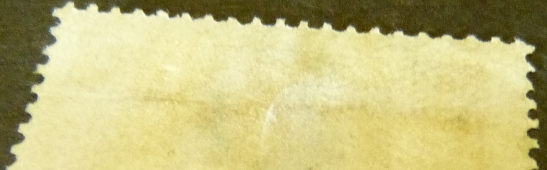 |
|
Send note to Staff
|
|
|
Pillar Of The Community
Netherlands
6641 Posts |
|
|
Pillar Of The Community

United States
812 Posts |
|
|
My copy of Scott says that the 80k orange, indeed that entire series, is on "chalk surfaced paper," which is generally quite shiny, especially if the stamp has never been soaked. On the other hand, neither my Michel nor my Yvert calls this stamp chalk surfaced. If Scott is correct, chalky is much more likely here than gummed on the face. If Scott is wrong? |
|
Send note to Staff
|
|
|
Valued Member
Australia
123 Posts |
|
|
Thank you NSK & EMaxim. Maybe a bit of both ? crease in paper before printing ? I remember as a small child watching my mother & grandmother removing stamps over a boiling pot of water on the stove, I've tried this too & it leaves more of the gum residue on the stamp than soaking does. They used to hold the envolope side down into the steam ;) It may have been removed a long time ago by that method & not been soaked yet, reason I'm thinking this is the hinge remnant on the back. Interesting stamp & yes, what if ? ........... ..as promised, day pics, no joy with up loading scans yet sorry. 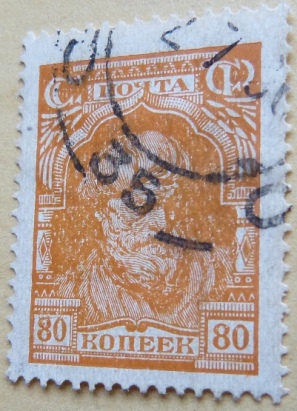 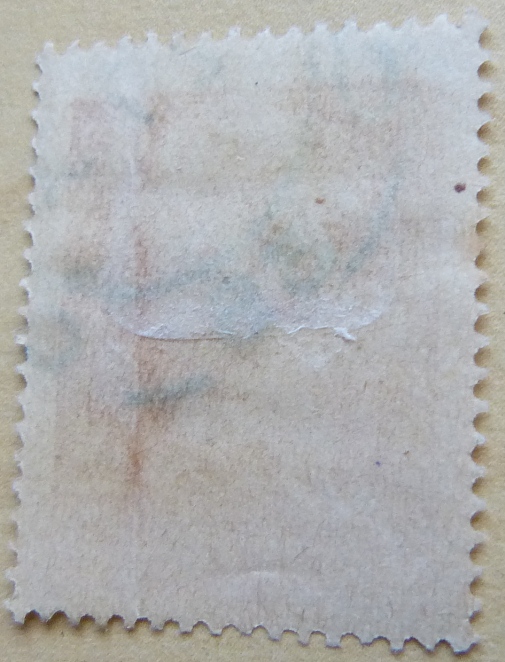 |
|
Send note to Staff
|
| Edited by Jad - 05/12/2020 07:14 am |
|
|
Pillar Of The Community
United Kingdom
1255 Posts |
|
|
Jad, the crease before printing may be a possibility. To determine this, have a look at the printing across the crease. If there is a tiny bit of ink missing on one side of the crease (just like when you're painting and you've gone over a flat surface with a bump on it, using a poorly loaded paintbrush or roller) then it's a pre-printing crease. A bit like an "ink shadow" as it were. If not, then the stamp has gotten creased afterwards. |
|
Send note to Staff
|
|
|
Valued Member
Australia
123 Posts |
|
|
Thanks Tim H for your time, Seem to have sorted the scanner, a 1200 scan saw what my old nackered eyes with a magnifier couldn't  Now all I have to do is work out what the glossy coating is, maybe it was on a bench close to a mirror in the days where ladies used lots of hair spray :) :) 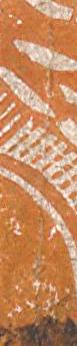 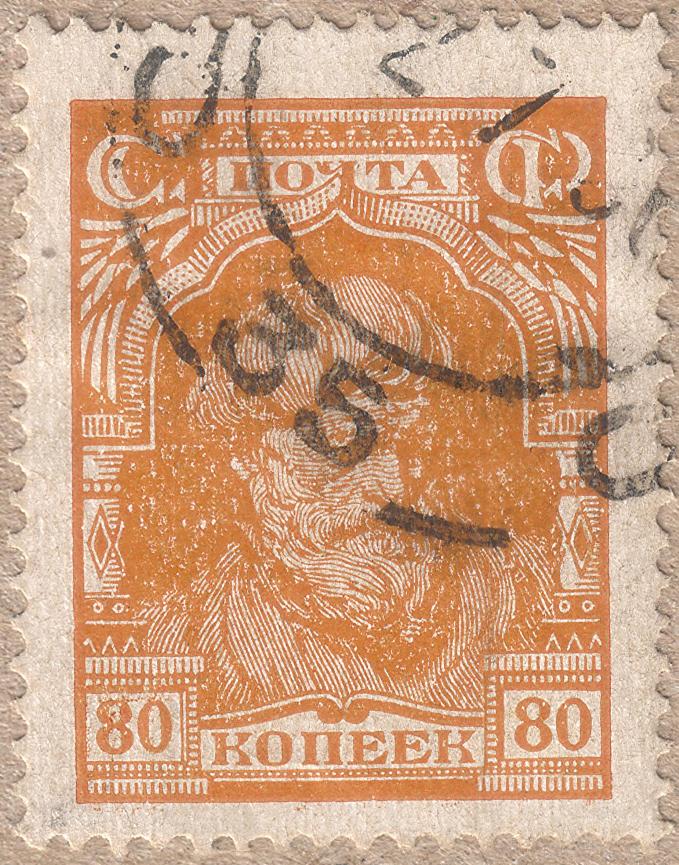 |
|
Send note to Staff
|
| Edited by Jad - 05/12/2020 07:10 am |
|
|
Pillar Of The Community
United States
1026 Posts |
|
|
Well there are some clues there... #1087;#1086;#1095;#1090;#1072; means Mail in Russian and there are stylized characters at top left and right forming #1017;#1017;#1017;#1056;, so Soviet Union. The #1082;#1086;#1087;#1077;#1077;#1082; at the bottom is Kopek in Russian, so an 80 kopek stamp in orange from the USSR. The design and printing makes me think prior to WW2, they got much more into stuff they could sell to the west after the war. A quick look through Scott finds the 1927-1928 set shows that design in the 2k apple green, and the 80k uses the same design but in orange. Looks like it's Scott #400. |
|
Send note to Staff
|
|
|
Pillar Of The Community
United States
1026 Posts |
|
|
Dang, all my nice clear Cyrillic characters were wiped. :(
noyta, CCCP and koneek are close enough. |
|
Send note to Staff
|
|
|
Valued Member
Australia
123 Posts |
|
|
Pillar Of The Community
United States
1026 Posts |
|
|
I believe it's just the chalk surfaced paper you are seeing. I'm guessing the printing itself is showing the glaze from the paper surface because it's lithographed, so there's no raised surface to the ink. The paper was coated with the "chalk" which might have not been actual chalk, but a glaze to give the very smooth surface. That let the lithograph have clearer lines, becuase the ink beads up slightly on the edges as it's placed on the surface. |
|
Send note to Staff
|
|
|
Valued Member
Australia
123 Posts |
|
|
I now see you're right billsey, ....after an enjoyable evening last night reading up on & learning more about chalk paper. The only stamps I'd come in contact with up till now, were the Aussie ones & a couple of early Russian empire 10 kons, they had all been soaked & lost a lot of their printing in the soak. But the Aussie stamps are different to these, a different application I think now, maybe dry coated as apposed to these wet coated/rolled maybe. I didn't have any more of this series to compare this with, so I went back into Scott's cat & saw the next series was on the same paper & saw in this little $3 lot that just arrived a couple of days ago there were two of that series. They are both soaked & there is very little of the shine/sheen left on them, but I can see little bits & on the left side of the Scott 403 sailor stamp, also very faint fine lines still show up. Not sure my photo will be good enough & scans don't pick this up for me. So I'm still very happy to have my first "crease before printing" stamp & is only made sweeter as it's in my main passion.....just :), of the early little Russian empire stamps which is why I took a gamble on this lot with a BAD out of focus photo, couldn't even read the numbers on the stamps but I went by colors & could see a circular dot cancel on a 10 kon I thought ;)...& others I like. I think some of you may enjoy the result of the gamble, as it turned out to be a Scott 8 (Mi 5) P12 1/2, Riga 38 circular dot cancel :) Thanks everyone for your help, you saved me a lot of web time. 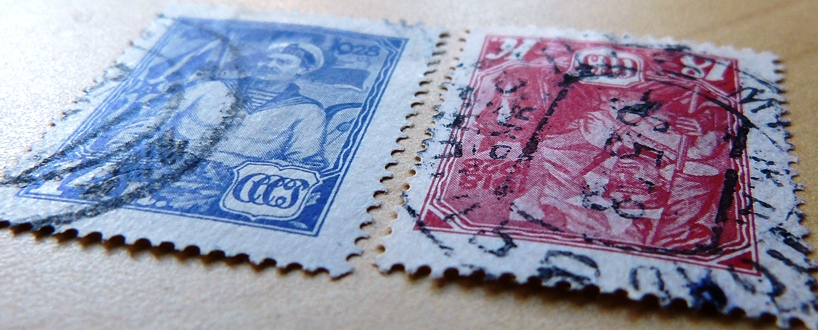 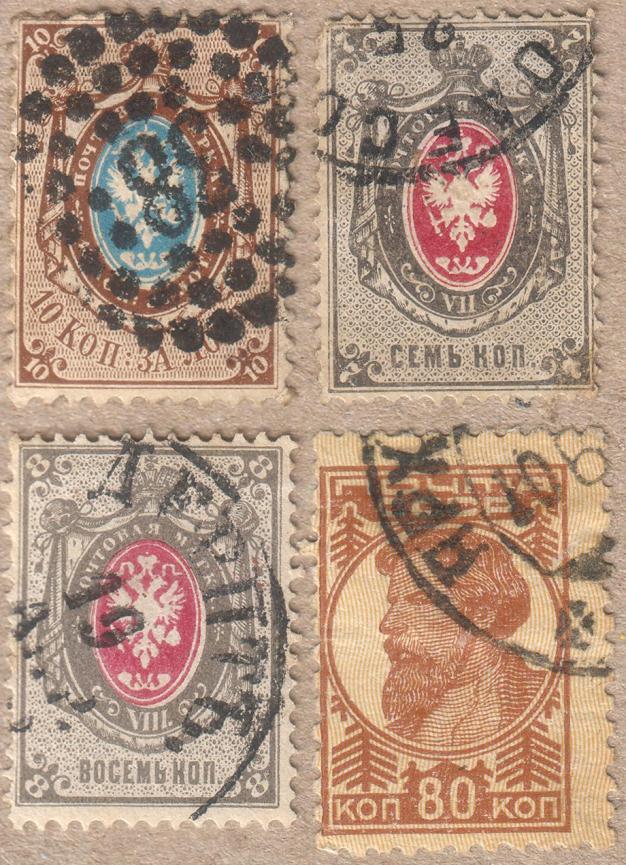 |
|
Send note to Staff
|
| Edited by Jad - 05/13/2020 11:44 pm |
|
|
Pillar Of The Community
United States
1026 Posts |
|
|
One of these days my collecting will wander into Russia and I'll be able to get deeper into it. Take a look at the Portuguese issues for some education into paper surfacing. They have several different coatings used throughout the years, including ceramic. Also note that the lower right stamp in your latest image (80 kopek) has a buralage printed under the design. Those were used as an anti-forgery device. With the buralage used on some early Denmark stamps they can be reversed, so the waves go a different way... |
|
Send note to Staff
|
|
|
Valued Member
Australia
123 Posts |
|
|
Be careful billsey, these little empires are very addictive ;) & funny you should say "wander"ing off track, as these got me into the early stamps of Finland too. The Sc.426 8k is a bit of a space filler but I'm happy to have it as I didn't have one & they don't turn up here locally often. The 426 does have some varieties of partially missing & completely missing groundwork on these too as you would already know. You've sparked my interest with the ceramic coating, so I'll be doing some more reading once I finish this little lot off this evening, just about to perf. check them to narrow down the cat. numbers. I nice mix of vertically & horizontally laid too ;) & some nice little groundwork shifts as well. The other two thirds of the lot were all modern Russian & are in my 'rainy day" box ;) Take care mate & thanks again for the input, very interesting.  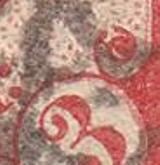 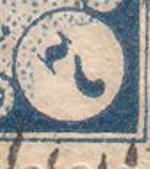 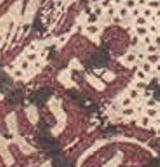  |
|
Send note to Staff
|
| Edited by Jad - 05/15/2020 06:08 am |
|
| |
Replies: 14 / Views: 1,283 |
|



 Posted 05/11/2020 08:36 am